
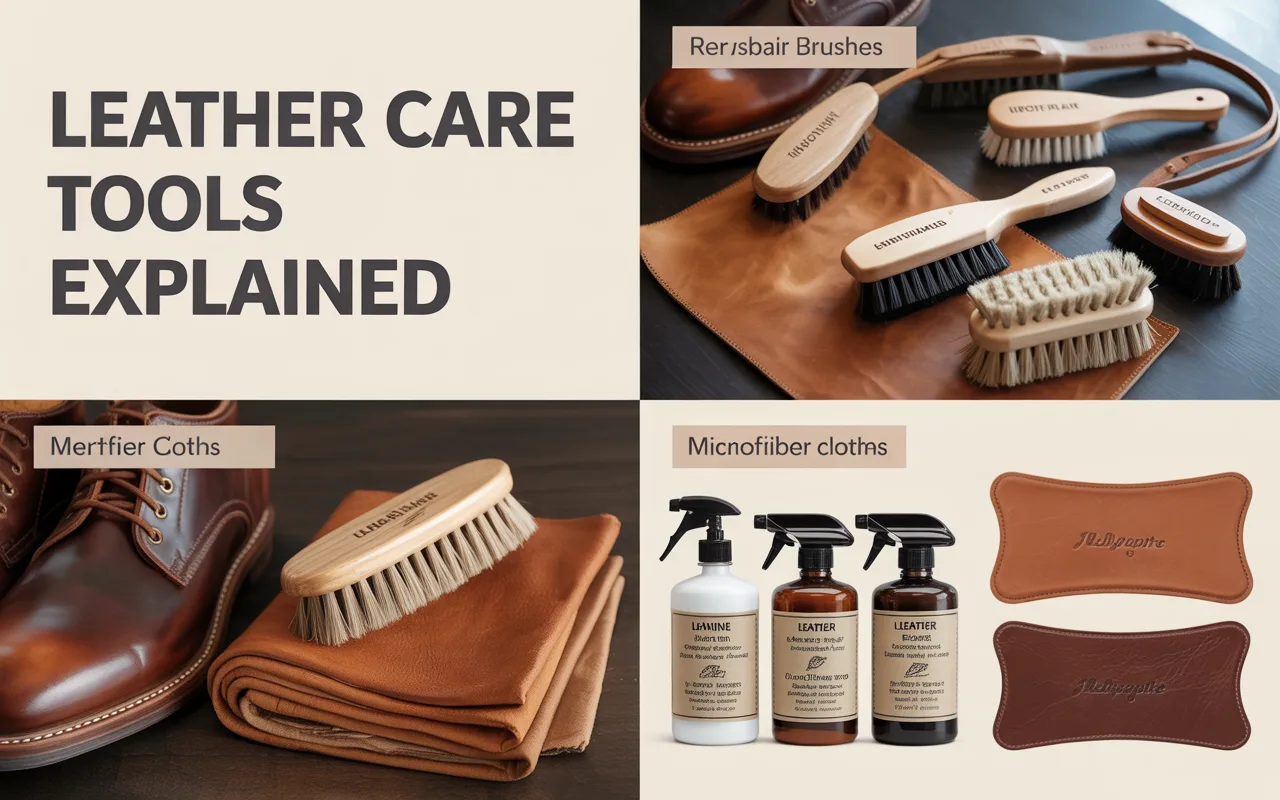
Everything about leather care tools explained simply and clearly. Learn about brushes, conditioners, cleaners, and applicators for jackets, sofas, shoes, and bags. Start caring for your leather items the right way today.
Keeping leather items looking their best does not need to be complicated. The secret lies in knowing which tools to use and when to use them. Many people buy expensive leather jackets, sofas, or bags but then feel unsure about how to clean and protect them properly. That confusion often leads to damage or premature aging of the leather. This guide will help you understand exactly what you need in your leather care kit.
Leather is a natural material that comes from animal hides. Just like human skin, it needs regular attention to stay soft and healthy. Without proper care, leather can dry out, crack, and lose its beautiful appearance. Dirt and body oils build up over time and break down the fibers. Sunlight can fade the color and make the leather brittle.
Using the correct leather care tools makes a huge difference in how your items age. A good leather jacket can last for decades with the right maintenance. Leather sofas become more comfortable and beautiful as they age, but only if they are conditioned regularly. Shoes last longer and keep their shape when you clean and polish them with the proper tools.
I have seen too many people throw away perfectly good leather items simply because they did not know how to care for them. The truth is that leather care is not difficult once you understand the basics. You do not need a lot of expensive equipment. You just need a few essential tools and the knowledge to use them correctly.
Leather Care Tools Explained: The Essential Items You Need
When people ask me about leather care tools explained in simple terms, I always start with the basics. You do not need to buy everything at once. Start with the essentials and build your collection as you become more comfortable with the process.
Cleaning Brushes: The Foundation of Good Leather Care
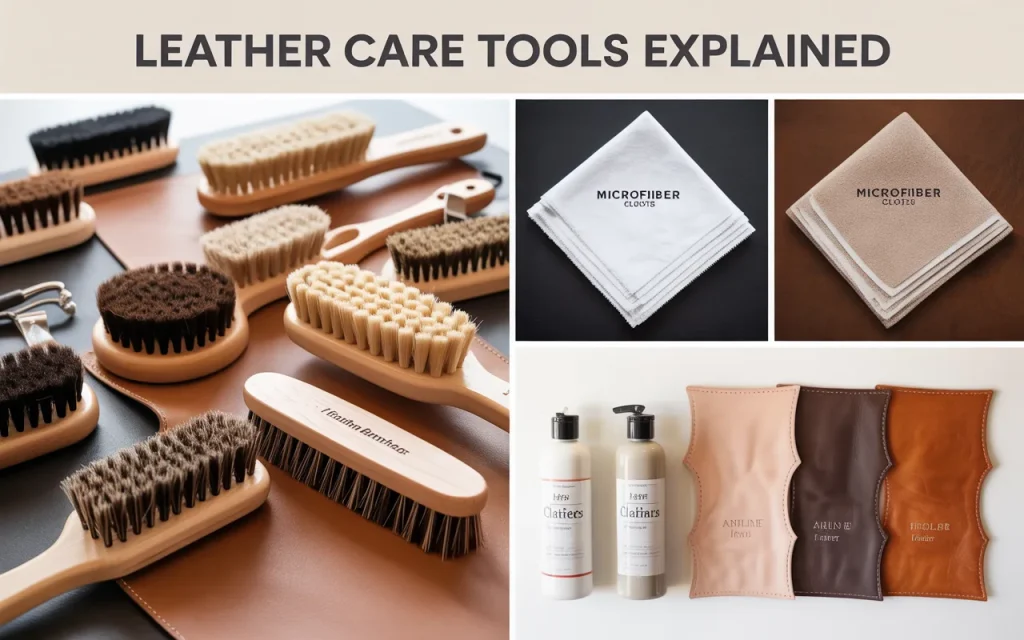
Soft brushes are the most important tools for regular leather maintenance. They remove dust and dirt without scratching the surface. Horsehair brushes are the best choice because the bristles are soft enough for delicate leather but firm enough to lift dirt from the grain.
You should brush your leather items gently before applying any cleaner or conditioner. This simple step prevents you from grinding dirt into the leather during the cleaning process. It also helps you see the true condition of the leather without a layer of dust on top.
For smooth leather, use a brush with medium-soft bristles. For suede and nubuck, you need a special brush with brass bristles to raise the nap and remove embedded dirt. Using the wrong brush on suede can ruin the texture permanently.
Cleaning Cloths: What to Use and What to Avoid
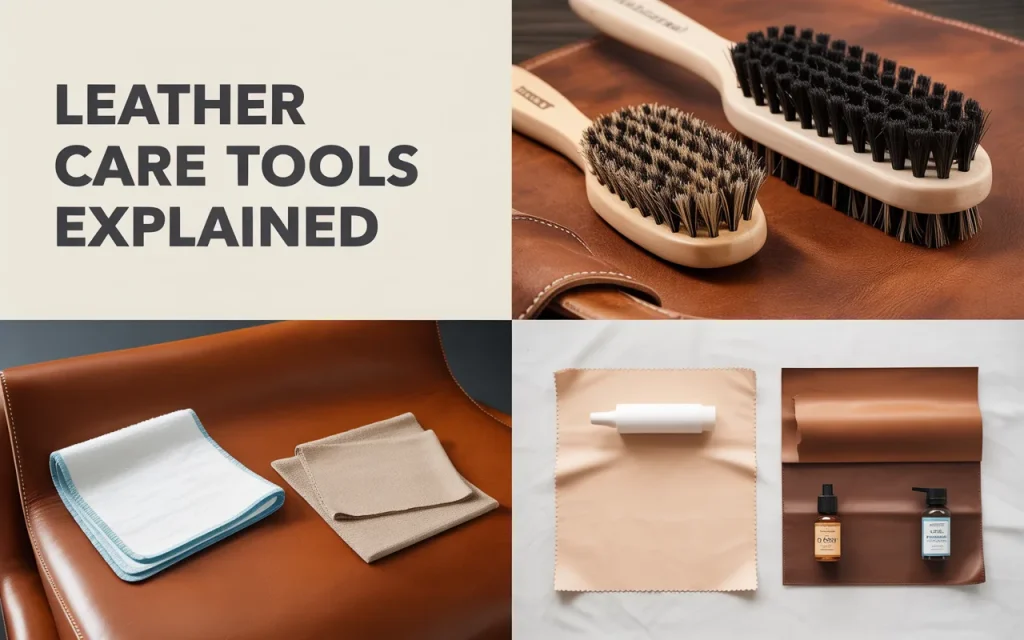
Microfiber cloths are perfect for leather care. They are soft, lint-free, and gentle on the surface. Cotton cloths can work too, but make sure they are clean and soft. Avoid paper towels at all costs. The wood fibers in paper towels can scratch leather and leave tiny scratches that add up over time.
You will need several cloths for different steps in the cleaning process. Use one cloth for applying cleaner, another for wiping it off, and a separate one for buffing conditioner. This prevents you from spreading dirt around or mixing products in ways that could damage the leather.
I recommend keeping a dedicated set of cloths just for your leather items. Wash them regularly with mild soap and no fabric softener. Fabric softener residue can transfer to your leather and interfere with the products you use.
Understanding Different Types of Leather Cleaners
Not all leather cleaners work the same way. The type of leather you have determines which cleaner you should use. Aniline leather, which has no protective coating, needs very gentle cleaners. Pigmented leather, which has a surface coating, can handle stronger products.
pH-Balanced Cleaners for Everyday Use
Most leather items benefit from pH-balanced cleaners. These products clean without stripping natural oils or damaging the surface. They lift dirt and grime gently and rinse away easily. Look for cleaners specifically made for leather rather than all-purpose cleaners that might be too harsh.
Apply the cleaner to your cloth first, not directly to the leather. This gives you better control over how much product you use. Work in small sections and use gentle circular motions. Do not soak the leather. You want it damp, not wet.
Saddle Soap for Deep Cleaning
Saddle soap has been used for generations to clean leather. It contains waxes that clean and condition at the same time. It works well for heavily soiled items like work boots or saddles. However, you must use it carefully. Too much water with saddle soap can damage leather.
Wet your cloth, rub it on the saddle soap to create a lather, and then apply to the leather. Work the lather in gently and wipe away the residue with a clean damp cloth. Let the leather dry completely before conditioning.
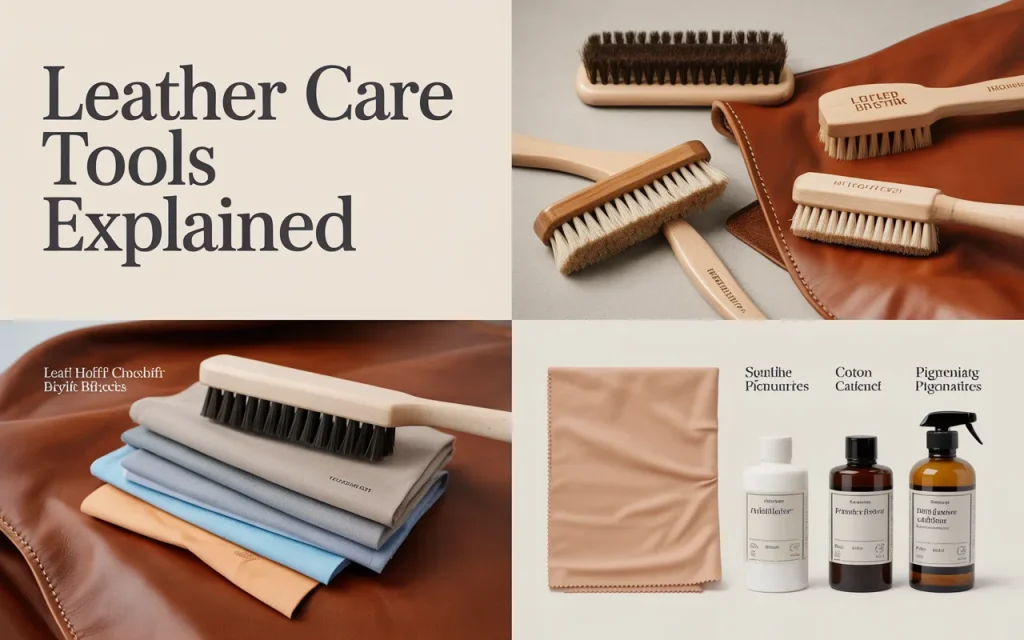
Table 1: Comparison of Common Leather Cleaners
| Cleaner Type | Best For | What It Does | Important Note |
|---|---|---|---|
| pH-Balanced Cleaner | Everyday cleaning on all leather types | Lifts dirt gently without damage | Safe for most applications |
| Saddle Soap | Heavy soil on boots and saddles | Cleans and adds light wax protection | Use minimal water |
| Leather Deglazer | Preparing leather for dyeing | Removes factory finishes | Very harsh, not for regular use |
| Vinegar Solution | Homemade cleaning for mild soil | Cuts grease and disinfects | Test on hidden area first |
Conditioners and Their Application Tools
Leather needs moisture to stay flexible. Conditioners replace natural oils that leather loses over time. Without regular conditioning, leather becomes dry and starts to crack. The cracks often start small but grow larger until the leather falls apart.
Sponge Applicators for Even Coverage
Soft sponge applicators help you spread conditioner evenly across the leather surface. They do not absorb too much product, so most of the conditioner stays on the leather where it belongs. Look for sponge applicators with a smooth surface rather than a rough texture.
Apply conditioner in thin, even layers. Thick layers do not absorb better and can leave sticky residue. Let the conditioner sit for the time recommended on the bottle. Usually fifteen to thirty minutes is enough for the leather to drink in the oils.
Dauber Bottles for Precise Application
Some conditioners come in bottles with daubers attached. These felt-tipped applicators let you put conditioner exactly where you want it. They work well for small areas, stitching lines, and detailed work. You can also buy empty dauber bottles and fill them with your preferred conditioner.
Using a dauber gives you more control than a cloth or sponge. You can work conditioner into creases and corners without getting product on areas that do not need it. This precision saves product and prevents buildup in unwanted places.
Specialized Tools for Different Leather Types
Different leathers need different care approaches. Understanding your leather type helps you choose the right tools and products. When I explain leather care tools explained by leather type, people finally understand why their previous attempts did not work well.
Suede and Nubuck Care Tools
Suede and nubuck have a napped surface that feels soft and velvety. This texture requires special tools because standard brushes and cloths can damage the nap. A brass bristle brush lifts the nap and removes surface dirt. A suede eraser rubs away spots and stains without water.
You should brush suede regularly to keep the nap looking fresh. Brush in one direction to maintain a consistent texture. For stubborn stains, hold the item over steam from a kettle and then brush gently. This relaxes the fibers and helps them release dirt.
Patent Leather Care
Patent leather has a high-gloss coating that shows every fingerprint and smudge. It needs gentle cleaning with a soft, damp cloth. Harsh cleaners can cloud the glossy finish. Special patent leather cleaners exist, but mild soap and water often work fine.
After cleaning, buff patent leather with a soft cloth to restore the shine. You can also use a tiny amount of petroleum jelly on a cloth to add extra gloss. Never use regular shoe polish on patent leather because it will not absorb and will look streaky.
Protection Tools and Products
Cleaning and conditioning keep leather healthy, but protection keeps it safe from future damage. Protective products create a barrier against water, stains, and UV rays.
Spray Applicators for Even Protection
Many leather protectants come in spray bottles. Spraying gives you even coverage without disturbing the leather surface. Hold the bottle about six inches away and use steady sweeping motions. Do not spray too much in one spot or it will run.
Let the protectant dry completely before using the item. This usually takes a few hours. Water-based protectants dry faster than solvent-based ones. Check the product instructions for specific drying times.
Applicator Pads for Waxes and Creams
Some protectants come in paste or cream form. These need applicator pads to work them into the leather. The pads help you apply a thin, even layer that absorbs properly. Look for pads with a smooth side for application and a slightly rough side for buffing.
Work waxes and creams into the leather using small circular motions. Let them sit for a few minutes, then buff with a clean cloth. The buffing step brings out the shine and removes excess product that could attract dirt.
Table 2: Leather Protection Methods Compared
| Protection Type | Application Tool | Best For | Reapplication Frequency |
|---|---|---|---|
| Spray Protectant | Spray bottle | Quick coverage on large items | Every 3-6 months |
| Leather Wax | Applicator pad | Adding shine and water resistance | Every 2-3 months |
| Cream Polish | Soft cloth | Color restoration and light protection | As needed for color |
| Waterproofer | Spray or sponge | Outdoor leather items | Before wet seasons |
Storage Tools That Protect Your Leather
How you store leather matters just as much as how you clean it. Proper storage tools prevent damage when you are not using your leather items.
Shoe Trees for Leather Footwear
Wooden shoe trees absorb moisture from inside your shoes after wearing. They also help shoes keep their shape and prevent creases from becoming permanent. Cedar wood works best because it absorbs moisture and smells nice.
Put shoe trees in your leather boots and shoes as soon as you take them off. Let the trees work overnight to draw out moisture. In the morning, your shoes will be fresh and ready to wear again.
Garment Bags for Leather Clothing
Leather jackets and clothing need breathable garment bags. Plastic bags trap moisture and can cause mold growth. Cotton or canvas bags let air circulate while protecting from dust.
Always hang leather clothing on wide, padded hangers. Thin wire hangers create pressure points that can stretch and distort the leather over time. The weight of a leather jacket pulls down on narrow hangers and creates permanent shoulder bumps.
Professional Tools for Advanced Leather Care
As you become more experienced with leather care, you might want to try more advanced tools. These tools handle specific problems that basic tools cannot fix.
Heat Guns for Leather Repair
Heat guns help when removing creases or shrinking stretched leather. The gentle heat relaxes the fibers so you can reshape them. You must be very careful with heat guns because too much heat damages leather permanently.
Use the lowest heat setting and keep the gun moving constantly. Never hold it in one spot. Work in small areas and check the temperature with your hand frequently. If it feels too hot for your skin, it is too hot for the leather.
Edge Bevelers and Burnishers
If you do leathercraft or repair leather edges, edge bevelers and burnishers become important tools. Edge bevelers cut a smooth angle on raw leather edges. Burnishers rub the edges to create a smooth, finished surface.
These tools require practice to use well. Start on scrap leather pieces before working on your good items. Watch videos from experienced leather workers to learn proper technique.
Common Mistakes People Make With Leather Care Tools
Even with the best intentions, people often make mistakes when caring for leather. Knowing these common errors helps you avoid them.
Using too much water is probably the most frequent mistake. Water stains leather and can cause it to stiffen as it dries. Always use the minimum amount of moisture needed. Your cleaning cloth should be damp, not wet.
Another mistake is using products not meant for leather. Olive oil, vinegar, and furniture polish all get recommended online, but they can damage leather over time. Olive oil goes rancid and smells bad. Vinegar is too acidic. Furniture polish leaves residue that clogs leather pores.
Skipping the testing step causes many problems. Always test any new product on a hidden area first. Wait twenty-four hours to see how the leather reacts. Different dyes and finishes respond differently to products. Testing prevents disasters on visible areas.
How Often Should You Use Your Leather Care Tools?
Creating a regular care schedule keeps your leather looking good without overworking it. Different items need different frequencies of care.
Items you use daily, like shoes or a favorite bag, need attention every few weeks. Wipe them down and condition them monthly. Items you use occasionally, like a dressy jacket, can go longer between treatments. Check them every season and clean as needed.
Leather furniture needs cleaning and conditioning two to four times per year, depending on use. High-traffic areas might need more frequent attention. Watch for signs of drying or fading and respond when you see them.
“As a leather craftsman with thirty years of experience, I tell my customers that regular brushing is more important than deep cleaning. A quick brush once a week removes the grit that acts like sandpaper on leather fibers. This simple habit extends the life of leather items more than any expensive product.” – Thomas Keller, Master Leather Craftsman
Building Your Leather Care Kit
You do not need to buy everything at once. Start with the basics and add tools as you need them.
For most people, a starter kit should include a soft horsehair brush, a pack of microfiber cloths, a pH-balanced leather cleaner, and a good conditioner. This combination handles ninety percent of leather care needs. Add a suede brush if you have suede items, and a spray protectant for items exposed to weather.
Store your leather care tools in a clean, dry place. Keep products away from extreme temperatures. Heat and cold can separate ingredients and make products less effective. Check expiration dates and replace old products that have changed consistency or smell.
Environmental Considerations in Leather Care
More people now think about the environmental impact of their care products. Many leather care companies now offer eco-friendly options. These products use natural ingredients and biodegradable packaging.
Water-based products generally have less environmental impact than solvent-based ones. They also have less odor and are safer to use indoors. Look for products that list their ingredients clearly and avoid harsh chemicals.
Some traditional leather care methods use natural materials that work well and have minimal environmental impact. Beeswax, for example, makes an excellent leather conditioner and waterproofing agent. It comes from a renewable source and biodegrades completely.
Troubleshooting Common Leather Problems
Even with good care, leather sometimes develops problems. Knowing how to handle these issues saves your items from damage.
Water Spots
Water spots happen when moisture dries unevenly on leather. To fix them, lightly dampen the entire panel with distilled water using a spray bottle. Let it dry naturally. The even moisture distribution often makes spots disappear.
If spots remain, clean the whole area with leather cleaner and recondition. Sometimes the spots are actually dirt that water pushed into the leather. Cleaning removes that trapped dirt.
Color Transfer
Light-colored leather can pick up color from dark clothing or other materials. This often happens with new jeans on leather car seats or sofas. Remove color transfer with a gentle cleaner made for that purpose. Test first to make sure the cleaner does not remove leather dye too.
For stubborn transfer, a leather deglazer might work, but use it only as a last resort. Deglazers remove the protective finish along with the transferred color. You will need to reapply finish after using them.
“People often panic when they see the first signs of wear on their leather furniture. They reach for harsh cleaners that strip away the patina that makes leather beautiful. A little wear adds character. Learn to distinguish between damage and natural aging.” – Patricia Nguyen, Furniture Restoration Specialist
The Cost of Leather Care Tools
Good leather care tools cost money, but they cost much less than replacing leather items. A basic set of quality tools and products costs about the same as one good meal out. That small investment protects items worth hundreds or thousands of dollars.
Cheap tools rarely work well and can actually damage leather. A low-quality brush might have stiff bristles that scratch. Inexpensive cloths might leave lint behind. Spend a little more for tools that will last and perform properly.
Remember that you will use these tools for years. Spread the cost over that time and the investment becomes tiny. Buying quality once costs less than replacing cheap tools multiple times.
Frequently Asked Questions
How do I know which leather care tools I really need?
Start with a soft brush, microfiber cloths, a gentle cleaner, and a conditioner. This basic set works for most leather items. Add specialized tools only if you have specific leather types like suede or if you notice problems that basic tools cannot solve.
Can I use baby wipes to clean leather?
Baby wipes are not recommended for leather. They contain moisturizers and other ingredients not meant for leather. These ingredients leave residue that builds up over time and can damage the leather. Stick to products made specifically for leather.
How often should I condition my leather jacket?
Condition your leather jacket two to four times per year, depending on how often you wear it and the climate where you live. Dry climates need more frequent conditioning. Watch for signs of dryness like lighter color or stiff feel.
What is the best way to remove ink stains from leather?
Ink stains are difficult to remove and often require professional help. For fresh ink, try a leather cleaner designed for stain removal. Dab gently, do not rub. Rubbing spreads the ink. If home methods do not work, take the item to a professional leather cleaner.
Do I need different tools for different leather colors?
The tools themselves do not need to change for different colors. However, you should use separate cloths for dark and light leather to prevent color transfer. Clean your brushes thoroughly between uses on different colors.
Can I use the same tools on leather shoes and leather furniture?
Yes, the same basic tools work on all smooth leather items. Just make sure your tools are clean before moving from one item to another. Dirt from shoes can scratch furniture if you use the same dirty brush.
Conclusion
Taking care of leather does not need to feel overwhelming. When you have leather care tools explained clearly, you can see that the process is simple and straightforward. A few quality tools used regularly will keep your leather looking beautiful for many years.
Start with the basics and learn how your leather responds to different products. Pay attention to how it looks and feels. Your leather will tell you what it needs. Dry spots mean condition more often. Dull areas might need cleaning. Cracking means you waited too long between treatments.
The time and money you invest in leather care tools pay off every time you use your favorite leather items. A well-cared-for leather jacket becomes softer and more comfortable with age. Leather boots that receive regular cleaning and conditioning last through years of wear. Leather furniture develops a rich patina that makes it uniquely yours.
“After forty years of working with leather, I still get excited when a customer brings in a piece they have cared for over many years. The leather tells a story of their life and their care. That is what makes leather special. It records our history while serving us faithfully.” – Robert Chen, Third-Generation Leather Artisan
Remember that leather care is not about perfection. It is about preservation. Your leather items will show their age, and that is okay. The goal is to keep them healthy and functional, not to keep them looking brand new forever. With the right tools and consistent care, your leather items will serve you well and develop character that no new item can match.
One Comment