The complete friendly guide to leash train a puppy. Get step-by-step tips for calm walks, choosing gear, and fixing pulling. Start your happy walk journey today!
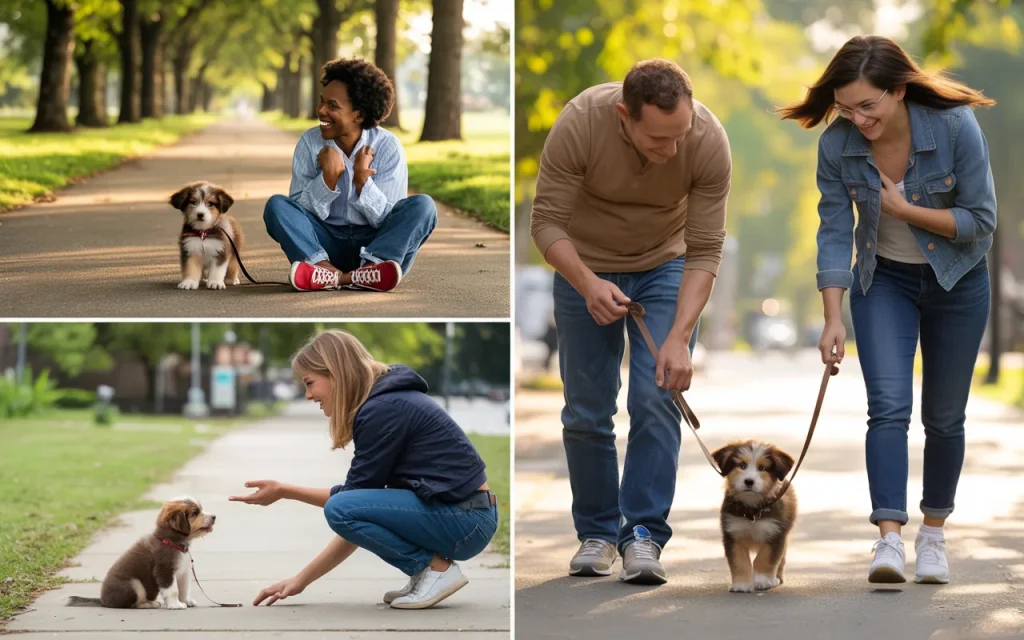
Does the thought of a peaceful walk with your puppy feel like a far-off dream? Are you being dragged down the street by a tiny, furry force of nature? You are not alone. Every dog owner starts at the beginning. The good news is, with some patience and the right approach, you can teach your puppy to walk nicely on a leash. It is a key skill for safety, bonding, and fun. This guide will show you exactly how to leash train a puppy in a positive, stress-free way.
Let’s get you and your pup ready for many happy walks ahead.
Why Leash Training Matters So Much
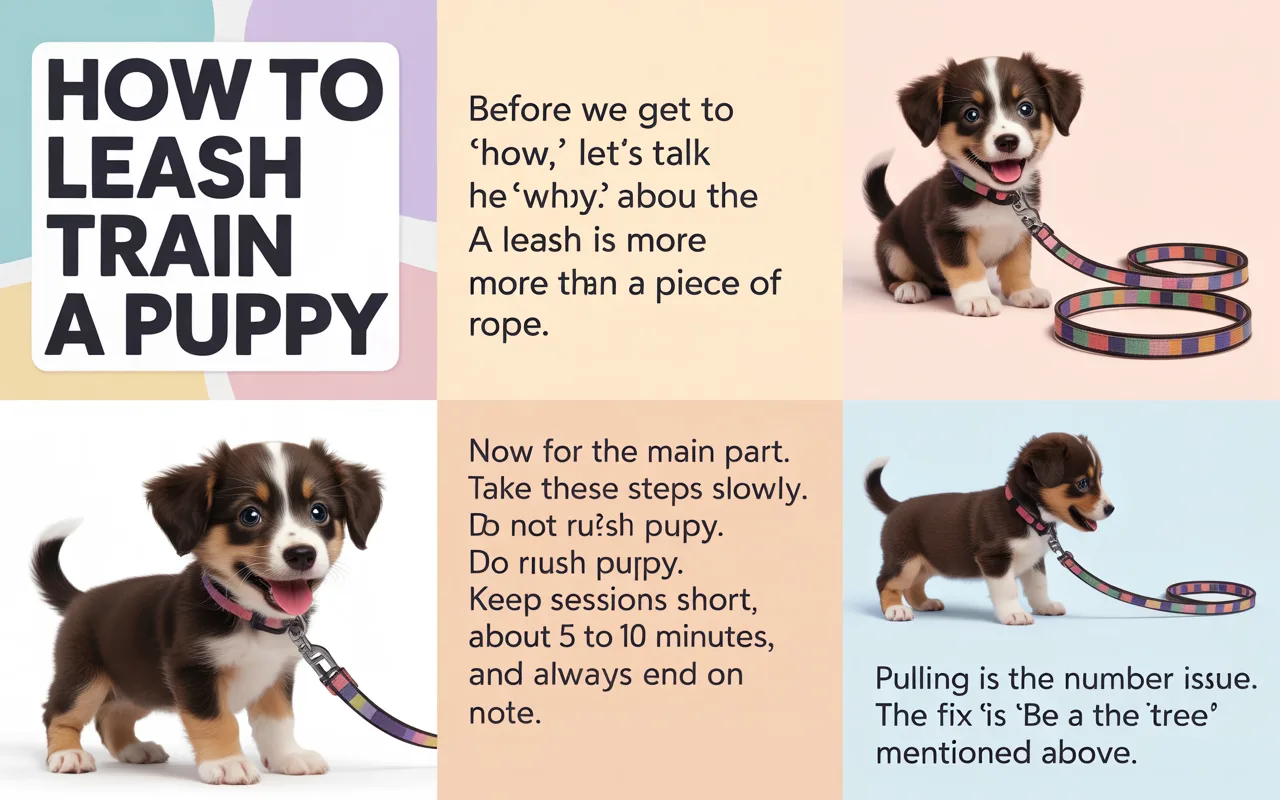
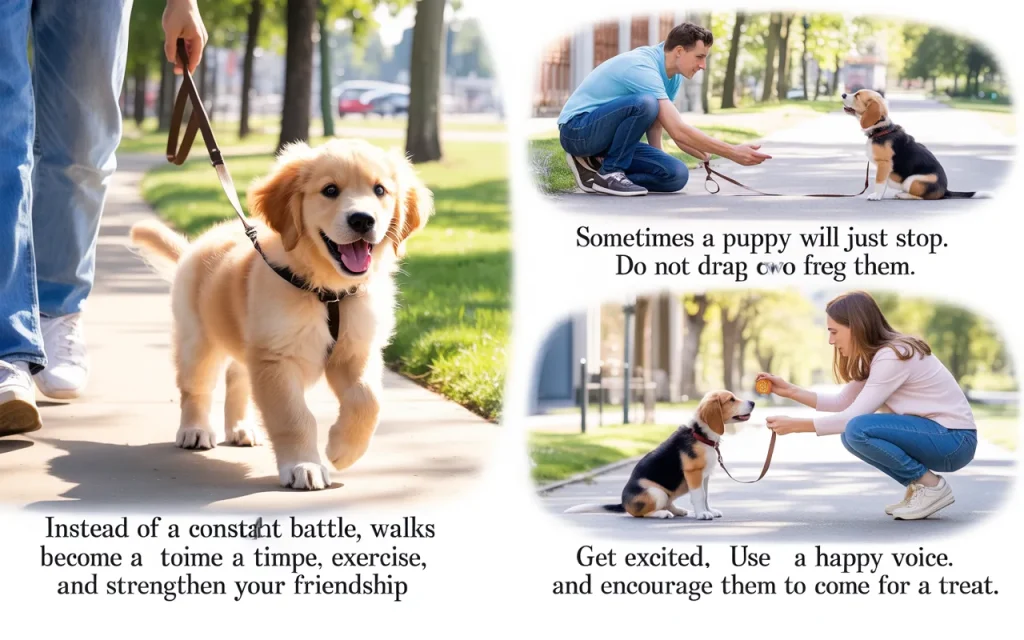
Before we get to the “how,” let’s talk about the “why.” A leash is more than just a piece of rope. It is your puppy’s connection to you in a big, busy world. Good leash manners keep your puppy safe from cars, other animals, and getting lost. It also makes walks enjoyable for both of you. Instead of a constant battle, walks become a time to explore, exercise, and strengthen your friendship.
As the famous dog trainer Brian Kilcommons once said, “The leash is not for steering, it’s for communication.” This is a powerful idea. The leash should be a gentle way to talk to your puppy, not a tool for pulling them around.
What You Need Before You Start
You do not need much to begin, but having the right gear makes a big difference. Here is a simple list:
Essential Leash Training Gear
| Item | Why It Helps |
|---|---|
| A Flat Collar or Harness | Holds ID tags. A harness is often kinder for pups who pull. |
| A Standard 6-Foot Leash | Gives enough space to explore but keeps control. Avoid retractable leashes for training. |
| Tiny, Soft Training Treats | Your puppy’s paycheck for a job well done! |
| A Positive Attitude | Your patience is the most important tool. |
Step-by-Step: How to Leash Train a Puppy
Now for the main part. Take these steps slowly. Do not rush your puppy. Keep sessions short, about 5 to 10 minutes, and always end on a good note.
Step 1: Make Friends with the Gear
Your puppy might find a collar or harness strange at first. Let them sniff it. Give them treats just for looking at it. Then, put it on for very short periods inside the house while you play or feed them. The goal is to make the gear a sign of good things, not something scary.
Step 2: The First Connection Inside
Clip the leash on indoors where it is safe and quiet. Let your puppy drag it around under your watch. Then, pick up the end. Stand still. The second your puppy looks at you or moves toward you, say “Yes!” and give a treat. Do this many times. You are teaching that paying attention to you while on the leash is wonderful.
Step 3: Start Moving Together
Now, take a few steps. If your puppy follows you, reward them right away. If they plant their feet or pull, just stop and wait. Do not pull back. Be a tree. When the leash gets slack, praise and reward, then try again. This step teaches that pulling makes walks stop, but walking with you makes walks go.
Step 4: Take the Show Outside
Outdoor walks are the big test. There are so many smells and sounds! Start in a quiet place, like your yard or an empty driveway. Expect your puppy to be more distracted. Use higher-value treats, like small bits of chicken or cheese. Keep your sessions very short outside at first.
Solving Common Leash Training Problems
You will hit some bumps in the road. That is normal. Here is how to handle two big ones.
What to Do If Your Puppy Pulls
Pulling is the number one issue. The best fix is the “be a tree” method mentioned above. As soon as your puppy pulls, stop walking. Wait for them to come back and make the leash loose. Then, start walking. It might take many repeats, but they will learn that pulling gets them nowhere, literally. Another tip is to suddenly change direction when they pull ahead. This teaches them to watch where you are going.
What to Do If Your Puppy Sits or Lies Down
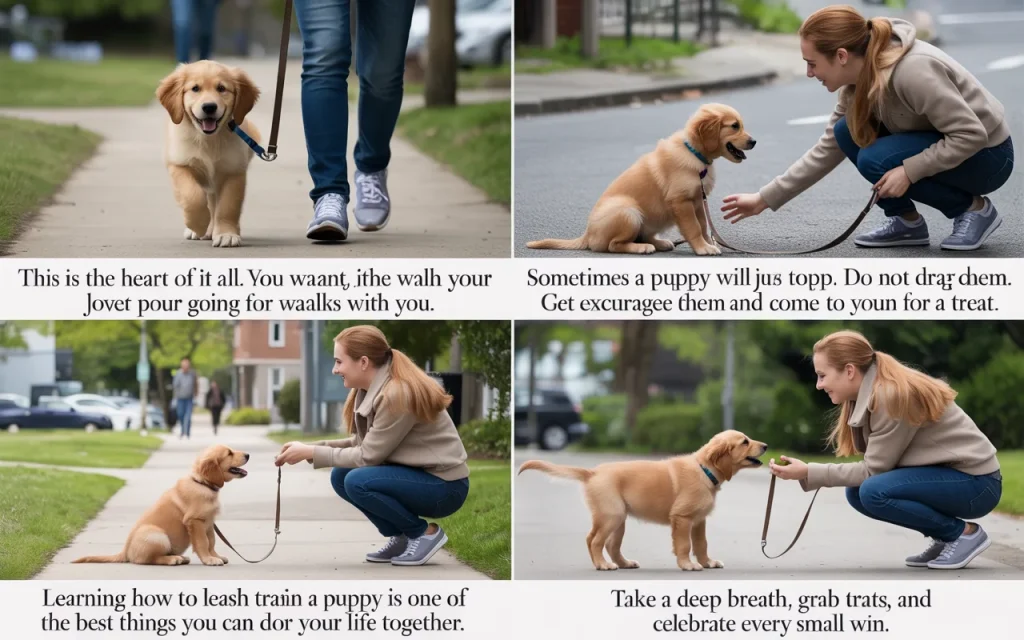
Sometimes a puppy will just stop. Do not drag them. Get excited, use a happy voice, and encourage them to come to you for a treat. You can also gently tap your leg. If they are tired or overwhelmed, it is okay to pick them up and try again later. Patience is key.
Choosing Your Walking Gear
The right collar or harness can help your training. Here is a simple comparison:
Collar vs. Harness for Training
| Type | Best For | Things to Note |
|---|---|---|
| Flat Collar | Puppies who are already calm on leash. | Simple and good for holding tags. Can encourage pulling if not used with training. |
| Front-Clip Harness | Puppies who are learning not to pull. | The clip on the chest gently turns the puppy toward you if they pull. Very helpful for training. |
| Back-Clip Harness | Puppies who are not strong pullers. | Easy to put on and comfortable for the dog. Does not discourage pulling as much. |
Making Leash Training a Positive Experience
This is the heart of it all. You want your puppy to love going for walks with you. Use lots of praise, treats, and happy talk. If you get frustrated, take a break. Your puppy can feel your stress. Remember, they are not trying to be bad. They are just learning.
As animal expert Dr. Ian Dunbar notes, “Reward the behavior you want and you will get more of it. It’s that simple.” This is the golden rule of leash training.
Frequently Asked Questions
Q: What age should I start to leash train a puppy?
A: You can start as soon as you bring your puppy home, usually around 8 weeks old. Begin with getting them used to a collar and short, fun indoor sessions.
Q: My puppy bites the leash! What do I do?
A: This is common. Have a toy ready to swap for the leash. When they bite the leash, stop walking, offer the toy, and praise them for biting that instead. Carrying a toy on walks can be a big help.
Q: How long does it take to leash train a puppy?
A: Every puppy is different. Some learn in a few weeks, others need a few months of steady practice. Consistency is more important than speed.
Q: Can I use a retractable leash?
A: It is better not to use a retractable leash for training. They teach the puppy that pulling makes the leash longer, which is the opposite of what you want. They can also be unsafe. Stick with a standard 6-foot leash for training.
Final Thoughts for Your Walking Journey
Learning how to leash train a puppy is one of the best things you can do for your life together. It builds trust, keeps you both safe, and opens the door to so many adventures. There will be days of perfect heel and days where you feel you are back at square one. That is okay. What matters is that you are helping your puppy learn how to live happily in our human world.
Take a deep breath, grab some treats, and celebrate every small win. The sight of your puppy happily trotting beside you, leash loose, looking up at you with trust, is worth every bit of effort. That is the goal.
The famous storyteller and dog lover Roger Caras had it right: “Dogs are not our whole life, but they make our lives whole.” The simple, shared joy of a good walk is a big part of that wholeness. You have got this. Happy walking.