We created this kitchen product comparison guide to help you choose cookware, knives, and appliances without confusion. Compare materials, prices, and features side by side. Save money and time with honest advice.
Shopping for kitchen items can feel like too much work. You walk into a store or open a website and see hundreds of pots, pans, knives, and gadgets. Everything looks good. But how do you know what really works? That is exactly why you need a good kitchen product comparison guide.
I have spent years testing kitchen tools. Some items broke after three months. Others lasted ten years. The difference was not always the price. Sometimes cheap stuff worked great. Sometimes expensive stuff failed. This article will help you ask the right questions before you buy.
We will look at cookware, knives, small appliances, and food storage. Each section includes a simple table to compare options. By the end, you will feel confident picking products that fit your cooking style and budget.
Why You Need a Kitchen Product Comparison Guide
Many people buy kitchen tools based on looks alone. That shiny pot or that sleek knife catches your eye. But beauty fades fast when food sticks to the pan or the knife goes dull after two uses.
A proper kitchen product comparison guide saves you from bad buys. It helps you see past the marketing and focus on what matters. Things like material quality, heat distribution, handle comfort, and cleaning ease.
You also save money. When you compare, you avoid buying duplicates. You stop wasting cash on trendy gadgets that just collect dust. Instead, you build a kitchen full of tools you actually use.
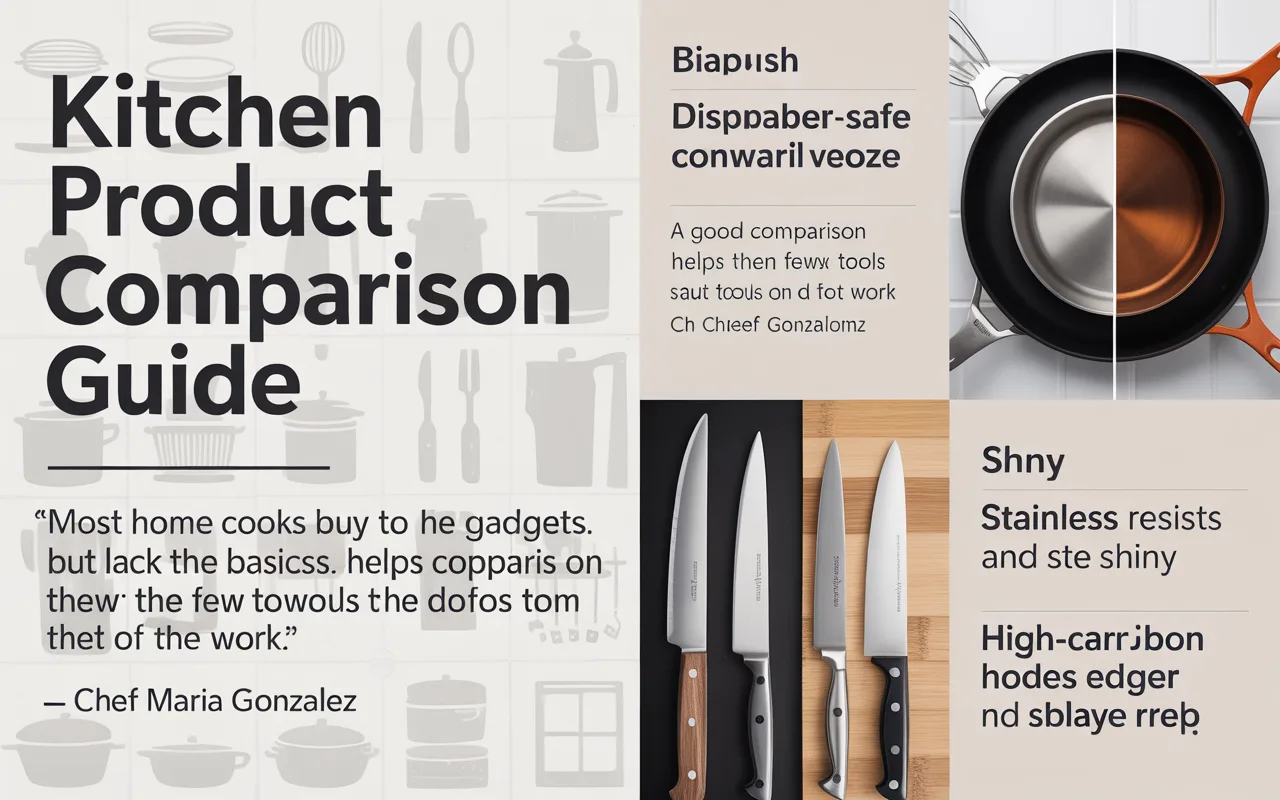
According to chef Maria Gonzalez, “Most home cooks buy too many gadgets but lack the basics. A good comparison helps them focus on the few tools that do most of the work.”
How to Compare Cookware Like a Pro
Cookware is the heart of your kitchen. But not all pots and pans are equal. Some heat unevenly. Some weigh a ton. Some lose their nonstick coating after a few months.
Material Matters
The material changes everything. Stainless steel lasts forever but needs some skill to cook with. Nonstick is easy but wears out. Cast iron holds heat well but weighs a lot. Copper heats fast but costs a bundle.
When you use a kitchen product comparison guide, look at material first. Ask yourself what you cook most. Eggs and fish? Go nonstick. Steaks and searing? Go stainless or cast iron. Everyday cooking? Try hard anodized aluminum.
Handle Design and Weight
People forget about handles until they drop a hot pan. A good handle stays cool on the stove and feels solid in your hand. It should not wiggle or feel cheap.
Weight also matters. Heavy pans feel sturdy but tire your wrists. Light pans are easy to handle but might warp over time. Find a balance that feels right for you.
Maintenance and Care
Some cookware goes in the dishwasher. Some demands hand washing and special care. Be honest about how much time you want to spend cleaning. If you hate scrubbing, avoid uncoated cast iron or copper.
Here is a simple comparison of common cookware types:
| Material | Heat Distribution | Weight | Maintenance | Best For |
|---|---|---|---|---|
| Stainless Steel | Even with layered bottom | Medium | Dishwasher safe | Searing, browning |
| Nonstick | Good | Light | Hand wash recommended | Eggs, fish, delicate foods |
| Cast Iron | Excellent, holds heat | Heavy | Hand wash, season regularly | Steaks, cornbread, frying |
| Hard Anodized | Very even | Medium | Usually dishwasher safe | Everyday cooking |
Knives: What to Look For
Good knives change your cooking life. Dull knives make chopping hard and dangerous. Sharp knives make prep work fast and fun. But picking knives confuses many people.
Blade Material
Most knives use either stainless steel or high-carbon steel. Stainless resists rust and stays shiny. High-carbon holds a sharper edge longer but needs more care. For most home cooks, good stainless steel works great.
Handle Comfort
You hold your knife more than any other tool. The handle must feel natural. It should not slip when wet. It should not have sharp edges that dig into your palm. Try holding knives before buying if you can.
Set vs. Single Knives
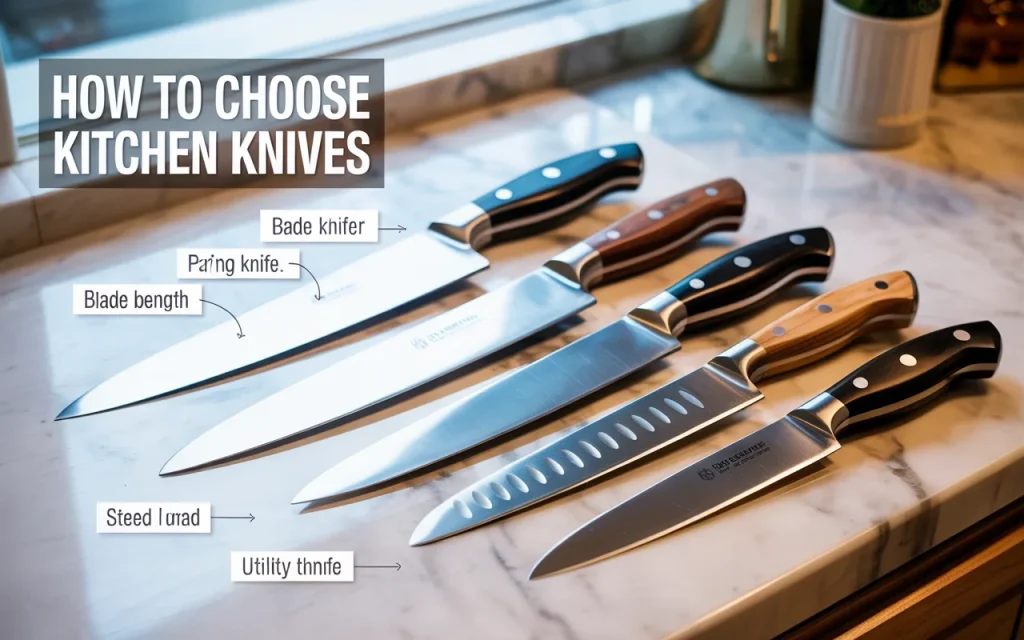
Big knife sets look nice on the counter. But do you really need twelve knives? Most cooks use only three: a chef’s knife, a paring knife, and a serrated knife. A kitchen product comparison guide often suggests buying these three good ones instead of a big set of average ones.
Chef David Chen says, “A sharp chef’s knife does the work of ten cheap knives. Spend your money on one great knife before buying anything else.”
Knife Comparison Table
Here is how different knife types compare for everyday use:
| Knife Type | Best Uses | Blade Length | Maintenance | Price Range |
|---|---|---|---|---|
| Chef’s Knife | Chopping, slicing, dicing | 8 inches | Sharpen every few months | $30-$200 |
| Paring Knife | Peeling, trimming, detail work | 3-4 inches | Sharpen occasionally | $10-$60 |
| Serrated Knife | Bread, tomatoes, soft fruits | 8-10 inches | Rarely needs sharpening | $15-$80 |
| Santoku | Similar to chef’s knife | 5-7 inches | Sharpen regularly | $40-$150 |
Small Appliances: Find What You Actually Use
Small appliances take up counter space and cost money. A kitchen product comparison guide helps you avoid buying machines that just sit in the cabinet.
Blenders vs. Food Processors
People mix these up all the time. Blenders handle liquids well. They make smoothies, soups, and shakes. Food processors handle solids better. They chop, slice, and make dough. If you cook a lot, you might need both. If you mostly drink smoothies, just get a blender.
Air Fryers vs. Toaster Ovens
Air fryers got popular for a reason. They make crispy food with less oil. But toaster ovens do more things. They toast, bake, broil, and sometimes air fry too. Think about your counter space and what you cook most.
Stand Mixers vs. Hand Mixers
Stand mixers cost more but handle heavy dough easily. Hand mixers cost less and store easily. If you bake bread weekly, get a stand mixer. If you bake cookies once a month, a hand mixer works fine.
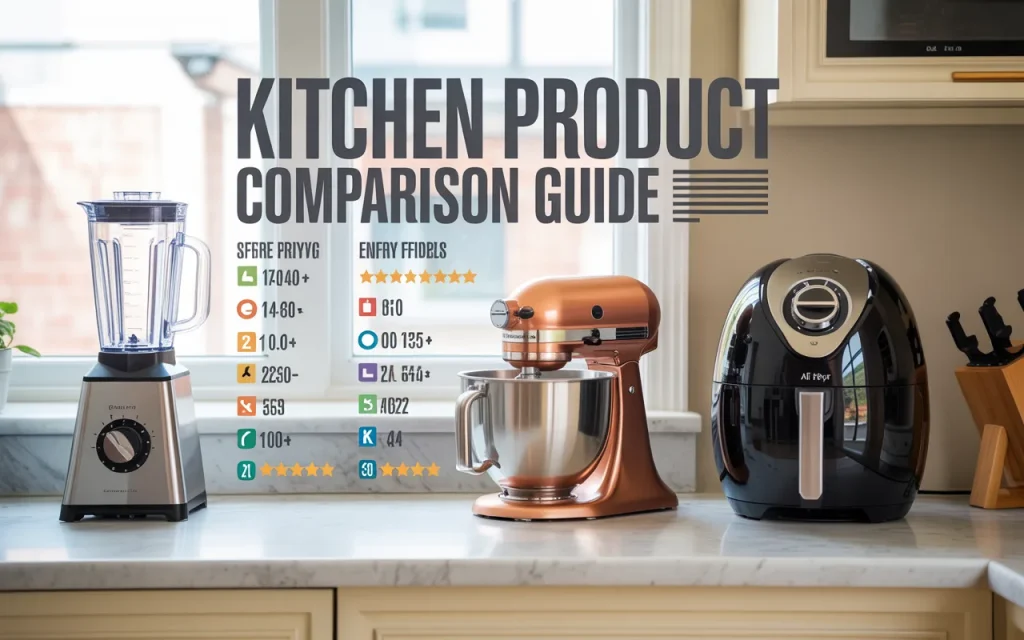
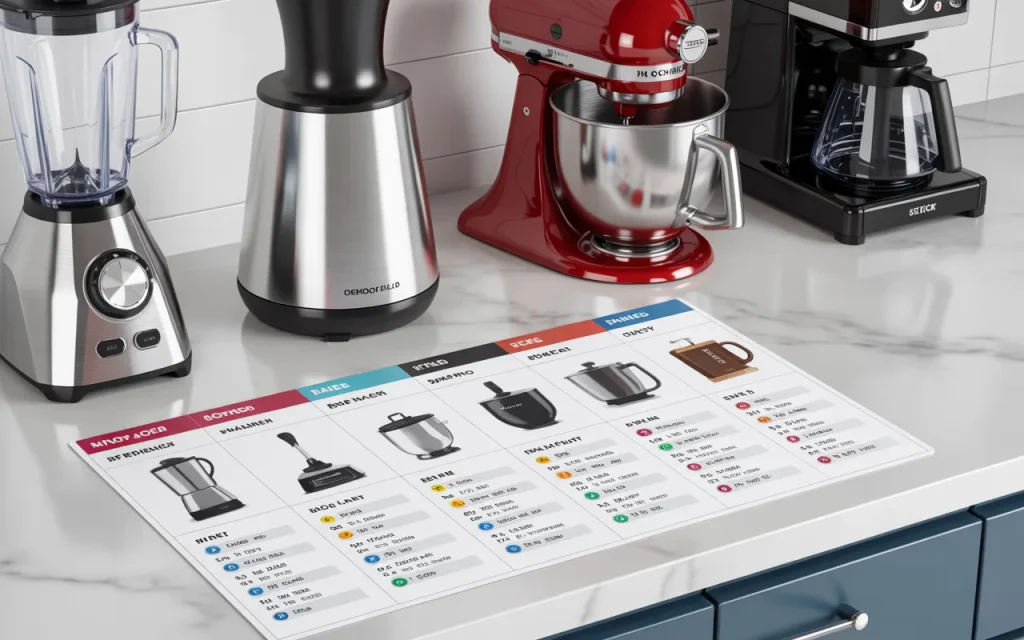
Here is a simple comparison of common small appliances:
| Appliance | Primary Use | Counter Space | Price Range | Best For |
|---|---|---|---|---|
| Blender | Liquids, smoothies, purees | Small to medium | $30-$500 | Drink makers, soup lovers |
| Food Processor | Chopping, slicing, dough | Medium | $50-$400 | Meal preppers, veggie choppers |
| Air Fryer | Crispy foods, reheating | Medium | $60-$300 | Snack lovers, small families |
| Toaster Oven | Toasting, baking, broiling | Medium to large | $50-$400 | Versatile cooks, small kitchens |
| Stand Mixer | Heavy mixing, dough | Large | $200-$600 | Regular bakers |
| Hand Mixer | Light mixing | Small | $15-$80 | Occasional bakers |
Food Storage: More Than Just Plastic Boxes
Food storage seems simple. But bad containers waste food and make a mess. Leaky lids, stained plastic, and lost covers frustrate everyone.
Glass vs. Plastic
Glass lasts longer and does not stain. It goes from fridge to oven safely. But glass breaks if dropped and weighs more. Plastic is light and cheap. But plastic stains, warps, and might have chemicals you worry about.
Lid Design Matters
A good lid seals tight. It does not crack after a few months. It stays attached so you do not lose it. Look for containers with silicone seals and sturdy locking tabs.
Size and Shape
Square containers pack better in the fridge than round ones. Different sizes help with different foods. Small ones for leftovers, medium for lunches, large for batch cooking. A good kitchen product comparison guide helps you pick sets that work together.
Home organizer Lisa Park notes, “Clear containers with straight sides are best. You see what is inside, and they stack neatly without wasting space.”
Budget vs. Premium: What Is Worth More Money?
Price tags tell only part of the story. Some expensive items truly last longer and work better. Some cheap items work just as well as expensive ones.
Where to Spend More
Cookware you use daily deserves better quality. A good skillet lasts decades. Knives also matter because sharpness affects everything. A stand mixer might be worth the cost if you bake often.
Where to Save
Simple tools like measuring cups, mixing bowls, and colanders work fine from cheaper brands. Utensils like spatulas and spoons do not need to cost much. Small appliances with simple functions also work well at lower prices.
Kitchen expert James Wilson says, “Spend on things that touch heat or sharp edges. Save on things that just hold food or stir things around.”
How to Read Product Reviews
Reviews help, but you must read them right. A kitchen product comparison guide teaches you what to look for in reviews.
Look for Long-Term Use
One week reviews do not tell much. Look for people who used the item six months or longer. They know if it holds up.
Ignore the Five-Star and One-Star Extremes
Some people love everything. Some people hate everything. Read the three and four star reviews. Those usually give balanced opinions.
Check for Specific Complaints
If ten people say the handle gets hot, believe them. If one person says it broke, maybe they dropped it. Look for patterns in what people say.
Frequently Asked Questions
How many pieces should I buy at once?
Start with fewer pieces. Buy a good skillet, a saucepan, and a chef’s knife. Cook with them for a month. Then decide what you actually need next.
Is nonstick coating safe?
Modern nonstick from trusted brands is safe when used correctly. Do not overheat empty pans. Do not use metal utensils on them. Replace them when the coating scratches or peels.
What is the best material for everyday cooking?
Hard anodized aluminum or tri-ply stainless steel work great for most cooking. They heat evenly, last long, and work on all stovetops including induction.
Should I buy a knife block set?
Usually not. Most sets include knives you never use. Buy individual knives that match your cooking style instead.
How often should I replace pots and pans?
Good quality pots last many years. Replace them when they warp, when nonstick peels, or when handles become loose.
What kitchen tool saves the most time?
A good chef’s knife saves the most time. It makes prep work faster and easier than any gadget. A food processor comes second for people who chop lots of vegetables.
Conclusion
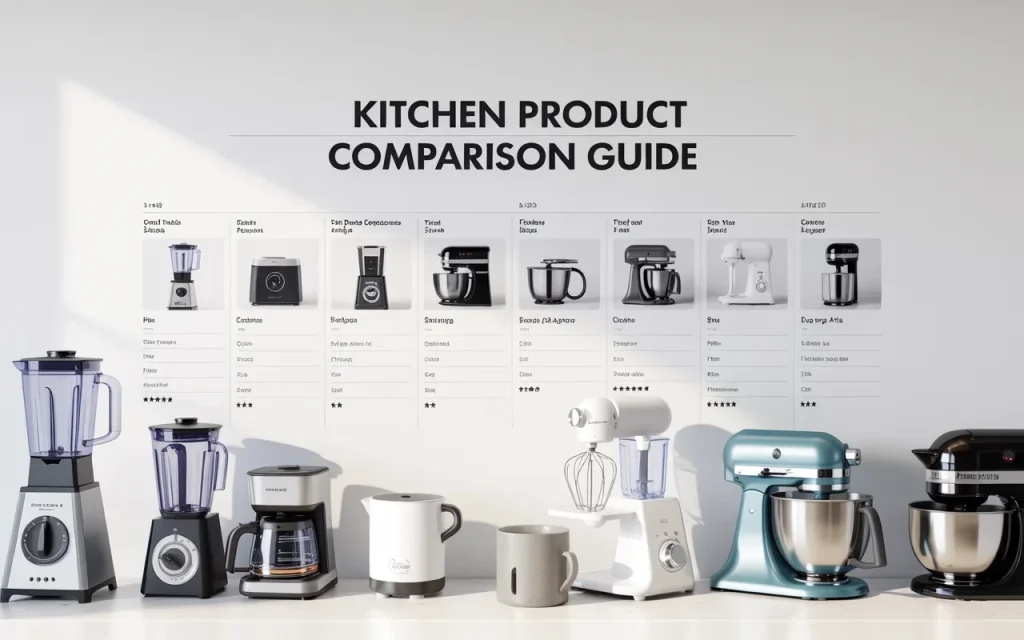
Shopping for kitchen items does not need to stress you out. Use this kitchen product comparison guide as your starting point. Think about what you actually cook. Consider how much time you want to spend cleaning. Be honest about your budget.
Remember that quality matters more than quantity. One good pan beats three cheap ones. One sharp knife beats a block of dull ones. Take your time, compare options, and buy things that will serve you well for years.
The best kitchen is not the one with the most stuff. It is the one with the right stuff. Tools that feel good in your hand. Tools that make cooking easier. Tools that last. Use this guide to find those tools for your own kitchen.
Happy cooking, and happy smart shopping.