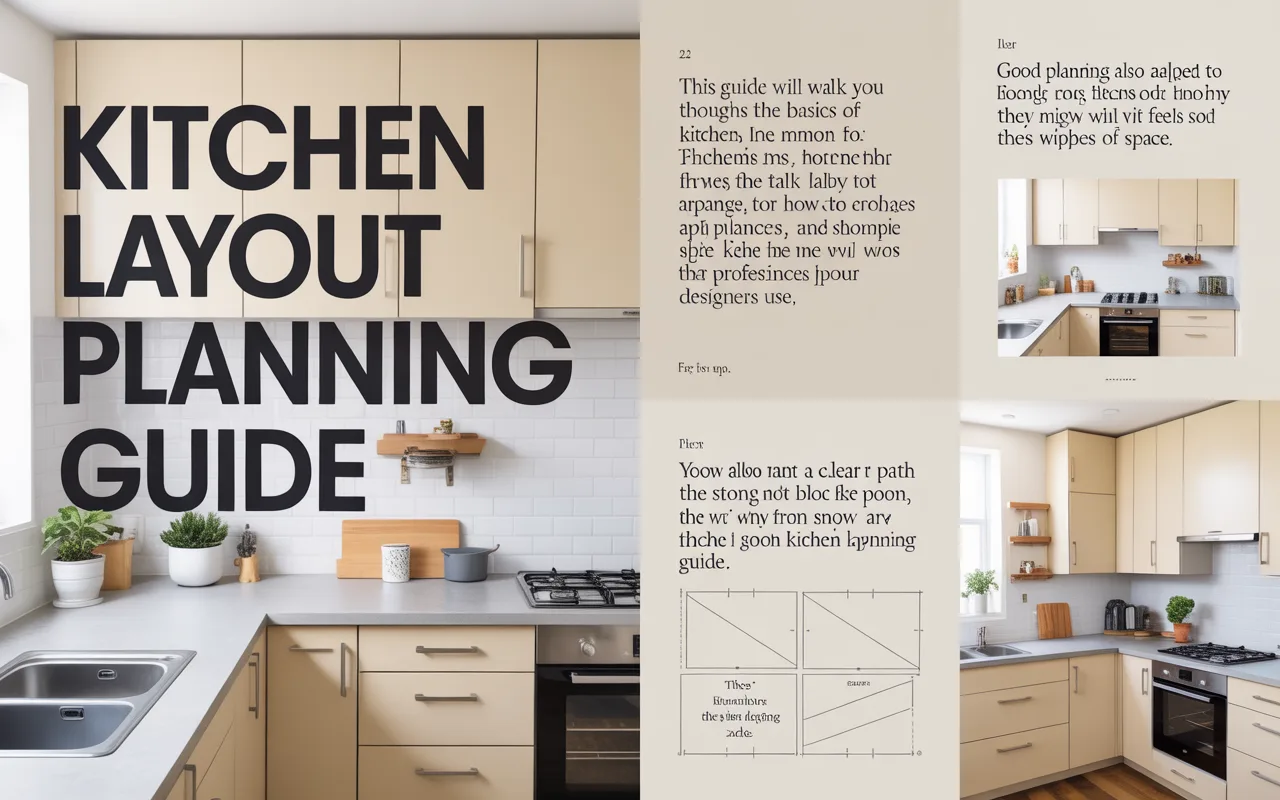
Use this kitchen layout planning guide to create a space that works for you. Learn about popular layouts, work triangles, and smart tips for your new kitchen.
Planning a new kitchen can feel like a big puzzle. You want a space that looks good, but more than that, you need a kitchen that works well for your daily life. Where should the sink go? How much space do you need between the counter and the island? These are real questions that need real answers.
I have helped many friends and family members think through their kitchen projects. The number one thing I have learned is that good planning saves you from years of frustration. A well-planned kitchen makes cooking easier, cleaning faster, and even helps keep the space more organized.
This guide will walk you through the basics of kitchen layout planning. We will look at the most common shapes for kitchens, talk about how to arrange your appliances, and share some simple rules that professional designers use. By the end, you will feel ready to plan a kitchen that truly fits your needs.
Why Good Kitchen Layout Planning Matters
Your kitchen is likely one of the busiest rooms in your home. You cook meals, pack lunches, maybe help kids with homework at the counter, or chat with friends while making coffee. If the layout is poor, every small task becomes harder.
Think about a kitchen where the trash bin is on the opposite side of the room from the main food prep area. You end up carrying vegetable peels across the floor, dropping bits as you go. Or imagine a dishwasher that opens right into the path where people walk. These small issues add up to daily frustration.
Sarah Johnson, a home organizer with 15 years of experience, says: “The best kitchens are not the biggest ones. They are the ones where the layout matches how the family actually lives. I see so many people try to copy magazine photos, but their own daily habits get ignored.”
Good planning also adds value to your home. Future buyers will notice if the kitchen feels right. They might not know why it feels good, but they will appreciate the smart use of space.
The Classic Work Triangle Explained
Before we talk about specific layouts, we need to cover one basic idea. It is called the work triangle.
The work triangle connects the three main areas where you work in the kitchen:
- The sink: Where you wash food and dishes.
- The fridge: Where you store food.
- The stove/oven: Where you cook food.
The idea is simple. You want these three points to form a triangle. The total distance around the triangle should be between 13 feet and 26 feet. If the triangle is too small, the kitchen feels cramped. If it is too big, you waste too many steps moving between tasks.
You also want a clear path between these points. An island or a table should not block the way from the sink to the stove. This triangle is the starting point for any good kitchen layout planning guide.
The Main Kitchen Layout Types
Most kitchens follow one of five basic shapes. Each shape has strengths and weaknesses. As you read through these, think about your own space and how you move in it.
The One-Wall Kitchen
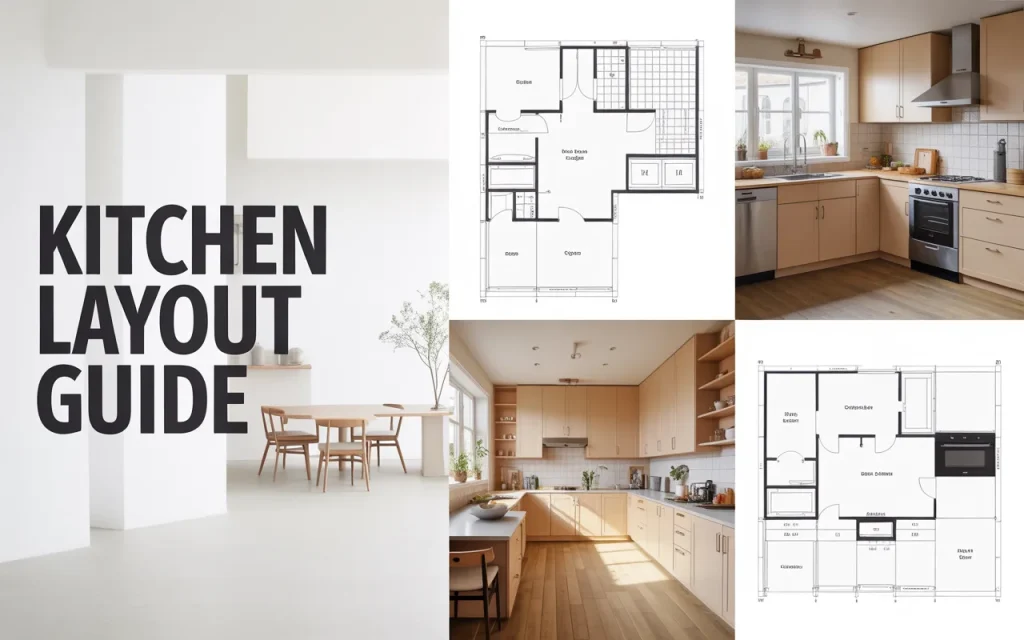
This layout puts everything along a single wall. It is common in small apartments, studios, or as a secondary kitchen in a basement.
How it works: The sink, fridge, and stove sit in a row. You work in a line, moving back and forth.
Good for: Small spaces, narrow rooms, or open-plan areas where you want the kitchen to blend into the living space.
Things to think about: You have limited counter space on either side of the stove and sink. This can make food prep tricky if you are cooking a big meal. The work triangle becomes a straight line, which means more walking back and forth.
A quick look at the one-wall kitchen:
| Feature | Consideration |
|---|---|
| Space needed | Works in rooms as narrow as 6 feet wide. |
| Best for | Singles, couples, or small apartments. |
| Main challenge | Limited counter space and storage. |
The Galley Kitchen
Also called a corridor kitchen, this layout has two parallel walls with a walkway between them. It is very efficient.
How it works: You typically put the sink and stove on one wall and the fridge on the other. You can turn from one counter to the other easily.
Good for: Smaller homes, rental properties, or anyone who wants a highly efficient workspace. Many restaurant kitchens use this layout because it minimizes steps.
Things to think about: The walkway width is very important. You need at least 4 feet between the counters so two people can pass, or one person can open lower cabinets and still have room behind them. If the walkway is too narrow, it feels like a tunnel.
Mark Chen, a kitchen designer from Portland, notes: “I love galley kitchens for people who actually cook a lot. Everything is right there. You just pivot, you don’t have to walk around an island. It is simple and fast.”
The L-Shaped Kitchen
This is one of the most popular and flexible layouts. It uses two adjoining walls to form an L shape.
How it works: The sink is often placed on one leg of the L, with the stove on the other. The fridge usually goes near the end of one leg. The corner where the two legs meet can be tricky, but smart cabinet solutions help.
Good for: Medium to large kitchens. It works well in open-plan homes because the L shape naturally defines the kitchen area without closing it off from the dining or living room.
Things to think about: The corner cabinet can become a dead space where items get lost. Look for pull-out shelves or lazy Susans to make that corner usable. You also have room to add a small table or an island in the open part of the room.
The U-Shaped Kitchen
This layout uses three walls, forming a U. It offers lots of counter space and storage.
How it works: You place appliances and cabinets on all three sides. This creates a very contained work zone. You can have the sink at the base of the U, with the stove on one side and the fridge on the other.
Good for: Larger kitchens or families who need plenty of storage. It gives you multiple countertops for big cooking projects.
Things to think about: If the U is too tight, it can feel closed in. You need enough space between the parallel legs of the U (at least 4 to 5 feet) so the person at the sink does not feel cramped. Also, the corners on both sides need careful planning to make them accessible.
The Island Kitchen
An island is not a full layout by itself. It is an addition to other layouts. You can add an island to an L-shaped or U-shaped kitchen, and sometimes even to a galley if the room is wide enough.
How it works: The island adds counter space, storage, and often seating. It can house a second sink or a cooktop.
Good for: Open-plan living, families who eat at the counter, and anyone who wants extra workspace.
Things to think about: You need space around the island. Aim for at least 42 inches of clearance on all sides. If you have multiple cooks, 48 inches is better. Also, think about what is inside the island. Do you want drawers for pots, or open space for stools?
Island at a glance:
| Feature | Suggestion |
|---|---|
| Minimum size | 4 feet by 6 feet is a good starting point. |
| Walk space | Keep 42 to 48 inches between island and counters. |
| Use ideas | Prep sink, breakfast bar, wine fridge, or just storage. |
Key Measurements You Should Know
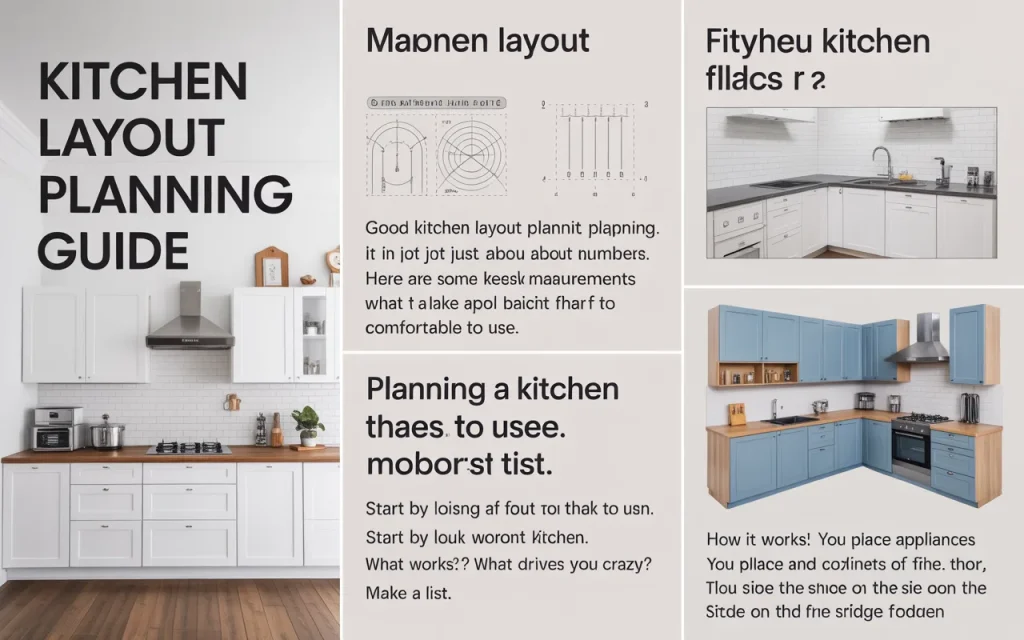
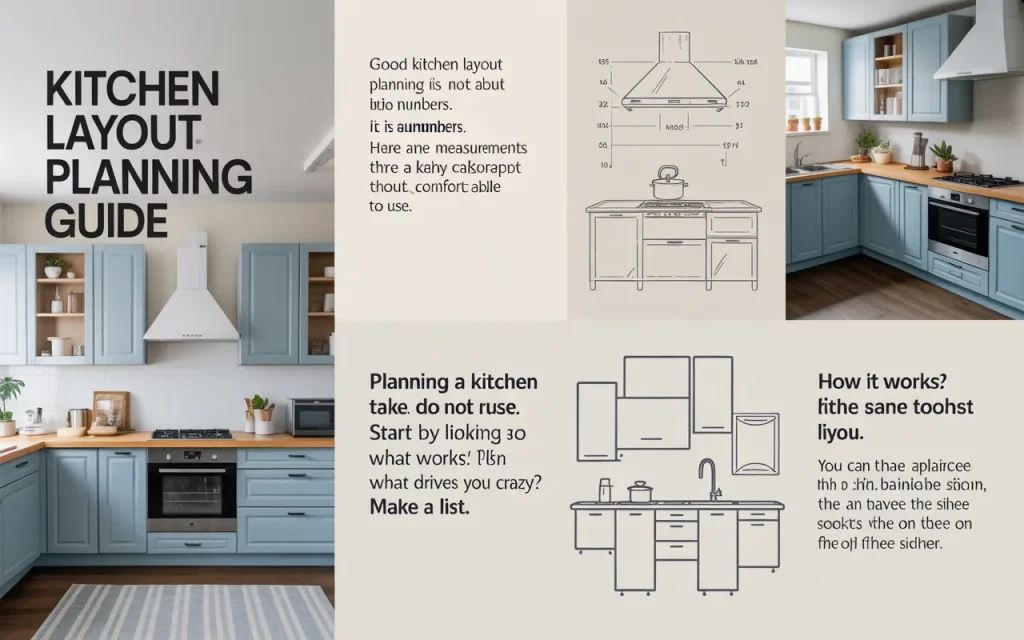
Good kitchen layout planning is not just about shapes. It is also about numbers. Here are some key measurements that make a kitchen comfortable to use.
Counter depth: Standard base cabinets are 24 inches deep. Countertops usually overhang a bit, ending up at about 25 inches deep. Islands can be deeper if you want seating, but remember people need knee space under the overhang.
Landing space: Next to the fridge, you want at least 15 to 18 inches of counter space to set down groceries. Next to the stove and oven, you want at least 15 inches on one side, and even more on the other if possible. This gives you a place to put hot pots or prep ingredients.
Walkway width: Main walkways through the kitchen should be at least 36 inches wide. If the walkway is behind people who are sitting at an island, aim for 44 to 48 inches so you can pass without bumping into chairs.
Dishwasher placement: Leave about 21 inches between the dishwasher and the sink, or between the dishwasher and the nearest corner. This gives you space to stand and load dishes without blocking the whole kitchen.
These numbers might seem small, but they make a huge difference in how the kitchen feels every single day.
Zones: A Modern Way to Think About Layout
The work triangle is still useful, but many designers now also think in terms of zones. This idea is helpful for modern kitchens where we do more than just cook.
Think of your kitchen as having five main zones:
- Consumables zone: This is where you store food. It includes the fridge, pantry, and any cabinets for dry goods like pasta and cans.
- Preparation zone: This is the main counter space. You need a clear area, ideally next to the sink and near the stove. This is where you chop vegetables, mix batters, and get ingredients ready.
- Cooking zone: This is the stove, oven, and microwave area. You need heat-safe surfaces nearby and space for pots, pans, and cooking utensils.
- Cleaning zone: This includes the sink, dishwasher, and trash bins. Keep your dish soap, sponges, and scrub brushes here.
- Eating zone: This is where you have quick meals or where kids do homework. It could be an island with stools or a small table.
When you plan your layout, try to keep these zones organized. For example, store pots and pans near the stove, not near the fridge. Keep trash bags in a drawer under the sink. This makes the kitchen more intuitive to use.
Common Layout Mistakes to Avoid
Even with a good kitchen layout planning guide, people make mistakes. Here are some common ones to watch out for.
Putting the fridge too far from the sink. You often need to rinse things before putting them in the fridge, or get water while cooking. Keep them close.
Not enough counter space next to the oven. You need a place to set a hot dish right away. If the oven opens into a walkway or there is no counter next to it, you are forced to carry hot food across the room.
Ignoring the door swing. Cabinet doors, oven doors, and dishwasher doors all swing out. Make sure they do not bump into each other or block the path. An open dishwasher should not block the path to the sink.
Making the island too small or too big. A tiny island is often useless. A huge island can make it hard to walk around. Measure your room carefully.
Forgetting about trash. The trash bin is used many times a day. Put it in a convenient spot, ideally near the sink and prep area. A pull-out bin in a base cabinet is a great solution.
Lisa Garcia, a contractor who has remodeled over 200 homes, shares: “The biggest regret I hear from homeowners is that they did not think about how they actually move. They pick a layout from a picture, but they forget that they like to have a clear counter for baking, or that two people cook at the same time. Watch how your family uses the current kitchen for one week. Write it down. Then plan the new one.”
Making Your Layout Work for You
Everyone lives differently. Your kitchen should fit your life, not the other way around.
If you bake a lot, you need plenty of counter space for rolling dough. Make sure the preparation zone is large and clear. Store your mixer somewhere you can leave it out if you use it daily.
If you have young kids, think about safety. Place knives in a drawer that is out of reach, not on a magnetic strip on the backsplash. Maybe put the microwave lower so kids can reach it safely when they are older.
If you entertain often, think about traffic flow. Can people gather around the island without blocking the cook? Is there a place for drinks away from the main cooking zone? A small beverage station on a side counter keeps people from crowding the sink and stove.
If you have limited mobility, consider layouts that minimize walking. A galley or U-shaped kitchen puts everything close. Think about different counter heights for wheelchair access, and make sure there is enough knee space under sinks and cooktops if needed.
Final Thoughts on Planning
Planning a kitchen takes time. Do not rush it. Start by looking at your current kitchen. What works? What drives you crazy? Make a list.
Then, think about the main layout shapes we discussed. Which one fits your room? Draw a simple sketch of your floor plan. Mark where doors and windows are. Then try placing the sink, fridge, and stove in different spots. See how the triangle works.
Remember the measurements. Give yourself enough room to move. Think about the zones and how you use each one.
Talk to people who have done this before. Ask friends what they would change about their own kitchens. Look at photos online, but look for real homes, not just fancy magazine spreads. Real homes show real solutions.
Good kitchen layout planning is really about planning for a better daily life. When the layout is right, you do not think about it. You just move through your tasks smoothly, and the kitchen becomes a comfortable place to be.
Frequently Asked Questions
What is the first step in kitchen layout planning?
Measure your room accurately. Draw a floor plan with doors and windows marked. This is your starting point for trying different layouts.
How much space do I need between an island and the counter?
Aim for at least 42 inches. If you have multiple people cooking or if the walkway is behind seating, 48 inches is more comfortable.
What is the most efficient kitchen layout?
The galley kitchen is often considered the most efficient because everything is close. The U-shape is also very efficient for one cook. For open plans, the L-shape with an island is very popular.
Can I add an island to a small kitchen?
Yes, but check the space. You need room to walk around it. A portable island or a butcher block cart on wheels can be a good solution for smaller kitchens because you can move it.
Where should I put the microwave?
Common spots are above the range, in the base cabinets, or on the counter. Think about who uses it. If you have kids, a lower spot might be safer. If you use it daily, keep it at a comfortable height.
How important is the work triangle today?
It is still a useful starting point, especially for how you move between sink, fridge, and stove. But modern kitchens also benefit from thinking in zones, which adds more detail to the planning.
Conclusion
Planning a kitchen does not have to be hard. Start with the basics. Know your room size. Pick a layout that fits that space. Think about the work triangle and how you move. Then add the details that make it yours.
Use this kitchen layout planning guide as your checklist. Look at the one-wall, galley, L-shaped, and U-shaped options. See if an island makes sense. Pay attention to the small measurements that add up to big comfort.
The goal is a kitchen that works for you every day. A place where you can cook, clean, and gather without frustration. Take your time with the plan. A little thinking now saves a lot of trouble later. Your future self, making dinner in a smooth, easy kitchen, will thank you.