
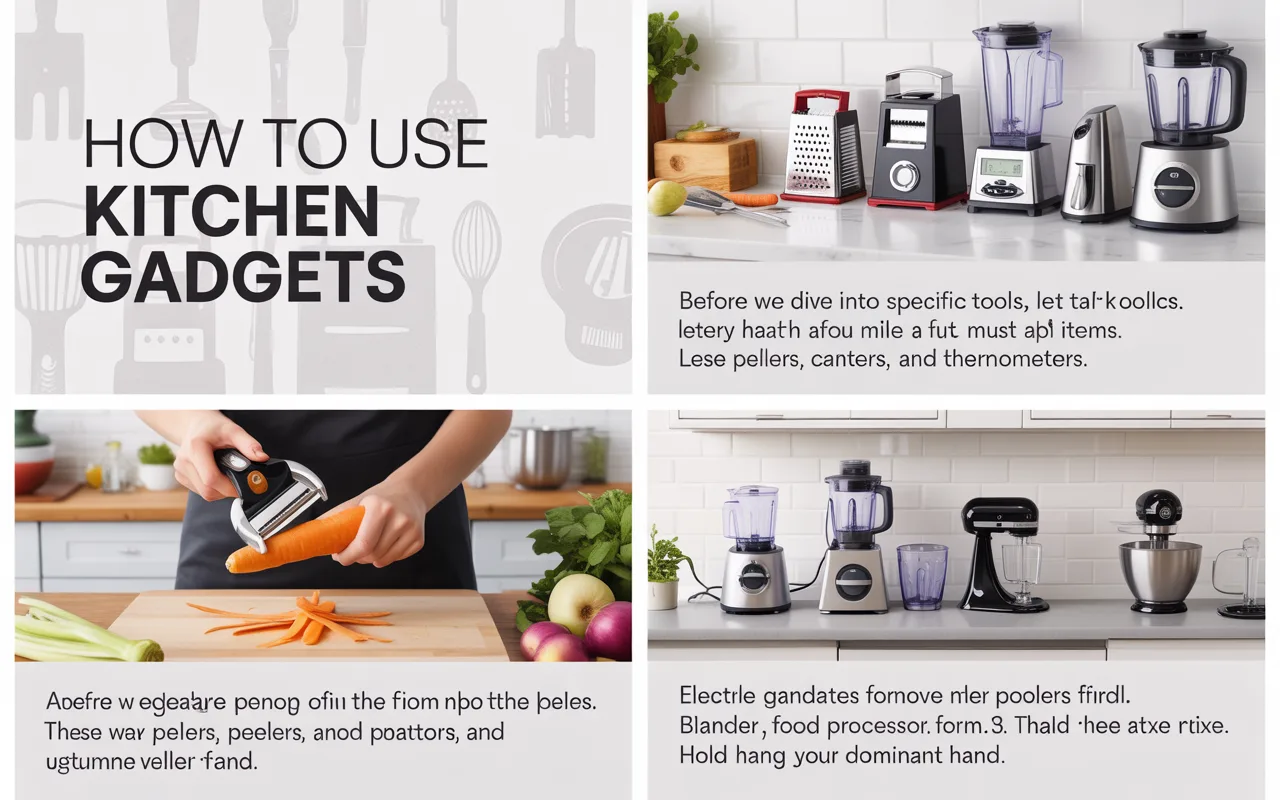
Discover simple ways to improve your cooking with our friendly guide on how to use kitchen gadgets. Learn safe tips, cleaning steps, and smart tricks for common tools.
Learning how to use kitchen gadgets can change the way you cook every day. Small tools save time and make food prep much easier. Many people buy gadgets but let them sit in drawers because they feel confused. This guide will help you feel confident with common tools. You will learn simple steps for each gadget. We will cover safety, cleaning, and smart tricks. By the end, you will know exactly how to use kitchen gadgets like a pro. Let us make cooking fun and simple together.
Cooking at home saves money and is healthier than eating out. Gadgets can speed up chopping, mixing, and peeling. But they only help if you know the right method. When you understand how to use kitchen gadgets, you waste less food and time. You also stay safe from cuts or burns. Many gadgets look complex, but most are simple once you break down the steps. Think of them as helpers, not scary machines. With practice, you will reach for them without thinking twice.
Getting Started with Basic Kitchen Gadgets
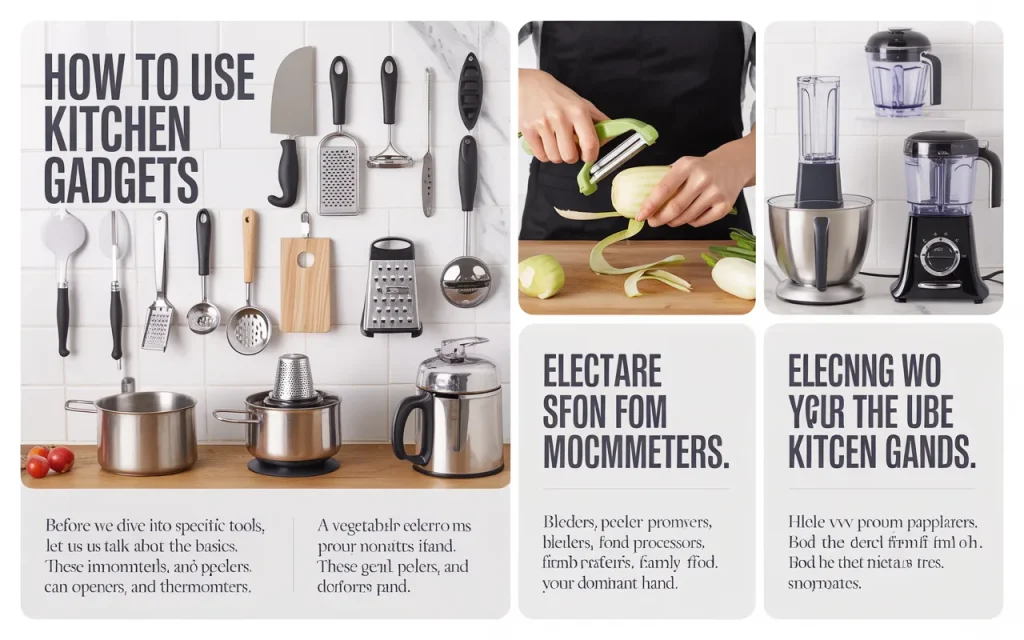
Before we dive into specific tools, let us talk about the basics. Every kitchen has a few must-have items. These include peelers, graters, can openers, and thermometers. Learning how to use kitchen gadgets starts with these everyday tools. They are safe and easy to handle. You can build confidence here before moving to electric gadgets like blenders or mixers.
Vegetable Peeler Tips
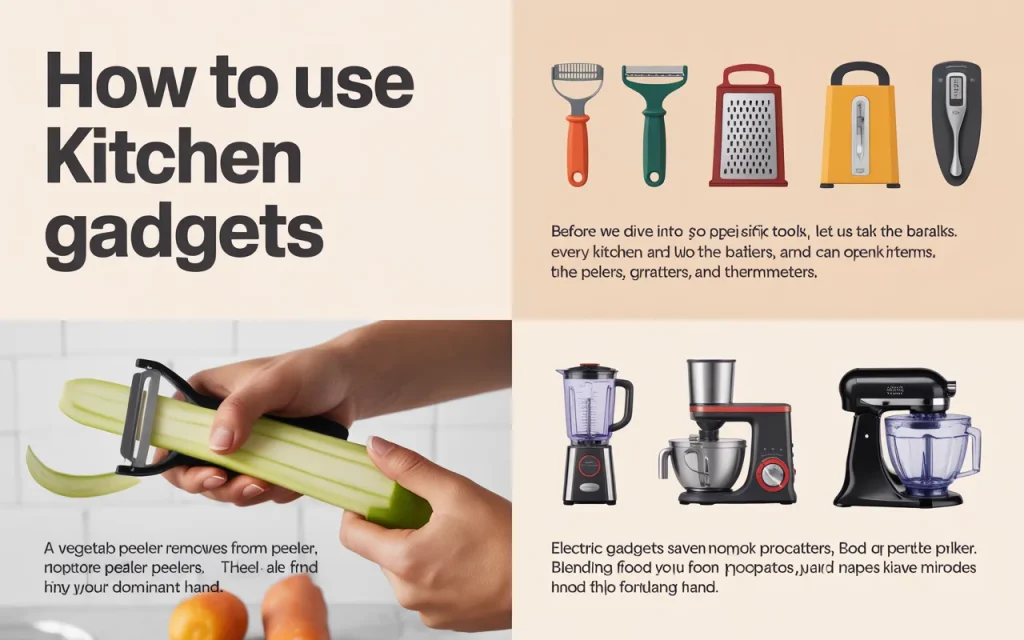
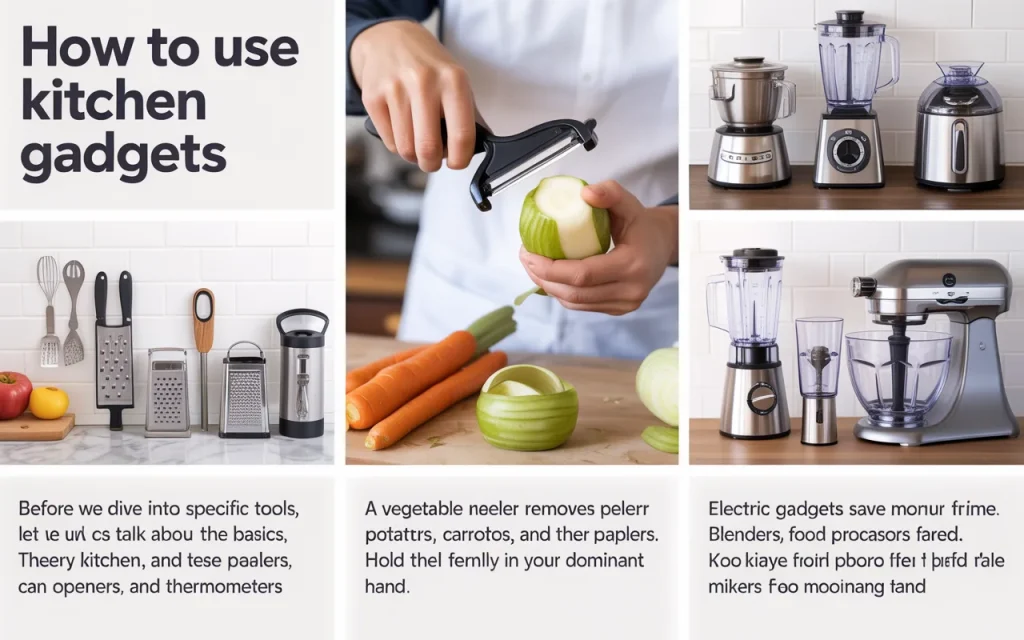
A vegetable peeler removes skin from potatoes, carrots, and apples. Hold the peeler firmly in your dominant hand. Grip the vegetable with your other hand. Pull the peeler toward you along the skin. Let the blade do the work. Do not press too hard. Practice on a carrot first. It is forgiving and straight. Once you feel good, try round items like potatoes. Always wash the vegetable first. Dry it a little so your hand does not slip. Some peelers work better for soft skins like tomatoes. These are called serrated peelers. Keep them handy for different jobs.
Box Grater Safety and Use
A box grater has four sides with different holes. The largest holes are for cheese or cold butter. The smaller ones work for zesting lemons or grating ginger. The fine side makes powdered cheese or nutmeg. Always place the grater on a flat surface. Hold it steady with one hand on top. Use the other hand to slide food downward. Watch your fingers near the end. When the food gets small, stop. Use a fork to hold the last bit if needed. This keeps your skin safe. Cleaning a grater right away stops food from sticking. Use a brush to get bits out of the small holes.
Can Opener Basics
Manual can openers are simple but need a trick. Hook the blade into the can lid near the edge. Squeeze the handles together to lock it. Turn the key clockwise slowly. Keep the opener level so the blade cuts clean. Go all the way around until the lid lifts off. Lift the lid with the opener or a fork. Watch out for sharp edges. Electric can openers work by pressing a lever. Place the can under the cutting wheel. Push the lever down to start. The magnet holds the lid so it does not fall in. Always wash the can top before opening to keep dirt out.
Must-Know Tips for Electric Kitchen Gadgets
Electric gadgets save even more time. Blenders, food processors, and mixers do heavy work fast. But they also need care. Knowing how to use kitchen gadgets with motors means following rules. Never put hands near blades. Unplug before cleaning. Read the manual once to learn parts. Most problems come from overfilling or wrong assembly. Let us look at common electric tools.
Using a Blender Correctly
A blender makes smoothies, soups, and sauces. Put liquids in first. This helps everything move. Add soft foods next. Hard items like ice or frozen fruit go last. Put the lid on tight. Start on low speed. Slowly go higher. If food sticks, stop and stir with a long spoon. Do not use utensils while it runs. For hot soup, let steam escape by removing the center cap. Cover with a towel to avoid splashes. Clean right after use. Fill halfway with warm water and a drop of soap. Run for a few seconds. Rinse well.
Food Processor Shortcuts
A food processor chops, slices, and shreds fast. It has a bowl, lid, and blade inside. Lock the bowl on the base first. Place the blade or disc inside. Add food through the top tube. Use the pusher to guide food down. For chopping, use short pulses. Do not hold the button too long. This turns food to mush. For slicing, pick the right disc. Thicker discs make chunkier slices. Always unplug before changing parts. Wash blades carefully by hand. They stay sharp for years.
Stand Mixer Guide
A stand mixer is great for baking. It has a bowl that lifts or tilts. Attach the flat beater for cookie dough. Use the whisk for eggs or cream. The dough hook works for bread. Start slow so flour does not fly. Scrape the bowl sides once or twice. Never go above speed four with thick dough. This protects the motor. Lift the head or bowl to remove attachments. Hand wash all parts except the main unit. Dry well before storing.
Simple Kitchen Gadgets That Save Time
Not all gadgets need electricity. Some small tools do big jobs. Knowing how to use kitchen gadgets like mandolines, garlic presses, and zesters helps you cook faster. These tools often sit unused because people fear them. But with care, they become favorites.
Mandoline Slicer Safety
A mandoline makes perfect slices fast. It has a flat bed with a blade inside. Hold the food with the guard. Never use bare hands near the blade. Slide the food back and forth. Adjust the thickness knob for thin or thick cuts. Always use the guard until the end. When the food is small, stop. Switch to a knife for the last bit. Store the mandoline with the blade lock on. Keep it out of reach from kids. Clean it right away to avoid cuts later.
Garlic Press Made Easy
A garlic press crushes cloves without chopping. Peel the garlic first. Put one or two cloves inside the press. Squeeze the handles hard. The garlic comes out the small holes. Scrape the paste off the back with a knife. Some presses come with a cleaner tool. Use it to push out stuck bits. Rinse the press right after use. Garlic dries hard and is tough to clean later. This tool saves your fingers from smelling like garlic for hours.
Citrus Zester Tricks
A zester takes thin strips of peel from lemons, limes, or oranges. Only take the colored part. The white part underneath tastes bitter. Run the zester along the fruit lightly. Turn the fruit as you go. Stop when you see white. Use the zest in cakes, drinks, or salads. Wash the fruit first to remove wax. Dry it so your grip stays firm. Clean the zester with a small brush. The tiny holes trap peel easily.
Helpful Table for Common Gadget Uses
Here is a quick reference for daily tools. This table shows what each gadget does best. Keep it handy while you learn how to use kitchen gadgets.
| Gadget | Best Use | Quick Tip |
|---|---|---|
| Vegetable Peeler | Peeling potatoes, carrots, apples | Pull toward you, not away |
| Box Grater | Shredding cheese, zesting citrus | Use fork for small pieces |
| Can Opener | Opening canned goods | Keep edge smooth with a file |
| Blender | Smoothies, soups, sauces | Liquids first, then solids |
| Food Processor | Chopping nuts, slicing veggies | Pulse for control |
| Garlic Press | Crushing fresh garlic | Peel cloves first for best results |
Cleaning and Care for Long Life
Gadgets last longer with good care. Learning how to use kitchen gadgets includes cleaning steps. Food bits left on tools can cause rust or germs. Wash most parts by hand with warm soapy water. Dry them fully before putting away. Electric gadgets need special care. Never dunk the base in water. Wipe it with a damp cloth. Check blades often for dullness. Sharp blades work safer than dull ones. They need less force to cut. Replace parts if they crack or bend. Store gadgets in a dry drawer. Keep similar tools together. This saves time when you cook.
Quotes from Real Home Cooks
Hearing from others helps us learn. Here are three quotes from people who love their gadgets.
“Using a food processor changed my meal prep entirely. I used to dread chopping onions, but now it takes seconds.”
— Marta Gonzalez, home cook for 15 years
“I was scared of my mandoline for months. Then I watched a video and learned to use the guard. Now I make perfect potato slices for gratin.”
— David Chen, food blogger
“The garlic press is my favorite tool. My hands never smell, and the flavor is so much better than jarred garlic.”
— Linda Park, busy mom of three
Troubleshooting Common Gadget Problems
Sometimes gadgets do not work right. Here are fixes for issues. These tips make learning how to use kitchen gadgets less frustrating.
Blender Not Moving Food
If a blender stalls, the mix is too thick. Add more liquid like water or milk. Stir with a long spoon. Pulse a few times to break air pockets. Do not run it long on high. This can burn the motor.
Grater Clogging
Food can stick in grater holes. Grate in one direction only. Do not rub back and forth. Clean the back with a toothpick if needed. Chill cheese before grating. Cold cheese sticks less.
Can Opener Slipping
If the opener slips, the wheel might be dull. Check for metal bits stuck in the gear. Clean it with a brush. Turn the knob slowly and steady. Replace the opener if it keeps slipping. A new one is cheap and safer.
Second Table: Quick Fixes for Gadget Problems
| Problem | Gadget | Simple Fix |
|---|---|---|
| Blender stuck | Blender | Add liquid, stir, pulse |
| Grater clogged | Box grater | Grate cold food, clean holes |
| Slipping | Can opener | Clean wheel, replace if dull |
| Garlic stuck | Garlic press | Rinse right away, use tool |
| Uneven slices | Mandoline | Check blade, use guard |
Building Confidence with Practice
The best way to learn is by doing. Pick one gadget each week. Practice with soft foods first. Try a peeler on a cucumber. Use a grater on a block of cheese. Run your blender with just water to see how it works. Watch videos if you feel stuck. Many people share tips online. Ask a friend to show you their favorite tool. Soon you will not think twice about grabbing any gadget. Remember that everyone starts as a beginner. Even chefs had to learn how to use kitchen gadgets at some point. Be patient with yourself. Each try makes you better.
Frequently Asked Questions
What is the safest way to use a mandoline slicer?
Always use the food holder. Never slide food with bare hands. Keep fingers away from the blade area. Store it with the blade locked.
Can I put blender parts in the dishwasher?
Check your manual first. Many blender jars are top-rack safe. But the blade base usually needs hand washing. Heat can dull blades over time.
How do I clean a garlic press easily?
Rinse it right after use. Use the built-in cleaner tool if you have one. A small brush also works well. Dry it fully to avoid rust.
Why does my food processor make uneven chunks?
You might be overfilling the bowl. Work in small batches. Pulse instead of holding the button down. Cut food into similar sizes before adding.
Is it worth buying expensive gadgets?
Not always. Mid-range tools often work great for home cooks. Look for solid build and good reviews. Expensive does not always mean better.
How often should I replace kitchen gadgets?
Replace if blades are dull or parts are broken. Rusty tools should go. Good care makes most gadgets last for years.
Conclusion
Learning how to use kitchen gadgets opens up a new world in your kitchen. Small tools save time and make cooking fun. You do not need to be an expert to start. Begin with one gadget and practice slowly. Focus on safety first. Clean tools right after use. Soon you will wonder how you cooked without them. Remember that every cook learns step by step. Share your new skills with family. Let them see how easy it can be. Your kitchen is a place for creativity and good food. Gadgets are just there to help. Enjoy the process and make tasty meals along the way.

3 Comments