Improve kitchen workflow with simple layout changes, smart storage, and efficient habits that make cooking smoother, faster, and less stressful every day.
A kitchen can feel calm and productive or chaotic and exhausting depending on how it is organized. Even a beautiful kitchen can become frustrating if tools are hard to reach, ingredients are scattered, and cooking tasks interrupt each other. Many people spend extra time cooking simply because their kitchen workflow slows them down.
Learning how to improve kitchen workflow makes a huge difference in daily cooking. A well planned kitchen saves time, reduces stress, and helps meals come together smoothly. It also minimizes unnecessary movement, clutter, and wasted effort.
Professional chefs rely heavily on efficient workflow. In restaurant kitchens, every movement is planned. While a home kitchen does not need to be that strict, the same ideas still work extremely well. Small improvements such as organizing prep zones, keeping tools within reach, and managing counter space can transform how a kitchen functions.
A smooth workflow also makes cooking more enjoyable. Instead of constantly searching for items or cleaning messes in the middle of cooking, everything flows from preparation to cooking to serving.
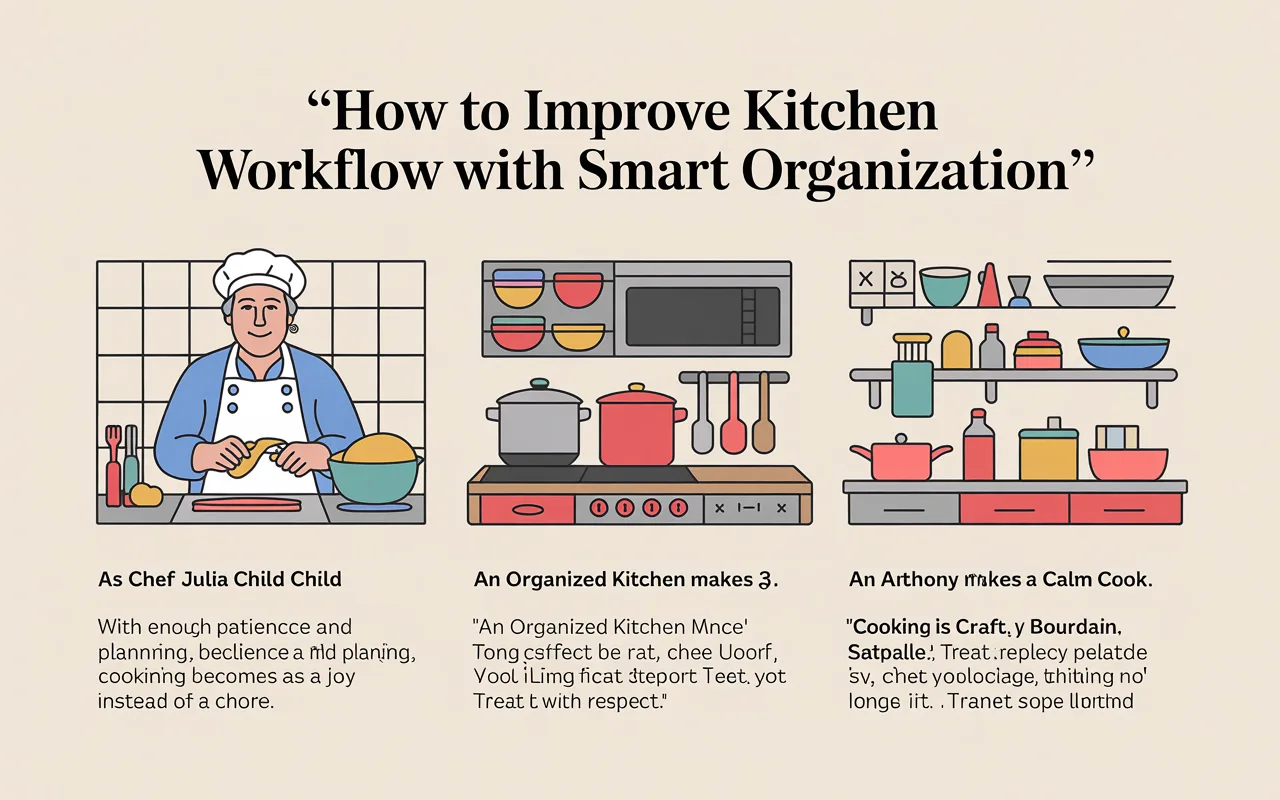
As chef Julia Child once said: “With enough patience and planning, cooking becomes a joy instead of a chore.”
Julia Child
The following guide explains practical ways to improve kitchen workflow so that everyday cooking becomes faster, easier, and more comfortable.
Why Kitchen Workflow Matters
Many kitchens struggle with inefficiency because they were designed for appearance rather than daily use. When workflow is poor, people waste time walking back and forth, opening multiple cabinets, and moving clutter around the counter.
Good workflow means the kitchen supports natural cooking steps. Preparation, cooking, plating, and cleaning all happen smoothly without obstacles.
| Workflow Factor | Why It Matters |
|---|---|
| Organization | Keeps tools and ingredients easy to access |
| Kitchen zones | Reduces unnecessary walking |
| Clear counter space | Allows faster food preparation |
| Smart storage | Prevents clutter and confusion |
| Cleaning routine | Maintains efficiency during cooking |
A well organized kitchen allows tasks to happen in sequence. For example, ingredients are washed near the sink, chopped on the prep counter, cooked at the stove, and served near the dining area. This natural flow prevents unnecessary steps.
In contrast, a poorly organized kitchen forces constant interruptions. A cook might need to cross the room several times just to gather ingredients. These small inefficiencies add up quickly.
Improving workflow does not require expensive remodeling. Often, rearranging cabinets, tools, and work zones makes the biggest difference.
Organize the Kitchen Into Functional Zones
One of the most effective ways to improve kitchen workflow is by dividing the kitchen into clear working zones. This idea comes from professional kitchens where each station has a defined purpose.
In a home kitchen, zones help group related tools and ingredients together. This prevents confusion and makes cooking feel more structured.
The four most common kitchen zones include preparation, cooking, storage, and cleaning.
| Kitchen Zone | Purpose | Typical Items |
|---|---|---|
| Preparation Zone | Chopping and ingredient prep | Cutting boards, knives, mixing bowls |
| Cooking Zone | Heat based cooking tasks | Pots, pans, spices, stove tools |
| Storage Zone | Ingredient storage | Pantry items, dry goods, refrigerator |
| Cleaning Zone | Washing and cleaning | Sink, dish soap, drying rack |
When zones are organized correctly, cooking becomes smoother. For example, knives, cutting boards, and mixing bowls should remain close together in the prep area. Moving between tasks becomes effortless.
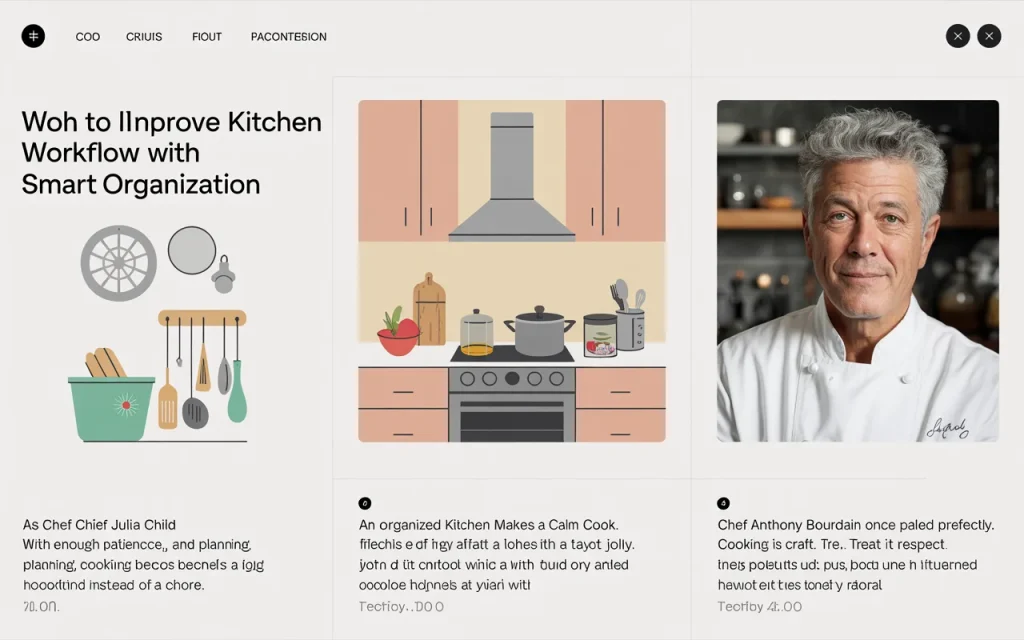
This zoning strategy is one of the simplest methods to improve kitchen workflow without spending money.
Reduce Clutter and Clear Counter Space
Counter space plays a huge role in kitchen efficiency. When counters are packed with appliances, containers, and decorative items, food preparation becomes difficult.
Clear counters allow faster movement and safer cooking. Chopping vegetables, mixing ingredients, and plating meals all require space.
A good rule is to keep only frequently used appliances on the counter. Everything else should go inside cabinets or storage shelves.
Common counter clutter includes:
- Rarely used appliances
- Large utensil containers
- Unnecessary decorations
- Paper clutter or mail
- Extra spice containers
Removing clutter instantly improves kitchen workflow because the cook gains more room to work comfortably.
Professional kitchens keep counters mostly clear for this exact reason. More space means fewer interruptions and faster food preparation.
Place Tools Where You Use Them
Another simple way to improve kitchen workflow is storing tools near the place they are used.
Many kitchens store utensils randomly, which forces people to search through drawers while cooking. This wastes time and disrupts concentration.
Instead, tools should live close to their work areas.
Examples include:
- Cooking utensils near the stove
- Cutting boards near the prep area
- Measuring cups near baking ingredients
- Dish towels near the sink
This arrangement prevents unnecessary movement and keeps cooking smooth.
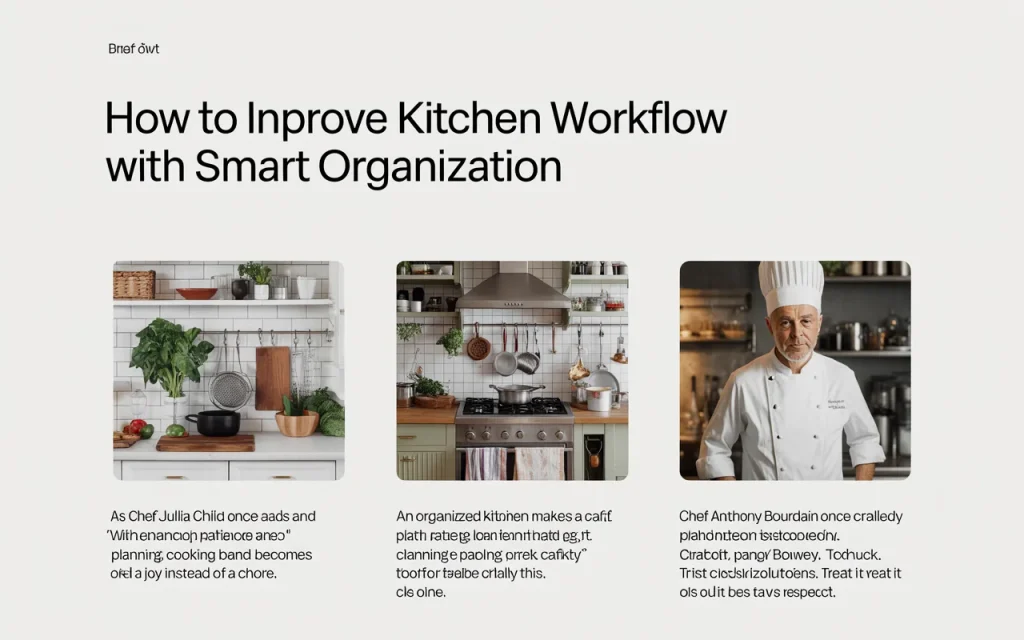
Famous chef Gordon Ramsay once shared a simple insight about kitchen organization:
“An organized kitchen makes a calm cook.”
Gordon Ramsay
A calm cooking environment naturally leads to better workflow and less stress.
Create a Dedicated Prep Station
Preparation takes up a large portion of cooking time. Chopping vegetables, measuring ingredients, and mixing sauces all happen before heat is involved.
Without a dedicated prep area, cooks constantly shift tools around the kitchen.
A prep station should include:
- Cutting board
- Sharp knives
- Mixing bowls
- Measuring spoons
- Trash container or compost bowl
Keeping these items together makes the process efficient.
Many experienced home cooks also keep a small bowl nearby for scraps. This prevents constant trips to the trash bin.
A consistent prep area greatly improves kitchen workflow because every cooking session starts in the same organized space.
Optimize Storage for Easy Access
Storage systems play a huge role in kitchen efficiency. Poor storage design leads to overcrowded cabinets and wasted time searching for items.
Smart storage makes tools easy to see and reach.
Helpful storage strategies include:
Vertical storage for baking sheets and cutting boards
Drawer dividers for utensils
Clear containers for pantry items
Lazy susans for spices
Pull out shelves for deep cabinets
These small adjustments allow items to be accessed quickly.
Pantry organization is especially important. Grouping ingredients such as baking supplies, grains, spices, and snacks keeps everything predictable.
When storage is clear and logical, cooking becomes faster and smoother. That is a key step to improve kitchen workflow in both small and large kitchens.
Use the Kitchen Work Triangle Concept
The kitchen work triangle is a classic design idea used by kitchen planners for decades. It focuses on the relationship between three main work points:
- The stove
- The sink
- The refrigerator
These three areas form a triangle that supports efficient movement.
The idea is simple. A cook moves frequently between these points while preparing meals. If they are too far apart or blocked by obstacles, cooking becomes inefficient.
A well designed triangle allows easy movement between these areas without excessive walking.
While modern kitchens may include islands or extra appliances, the work triangle still remains a helpful guide.
Keeping pathways clear between these points is another strong way to improve kitchen workflow.
Develop Simple Cooking Routines
Workflow is not only about kitchen layout. Habits and routines also influence efficiency.
Experienced cooks often follow consistent cooking patterns. They gather ingredients first, prepare everything in advance, and clean as they go.
This method prevents chaos while cooking.
Key habits that improve workflow include:
Preparing ingredients before heating pans
Keeping frequently used spices nearby
Washing tools during cooking pauses
Placing ingredients back immediately after use
These habits reduce clutter and help maintain focus.
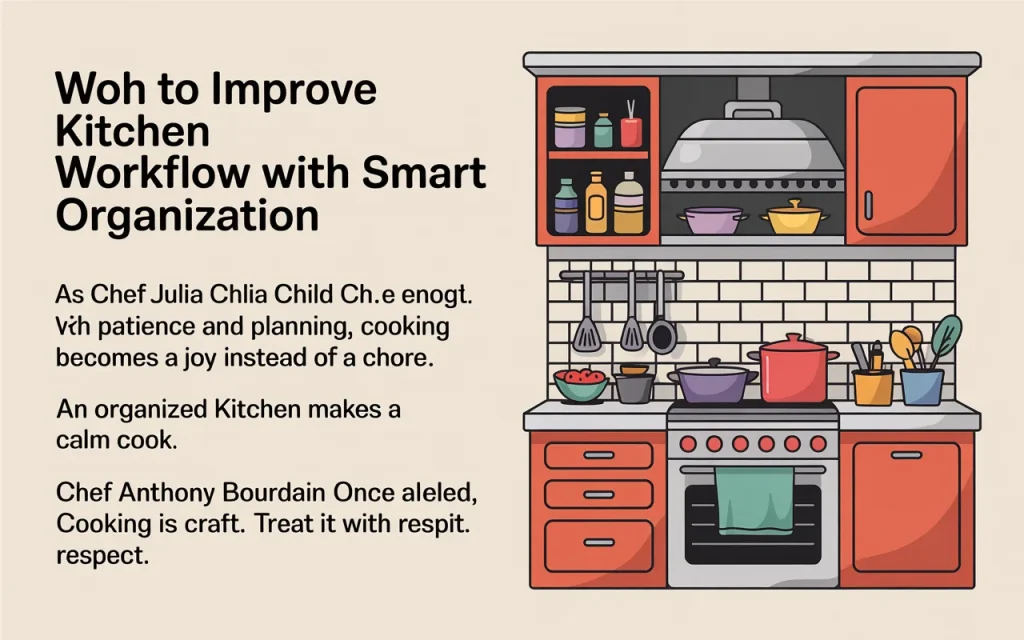
Chef Anthony Bourdain once captured this idea perfectly: “Cooking is craft. Treat it with respect.”
Anthony Bourdain
Respecting the process means working with intention and organization. That mindset naturally improves workflow.
Keep Cleaning Part of the Workflow
Cleaning often feels like a separate task, but it should actually be part of kitchen workflow.
Allowing dishes and spills to pile up slows down cooking and makes the kitchen stressful.
Cleaning during cooking keeps the space functional.
Helpful cleaning habits include:
Wiping counters while ingredients cook
Loading dishes into the dishwasher immediately
Rinsing tools after use
Keeping a small towel nearby for quick cleaning
These habits prevent clutter from building up.
A clean kitchen is also safer. Less clutter means fewer accidents and easier movement.
Frequently Asked Questions
What is kitchen workflow?
Kitchen workflow describes how cooking tasks move through the kitchen from preparation to cooking to cleaning. A good workflow allows smooth movement and minimal interruptions.
How can small kitchens improve workflow?
Small kitchens benefit greatly from smart organization. Clear counters, vertical storage, and defined work zones make limited space function more efficiently.
Does kitchen layout affect workflow?
Yes. Layout plays a major role. The position of the sink, stove, refrigerator, and prep space determines how easily cooking tasks flow.
Is the kitchen work triangle still useful today?
Yes. Even with modern appliances and islands, the work triangle still helps create efficient movement between the most important work areas.
What is the fastest way to improve kitchen workflow?
The quickest improvement comes from decluttering counters and organizing tools near where they are used.
Conclusion
An efficient kitchen supports the natural flow of cooking. When tools are easy to reach, counters are clear, and work areas are organized, cooking becomes far more enjoyable.
Many people assume they need a kitchen remodel to solve workflow problems. In reality, small adjustments often produce the biggest improvements. Rearranging tools, organizing storage, and creating clear work zones can dramatically improve kitchen workflow.
Consistency also matters. Developing cooking routines, cleaning as you go, and keeping preparation areas organized helps maintain an efficient environment.
Professional kitchens rely on these exact principles because they work. The same ideas apply perfectly to home kitchens of any size.
By focusing on organization, movement, and practical habits, anyone can improve kitchen workflow and transform cooking into a smoother daily experience.