Design a functional kitchen that supports daily cooking with smart layout choices, efficient storage, and practical lighting so the space stays organized, comfortable, and easy to use.
A kitchen works best when it supports real everyday habits. Cooking, cleaning, storing food, and preparing meals all happen in one place. If the layout feels cramped or tools are hard to reach, the entire space becomes frustrating. A thoughtful layout improves comfort, saves time, and keeps the kitchen organized.
Many homeowners want a beautiful kitchen, but beauty alone does not guarantee usability. A good kitchen balances style with purpose. Cabinets should open easily, counters should allow room to prepare food, and appliances should sit where they are needed most.
Learning how to design a functional kitchen starts with understanding how people actually move through the space. Small decisions like drawer placement or lighting direction affect daily cooking more than decorative details. A well planned kitchen makes cooking easier, cleaning faster, and storage simpler.
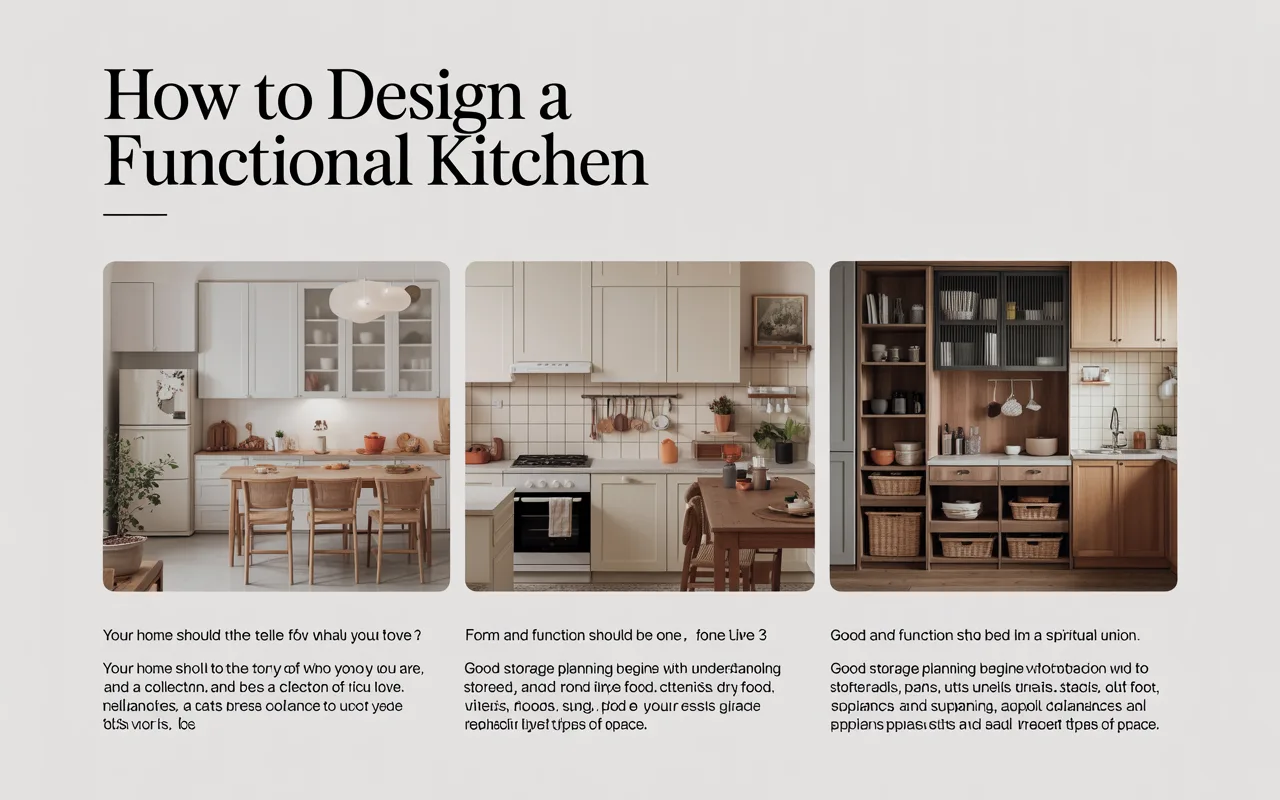
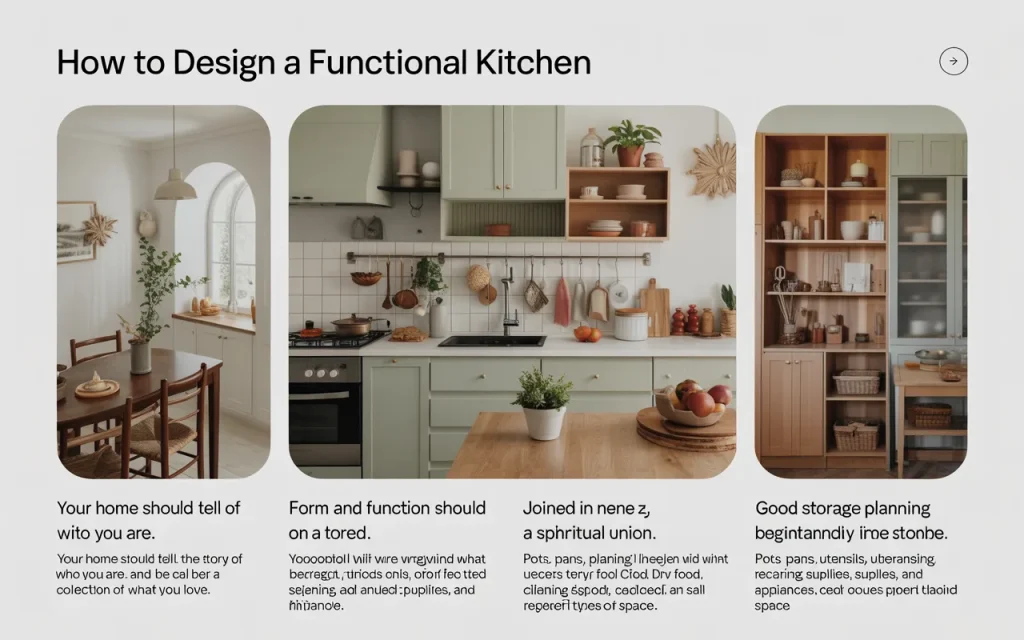
Interior designer Nate Berkus once said: “Your home should tell the story of who you are, and be a collection of what you love.”
That idea applies strongly to kitchens. A kitchen should match the habits of the people who use it. Some people cook elaborate meals every night, while others focus on quick family dinners. The design should support those routines naturally.
The following guide explains practical steps that help create a kitchen that works well every day.
Understanding Kitchen Layout and Workflow
One of the first steps to design a functional kitchen is choosing a layout that supports movement. Most kitchen activities fall into three main zones: cooking, cleaning, and food storage. These zones form what designers often call the kitchen work triangle.
When these areas sit too far apart, cooking feels tiring. When they sit too close together, the kitchen becomes crowded. The goal is balance.
Common Kitchen Layout Types
| Layout Type | Best For | Key Benefit |
|---|---|---|
| Galley Kitchen | Small homes or apartments | Efficient use of narrow space |
| L-Shaped Kitchen | Medium kitchens | Open movement and corner use |
| U-Shaped Kitchen | Larger kitchens | Maximum counter and storage space |
| Island Kitchen | Open concept homes | Extra workspace and seating |
Each layout supports different lifestyles. Galley kitchens are efficient but compact. U-shaped kitchens allow multiple cooks to work comfortably. Island layouts provide gathering space while maintaining cooking areas.
To successfully design a functional kitchen, the layout should allow a smooth path between the refrigerator, sink, and stove. Walking back and forth across the entire kitchen to complete one meal wastes time and energy.
Architect Frank Lloyd Wright once explained: “Form and function should be one, joined in a spiritual union.”
This idea reflects the heart of kitchen planning. The kitchen should feel natural to use. When layout and workflow align, cooking becomes more enjoyable and less stressful.
Another key point is walkway clearance. A comfortable kitchen walkway typically measures between 36 and 48 inches. This allows cabinet doors to open and people to pass through without blocking work areas.
When planning layout, think about how the kitchen feels during busy moments such as preparing dinner while someone loads the dishwasher or grabs a snack. The design should allow these tasks to happen without constant interruption.
Smart Storage Solutions for Daily Use
Storage plays a major role when trying to design a functional kitchen. Even a large kitchen can feel messy if storage is poorly planned. Smart storage keeps tools visible, accessible, and organized.
Good storage planning begins with understanding what needs to be stored. Pots, pans, utensils, dry food, cleaning supplies, and small appliances all require different types of space.
Practical Kitchen Storage Options
| Storage Feature | Best Use | Benefit |
|---|---|---|
| Deep drawers | Pots and pans | Easier access than cabinets |
| Pull-out pantry shelves | Dry food and spices | Prevents items from getting lost |
| Vertical tray dividers | Baking sheets and cutting boards | Keeps items upright |
| Corner carousel shelves | Corner cabinets | Uses difficult spaces effectively |
Pull-out drawers work well because they allow full visibility. Instead of bending into deep cabinets, everything slides forward. This saves time during cooking.
Pantry organization also matters. Transparent containers and labeled bins make ingredients easy to find. This reduces food waste and helps keep shelves tidy.
Another helpful strategy is grouping items by task. Baking tools should stay near the oven. Cooking utensils belong near the stove. Dishwashing supplies should sit close to the sink.
Professional chef Julia Child once shared a practical thought about kitchens:
“The only real stumbling block is fear of failure.”
Her message reminds people that kitchens are meant to be used. Storage should support active cooking rather than create a showroom space that feels untouchable.
When storage fits daily habits, the kitchen remains cleaner and more enjoyable to use.
Choosing Practical Counter Space and Work Zones
Counter space determines how comfortable food preparation feels. One key goal when learning to design a functional kitchen is creating enough surface area for everyday tasks.
Many kitchens fail because counters become cluttered with appliances, leaving little space to work. Planning dedicated zones solves this issue.
A well organized kitchen typically includes these work areas:
- A preparation zone near the sink
- A cooking zone near the stove
- A small appliance zone for items like blenders or coffee makers
- A serving or plating area
Spacing matters. Food preparation works best when the counter area between the sink and stove measures at least 24 to 36 inches. This gives enough room to chop ingredients and assemble meals.
Another useful strategy is appliance garages or cabinet niches. These allow small appliances to remain plugged in but hidden when not in use.
Island counters can also improve workflow. They offer additional space for chopping, mixing, and serving food. In family homes, islands often become gathering spots where children do homework or guests chat while meals are prepared.
While planning counter space, think about realistic cooking habits. Someone who cooks daily needs more preparation area than someone who relies on quick meals.
Good kitchen design reflects real behavior rather than ideal situations.
Lighting That Supports Cooking and Safety
Lighting often receives less attention during planning, but it plays a major role in comfort and safety. Proper lighting helps design a functional kitchen that feels bright and practical throughout the day.
Kitchen lighting usually includes three layers:
- Ambient lighting for overall brightness
- Task lighting for specific work areas
- Accent lighting for visual warmth
Ambient lighting often comes from ceiling fixtures or recessed lights. These provide general visibility.
Task lighting matters even more. Under cabinet lights shine directly onto countertops, making chopping and food preparation safer. Without task lighting, shadows from overhead lights can block visibility.
Pendant lights above kitchen islands also improve function by focusing light where people gather and prepare meals.
Natural light adds another valuable element. Windows above sinks or near dining areas create a welcoming atmosphere and reduce reliance on artificial lighting during daytime hours.
Light color temperature also influences the feeling of the kitchen. Warm white light around 2700 to 3000 Kelvin creates a comfortable environment that feels inviting while still providing clear visibility.
A kitchen should feel bright enough for detailed work without appearing harsh or overly sterile.
Selecting Durable and Practical Materials
Materials affect both appearance and longevity. Durable surfaces help maintain a kitchen that stays easy to clean and reliable for years. Choosing the right materials helps design a functional kitchen that handles daily wear.
Countertops receive heavy use, so durability matters. Popular choices include quartz, granite, and solid surface materials. Quartz counters resist stains and scratches, making them ideal for busy kitchens.
Cabinet materials also influence long term performance. Solid wood cabinets offer strength and classic appeal. High quality plywood construction often lasts longer than particle board.
Flooring should combine durability with comfort. Kitchens experience spills, dropped utensils, and heavy foot traffic. Good flooring options include:
- Porcelain tile
- Luxury vinyl plank
- Engineered hardwood
Each of these materials resists moisture while remaining easy to clean.
Backsplashes protect walls from splashes and cooking residue. Ceramic tile backsplashes remain popular because they clean easily and come in many patterns.
When selecting materials, focus on practicality rather than trends. A kitchen used every day benefits from surfaces that handle stains, heat, and cleaning without constant maintenance.
Durability keeps the kitchen feeling fresh even after years of use.
Designing Kitchens for Small Spaces
Limited square footage does not prevent someone from creating a practical cooking area. With careful planning, even compact homes can design a functional kitchen that feels efficient and organized.
Small kitchens benefit from vertical storage. Tall cabinets use wall space that would otherwise remain empty. Open shelving can also create easy access to frequently used items.
Multipurpose furniture helps maximize space. A small island with storage drawers provides both workspace and storage. Foldable tables or extendable counters can offer temporary workspace when needed.
Appliance size also matters. Compact refrigerators, slim dishwashers, and combination microwave ovens help preserve space without sacrificing function.
Another helpful approach is minimizing visual clutter. Light colored cabinets and reflective surfaces make smaller kitchens appear more open. Glass cabinet doors can also reduce the feeling of heaviness.
Organization becomes even more important in smaller kitchens. Keeping countertops clear ensures every inch of workspace remains usable.
With thoughtful planning, a compact kitchen can perform just as well as a larger one.
Workflow Tips That Improve Everyday Cooking
A kitchen should make daily routines easier. Good workflow planning helps design a functional kitchen that supports meal preparation without frustration.
Start by placing frequently used tools within easy reach. Cooking utensils belong near the stove. Knives and cutting boards should stay close to preparation areas. Dish soap and sponges belong near the sink.
Another helpful habit is separating clean and dirty zones. Dirty dishes should move directly from the table to the sink or dishwasher without crossing food preparation areas.
Trash and recycling bins should remain accessible but slightly out of the main work path. Pull-out cabinet bins often solve this issue effectively.
Food storage also influences workflow. Refrigerators work best when placed near the kitchen entrance. This allows groceries to be unloaded quickly without walking through the entire space.
Planning simple workflow improvements saves time every day. These small adjustments create a kitchen that supports smooth movement rather than constant rearranging.
A kitchen designed with real routines in mind always feels more comfortable.
Frequently Asked Questions
What is the most important rule in kitchen design?
The most important rule is maintaining a logical workflow between the sink, refrigerator, and stove. This arrangement helps people move efficiently while preparing meals.
How much counter space should a kitchen have?
A practical kitchen typically includes at least 24 inches of counter space near the sink and another 24 to 36 inches near the cooking area for food preparation.
Are kitchen islands necessary?
Kitchen islands are helpful but not essential. They provide additional workspace, storage, and seating, but smaller kitchens can function well without them.
What lighting works best for kitchens?
A combination of ambient ceiling lights, task lighting under cabinets, and pendant lights above work areas provides balanced illumination.
How can small kitchens feel more spacious?
Vertical storage, light colored cabinets, reflective surfaces, and clear countertops help create the appearance of a larger space.
Conclusion
A successful kitchen supports real daily habits. Cooking, cleaning, and storing food should feel simple and natural within the space. Careful planning makes a significant difference in comfort and efficiency.
Learning how to design a functional kitchen involves thoughtful layout choices, smart storage, sufficient counter space, and practical lighting. Durable materials and organized work zones also contribute to long term usability.
Interior designer Nate Berkus once shared a helpful reminder: “Your home should rise up to meet you.”
A kitchen should do exactly that. It should support everyday cooking, family meals, and small daily routines without feeling stressful or cramped.
When layout, storage, lighting, and workflow work together, the kitchen becomes more than a place to cook. It becomes a space where daily life flows easily and comfortably.