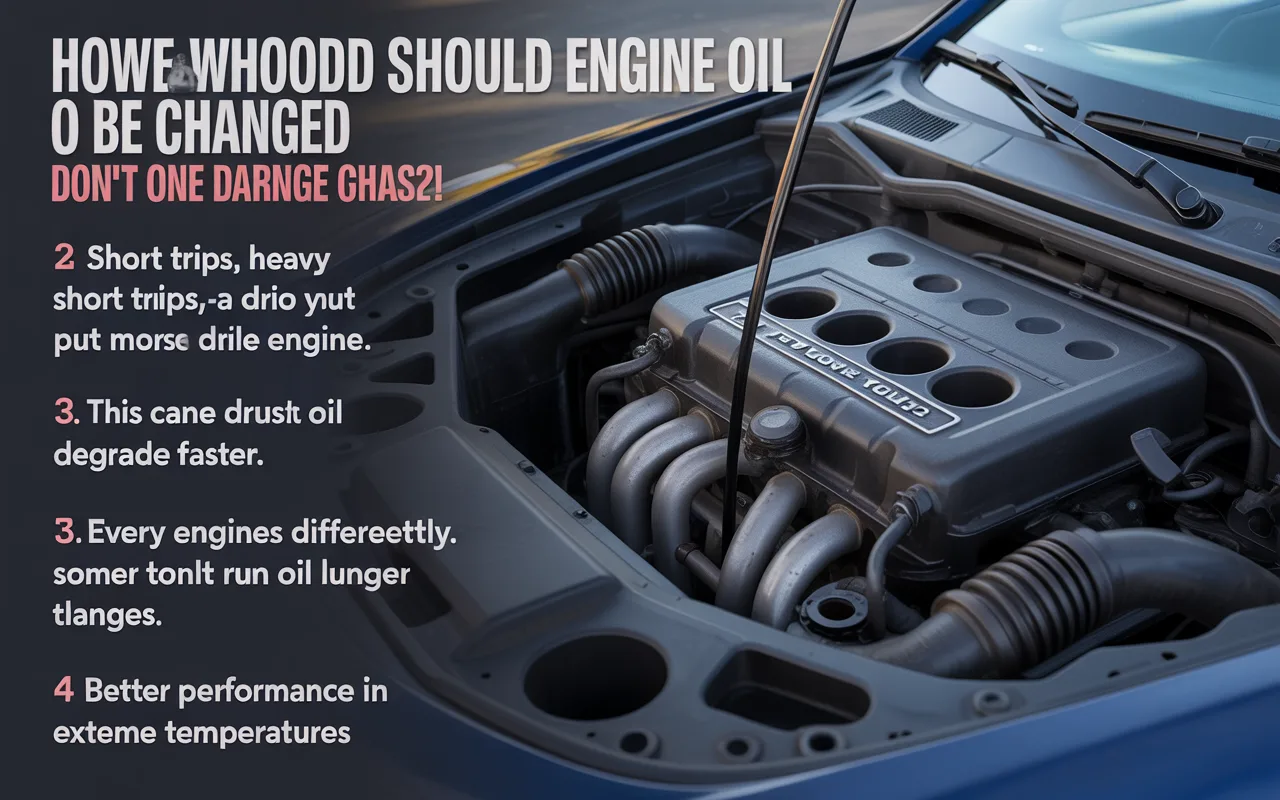
Learn how often engine oil should be changed based on driving habits, oil type, and car age. Get clear intervals and practical maintenance tips.
Engine oil is one of the most important fluids in your car, yet it is often overlooked until problems show up. If you are wondering how often should engine oil be changed, the answer is not always the same for every driver. It depends on your vehicle, the type of oil you use, and how you drive every day.
This guide explains clear oil change intervals, the factors that affect them, and how to tell when your engine needs fresh oil. Whether you drive short distances in city traffic or take long highway trips, understanding this topic helps protect your engine and avoid costly repairs.
Why Engine Oil Changes Matter
Engine oil does more than just lubricate moving parts. It plays several key roles that directly affect your engine’s health.
- Reduces friction between engine components
- Prevents overheating by carrying heat away
- Cleans dirt, sludge, and metal particles
- Protects against corrosion and wear
Over time, oil breaks down and becomes less effective. Dirt builds up, viscosity changes, and it can no longer protect the engine properly. Skipping oil changes can lead to increased wear, reduced fuel efficiency, and in severe cases, engine failure.
Regular oil changes are one of the simplest and most effective ways to extend engine life.
How Often Should Engine Oil Be Changed?
There is no single rule that applies to every car, but most modern vehicles follow a general range.
Typical Oil Change Intervals
| Oil Type | Recommended Interval |
|---|---|
| Conventional oil | 5,000 to 7,500 km |
| Synthetic blend | 7,500 to 10,000 km |
| Full synthetic oil | 10,000 to 15,000 km |
These ranges are common for modern engines. However, always check your owner’s manual for the exact recommendation for your specific vehicle.
Older advice often suggested changing oil every 3,000 km, but this is outdated for most modern cars, especially those using synthetic oil.
What Affects Your Oil Change Frequency?
Your driving conditions and habits play a big role in how often your engine oil should be changed.
1. Driving Conditions
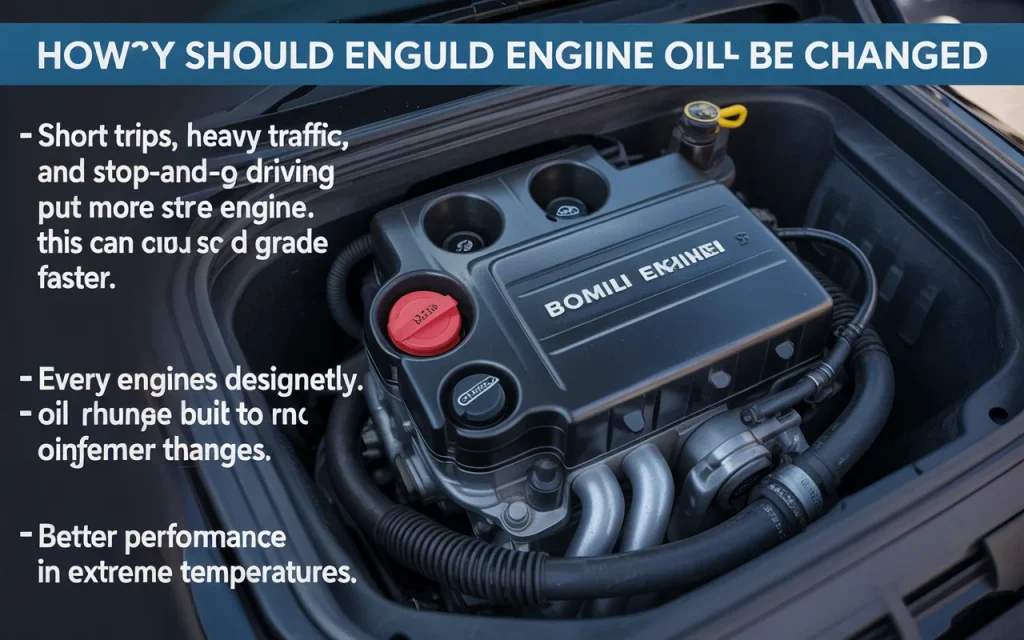
Short trips, heavy traffic, and stop-and-go driving put more stress on the engine. This can cause oil to degrade faster.
Examples of severe conditions include:
- Frequent short drives under 5 km
- Driving in hot climates
- Dusty or dirty roads
- Towing or carrying heavy loads
If you drive under these conditions regularly, you may need to change oil more often than standard intervals.
2. Type of Oil Used
Synthetic oil lasts longer and performs better under extreme temperatures compared to conventional oil.
- Conventional oil breaks down faster
- Synthetic oil resists heat and oxidation better
Using full synthetic oil can safely extend your oil change interval.
3. Engine Age and Condition
Older engines may consume oil faster and require more frequent checks and changes.
If your car has high mileage, it is wise to:
- Check oil level regularly
- Follow a shorter oil change interval
4. Manufacturer Recommendations
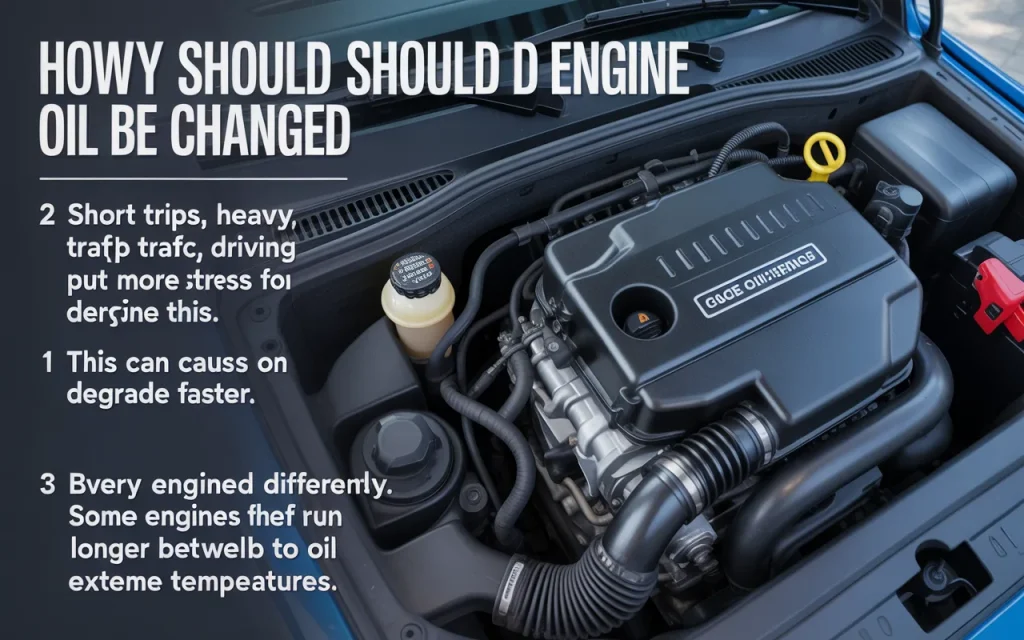
Every car is designed differently. Some engines are built to run longer between oil changes.
Always follow the manufacturer’s guidelines if available. Many newer vehicles also include oil life monitoring systems that adjust intervals based on real driving conditions.
Signs Your Engine Oil Needs Changing
Even if you follow a schedule, it is important to recognize warning signs that your oil may need to be changed sooner.
Common Warning Signs
| Symptom | What It Means |
|---|---|
| Dark, dirty oil | Oil is contaminated |
| Engine noise | Reduced lubrication |
| Oil warning light | Low or degraded oil |
| Burning smell | Overheated or old oil |
| Reduced fuel efficiency | Increased engine friction |
If you notice any of these signs, do not wait. Changing the oil early is better than risking engine damage.
Conventional vs Synthetic Oil: Which Should You Choose?
Choosing the right oil affects how often you need to change it and how well your engine performs.
Conventional Oil
- Lower cost
- Suitable for older engines
- Requires more frequent changes
Synthetic Oil
- Better performance in extreme temperatures
- Longer lifespan
- Improved engine protection
For most modern cars, synthetic oil is the better choice because it offers longer intervals and better protection.
How to Check Your Engine Oil Level
Checking your oil is simple and should be done regularly, especially if you drive often.

Step-by-Step Guide
- Park the car on a flat surface
- Turn off the engine and let it cool
- Pull out the dipstick and wipe it clean
- Insert it back fully, then remove it again
- Check the oil level and color
The oil should be between the minimum and maximum marks. If it looks very dark or dirty, it may be time for a change.
Common Oil Change Mistakes to Avoid
Many drivers make small mistakes that can lead to bigger problems over time.
Mistakes to Watch Out For
- Ignoring the owner’s manual
- Waiting too long between changes
- Using the wrong oil type
- Not replacing the oil filter
- Overfilling or underfilling oil
Avoiding these mistakes helps maintain proper engine performance and prevents unnecessary wear.
Oil Change Intervals for Different Driving Styles
Not all drivers use their cars the same way. Your routine affects how often oil changes are needed.
City Driving
- More frequent stops and starts
- Higher engine stress
- Shorter oil change intervals recommended
Highway Driving
- Steady speeds
- Less engine strain
- Oil lasts longer
Occasional Driving
- Oil can degrade even when the car is not used often
- Change oil at least once every 6 to 12 months
Should You Follow Time or Distance?
Many people focus only on kilometers, but time also matters.
Even if you do not drive much, oil can break down due to:
- Moisture buildup
- Temperature changes
- Oxidation
A good rule is:
- Change oil every 6 to 12 months if mileage is low
This ensures your engine always has fresh, effective oil.
FAQ
How often should engine oil be changed in city driving?
Every 5,000 to 7,000 km is a safe range due to heavier engine load and frequent stops.
Can I go 10,000 km without changing oil?
Yes, if you use synthetic oil and your manufacturer allows it. Always confirm with your manual.
What happens if I delay an oil change?
Old oil loses its protective properties, leading to increased wear, overheating, and possible engine damage.
Is synthetic oil worth it?
Yes, it lasts longer and provides better protection, especially in hot climates or heavy traffic.
Should I change oil if I do not drive much?
Yes. Oil should be changed at least once a year even with low mileage.
Do new cars need less frequent oil changes?
Most modern cars can go longer between changes, especially with synthetic oil and built-in monitoring systems.
Conclusion
Understanding how often should engine oil be changed helps you avoid unnecessary repairs and keep your car running smoothly. For most drivers, the right interval depends on oil type, driving conditions, and manufacturer guidance.
A simple habit like checking your oil regularly and sticking to a proper schedule can make a big difference in engine performance and lifespan. If you are unsure, follow your car manual and adjust based on how you actually drive.
For your next step, consider reading related guides on checking engine oil condition or choosing the right oil type for your vehicle.