
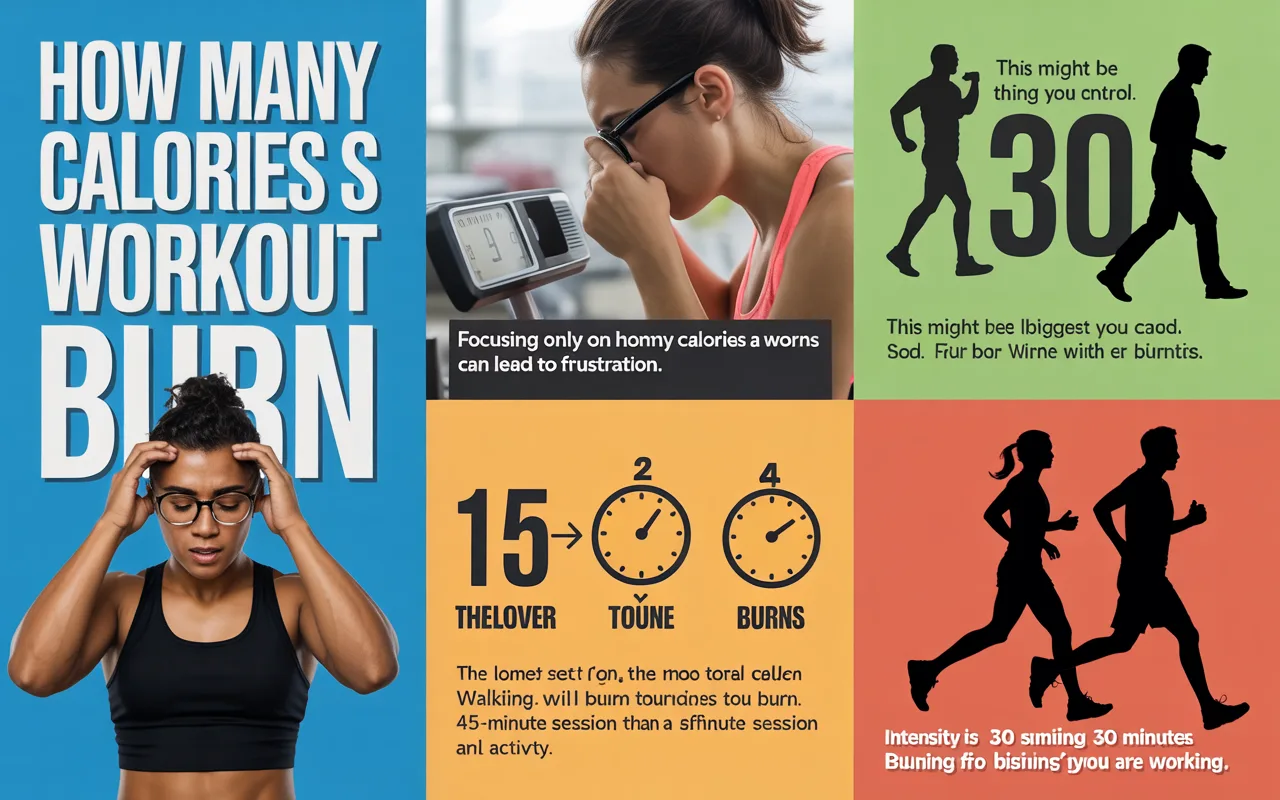
You want to know how many calories does workout burn for different exercises to help with your fitness goals. The direct answer is that a workout can burn anywhere from 100 to over 800 calories per hour, but the real number depends on you, your body, and how you move.
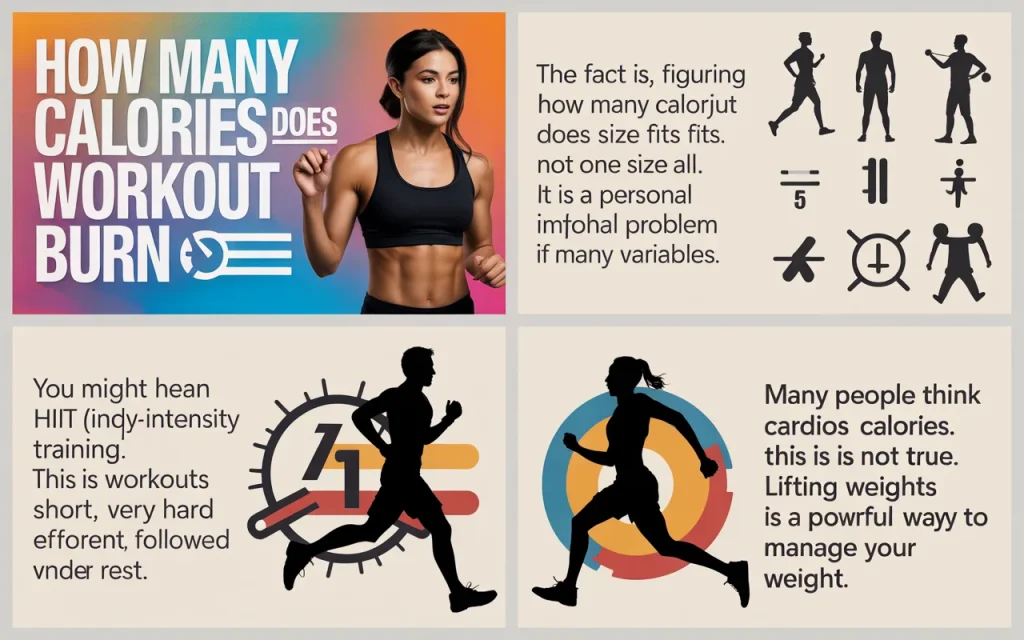
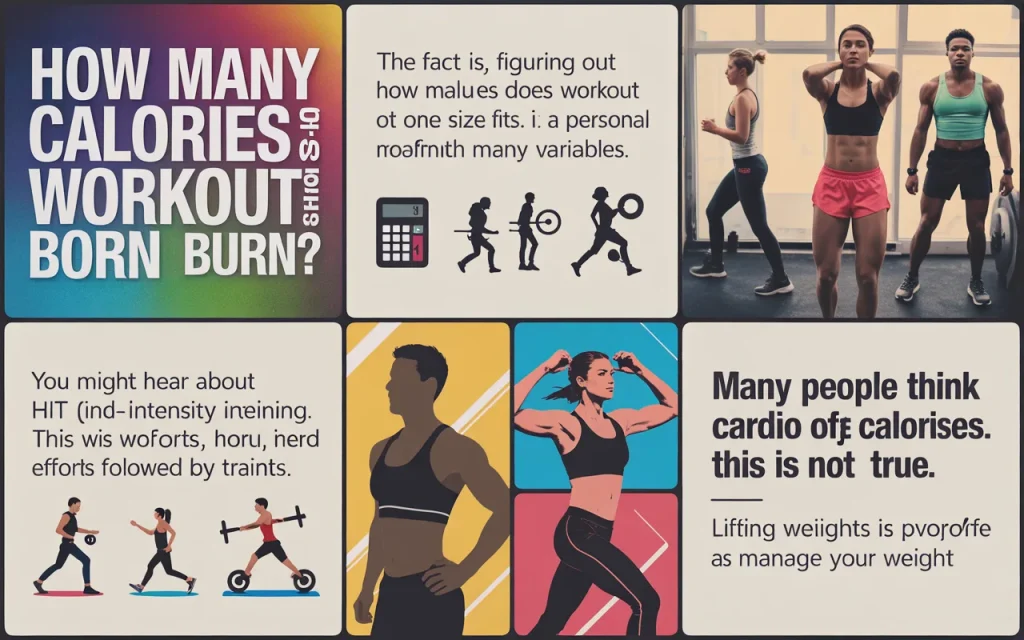
We have all seen those numbers on treadmills or fitness apps. “You burned 500 calories!” It feels good. But how accurate are they? The fact is, figuring out How Many Calories Does Workout Burn is not one size fits all. It is a personal math problem with many variables.
Think of your body like a car. A bigger car uses more fuel just to idle. A smaller car uses less. Now, if you drive that big car up a steep hill very fast, it will use much more fuel than the small car going slowly on a flat road. Your body works in a similar way.
“The only bad workout is the one that didn’t happen.” – Unknown
This quote reminds us that movement itself is the victory. Getting caught up in exact numbers can sometimes steal the joy from exercise. But, having a good general idea can help you make smart choices for your health.
What Changes the Calorie Burn?
So, what are the main things that change how many calories your workout burns? Let us look at the big four.
- Your Body Size and Makeup: This is a major factor. A person who weighs 200 pounds will burn more calories doing the same exercise as a person who weighs 130 pounds. Why? Because it takes more energy to move a larger body. Muscle also burns more calories at rest than fat does, so your overall body makeup matters.
- Workout Intensity: This might be the biggest thing you can control. Walking for 30 minutes is good. Running for 30 minutes burns significantly more calories. Intensity is about how hard you are working.
- Workout Length: The longer you go, the more total calories you burn. A 15-minute session will burn fewer calories than a 45-minute session of the same activity.
- Your Sex and Age: Men often burn calories faster than women because they tend to have more muscle mass. Also, as we get older, our metabolism can slow down, which can mean a lower calorie burn during the same activity compared to when we were younger.
Calorie Burn Estimates for Common Workouts
Here is a look at what a person weighing about 155 pounds might burn in 30 minutes of activity. Remember, these are estimates to give you a picture.
| Activity (30 minutes) | Estimated Calories Burned |
|---|---|
| Walking (3.5 mph) | 140 calories |
| Hiking | 185 calories |
| Slow Jogging (5 mph) | 295 calories |
| Swimming (Laps) | 255 calories |
| Cycling (12-14 mph) | 295 calories |
| High-Intensity Circuit | 300+ calories |
High-Intensity vs. Steady-State: The Burn and Beyond
You might hear about HIIT (High-Intensity Interval Training). This is workouts with short, very hard efforts followed by rest. Then there is steady-state cardio, like a long, constant bike ride.
- HIIT (e.g., Sprint Intervals): Burns a huge number of calories in a short time. Even better, it creates an “afterburn” effect, where your body keeps burning extra calories for hours after you finish as it recovers. A 30-minute HIIT session can be very effective for calorie burn.
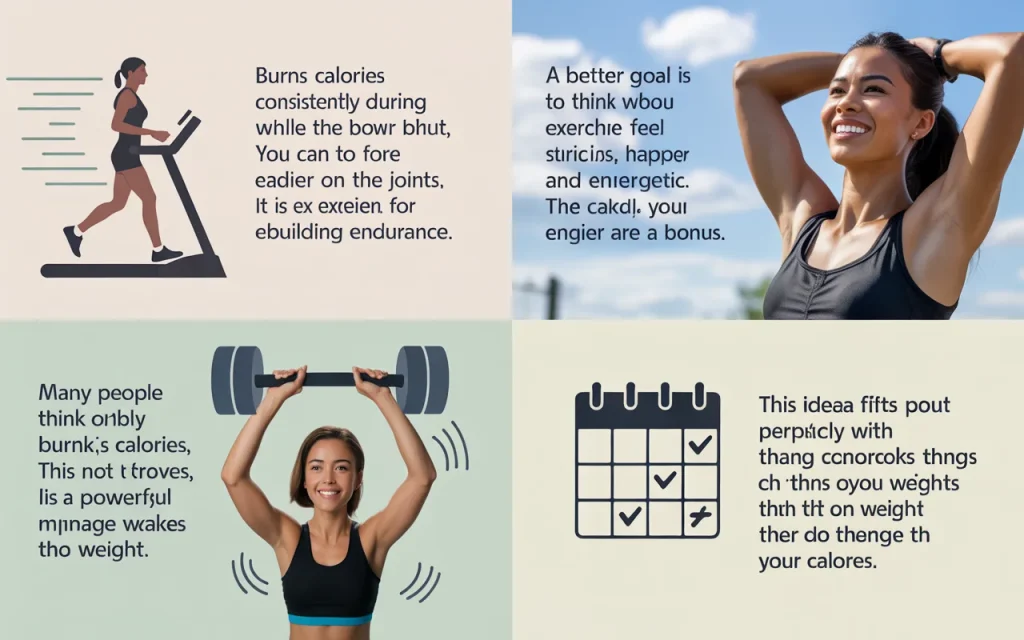
- Steady-State Cardio (e.g., Brisk Walking): Burns calories consistently during the workout. While the afterburn is smaller, you can often do it for longer periods and it is easier on the joints. It is excellent for building endurance.
The best type of workout to burn calories is the one you will do regularly. Enjoyment is key.
“We are what we repeatedly do. Excellence then is not an act, but a habit.” – Will Durant
This idea fits perfectly with fitness. Consistency over time is what changes your body and health, not one single workout where you burn a record number of calories.
Strength Training: The Secret Calorie Burner
Many people think only cardio burns calories. This is not true. Lifting weights is a powerful way to manage your weight.
When you do strength training, you burn calories during the session. But the real magic happens later. By building muscle, you increase your resting metabolic rate. This means your body burns more calories all day long, even when you are sitting at your desk or sleeping. Muscle is active tissue that needs energy.
So, while a 30-minute weight session might show a lower immediate burn than 30 minutes of running, its long-term effect on your metabolism is very valuable. A balanced plan with both cardio and strength is often the best approach.
How to Get a Better Estimate for YOU
The numbers on gym machines are just guesses. To get a closer idea of how many calories your workout burns, you can use these tools:
- Heart Rate Monitors and Fitness Trackers: These devices use your heart rate, age, weight, and sex to give a more personalized calorie burn estimate. They are not perfect, but they are much better than a generic number.
- METs (Metabolic Equivalents): Scientists use this measure. One MET is the energy you use sitting quietly. An activity with a MET value of 5 uses five times that energy. You can find METs charts online and plug your weight into a formula for a good estimate.
Simple METs Calculation:
Calories Burned = [(METs x 3.5 x your weight in kg) / 200] x time in minutes.
Why the Number Isn’t Everything
Focusing only on how many calories a workout burns can lead to frustration. Here is why:
- Machines and Apps Often Overestimate: They might be off by 20% or more. Do not take them as perfect truth.
- You Can’t Out-Exercise a Poor Diet: It is much easier to eat 500 calories than to burn 500 calories. Nutrition is the most important part of weight management.
- Non-Exercise Activity Matters Most: The calories you burn outside the gym, by walking, cleaning, gardening, and even fidgeting, make up most of your daily energy use. This is called NEAT (Non-Exercise Activity Thermogenesis).
A better goal is to think about how exercise makes you feel stronger, happier, and more energetic. The calories burned are a bonus.
| Myth vs. Fact About Calorie Burn |
|---|
| Myth: Sweating more means you are burning more calories. |
| Fact: Sweat is about cooling your body, not calorie burn. |
| Myth: You must work out in the “fat-burning zone.” |
| Fact: Higher intensity burns more total calories and fat overall. |
| Myth: Ab exercises burn belly fat. |
| Fact: You cannot spot-reduce fat. Your body loses fat from all over. |
Frequently Asked Questions
How accurate are the calorie counters on gym equipment?
They are often not very accurate. They usually do not account for your personal details like body fat percentage or fitness level. Use them as a rough guide, not a precise measurement.
Which workout burns the most calories per minute?
Activities that use your whole body at a high intensity typically win. This includes running, swimming, rowing, and HIIT workouts that involve movements like burpees or kettlebell swings.
Does building muscle really help you burn more calories at rest?
Yes. Muscle tissue requires more energy to maintain than fat tissue. Each pound of muscle you gain can help you burn an extra 5-10 calories per day at rest. Over time, this adds up.
Should I eat back the calories I burn during exercise?
This depends on your goal. If you are trying to lose weight, it is generally best not to “eat back” all your exercise calories, as the estimates can be high. If you are very active or trying to maintain weight, you will need to eat more to fuel your body.
How can I increase my calorie burn during a workout?
You can do this by increasing the intensity (adding speed or resistance), lengthening the time, or adding intervals. Also, including compound movements in strength training, like squats and push-ups, works more muscles and burns more calories.
Conclusion
Trying to find the exact answer to how many calories does workout burn is tricky. The number changes for every person and every workout. A good estimate for a 155-pound person is between 200 and 600 calories for a solid 30 to 60-minute session.
But do not let the numbers run your fitness journey. The best workout is the one you enjoy and can stick with week after week. Use the estimates as a general map, but listen to your body. Celebrate feeling stronger, having more stamina, and the positive mood that comes from moving.
“Take care of your body. It’s the only place you have to live.” – Jim Rohn
In the end, exercise is about so much more than a calorie number. It is about health, strength, and taking care of the amazing place you live in, your body. Keep moving, find activities you love, and the benefits will follow.

One Comment