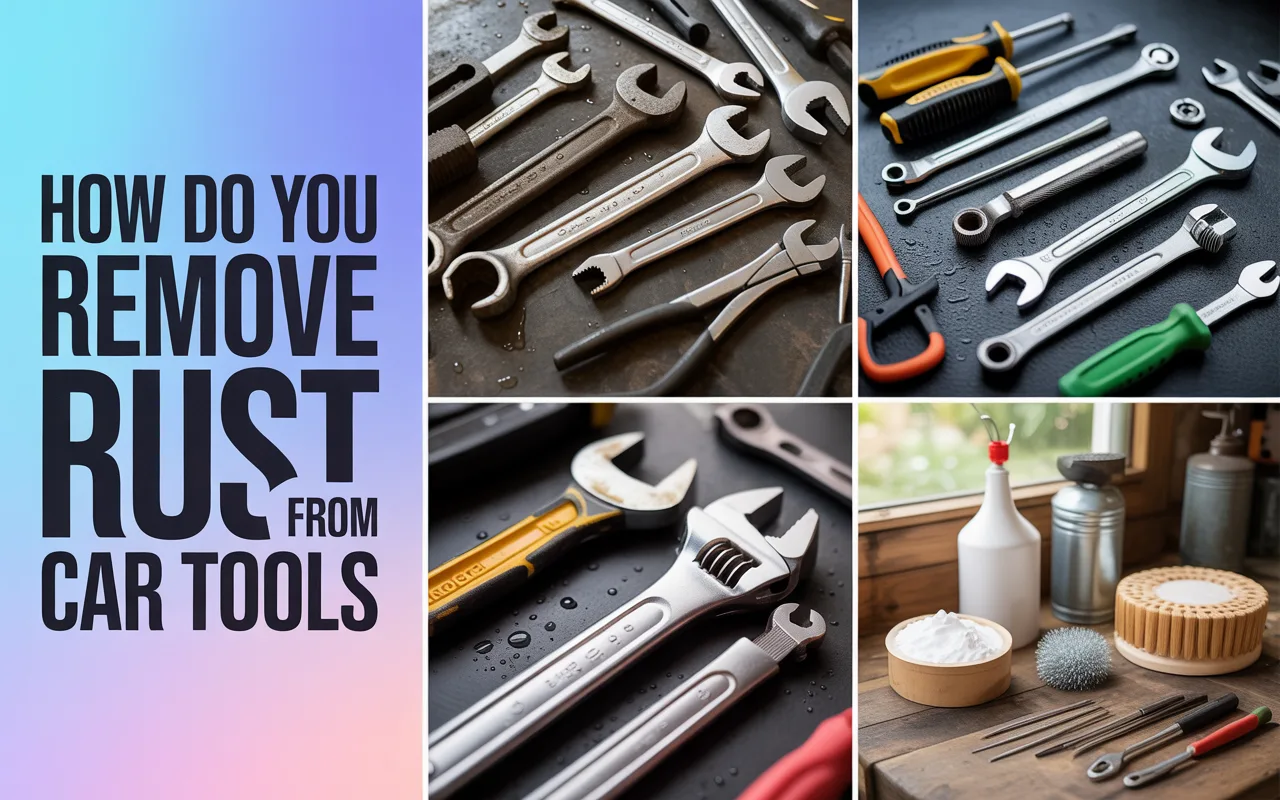
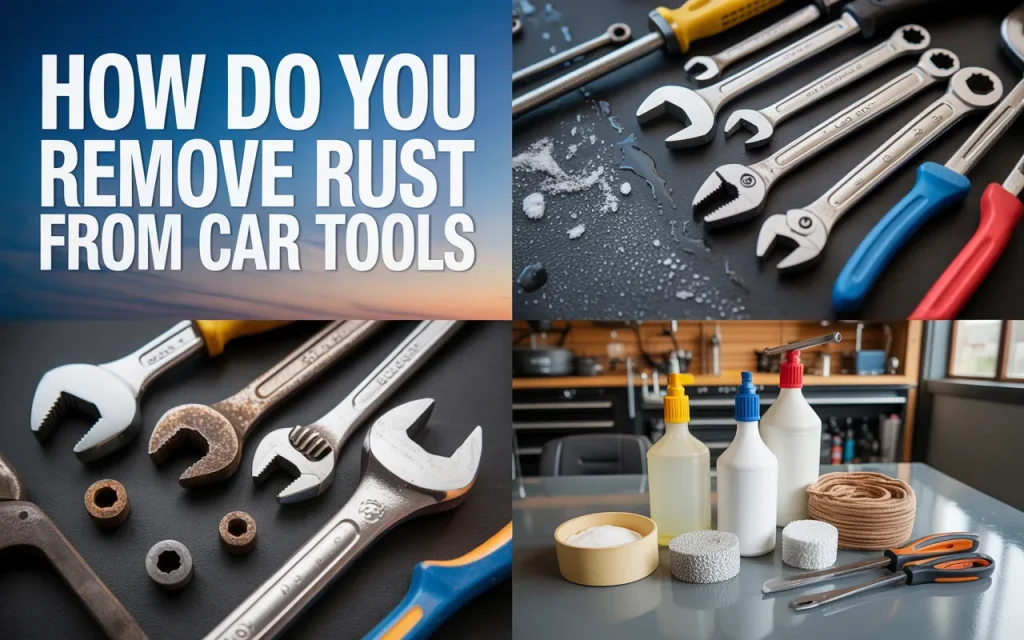
Learn the best ways to remove rust from car tools using simple home items. We show you step-by-step methods that work on wrenches, sockets, and other shop tools.
Rust happens to every car person. You open your tool box one day and see orange spots on your favorite wrench. Don’t worry. You can fix this problem without spending much money. Most car guys and gals have dealt with rusty tools at some point. The good news is that bringing old tools back to life is easier than you think.
When you remove rust from car tools, you save money and keep your gear working well. Rusty tools can slip when you use them. They can also mark up your car’s paint or parts. Clean tools just work better. They fit nuts and bolts the right way. They also last much longer.
Let me show you exactly how to clean up your tools. These methods work for hand tools, sockets, wrenches, and even larger shop equipment.
Why Do Car Tools Rust So Fast?
Car tools face tough conditions. They sit in damp garages. They get used on wet cars. They pick up road salt and moisture from the air. All these things cause rust to form.
Steel tools have iron in them. When iron meets water and oxygen, it starts to change. The metal turns into iron oxide, which we call rust. This process happens faster in humid places or when tools stay dirty.
“Rust is like a slow fire for your metal tools. It keeps eating away at the surface until the tool becomes weak and useless,” says Mark Thompson, a mechanic with 25 years of shop experience.
The good news? Surface rust is easy to fix. Even thick rust can be removed with the right steps. You just need to pick the method that works for your situation.
What You Need Before You Start
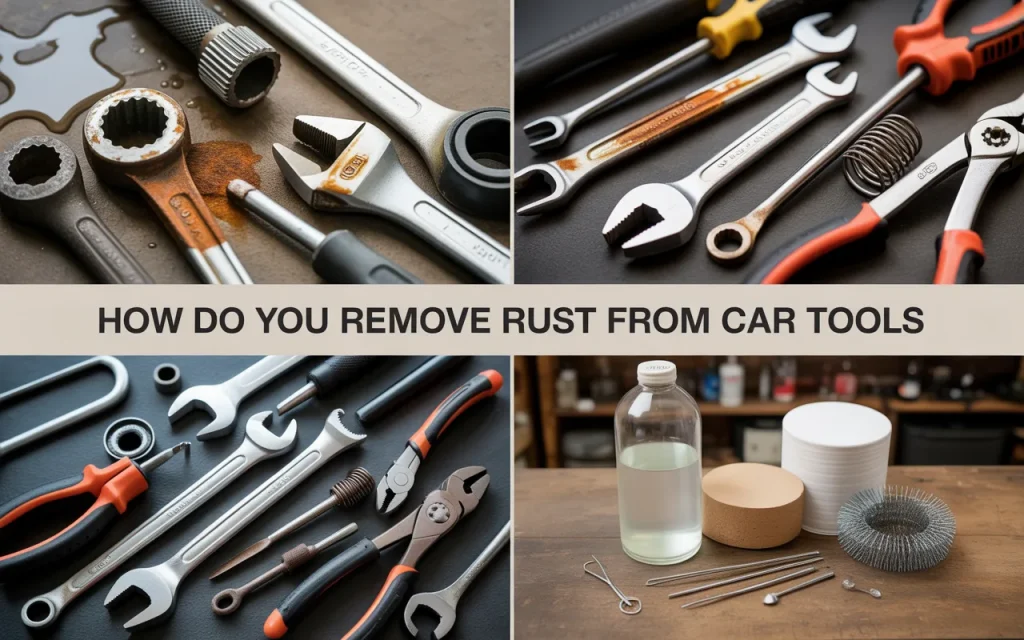
Gather these items based on which method you pick:
- White vinegar
- Baking soda
- Lemon juice
- Salt
- Potato (yes, really)
- Steel wool (fine grade)
- Wire brush
- Sandpaper (different grits)
- Old toothbrush
- Shop towels
- Protective gloves
- Rust converter spray (optional)
- Mineral oil or tool oil
Most of these things are already in your kitchen or garage. That makes this project cheap and easy to start today.
Method 1: Soak Tools in Vinegar
Vinegar works great when you remove rust from car tools. The acid in vinegar eats away the rust without hurting the good metal too much. This method works best for tools that are fully covered in rust.
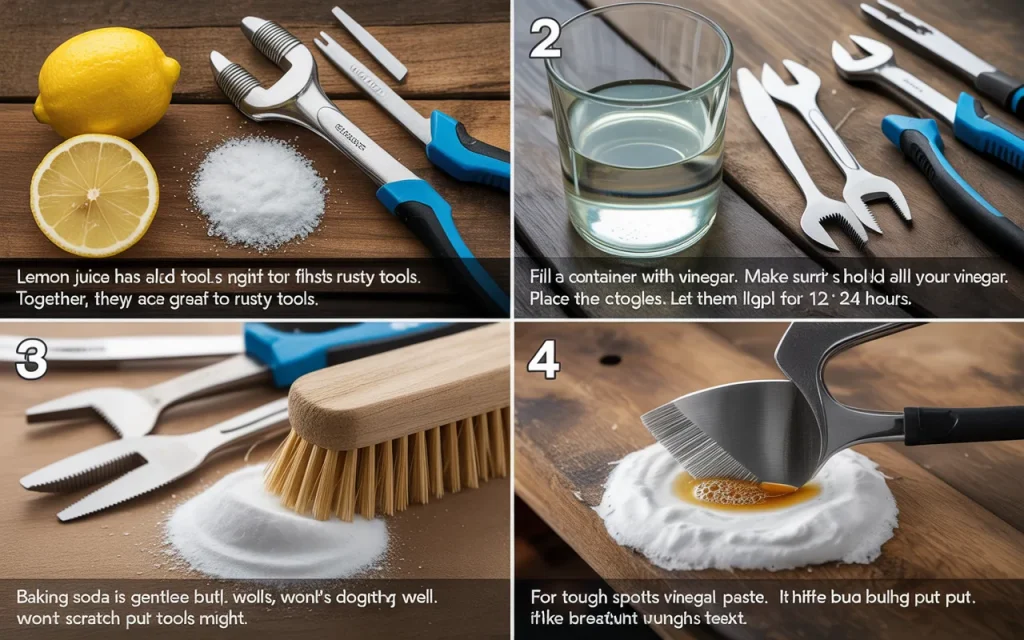
Fill a container with white vinegar. Make sure the container is big enough to hold all your rusty tools. Place the tools in the vinegar. Let them sit for 12 to 24 hours. Check them after 12 hours to see how the rust looks.
The vinegar will turn dark as it works. That is normal. It means the rust is coming off the metal.
After soaking, take the tools out. Rinse them with water. Then scrub with a wire brush or steel wool. The rust should come right off. Dry the tools fully with a shop towel. Put them in a warm place to make sure no water stays on them.
Vinegar Soak Table
| Tool Type | Soak Time | Scrub Tool | Notes |
|---|---|---|---|
| Light rust on wrenches | 4-6 hours | Steel wool | Check often |
| Heavy rust on sockets | 12-24 hours | Wire brush | May need two soaks |
| Rusty pliers | 8-12 hours | Old toothbrush | Work the joints |
| Rusty screwdrivers | 6-8 hours | Sandpaper | Don’t soak handles |
Method 2: Use Baking Soda Paste
Baking soda is gentle but works well. It won’t scratch your tools like some rough methods might. This is good for tools that just have light rust spots.
Mix baking soda with a little water. You want a thick paste, not a thin liquid. Put this paste on the rusty parts of your tools. Let it sit for about 30 minutes.
Take an old toothbrush or small brush and scrub the paste into the rust. The mild grit in baking soda helps lift the rust away. Rinse with water and dry the tool well.
For tough spots, add a little vinegar to the paste. It will bubble up. That bubbling action helps break down the rust. Scrub again and rinse.
Method 3: Try Lemon and Salt
Lemon juice has acid that fights rust. Salt adds grit to scrub with. Together, they make a great team for rusty tools.
Sprinkle salt over the rusty areas of your tool. Squeeze fresh lemon juice onto the salt. Let this sit for a couple of hours. The lemon juice soaks into the rust and loosens it. The salt gives you something to scrub with.
After a few hours, use the lemon rind to scrub the tool. The rind has natural oils and a rough surface. It works like a scrubber. Rinse the tool and dry it well.
This method smells much better than vinegar. It also leaves a fresh scent on your tools.
Method 4: The Potato Trick
This sounds strange, but it works. Potatoes have oxalic acid. This acid helps break down rust. Many people do not know that potatoes can help you remove rust from car tools.
Cut a potato in half. Sprinkle salt or baking soda on the cut side. Rub this on your rusty tool. The moisture from the potato carries the salt into the rust. Keep rubbing until you see the rust fading.
For tools with heavy rust, stick the tool into a potato and leave it overnight. The potato stays moist and works on the rust while you sleep. Take it out in the morning and scrub off the loose rust.
“This potato method saved my old set of sockets. I thought they were ruined, but one night in a potato brought them back,” shares Jenny Chen, a DIY car builder from Texas.
Method 5: Steel Wool and Sandpaper
Sometimes you just need to rub the rust off. This works for tools with thick rust spots. You do not need to soak them first.
Start with coarse sandpaper or steel wool. Rub the rusty areas until you see clean metal. Move to finer sandpaper to smooth the surface. Finish with very fine steel wool to polish.
Be careful with this method. You can remove good metal if you rub too hard. Go slow and check your progress often. Stop when the rust is gone.
Wipe the tool with a cloth to remove dust. Put a light coat of oil on the metal to stop new rust from forming.
How to Stop Rust From Coming Back
Cleaning rust is only half the job. You also need to keep it away. Here are simple ways to protect your tools after you clean them.
Keep tools dry. Wipe them down after each use. Do not put them away wet.
Use oil. A light coat of machine oil on metal parts stops rust. Just a few drops on a cloth, then wipe the tool.
Store smart. Keep tools in a dry box or drawer. Add silica gel packs to absorb moisture. Some people put chalk in their tool box to soak up dampness.
Check often. Look at your tools every few weeks. Catch rust early before it spreads.
Rust Prevention Table
| Prevention Method | How It Works | How Often | Cost |
|---|---|---|---|
| Tool oil coating | Blocks air from metal | After each use | Low |
| Silica gel packs | Soaks up moisture | Replace when wet | Low |
| Chalk in toolbox | Absorbs dampness | Monthly | Very low |
| Climate control | Keeps air dry | Always on | High |
| Rust paper | Releases vapor that stops rust | Every 6 months | Medium |
Natural vs Store Products
You can buy special rust removers at the store. They work fast. But they cost money and have strong chemicals. The home methods above use things you already have.
Store products work well for big jobs. If you have many tools to clean, a commercial rust remover might save time. For small jobs, try kitchen items first.
Some store products turn rust into a black coating. This coating protects the metal. You can also buy rust converters that do this. They paint onto the rust and change it into a safe layer.
“After 40 years in auto shops, I still use vinegar more than anything else. It’s cheap, it works, and I don’t worry about fumes,” says Robert Garcia, retired master mechanic.
Cleaning Different Types of Tools
Not all tools are the same. Some have moving parts. Others have wooden handles. You need to adjust your method for each type.
Wrenches and sockets: These are solid metal. Any method works. Soaking is fine for these.
Pliers and cutters: These have joints. Soak them with care. Work the joints while cleaning to get rust out of the moving parts.
Screwdrivers: Keep the handles dry. Only clean the metal shaft. If the handle gets wet, dry it fast.
Ratchets: These have internal parts. Do not soak them. Use paste methods instead. Oil them well after cleaning.
Big tools like breaker bars: These are too large to soak. Use scrubbing methods or apply rust remover with a brush.
Step-by-Step: Full Tool Cleaning Process
Follow these steps for best results when you remove rust from car tools.
- Gather all rusty tools in one place.
- Pick your cleaning method based on rust level.
- Clean the tools using your chosen method.
- Scrub off loose rust with brush or wool.
- Rinse tools with clean water.
- Dry tools fully with towels.
- Put tools in warm spot to finish drying.
- Apply light oil coat to all metal.
- Store tools in dry place.
- Check tools after one week for any missed rust.
This whole process takes a few hours of work plus waiting time. The results are worth it. Your tools will look and work like new.
Frequently Asked Questions
Can I use Coke to remove rust?
Yes. Coke has phosphoric acid that breaks down rust. Soak tools in Coke for 24 hours, then scrub and rinse well.
Will vinegar hurt my tools?
Vinegar is safe for most metal tools. Do not leave them in vinegar for more than 24 hours. Rinse and dry them well after soaking.
How do I clean rust off old tools I bought at a garage sale?
Use the vinegar soak method first. It works on old, thick rust. Then scrub with wire brush. Finish with oil to protect them.
What if my tools have plastic handles?
Keep handles out of liquids. Clean only the metal parts. Use paste methods on the metal near handles.
Is rust dangerous on tools?
Rust itself is not dangerous to touch. But rusty tools can break or slip, which can cause injury. Clean tools are safer tools.
Can I use a wire wheel on a bench grinder?
Yes. This works fast for heavy rust. Hold the tool against the spinning wire wheel. Wear eye protection. Small particles will fly.
How often should I clean my tools?
Clean them when you see rust starting. A quick check every month helps catch rust early. Full cleaning once a year keeps them nice.
Will sandpaper scratch my tools?
Yes, it leaves marks. Use fine grit for light rust. Start with medium grit and move to fine grit to reduce scratches.
Can I prevent rust without oil?
Store tools in a dry place. Use moisture absorbers. Keep them in closed boxes. These steps help without oil.
What is the fastest way to remove rust?
Store-bought rust removers work fastest. They dissolve rust in minutes. For home methods, vinegar works fairly fast.
Conclusion
Rust on car tools does not mean the tools are ruined. With simple items from your kitchen, you can remove rust from car tools and make them work like new. Vinegar, baking soda, lemons, and even potatoes all help fight rust.
The key is to act fast when you see rust. Small spots come off easy. Thick rust takes more work but can still be fixed. After cleaning, always dry and oil your tools. This stops rust from coming back.
“Tools are like teammates in the garage. Take care of them, and they take care of you,” says Maria Sanchez, auto shop teacher and collector of vintage tools.
Try these methods on your rusty tools this weekend. Pick one that fits the tools you have. You will be happy to see your old tools looking fresh again. Your car projects will go smoother with clean tools that grip well and work right.
Remember to check your tools often. A little care now saves big work later. Your wallet and your tools will thank you.