
If you want a Hair Tool Causes Less Hair Damage, the answer is a high quality ceramic tourmaline ionic dryer. This guide compares all popular tools to help you pick the best one for your hair’s health.
Let’s talk about hair damage. We all want beautiful, shiny hair, but our favorite tools can sometimes leave it dry, brittle, and sad. If you’ve ever wondered which hair tool causes less hair damage, you’re in the right place. I’ve been there, with my flat iron in one hand and a chunk of split ends in the other, feeling frustrated. It took me years of trial and error, plus lots of chats with stylists, to figure it out.
This guide will walk you through the real deal on heat tools. We will look at dryers, flat irons, curling wands, and more. We will see how they work, what makes them harmful, and how to choose the one that is gentle on your strands. The goal is simple: to help you get the style you love without the damage you hate.
How Heat Tools Damage Your Hair
To pick the right tool, we need to know the enemy. Hair is made of a protein called keratin. Think of each hair strand like a rope. Healthy hair has a smooth, outer layer called the cuticle that lays flat, protecting the inside.
Heat damages this structure. When you apply too much heat, especially from a tool that does not spread heat well, you scorch the hair. The cuticle lifts and cracks. The inner layer loses moisture. This leads to all the problems we know too well: split ends, breakage, dullness, and frizz. As celebrity hairstylist Jen Atkin once said, “Heat styling is a balance. It’s about using the right tools at the right temperature to achieve your look without compromising hair health.” It is a perfect summary of our mission.
The Great Tool Showdown: Damage Levels Compared
Let us put the most common tools side by side. This table gives you a quick look at which hair tool causes less hair damage in a direct comparison.
| Hair Tool | Primary Use | Typical Damage Risk (Low to High) | Key Reason for Damage Level |
|---|---|---|---|
| Hair Dryer (Ionic) | Drying & adding volume | Low to Medium | Indirect, dispersive heat with ionic tech to reduce frizz. |
| Curling Iron (Ceramic) | Creating curls & waves | Medium | Direct, concentrated heat on sections of hair. |
| Flat Iron (Ceramic) | Straightening & smoothing | Medium to High | Direct, high heat pressed directly on hair. |
| Hot Brushes | Drying & straightening | Medium | Direct heat, but often with wider, gentler surfaces. |
| Traditional Metal Iron | Straightening | Very High | Uneven heat that creates hot spots, frying hair quickly. |
| Heated Rollers | Setting curls | Low to Medium | Gentler, consistent heat without pulling or clamping. |
The Winner: Why a Good Hair Dryer Causes Less Damage
You might be surprised. The tool that typically causes less hair damage is your hair dryer, especially a modern ionic or tourmaline model.
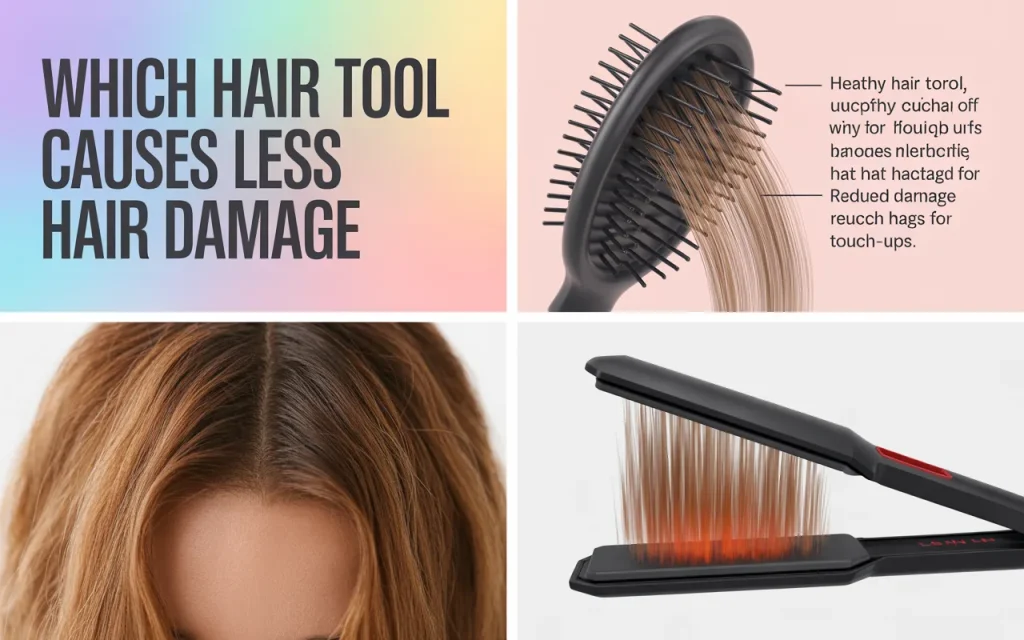
Here is why. A dryer uses moving air to evaporate water. The heat is indirect and spread over a larger area. You are not clamping or pressing the heat directly onto the hair. This is much gentler than the direct contact of a flat iron. Also, most of the water evaporates at 212°F (100°C). A good dryer lets you dry your hair on a medium heat setting without needing extreme temperatures.
The real heroes are ionic and ceramic technologies. Ionic dryers shoot out negative ions. These ions break down water molecules faster, so you dry hair quicker and with less heat. They also help seal the hair cuticle, leaving hair smooth and shiny. Ceramic and tourmaline materials spread heat evenly so there are no hot spots that can burn your hair. So, if you must use heat, start with a top quality dryer. It is the first step in a healthy routine.
Flat Irons & Curling Wands: Picking the Safer Option
Sometimes, you need more than a dryer. You want sleek strands or bouncy curls. Between a flat iron and a curling wand, which hair tool causes less hair damage? There is a slight edge for curling irons or wands.
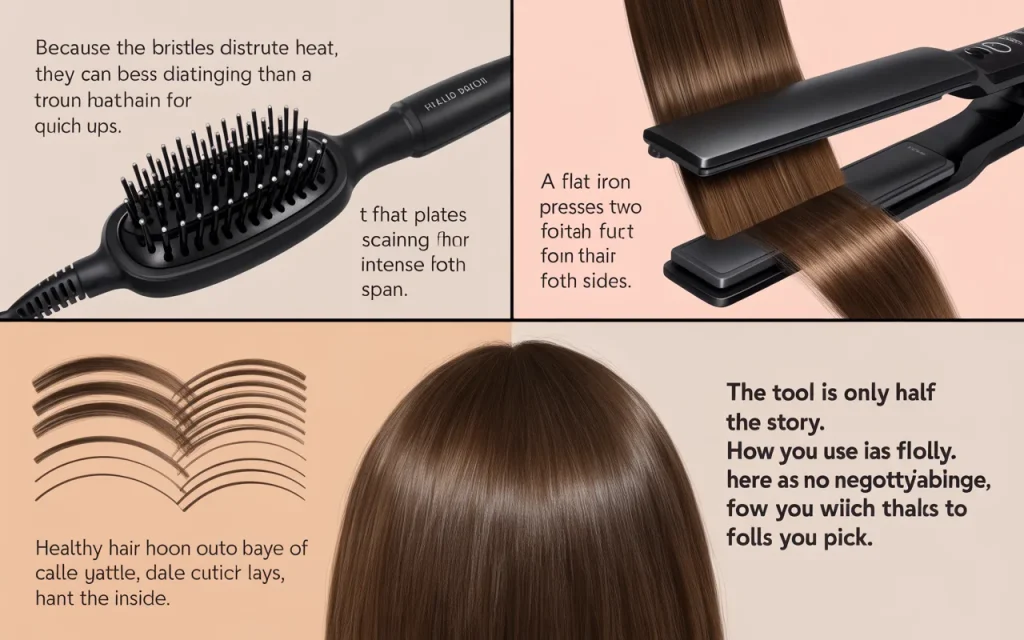
A flat iron presses two hot plates against your hair, sandwiching it with intense heat from both sides. This can be very harsh. A curling iron or wand wraps the hair around a single heated barrel. The heat is still direct, but it is not pressed from both sides. The contact can be a bit gentler.
The material is everything here. Always choose tools with ceramic, tourmaline, or titanium plates or barrels. Avoid cheap metal plates. Ceramic and tourmaline give even heat. Titanium heats up fast and is great for very thick hair, but it can be too hot for fine hair. Look for tools with adjustable temperature settings. Fine hair might only need 300°F, while thick hair may need 380°F. More heat is not always better.
The Role of Hot Brushes & Heated Rollers
What about these other options? Hot brushes combine drying and styling. They can be good for adding volume and smoothing. Because the bristles help distribute heat, they can be less damaging than a traditional flat iron for quick touch ups. However, they still use direct heat and can tug on hair if you are not careful.
Heated rollers are a classic choice for a reason. They are one of the gentlest heating tools. You heat them up, roll your hair in, and let it set. The heat is consistent and enveloping, but there is no pulling or clamping. They create beautiful, soft curls with minimal stress on the hair. For long term health and loose curls, they are a fantastic pick.
Your Hair Type Changes the Game
Your hair is unique. The best tool for you depends on its texture and condition.
- Fine or Thin Hair: This hair type is fragile. It needs low heat. A good ionic dryer and a ceramic curling iron with a low temperature setting (under 330°F) are best. Avoid heavy, high heat tools.
- Thick or Coarse Hair: This hair can handle more heat to change its shape. You might need a dryer with high power and a flat iron that reaches 400°F. Titanium tools can work well here. The key is to use a heat protectant and not pass over the same section too many times.
- Curly or Textured Hair: The goal is often to smooth or dry without causing frizz. A diffuser attachment on an ionic dryer is a lifesaver. It dries curls gently and reduces puffiness. For straightening, wide plate ceramic flat irons are helpful to cover more surface area quickly.
- Damaged or Color-Treated Hair: Your hair is already stressed. It needs the most care. Use the lowest heat setting that works. A high end ionic dryer and heated rollers might become your best friends. Give your hair breaks from direct heat tools whenever you can.
How to Use Any Tool with Less Damage
The tool is only half the story. How you use it matters just as much. Here are non negotiable rules to follow, no matter which tool you pick.
- Always Use a Heat Protectant: This is the number one rule. A good spray or cream coats the hair with a light shield. It does not stop the heat, but it helps prevent the moisture inside your hair from boiling away. Think of it as sunscreen for your hair.
- Dry Your Hair Most of the Way First: Never use a flat iron or curling iron on soaking wet hair. Always dry your hair at least 90% with a dryer first. Applying high heat to wet hair is like frying steam it causes bubbles in the hair strand and leads to severe breakage.
- Find the Right Temperature: Start low. You can always go higher if needed. Fine hair needs less heat than thick hair.
- Do Not Repeat Passes: Try to style each section of hair in one or two smooth passes. Going over and over the same piece with a hot iron is a sure way to fry it.
- Keep the Tool Moving: Do not let the tool sit in one spot on your hair. Keep it gliding smoothly along the section.
- Give Your Hair a Break: Have heat free days. Use loose braids or hair rollers for style without any heat at all. Your hair will thank you.
Choosing Your Champion: A Buying Checklist
Feeling ready to choose a new tool? Use this simple list to find one that will be a friend to your hair.
| Feature | What to Look For | Why It Helps |
|---|---|---|
| Material | Ceramic, Tourmaline, or Ionic components. | Spreads heat evenly and prevents hot spots. |
| Temperature Control | Adjustable settings with a digital display. | Lets you use the lowest effective heat for your hair. |
| Plate or Barrel Size | Choose a width that matches your hair length & style goal. | Lets you style faster with fewer passes. |
| Heat Up Time | A tool that heats up in 30-60 seconds. | Shows consistent heating technology. |
| Cord | A swivel cord. | Prevents tangling and tugging during use. |
Frequently Asked Questions
Does a more expensive hair tool cause less damage?
Often, yes. Higher priced tools usually have better materials like pure ceramic or tourmaline. They have more accurate temperature controls and better engineering to spread heat evenly. A cheap tool can have hot spots that burn your hair quickly. It is an investment in your hair’s health.
Can I use heat tools on wet hair?
Only a hair dryer. You should never use a flat iron, curling iron, or hot brush on wet or even damp hair. It causes instant, intense damage called bubble hair. Always make sure hair is completely dry before using any direct heat styling tool.
How often is it safe to use heat tools?
This depends on your hair’s health. For strong hair, using a tool like a dryer or iron 3-4 times a week with proper protection might be okay. For damaged hair, try to limit it to 1-2 times a week. Always listen to your hair. If it feels dry or straw like, take a longer break.
Are there any truly damage free heat tools?
No tool that uses heat is completely without risk. However, tools that use indirect heat (like dryers and heated rollers) or very low, consistent heat (like some newer thermal brushes) are the closest you can get to damage free styling.
Is air drying better than using a hair dryer?
It can be, but not always. For very thick hair, air drying can take hours. Having wet hair for a long time can actually swell the hair strand and make it weak. A quick, gentle dry with an ionic dryer on medium heat can sometimes be better. As hair scientist Dr. Sharon McGuire notes, “The duration of wetness matters. Sometimes, a controlled, efficient dry is less stressful than hours of damp vulnerability.”
Conclusion
So, which hair tool causes less hair damage? The clear winner is a modern ionic ceramic hair dryer for overall use. It is the foundation of safe styling. When you need more, choose curling wands over flat irons when you can, and always pick tools with good materials and temperature control.
Remember, the goal is not to never use heat. It is to use it smartly. Your routine and protection are just as important as the tool you buy. Start with a heat protectant, use the right heat for your hair type, and give your hair regular days off. Your hair is your crown. With the right knowledge and tools, you can style it beautifully and keep it healthy, strong, and shiny for years to come. The best style, after all, is healthy hair.
8 Comments