
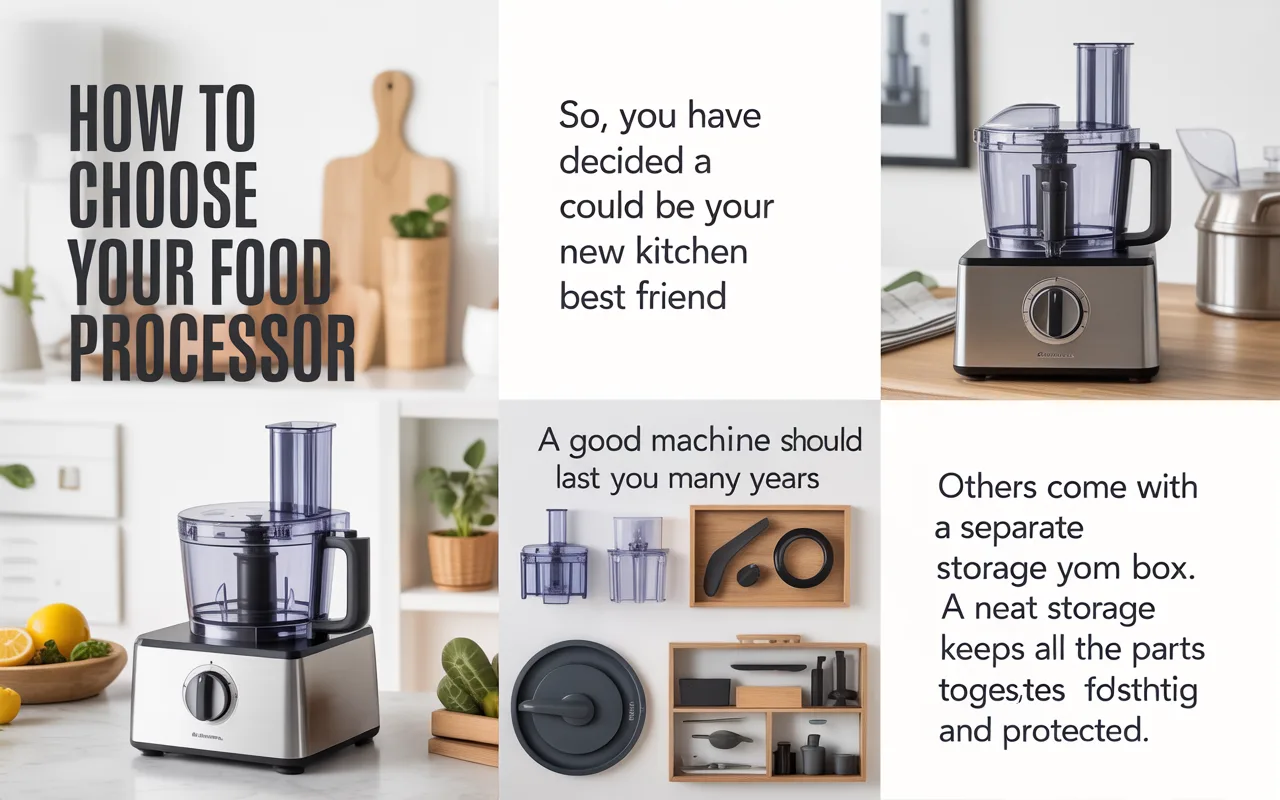
Our direct guide on how to choose your food processor covers power, size, and key features to match your real kitchen needs for perfect results every time.
So, you have decided a food processor could be your new kitchen best friend. Smart move. These tools can save you so much time and effort. But the real task is knowing how to choose a food processor that will actually work for you, not just look good on the counter. With so many options, it is easy to feel a bit lost.
This guide is here to help. We will walk through the simple, important things to think about. You will learn what matters for your cooking style and what you can probably skip. By the end, you will feel ready to pick the perfect machine for your home.
What a Food Processor Really Does
First, let us be clear on what this tool is for. A food processor is built for power and precision with solid or semi-solid foods. It chops, slices, shreds, and purees with speed. Think of it as a helper for the heavy prep work that makes cooking tiring.
Julia Child once said, “You don’t have to cook fancy or complicated masterpieces – just good food from fresh ingredients.” A food processor helps you do just that by making fresh preparation simple.
It is different from a blender. Blenders are best for liquids, like smoothies and soups. Food processors handle drier, chunkier jobs like dough, nut butter, and vegetable chunks. Knowing this helps you choose food processor power and features correctly.
Key Things to Think About Before You Buy
Before you look at models, ask yourself a few questions about your own kitchen habits.
- What do you cook most often? Do you make a lot of bread or pastry? Then you need a strong motor. Do you host big dinners? Then a large bowl is key. Are you cooking for one or two? A compact model saves space.
- What jobs annoy you? Is it chopping onions? Grating cheese? Making pie dough? Your biggest annoyance should guide your choice.
- How much space do you have? These machines need storage. Measure your cabinet or counter space.
Your honest answers will point you in the right direction. This step makes sure the machine you choose food processor for is the one you will actually use every week.
Motor Power and Capacity: The Heart of the Machine
These two factors are linked and very important.
Motor Power (Watts):
The motor is the engine. More power means the machine can handle tougher jobs without slowing down or stopping. A weak motor will struggle with stiff dough or hard cheese.
- Low (300-500 Watts): Good for light tasks like chopping herbs or making salsa.
- Medium (500-700 Watts): A great all-purpose range. It can handle most tasks, including some dough.
- High (700+ Watts): Best for frequent use, tough ingredients, and heavy doughs. If you cook a lot, aim for this.
Bowl Capacity (Cups):
This is the size of the main bowl. Bigger is not always better if it is always half-empty.
- Small (3-5 cups): Ideal for small households, baby food, or quick herb chops.
- Medium (8-12 cups): The most popular and useful size for families of 2-4.
- Large (13+ cups): Best for big batch cooking, large families, or serious meal preppers.
Here is a simple table to match capacity to your needs:
| Household Size & Cooking Style | Recommended Capacity |
|---|---|
| Single person or couple, light cooking | 3-8 cups |
| Family of 3-4, regular cooking | 10-14 cups |
| Large family, frequent entertaining, big batches | 14 cups and up |
Essential Features and Attachments
Beyond the basics, look at what comes with the machine. The right attachments make it more useful.
- The S-Blade: This is the standard blade for chopping, pureeing, and mixing. Every machine has one. Look for one that feels solid.
- Disc Attachments: These are for slicing and shredding. They slide into the top. A good set will have a few thickness options.
- Dough Blade: Often a plastic blade with arms. It is gentler on flour, helping make better bread or pastry dough.
- Feed Tube: This is where you push food through onto the discs. A wide feed tube can fit a whole tomato or small potato, saving you prep time.
- Pulse Function: This gives you short, quick bursts of power. It is vital for getting the perfect chop without turning food to mush.
Think about which you will really use. If you never make coleslaw, you might not need three shredding discs.
Build Quality and Safety
You want this machine to last. Here is what to check.
- Weight and Stability: A heavier base is good. It means the machine will not “walk” across the counter when it is working hard.
- Bowl Material: Clear plastic is common. It should be strong, without a flimsy feel. Look for marks to show you the maximum fill lines.
- Safety Features: Most will not run unless the bowl and lid are locked perfectly in place. This is a must-have.
- Noise Level: Food processors are not quiet. But some are louder than others. If this is important, read reviews about noise.
As chef and author Alice Waters notes, “Good food depends almost entirely on good ingredients.” A good food processor respects those ingredients by cutting them cleanly and safely.
Brands, Budget, and Value
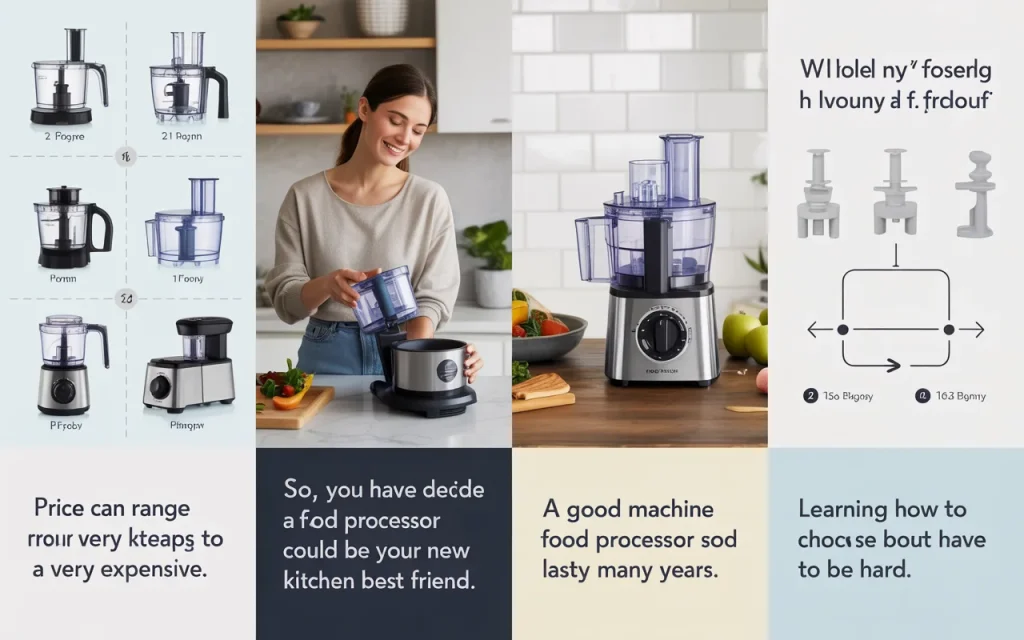
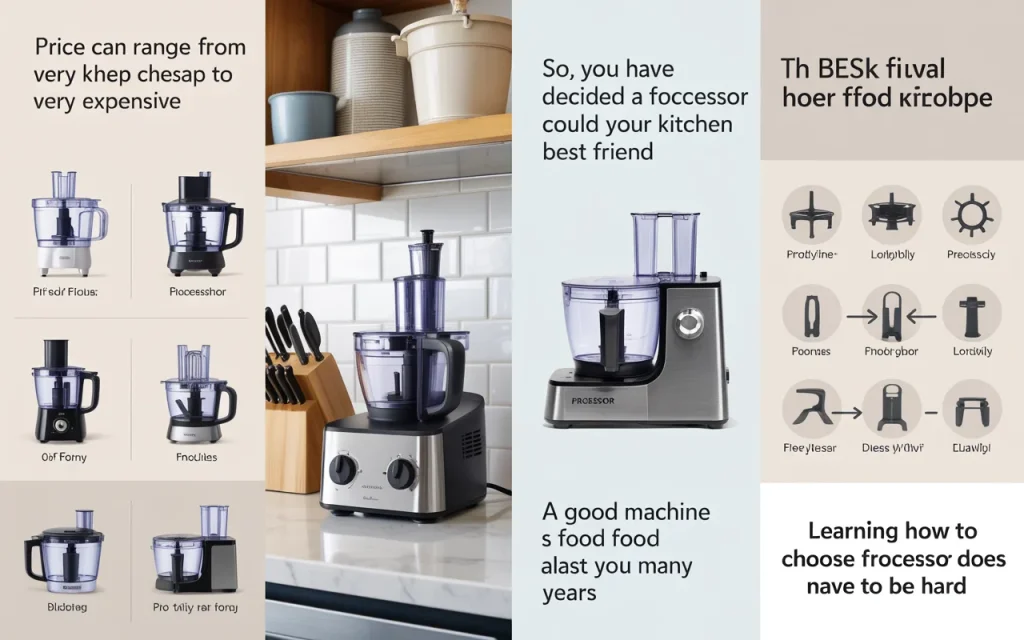
Price can range from very cheap to very expensive. A very low price often means a weak motor or parts that break. Spending a bit more for a known brand often means better quality and easier-to-find replacement parts.
Think of it as an investment. A good machine should last you many years. Set a budget you are okay with, but be ready to pay a fair price for a tool you will use often.
Cleaning and Storage
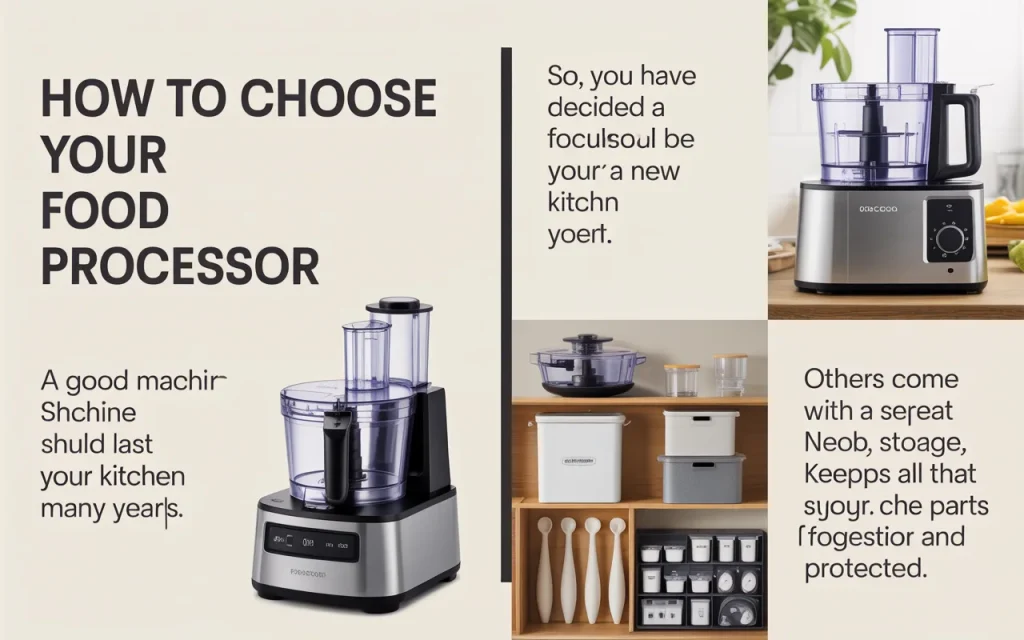
If a machine is hard to clean, you will not use it. Most parts should be dishwasher safe for easy cleaning. Check how they store, too. Some models nest the discs inside the bowl. Others come with a separate storage box. A neat storage system keeps all the parts together and protected.
Common Questions About Food Processors
Q: Can a food processor replace my blender?
A: Not fully. They do different jobs. Blenders are better for smooth liquids. Food processors are better for dry, chunky, or thick tasks. Many homes have both for different uses.
Q: Is a food processor hard to clean?
A: Most are very easy. The bowl, lid, blades, and discs usually go in the dishwasher. Just be careful with the sharp blades. The main motor base should never go in water. Just wipe it with a damp cloth.
Q: What can I not put in a food processor?
A: Do not put very hot liquids in it, as steam can create pressure. Avoid very hard bones or coffee beans, which can damage the blade. Do not overfill it with very thick mixtures like stiff dough.
Here is a quick look at what jobs these machines handle best:
| Great For a Food Processor | Better for a Blender |
|---|---|
| Chopping vegetables | Making smoothies |
| Shredding cheese | Pureeing soups |
| Making dough | Mixing drinks |
| Grinding nuts | Making sauces very smooth |
| Making pesto or hummus | Crushing ice |
Making Your Final Choice
Now you know the main points. You have thought about your kitchen, the power you need, the size you want, and the features you will use. The next step is to read some reviews for the models that fit your list. Look for comments from people who cook like you do.
Cookbook author Tamar Adler wisely wrote, “Cooking is not about making one perfect thing, but about making good things, one after another.” A well-chosen food processor helps you do exactly that, meal after meal.
Trust what you have learned here. The goal is to find a helper that makes cooking more fun and less work.
Wrapping It Up
Learning how to choose food processor does not have to be hard. It is about matching a tool to your real life in the kitchen. Forget the fancy extras you will never touch. Focus on a strong motor, the right size bowl, and the few attachments that will save you time on the jobs you actually do.
Think about the food you love to make. Then, pick the machine that helps you make it more often. A good choice will sit on your counter, ready to go, and you will wonder how you ever managed without it. Happy cooking, and enjoy all the time you are about to save.
4 Comments