Learn exactly how to choose healthy cookware that keeps toxins out of your food. We cover safe materials, what to avoid, top brands, and simple shopping tips for a healthier kitchen.
I remember standing in the cookware aisle a few years ago, completely lost. There were stainless steel pans, nonstick pots, ceramic sets, and cast iron skillets. Prices ranged from cheap to “do I need a loan?” And every box claimed to be the best. But I had one simple question: how do I choose healthy cookware that won’t leak chemicals into my family’s food?
If you have asked yourself the same question, you are in the right place. This guide is written for real people who want to cook without worry. We will walk through safe materials, toxic ones to skip, and practical tips so you can confidently choose healthy cookware for your budget and cooking style. No complicated science. No fear tactics. Just clear, helpful information.
Let us get your kitchen set up the safe way.
Why You Should Care About Your Cookware Materials
Cookware touches your food directly. Heat causes some materials to release particles or chemicals into meals. This is not about being perfect. It is about making smart choices most of the time.
Think of it like drinking water. You want clean water from the tap. You do not want lead or bacteria in it. The same idea applies to pots and pans. You want food cooked in materials that stay stable and do not add anything unwanted.
Dr. Emily Park, a food safety researcher, puts it simply:
“Your cookware is an ingredient you cook with every day. You would not add a questionable ingredient to your recipes. Your pans should meet the same standard.”
So let us look at exactly what to look for and what to leave on the store shelf.
Step 1: Know Which Cookware Materials Are Safe
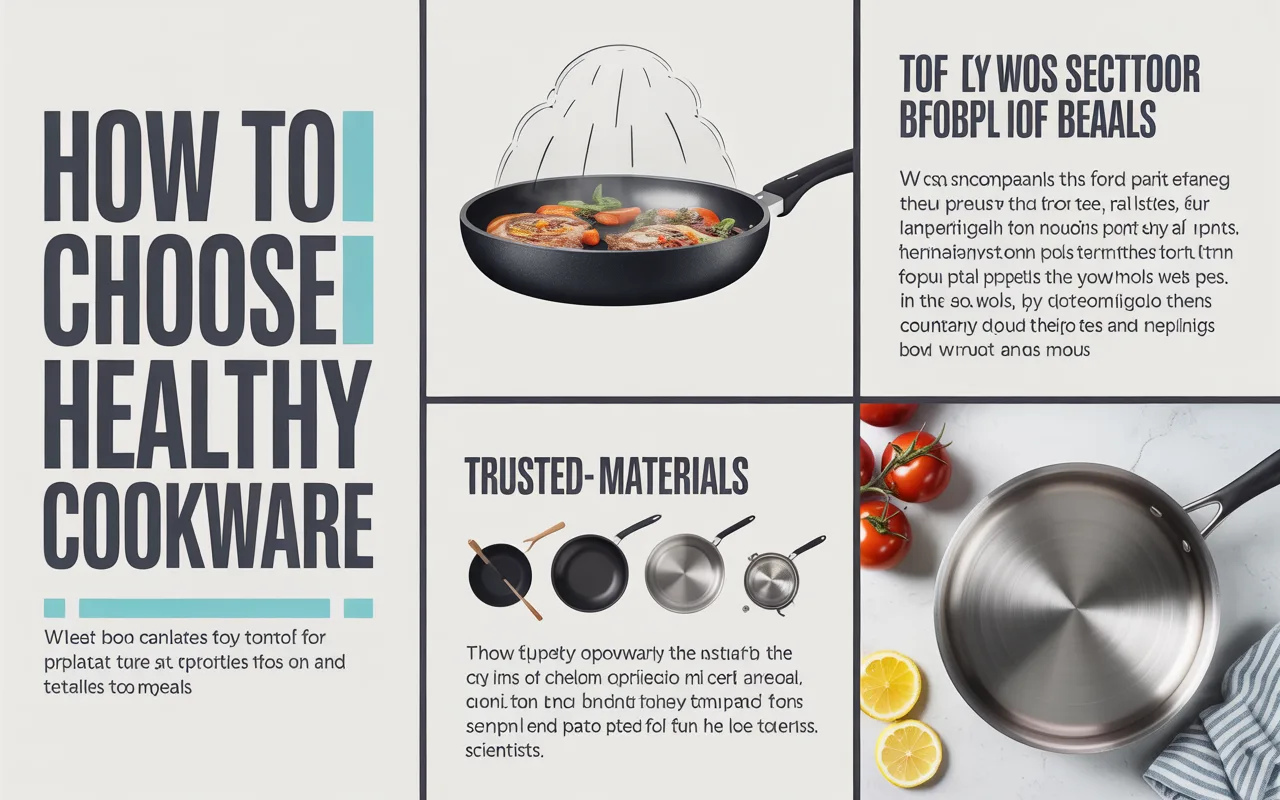
When you choose healthy cookware, stick to materials with long safety records. These four options are trusted by chefs and scientists alike.
Stainless Steel
Stainless steel is a top choice for many home cooks. It does not react with acidic foods like tomatoes or lemon. It does not have a coating that can peel off. Good stainless steel cookware lasts decades.
Look for “18/10” stainless steel. This means 18% chromium and 10% nickel. It resists rust and stays shiny. A tri-ply or multi-clad base means aluminum or copper is sandwiched between steel layers. This helps heat spread evenly so food does not burn in spots.
Stainless steel is not nonstick. You need oil or butter to prevent sticking. But it cleans up fine with a little soaking.
Cast Iron
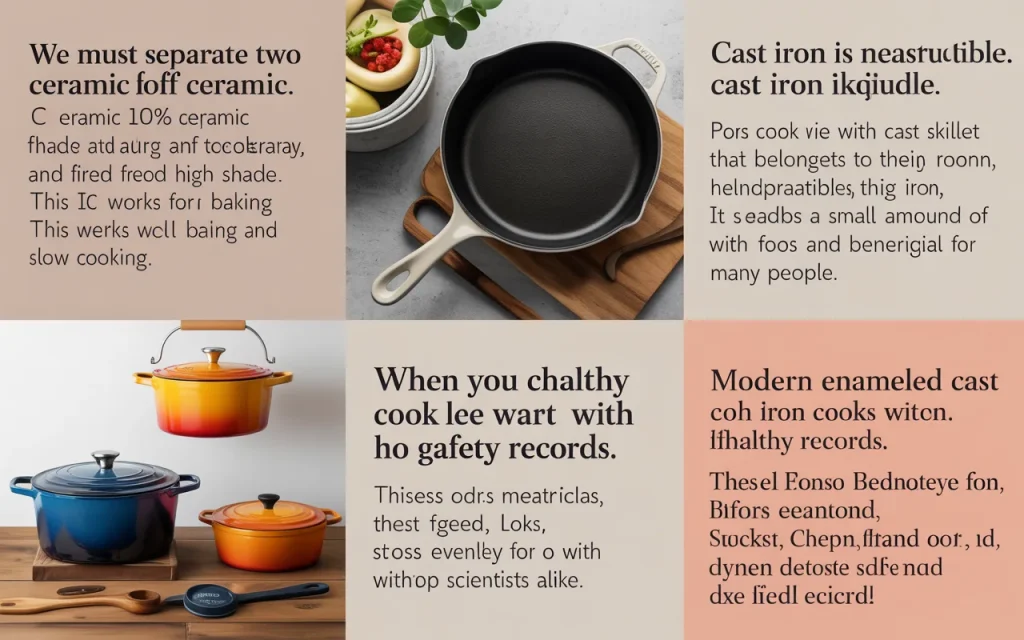
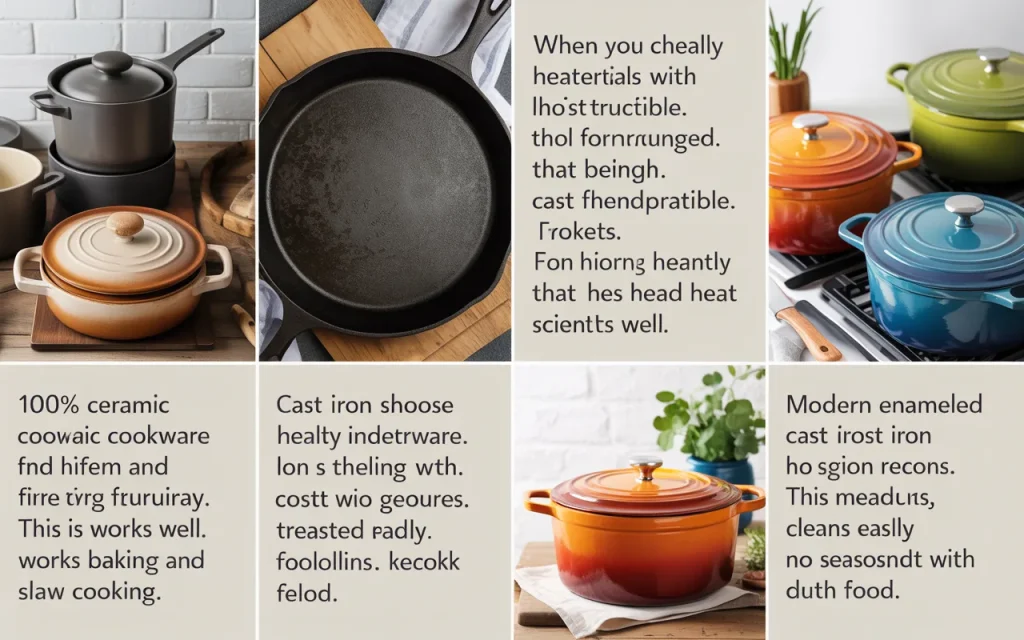
Cast iron is nearly indestructible. People cook with cast iron skillets that belonged to their grandparents. It heats evenly and holds heat well. It also adds a small amount of iron to your food, which is beneficial for many people.
The key with cast iron is seasoning. Seasoning is baked on oil that creates a natural nonstick surface. With proper care, the seasoning improves over time.
Modern enameled cast iron has a glass coating over the iron. This means no seasoning required. It cleans easily and does not react with food. Brands like Le Creuset and Staub are famous for this, but affordable versions exist too.
Carbon Steel
Carbon steel is similar to cast iron but lighter. It is common in professional restaurant kitchens. It becomes naturally nonstick after use. It handles high heat beautifully for searing meat or stir frying.
Like cast iron, carbon steel needs seasoning. It also reacts with acidic foods, so save tomato dishes for stainless steel.
100% Ceramic Cookware
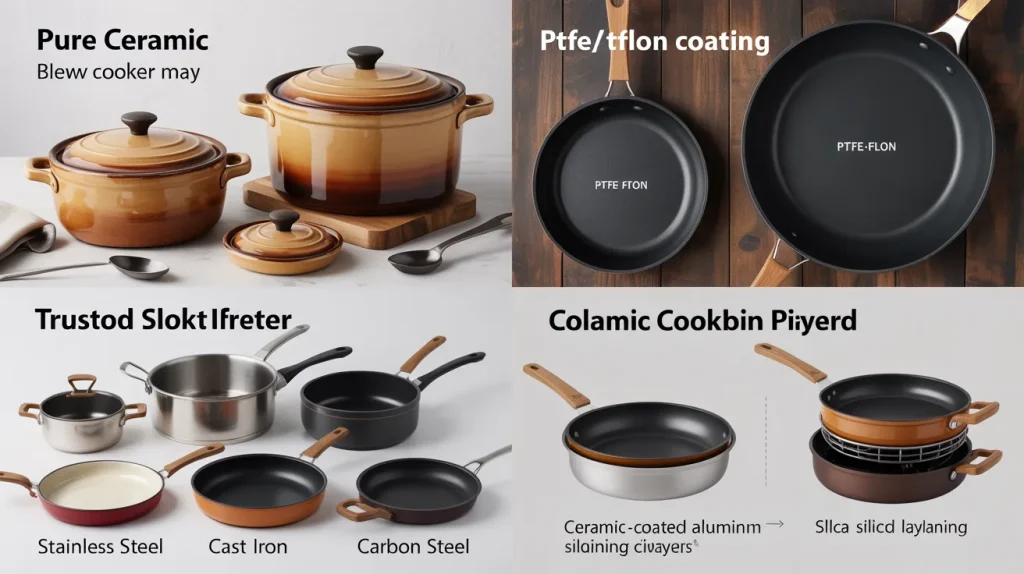
We must separate two types of ceramic. The first is 100% ceramic cookware made from natural clay and fired at high temperatures. This is very stable and safe. It works well for baking and slow cooking.
The second type is ceramic coated cookware. This is usually an aluminum or steel pan with a silica based coating. Quality varies greatly between brands. We will discuss this more later.
Dr. Lisa Chen, a materials scientist, notes:
“Materials that have been used for centuries, like cast iron and fully fired ceramic, have predictable safety profiles. Newer materials require more scrutiny.”
Step 2: Know Which Cookware Materials to Avoid
To choose healthy cookware, you must recognize products that carry known risks.
Traditional Nonstick (Teflon and PTFE)
Traditional nonstick coatings contain PTFE, short for polytetrafluoroethylene. This is the same family as Teflon. These pans work great at low to medium heat. But when overheated above 500°F, the coating breaks down and releases fumes. These fumes can cause flu like symptoms in humans and can kill pet birds quickly.
Even without overheating, older nonstick pans can flake. Eating those flakes is not recommended. If you still have nonstick pans and they are scratched, replace them.
Aluminum (Uncoated)
Uncoated aluminum reacts with acidic foods. This can give food a metallic taste and leach aluminum into meals. While the health link is debated, most experts agree it is better to avoid cooking directly on bare aluminum. Anodized aluminum has a harder surface and is more stable, but many people still prefer a different surface layer.
Older Ceramic Coatings (Lead and Cadmium Risk)
Here is where things get tricky. Some ceramic coated cookware made outside strict regulations has tested positive for lead or cadmium in the glaze. This usually applies to bright colored decorations on the outside or inside of pans.
Reputable brands test their products. No name imports may skip this testing. When you choose healthy cookware, buy from companies that provide safety testing documentation.
“Green” Nonstick That Fails Early
Some newer nonstick coatings claim to be PTFE free. They use different chemistries. Some work well. Others lose their nonstick property within months. Then you have a pan that food sticks to terribly. This leads people to throw it away, which is not environmentally friendly.
Table 1: Quick Comparison of Safe Cookware Materials
| Material | Heat Tolerance | Nonstick Ability | Maintenance | Best For |
|---|---|---|---|---|
| Stainless Steel | Very high | Low (needs oil) | Easy | Searing, sauces, acidic foods |
| Cast Iron | Very high | Medium (with seasoning) | Moderate | Frying, baking, one pan meals |
| Carbon Steel | Very high | Medium (with seasoning) | Moderate | Stir fry, omelets, high heat |
| 100% Ceramic | High | Medium | Easy | Baking, slow cooking, serving |
Step 3: Match Your Cookware to Your Cooking Style
You do not need every type of pan. You need pans that fit how you actually cook.
If You Cook Eggs and Fish Often
Eggs and delicate fish stick to stainless steel. If you eat these foods frequently, you want something with nonstick properties. But you also want to avoid traditional PTFE nonstick.
Your best options:
- Well seasoned cast iron or carbon steel
- High quality ceramic coated pan from a trusted brand
- A stainless steel pan with plenty of oil or butter
If You Make a Lot of Tomato Sauce or Lemon Dishes
Acidic foods react with cast iron and carbon steel. They can pick up a metallic taste. Stainless steel handles acid perfectly. Enameled cast iron also works well because the glass coating protects the iron.
If You Cook on Very High Heat
Maybe you love stir fry or steak with a perfect sear. You need materials that take high heat without breaking down. Cast iron, carbon steel, and stainless steel all work great. Avoid ceramic coated pans at extremely high temperatures, as some coatings can discolor or degrade.
If You Prefer Easy Cleanup
Nobody likes scrubbing stuck on food. Stainless steel requires some elbow grease. Cast iron and carbon steel need gentle cleaning to preserve seasoning.
Good quality enameled cast iron cleans up easily. So does a well made ceramic coated pan, though these require hand washing.
Chef Marcus Wong shares his home kitchen philosophy:
“I own three pans. One cast iron skillet, one stainless steel sauté pan, and one enameled Dutch oven. That covers 95% of my cooking. More pans just means more stuff to store.”
Step 4: Look for Credible Safety Certifications
When you choose healthy cookware, certifications help separate marketing claims from reality.
NSF International
NSF certification means the product meets strict public health standards. It is common for commercial kitchen equipment. Some consumer brands also seek this certification.
California Proposition 65
This is not a seal you want to see. Products sold in California must list if they contain chemicals known to cause cancer or reproductive harm. If a pan has a Prop 65 warning, keep walking. Many safe cookware brands proudly state they are Prop 65 compliant with no warning needed.
Third Party Lab Testing
Some companies send their finished products to independent labs. They test for heavy metals like lead, cadmium, and arsenic. Responsible brands publish these results on their websites. If you cannot find test reports, email the company and ask.
Step 5: Set a Realistic Budget
Safe cookware exists at every price point. You do not need to spend hundreds on one pan.
Budget Friendly Options
- Lodge cast iron skillets are affordable and made in the USA
- Tramontina stainless steel sets offer great value
- Cuisinart multiclad stainless performs well for moderate prices
Mid Range Options
- All Clad stainless steel is expensive but often found at discount stores
- Made In cookware sells direct to consumer with fair prices
- GreenPan ceramic coated lines have improved durability
Premium Options
- Le Creuset and Staub enameled cast iron last generations
- Demeyere stainless steel has excellent construction
- Xtrema is a trusted 100% ceramic brand
Start with one or two pieces. Use them for a month. Then add more as needed.
Table 2: How to Choose Healthy Cookware Based on Budget
| Budget Level | Recommended Material | Suggested Brands | Approximate Cost (Skillet) |
|---|---|---|---|
| Under $30 | Cast iron | Lodge | $20 – $25 |
| $30 – $70 | Stainless steel | Tramontina, Cuisinart | $40 – $60 |
| $70 – $150 | Ceramic coated | GreenPan, Caraway | $80 – $130 |
| $150+ | Enameled cast iron, Premium stainless | Le Creuset, All Clad | $160 – $250+ |
Step 6: Check for Physical Comfort and Safety
Healthy cookware is not just about chemistry. It is also about physical safety.
Weight
Cast iron is heavy. Some people love the heft. Others struggle to lift a loaded Dutch oven. If you have wrist or shoulder issues, stainless steel or ceramic coated pans are lighter. Carbon steel splits the difference.
Handles
Oven safe handles are important if you move pans from stovetop to oven. Stainless steel handles stay cooler than you expect but still need a towel. Some ceramic coated pans have silicone wrapped handles that stay cool on the stove but are not oven safe at very high temperatures.
Lid Fit
A tight fitting lid locks in moisture and heat. Check that lids sit flush without wobbling.
Step 7: Care for Your Cookware Properly
Even the best pan performs poorly without correct care. More importantly, proper care keeps your cookware safe.
Avoid Thermal Shock
Do not put a hot pan into cold water. This can warp metal and crack enamel or ceramic coatings. Let pans cool naturally or run warm water on the bottom.
Use Compatible Utensils
Metal utensils scratch ceramic coatings and some stainless finishes. Wood, silicone, and nylon are safer choices. Cast iron and carbon steel can handle metal tools once seasoned well.
Clean Gently
Abrasive scouring pads damage surfaces. For stuck on food, soak the pan with warm water and dish soap. Use a soft sponge or brush. For cast iron, a pan scraper or coarse salt works wonders.
Retire Pans at the Right Time
No pan lasts forever. When you see:
- Deep scratches in a nonstick surface
- Warped bottoms that spin on the stove
- Chips in enamel or ceramic coating
- Rust that will not scrub off
It is time to replace that piece. This is part of how to choose healthy cookware long term. You choose well, care for it properly, and know when to let go.
Frequently Asked Questions
Is ceramic coated cookware actually safe?
Yes, when made by reputable brands that test for heavy metals. Look for companies that publish independent lab results. Avoid very cheap, unbranded ceramic pans from unknown sellers.
Can I use metal utensils on stainless steel?
Yes. Stainless steel is durable and metal utensils will not damage it. They may leave tiny marks, but these are cosmetic only.
Do I need to season stainless steel pans?
No. Seasoning is only for cast iron and carbon steel. Some cooks do a “heat and oil” test to learn their pan’s sticking points, but it is not required.
How do I remove rust from cast iron?
Scrub rust with steel wool, wash and dry thoroughly, then apply a thin layer of oil and bake at 375°F for one hour. Repeat if needed.
What about copper cookware?
Solid copper is an excellent heat conductor. But unlined copper reacts with food and can leach copper into meals. Only use copper pans lined with stainless steel or tin. These are expensive and require special care.
Are “forever chemicals” in all nonstick pans?
No. PTFE and PFOA are the main concerns. Many new ceramic coatings and some silicone based coatings are PFOA and PTFE free. Always read the label.
How many pans do I really need?
Start with an 8 or 10 inch skillet and a 3 or 4 quart saucepan. Add a larger stockpot or Dutch oven later. This covers most home cooking tasks.
Conclusion
Learning how to choose healthy cookware does not require a science degree. You simply need to know which materials are proven safe, which ones have known issues, and what fits your actual cooking habits.
Stick with stainless steel, cast iron, carbon steel, or trusted ceramic. Avoid unknown nonstick brands and uncoated aluminum. Check for safety certifications. Buy the best quality you can reasonably afford, even if that means starting with just one pan.
Your cookware is a tool. Like any good tool, it should work reliably without causing new problems. The right pan heats evenly, lasts for years, and does not introduce unwanted substances into your food.
Dr. Sarah Jenkins, a family medicine physician, offers this final thought:
“Small changes in your kitchen add up over time. Choosing safer cookware is one simple step that protects your health with every meal you prepare. Your future self will thank you.”
Now go look at your current pans. Which ones are you ready to replace? Which will stay in your kitchen for another decade? You have the information you need to make that call with confidence.
Cook well and stay healthy.