
Find a guide to help you choose a knife set that fits your cooking style and budget. Learn about steel types, must-have knives, and care tips to make the best decision for your kitchen.
Think about your kitchen. What tool do you use the most? For many of us, it is a good knife. A knife set is a big choice. It can change how you cook. It can make food prep fun, fast, and safe. But with so many choices, how do you pick? This guide will help you learn how to choose a knife set that fits your hand, your cooking, and your home. We will talk about what matters most, from the feel of the handle to the type of steel. Let us find your perfect set together.
Start With You: Your Cooking Style and Needs
Before you look at a single knife, think about your life in the kitchen. Do you cook big meals every day? Or do you just need to chop veggies for a quick salad? Your habits are the best guide.
- The Everyday Cook: You need a simple, strong set. A chef’s knife, a paring knife, and a serrated bread knife might be all you need. Look for sets that are easy to care for.
- The Home Chef: You love to try new recipes. You might want more specialty knives, like a santoku or a carving knife. You may also think about how the knives look on your counter.
- The Minimalist: You want just a few great knives, not a big block. Buying single, open-stock knives might be better for you than a full set.
Ask yourself: What do I cut most often? Do I have space for a big block? How much time do I want to spend on knife care? Your answers will point you in the right direction.
Julia Child once said, “The only real stumbling block is fear of failure. In cooking you’ve got to have a what-the-hell attitude.” The same goes for picking tools. Do not be afraid to find what works for you.
What Makes a Knife Good? Key Things to Know
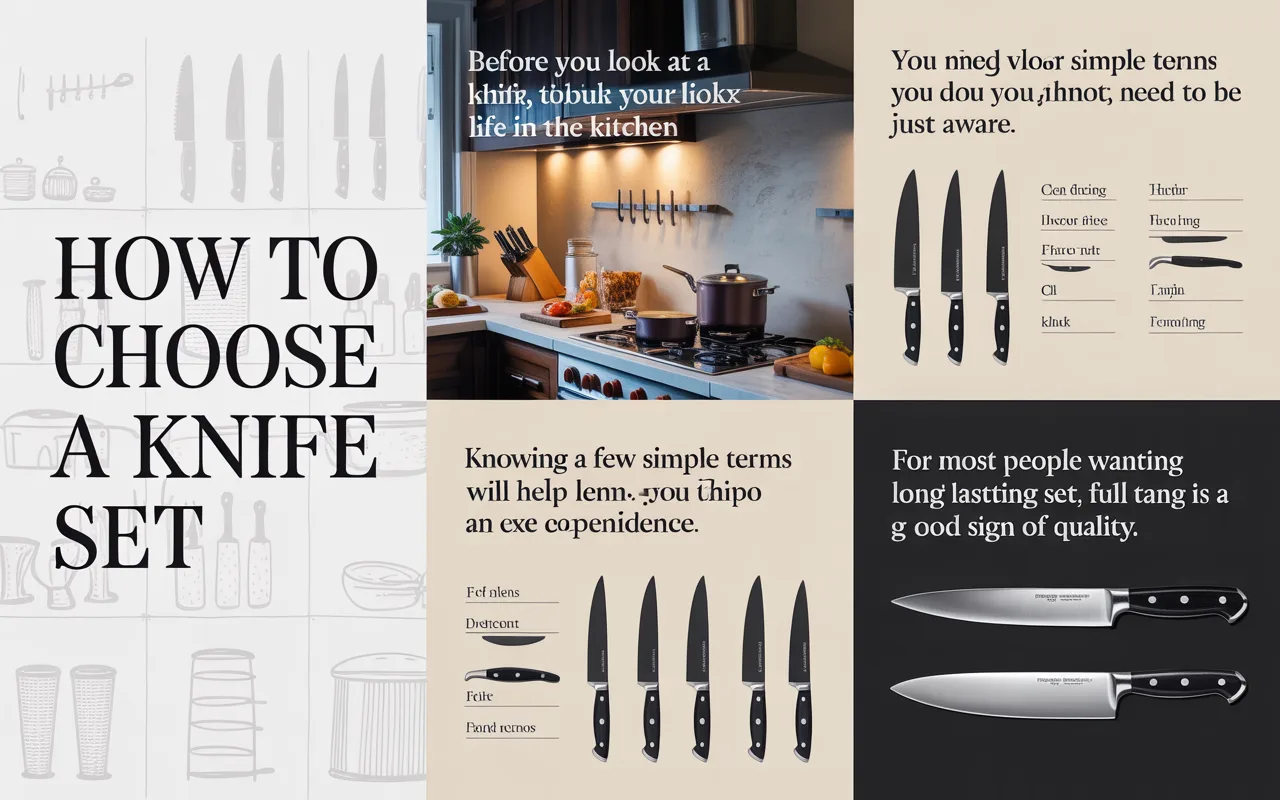
Knowing a few simple terms will help you shop with confidence. You do not need to be an expert, just aware.
Knife Construction: How the Knife is Built
This is about how the blade is attached to the handle. It changes how the knife feels and lasts.
- Full Tang: The blade metal runs the full length of the handle. It is the strongest build. It often feels more balanced. You can see the metal along the handle’s edge.
- Partial Tang: The blade metal goes only partway into the handle. It is common in less costly sets. It can be good, but may not last as long with heavy use.
For most people wanting a long lasting set, full tang is a good sign of quality.
Knife Steel and Sharpness
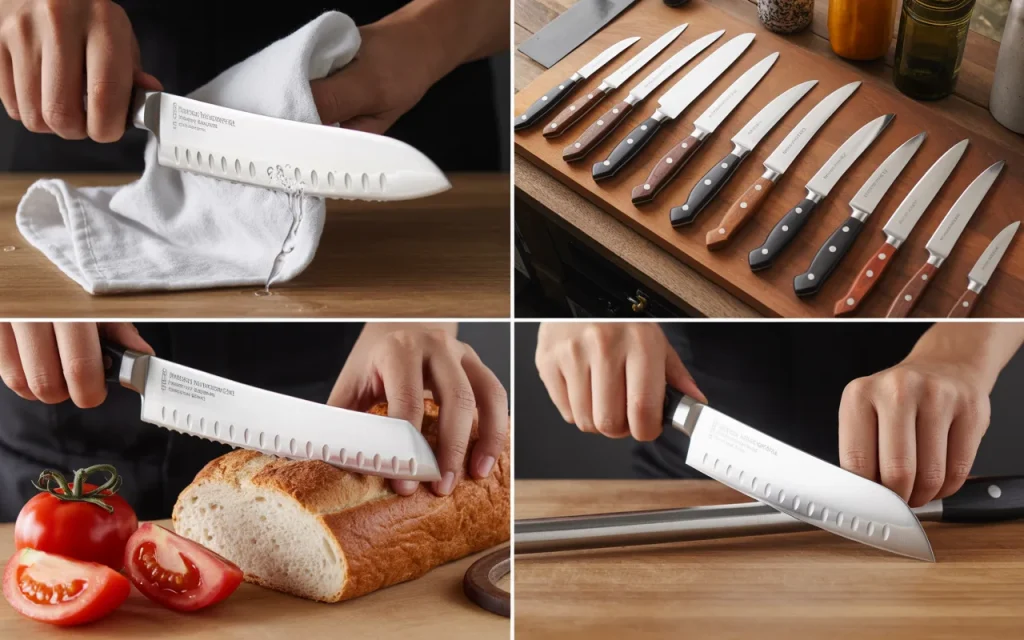
The type of steel affects how long the knife stays sharp and how easy it is to sharpen.
- Stainless Steel: Very common. It fights rust and stains well. It is easy to care for. It might need sharpening more often than some other types.
- High Carbon Stainless Steel: A great mix. It has the rust resistance of stainless steel but holds a sharp edge longer. This is a top pick for many home cooks.
- Carbon Steel: Gets extremely sharp and holds the edge. But it can rust and stain if not dried right away. It needs more care.
Most good home kitchen sets use High Carbon Stainless Steel. It gives you a sharp edge without too much worry.
The Handle and How It Feels
You hold the handle, not the blade. It must feel good.
- Material: Handles can be plastic, wood, or composite materials. Look for a material that feels solid, not slippery, even when your hands are wet.
- Fit: The handle should have no sharp gaps where it meets the blade. This keeps food and germs out.
- Balance: Pick the knife up. It should feel comfortable in your hand, not too heavy in the front or the back.
The best test? If you can, hold the knife. It should feel like an extension of your hand.
Set or Singles? Understanding Your Options
You have two main paths: buy a complete set or buy knives one by one.
| Option | Good Points | Things to Think About |
|---|---|---|
| Knife Set | Usually costs less per knife. Comes with a block or rack for storage. Everything matches. | You may get knives you never use. Quality can be mixed in some sets. |
| Single Knives | You buy only what you need. You can pick the exact brand and type for each job. Often higher quality. | The total cost can be higher. You need to find your own way to store them. |
Most new cooks start with a set. It is simple. As you learn, you might add single knives. If you know you only need three knives, buying singles could be perfect.
The Core Knives Every Kitchen Uses
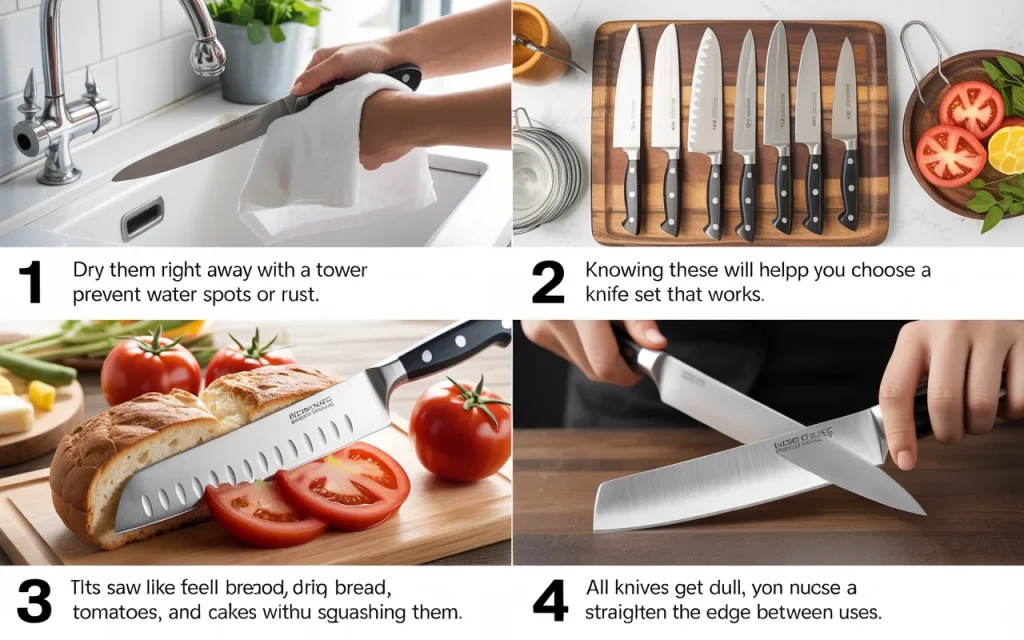
Even big sets are built around a few essential knives. Knowing these will help you choose a knife set that works.
The Chef’s Knife: Your Kitchen Workhorse
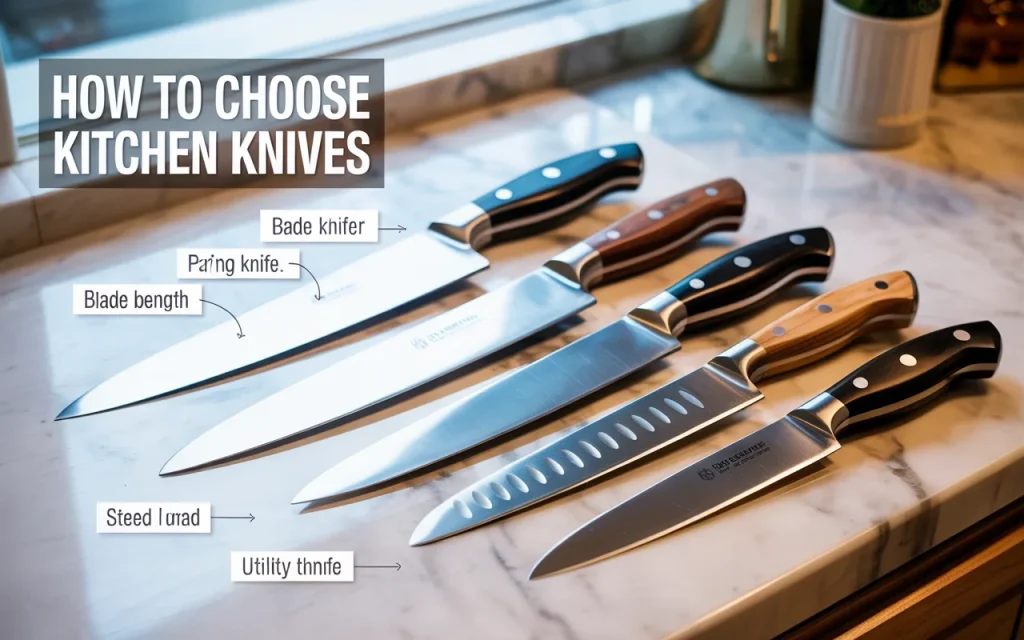
This is the most important knife. It does almost everything: chopping, slicing, mincing. Blade length is usually 6 to 10 inches. An 8-inch chef’s knife is a great start for most people.
The Paring Knife: For Small Jobs
This small knife is for peeling apples, cutting strawberries, or other close work. It is easy to control.
The Serrated Bread Knife
Its saw like teeth cut through bread, tomatoes, and cakes without squashing them. Do not try to sharpen this one at home.
Other Helpful Knives
- Utility Knife: Longer than a paring knife, good for slicing sandwiches or smaller fruits.
- Santoku Knife: A Japanese style knife. It is great for slicing, dicing, and chopping vegetables. It has a straighter edge than a chef’s knife.
- Carving/Slicing Knife: Long and thin, perfect for slicing cooked meats like roast chicken or ham.
Anthony Bourdain noted, “Skills can be taught. Character you either have or you don’t have.” A good knife set is a skill you can learn to use. Your passion for cooking is the character you bring to it.
How to Store and Care for Your Knives
If you want your knives to last, you must take care of them. This is a big part of how to choose a knife set. Think about care before you buy.
Safe Storage Options
Do not throw knives in a drawer. The blades will get damaged and it is not safe.
- Knife Block: The classic choice. It keeps knives handy and protected. Make sure the block has slots that fit your knives well.
- Magnetic Strip: Saves counter space. Looks modern. Lets you see all your knives. Very safe if installed well.
- In-Drawer Tray: Keeps knives hidden and secure. You need a deep enough drawer for this.
Keeping Knives Sharp and Clean
- Washing: Always wash by hand with soap and water. Do not put good knives in the dishwasher. The heat and chemicals can hurt the blade and handle.
- Drying: Dry them right away with a towel to prevent water spots or rust.
- Cutting Surface: Always use a wooden or plastic cutting board. Glass or stone boards will ruin your sharp edge fast.
- Sharpening: All knives get dull. You can use a honing steel to straighten the edge between uses. A whetstone or manual sharpener is used to actually sharpen the blade a few times a year.
| Task | Tool | How Often |
|---|---|---|
| Honing | Honing Steel | Every few times you use the knife |
| Sharpening | Whetstone or Manual Sharpener | 2 to 4 times per year, depending on use |
| Replacement | Professional Service | Every few years if home sharpening does not work |
Setting Your Budget for a Knife Set
You can spend a little or a lot. Good news: you do not need to spend a fortune to get a solid set.
- Budget (Under $100): You will find sets that work for light use. Look for known brands and high carbon stainless steel. They may need more frequent care.
- Mid-Range ($100 – $300): This is a sweet spot for many home cooks. Here you find strong full tang knives, good steel, and comfy handles from trusted brands.
- High-End ($300 and up): For serious cooks. These sets often have premium materials, perfect balance, and are built to last a lifetime.
Remember, the best knife set for you is the one you will use. A $150 set you love is better than a $500 set you are afraid to touch.
Frequently Asked Questions
Q: How many knives do I really need in a set?
A: Most cooks use just 3 or 4 knives for 90% of tasks. A set with 5 to 7 pieces is often plenty. Bigger sets look nice, but the extra knives might just sit in the block.
Q: Is a knife block included in the set important?
A: It is convenient, but not a must. Some people prefer a magnetic strip. Check if the set price includes the block or if it is sold separately.
Q: Can I put my new knives in the dishwasher?
A: It is best not to. The dishwasher can damage knife handles, dull the blades faster, and is a safety risk. Hand washing takes only a minute and keeps your knives in great shape.
Q: How do I know if a knife is good quality in the store?
A: Look for full tang construction. Feel the weight and balance. Check that the handle is attached with no gaps. Look for the words “high carbon stainless steel” on the box.
Q: Should the knife set come with a sharpening tool?
A: It is a nice bonus, but not always needed. A basic honing steel is useful. You can buy a separate sharpener later that fits your needs.
James Beard advised, “The secret of good cooking is, first, having a love of it… If you’re convinced cooking is drudgery, you’re never going to be good at it.” Loving your tools makes cooking more fun, not a chore.
Conclusion: Your Next Steps to Find the Perfect Set
Learning how to choose a knife set is a personal process. It is about your hand, your counter, and your cooking dreams. Start by thinking about what you cook. Then, learn a little about steel and how a knife should feel. Decide if you want a full set or just a few key knives. Plan for how you will store and care for them. Set a budget that feels right.
The goal is to find knives that make you want to cook. Knives that feel safe and easy in your hand. Do not get lost in all the choices. Think about your own kitchen. Trust what feels right to you. A good knife set is not just a purchase. It is a partner in making countless meals and memories. Happy cooking, and enjoy the search for your perfect kitchen tools.

One Comment