
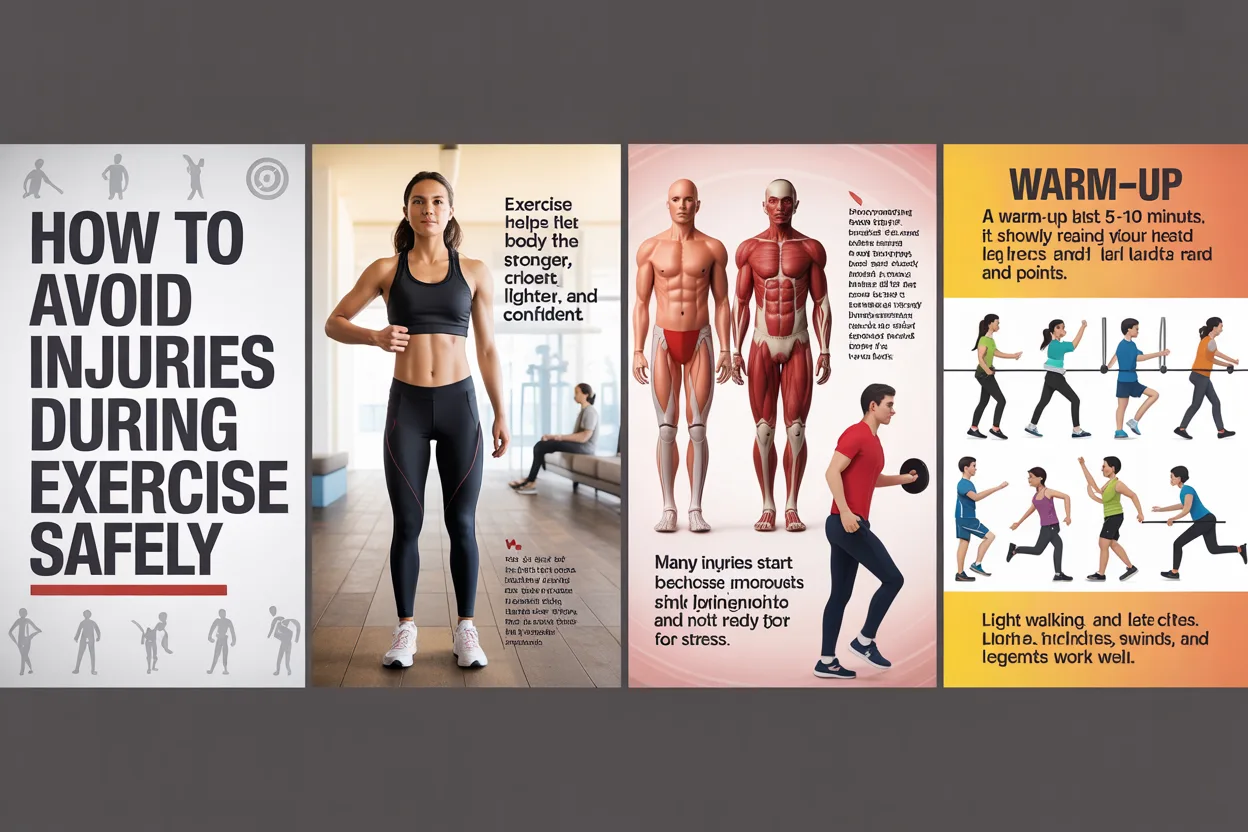
Learn practical ways to avoid injuries during exercise with simple steps for warm-ups, form, recovery, and safety. This guide explains clear actions anyone can follow to stay active and pain free.
Exercise helps the body feel stronger, lighter, and more confident. Many people start working out with good intentions but stop after pain or strain appears. That pain often comes from small mistakes that build up over time. Learning how to avoid injuries during exercise is not about fear. It is about moving with care, patience, and respect for your body.
Injuries can happen to beginners and experienced athletes alike. A wrong posture, weak muscles, poor recovery, or rushing progress can lead to problems. These issues may stop workouts for weeks or months. This article explains clear and simple ways to stay safe while staying active.
You will learn how to prepare your body, choose the right intensity, listen to warning signs, and recover well. The advice here is based on real training experience, sports science basics, and practical fitness habits that work for daily life.
Why Exercise Injuries Happen
Most injuries do not come from one big mistake. They often come from repeated small issues.
Common causes of injuries
Many injuries start because muscles and joints are not ready for stress. Poor form is another big reason. People often copy others without knowing proper technique. Some push too hard, too fast, or too often.
Lack of rest is also a major cause. The body needs time to heal after workouts. Without rest, small muscle tears grow into serious problems.
“Pain is not a badge of honor. It is often a message asking you to slow down.”
James Carter, Certified Personal Trainer
Start With a Proper Warm-Up
A warm-up prepares your muscles, joints, and heart for activity. Skipping it increases injury risk.
What a good warm-up looks like
A warm-up should last 5 to 10 minutes. It should slowly raise your heart rate and loosen joints. Light walking, arm circles, leg swings, and gentle movements work well.
Stretching cold muscles is not ideal. Save long static stretches for after workouts. Use movement-based warm-ups instead.
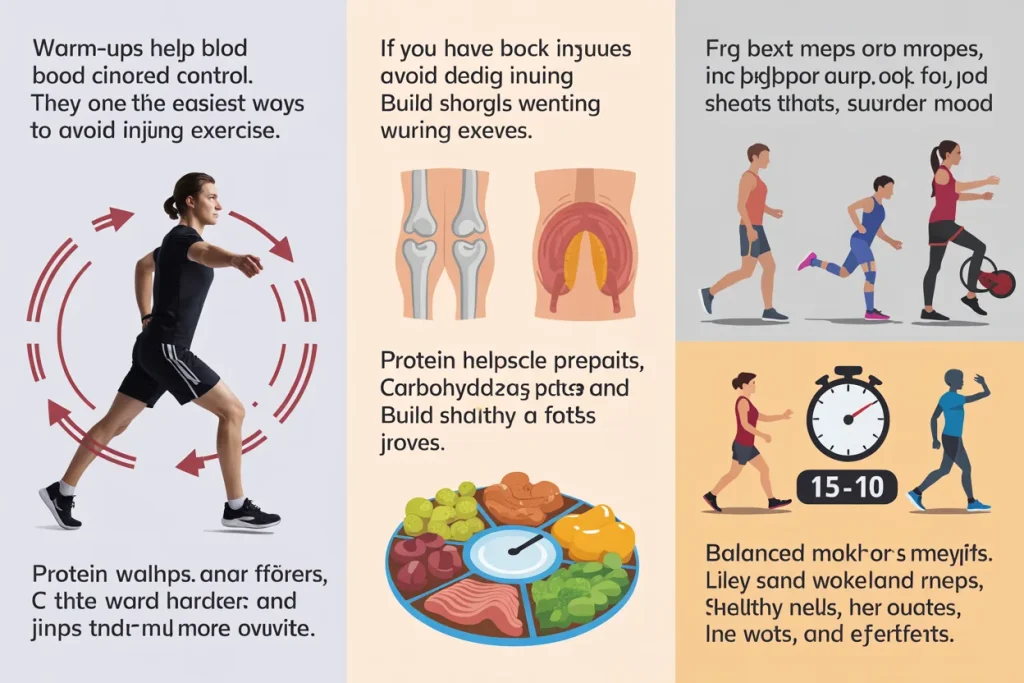
Warm-ups help blood flow and muscle control. They are one of the easiest ways to avoid injuries during exercise.
Use Correct Form and Technique
Good form keeps stress where it belongs, on muscles, not joints.
Learn before you lift or run
If you are new, start with bodyweight movements. Learn how squats, push-ups, and lunges should feel. Use mirrors or videos to check posture.
For weight training, start with light weights. Focus on slow and controlled movements. Speed and heavy loads can wait.
“Good form is like good handwriting. It may take time, but it prevents mistakes.”
Laura Mitchell, Strength Coach
Choose the Right Exercise for Your Level
Not every exercise suits every body. Fitness level, age, and past injuries matter.
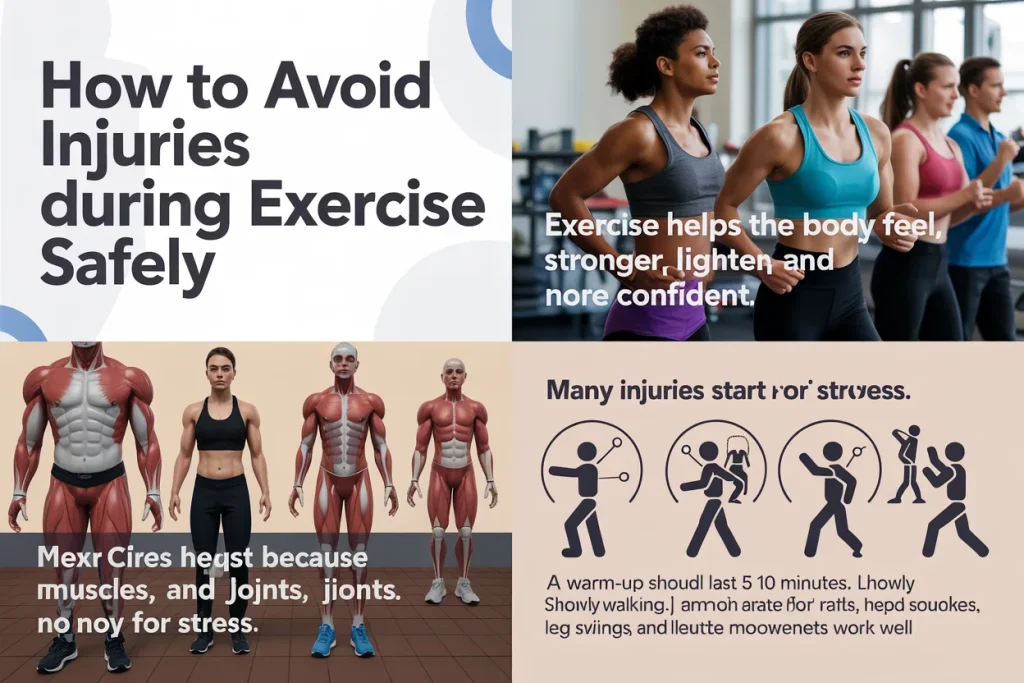
Beginner-friendly choices
Low-impact exercises are great for beginners. Walking, swimming, cycling, and light resistance training reduce stress on joints.
If you have knee or back issues, avoid deep jumps or heavy twisting at first. Build strength around weak areas before adding harder moves.
Listening to your body helps you avoid injuries during exercise and build confidence.
Progress Slowly and With Purpose
One of the most common mistakes is doing too much too soon.
Follow the gradual rule
Increase weight, distance, or time by small amounts. A common rule is no more than a 10 percent increase per week.
Your muscles grow faster than tendons and ligaments. Slow progress gives support tissues time to adapt.
Safe progress examples
| Exercise Type | Safe Weekly Increase | Why It Helps |
|---|---|---|
| Running | 5 to 10 percent | Protects knees and ankles |
| Weight lifting | 2 to 5 kg | Reduces joint stress |
| Yoga poses | Hold 5 to 10 sec more | Improves flexibility safely |
Rest and Recovery Matter
Exercise breaks muscles down. Rest builds them back stronger.
Importance of rest days
Rest days allow muscles to repair. Without rest, fatigue builds and form breaks down.
Sleep is also part of recovery. Aim for 7 to 9 hours per night. Good sleep improves balance, reaction time, and strength.
Recovery habits help you avoid injuries during exercise and keep progress steady.
Hydration and Nutrition Support Safety
The body needs fuel and water to work well.
How hydration helps
Dehydration reduces focus and muscle control. This increases injury risk. Drink water before, during, and after workouts.
Eat to support movement
Protein helps muscle repair. Carbohydrates provide energy. Healthy fats support joints. Balanced meals make workouts safer and more effective.
Pay Attention to Pain Signals
Pain is feedback, not weakness.
Know the difference between soreness and pain
Mild soreness after exercise is normal. Sharp, sudden, or worsening pain is not. Joint pain should never be ignored.
Stop exercising if pain changes your movement. Rest and assess before continuing.
“Your body speaks quietly at first. Injuries happen when we ignore the whispers.”
Daniel Reyes, Sports Physiotherapist
Listening carefully helps you avoid injuries during exercise and stay active longer.
Use Proper Equipment and Footwear
The right gear supports safe movement.
Shoes matter more than style
Wear shoes designed for your activity. Running shoes support forward motion. Training shoes offer side support.
Worn-out shoes lose cushioning. Replace them regularly based on use.
Support tools
Gloves, belts, or braces may help, but they should not replace good form. Use them as support, not protection from poor habits.
Balance Strength and Flexibility
Strong muscles without flexibility create tension. Flexible muscles without strength lack control.
Combine both in training
Add stretching after workouts. Focus on hips, hamstrings, calves, chest, and shoulders.
Include strength training at least two days per week. Balanced muscles protect joints and posture.
This balance is key to avoid injuries during exercise across all fitness levels.
Cross-Training Reduces Overuse Injuries
Repeating the same movement daily stresses the same tissues.
Mix activities
Alternate between cardio, strength, and mobility work. Runners can swim or cycle. Lifters can add yoga or walking.
Cross-training spreads load across muscles and joints.
Cross-training ideas
| Main Activity | Cross-Training Option | Benefit |
|---|---|---|
| Running | Swimming | Joint relief |
| Weight lifting | Yoga | Mobility |
| Cycling | Walking | Balance |
Warm Down After Exercise
Cooling down helps the body return to normal.
Simple cool-down steps
Slow walking or light movement for 5 minutes helps heart rate drop safely. Gentle stretching reduces stiffness.
Cool-downs also support mental calm and body awareness.
They are another simple way to avoid injuries during exercise and feel better the next day.
Adjust Exercise With Age and Lifestyle
Bodies change with time, stress, and daily habits.
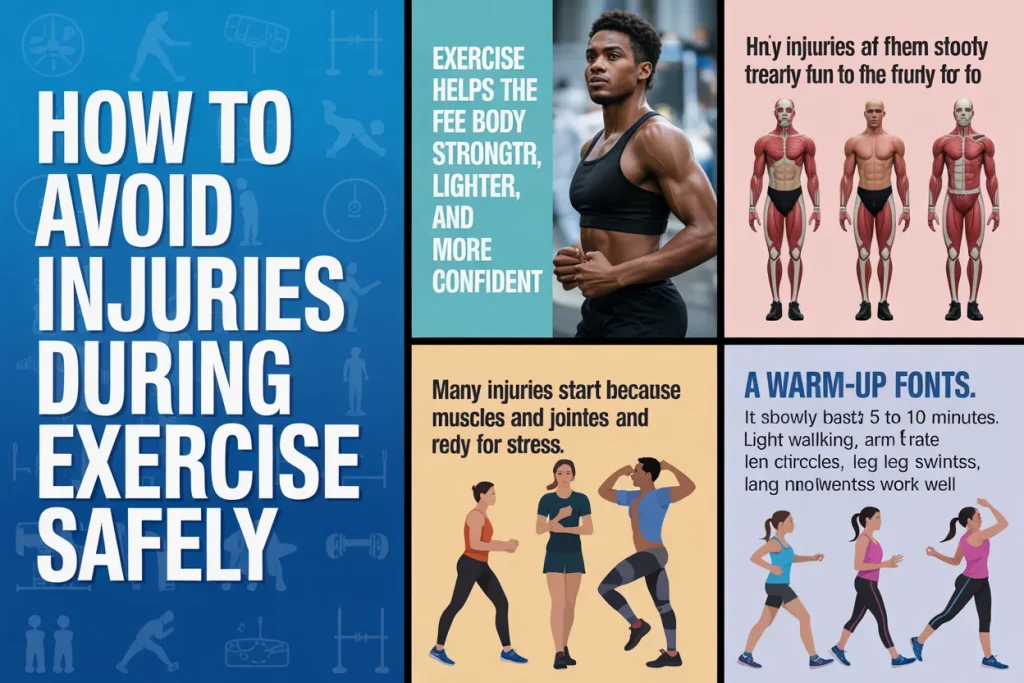
Age-aware training
As people age, recovery takes longer. Focus on joint care, balance, and mobility. Strength training remains important but with more rest.
Lifestyle factors
Long sitting hours tighten hips and back. Add mobility work if you sit often. Stress also affects recovery. Gentle exercise can help.
Exercise Environment and Safety
Where you exercise also matters.
Check your surroundings
Uneven surfaces, poor lighting, or crowded spaces increase risk. Clear your workout area.
Outdoor workouts should consider weather. Heat increases dehydration risk. Cold tightens muscles.
Safe surroundings support your goal to avoid injuries during exercise.
Consistency Beats Intensity
Doing a little often is safer than doing a lot once.
Build a steady routine
Short, regular workouts keep muscles ready. Long gaps followed by hard sessions increase injury risk.
Consistency builds habit, confidence, and body awareness.
Mental Focus During Exercise
Distraction leads to mistakes.
Stay present
Avoid texting or rushing through movements. Focus on breathing and posture.
Mindful movement improves control and reduces sudden strain.
Mental focus helps you avoid injuries during exercise even in simple workouts.
Frequently Asked Questions
How long should I warm up before exercise?
A warm-up should last 5 to 10 minutes and gently prepare your body for movement.
Is soreness after exercise bad?
Mild soreness is normal. Sharp or lasting pain is not and should be addressed.
Can stretching prevent injuries?
Stretching improves movement quality and supports joint safety when combined with strength training.
How many rest days do I need?
Most people need one to two rest days per week depending on workout intensity.
Do beginners need a trainer?
A trainer can help with form, but slow practice and trusted guidance also work well.
Conclusion
Exercise should support health, not take it away. Learning how to avoid injuries during exercise is about patience, awareness, and respect for your body. Warm-ups, proper form, gradual progress, and recovery are not extras. They are part of training.
By listening to your body, choosing the right exercises, and staying consistent, you can enjoy movement for years. Safety builds confidence. Confidence builds habit. And healthy habits lead to a stronger, happier life.



5 Comments