
20 Hairstyles for Round Faces
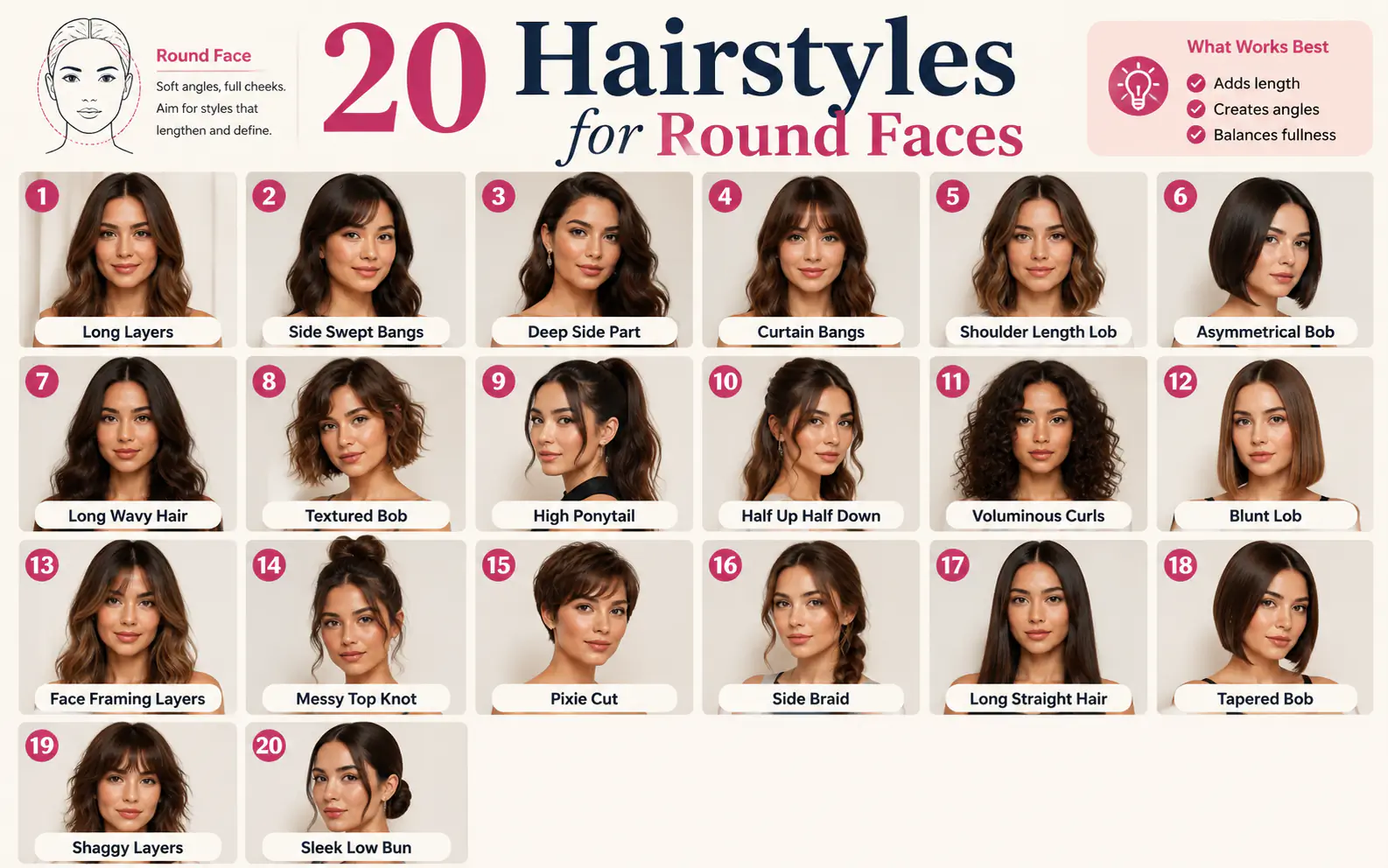
Discover 20 hairstyles for round faces that add shape, movement, and balance, from flattering layers and lobs to pixies, shags, and curtain bangs.
A round face has naturally soft curves, fuller cheeks, and fairly balanced width and length, which means the most flattering haircut is less about “hiding” your face and more about creating intentional shape. Strategic layers, vertical volume, asymmetry, and face-framing pieces can add movement and definition while keeping your look fresh and wearable. Professional stylist guidance consistently highlights long layers, side-swept or curtain-style fringe, textured shags, lobs, and pixies with height as strong options for round face shapes.
The good news is that there is no single haircut you have to follow. Your hair texture, density, styling routine, and favorite features matter just as much as face shape. Current beauty trends also favor blended bangs, lived-in length, natural texture, and softer layering, making it easier to personalize a flattering cut without making the result look overly sculpted.
Ahead, you will find 20 hairstyles for round faces, ranging from long and romantic to short and edgy. Use these ideas to narrow down your salon inspiration, compare maintenance needs, and choose a style that feels balanced, modern, and unmistakably you.
1. Long Face-Framing Layers with a Deep Side Part
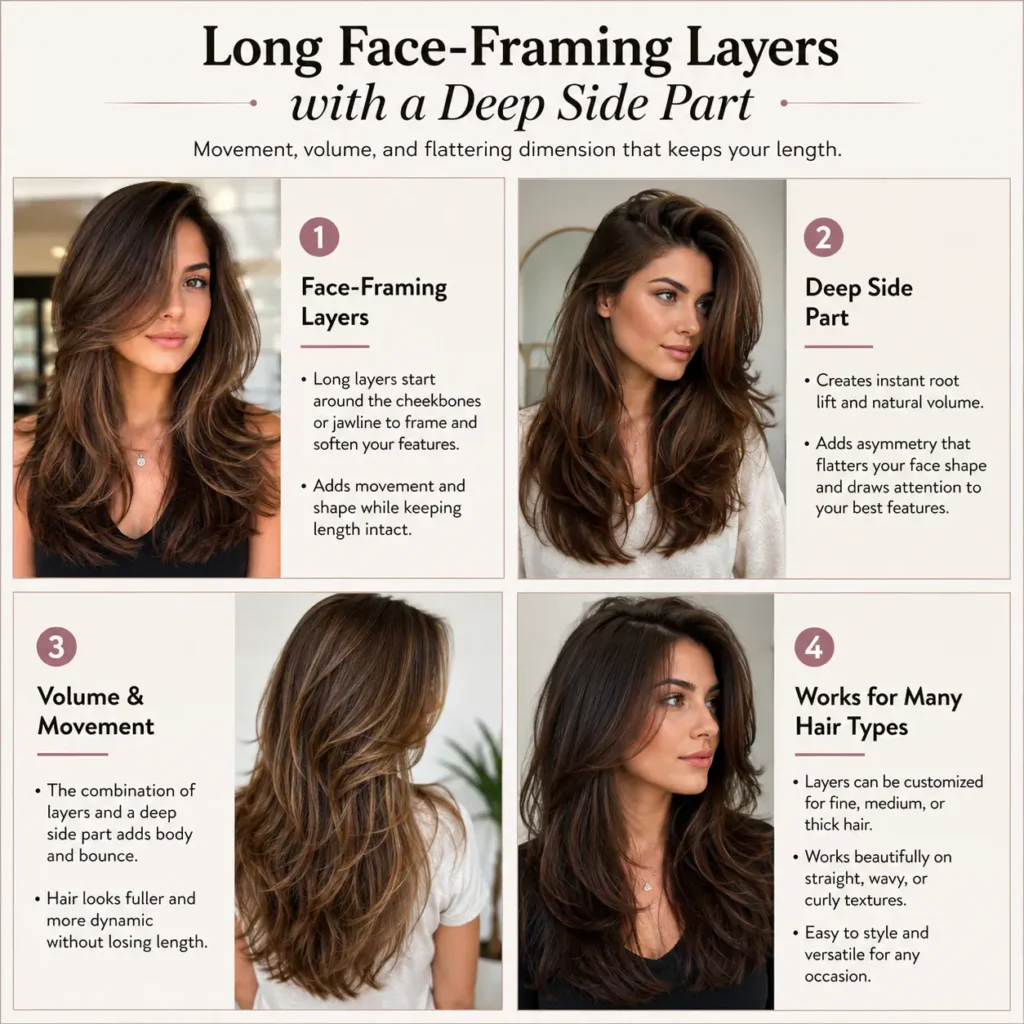
Long face-framing layers paired with a deep side part create movement, emphasize facial features, and add visible root lift without sacrificing length. The combination works across many hair types because the layers can be customized for density and texture, while the side part adds flattering asymmetry and volume.
Shape and Visual Effect:
• Long layers create movement while keeping overall length intact.
• Face-framing pieces soften features and highlight cheekbones naturally.
• A deep side part adds lift near flatter roots.
• The asymmetrical sweep creates polished drama without heavy styling.
Cutting and Styling Approach:
• Ask for gradual layers beginning around chin or collarbone.
• Keep perimeter density strong to prevent wispy-looking ends.
• Blow-dry front sections away from the face for movement.
• Set the deep part while roots remain slightly damp.
• Use a round brush to encourage soft outward bends.
Suitability and Maintenance:
• Fine hair benefits from side-parted volume at the crown.
• Thick hair gains shape when layers remove controlled weight.
• Curly textures need customized layering to preserve curl balance.
• Trim face-framing pieces regularly to keep their shape defined.
• Lightweight styling products preserve movement without flattening the layers.
2. Butterfly Cut with Below-the-Chin Curtain Bangs
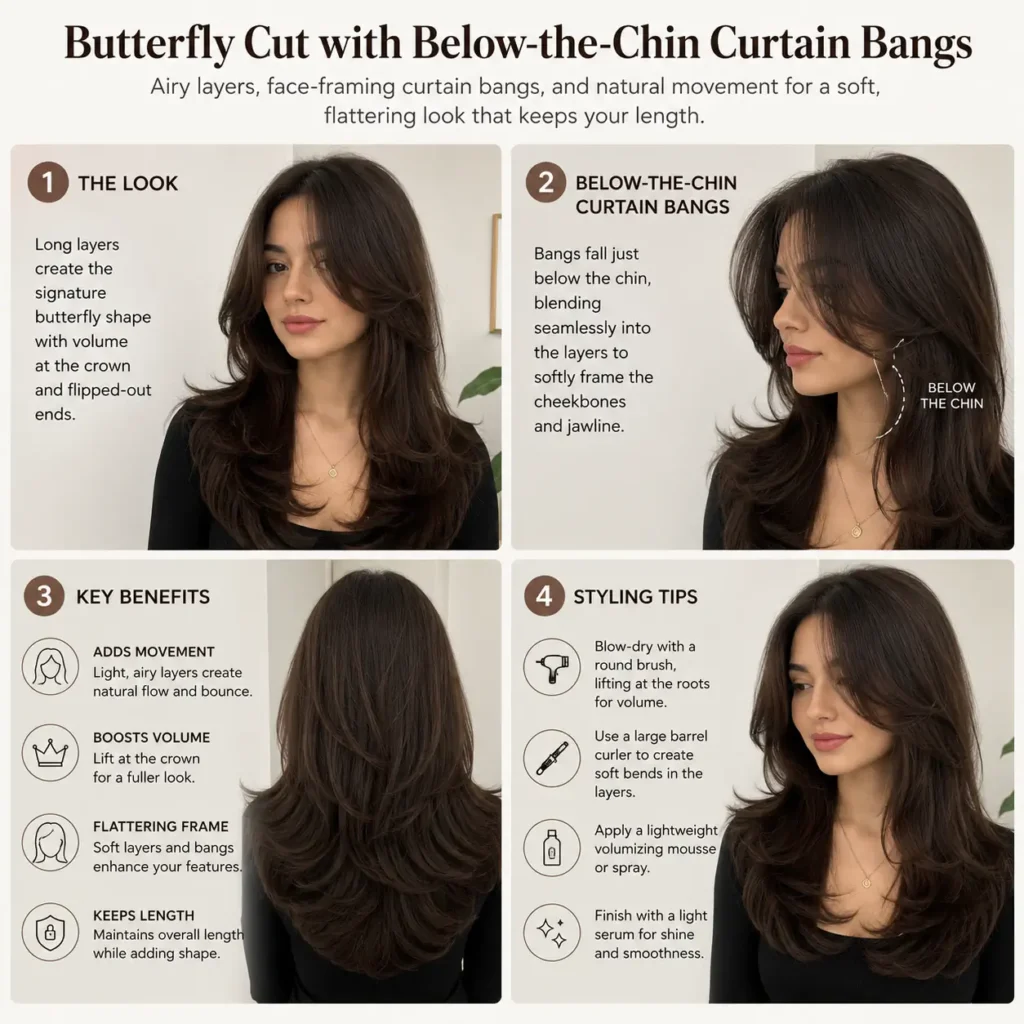
A butterfly cut with below-the-chin curtain bangs combines airy, face-framing layers with long fringe that blends smoothly into the haircut. The result keeps overall length while adding movement, crown lift, and a softer frame around the cheekbones and jaw.
Layered Shape and Visual Impact:
• Long curtain bangs skim below the chin, framing softly.
• Feathered upper layers create lift without sacrificing overall length.
• Longer lower layers preserve fullness while encouraging airy movement.
• The blended shape looks polished, soft, and naturally voluminous.
Cutting and Layer Placement:
• Ask for face-framing layers beginning slightly below your chin.
• Keep perimeter length strong if your hair feels fine.
• Thicker hair benefits from internal layers that remove bulk.
• Request soft blending so bangs merge into shorter layers.
• Bring reference photos because butterfly-cut terminology varies between stylists.
Styling and Maintenance Approach:
• Blow-dry bangs away from your face for curved movement.
• Use a round brush to emphasize bounce through layers.
• Lightweight mousse supports volume without making ends feel heavy.
• Trim regularly to keep curtain pieces balanced and intentional.
• Fine hair needs fewer layers to protect visible density.
3. Collarbone Lob with Side-Swept Fringe
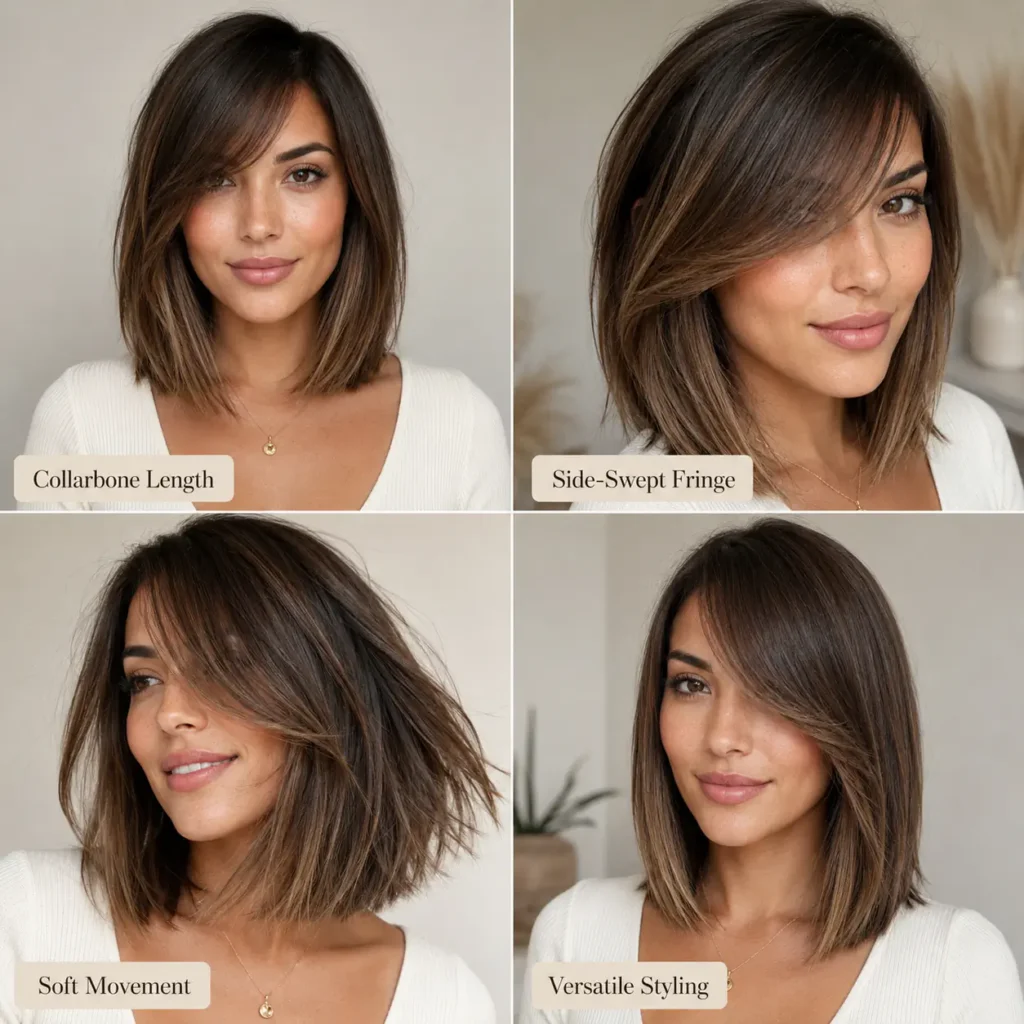
A collarbone lob with side-swept fringe pairs collarbone-skimming length with angled bangs, creating a polished shape without sacrificing natural movement. The longer fringe softly frames facial features, while the versatile lob adapts well to multiple hair textures and styling preferences.
Shape and Visual Effect:
• Collarbone length keeps the silhouette polished without feeling severe.
• Side-swept fringe softens the forehead and highlights cheekbones naturally.
• Subtle end layers add movement while preserving overall fullness.
• A deeper side part creates flattering asymmetry around features.
Cutting and Styling Approach:
• Ask for collarbone-grazing ends with controlled, minimal layering.
• Keep fringe longer so it blends into face-framing pieces.
• Blow-dry bangs sideways with a round brush for sweep.
• Use lightweight mousse to build lift without stiffening movement.
Wearability and Maintenance:
• This length suits straight, wavy, and many curly textures.
• Longer side fringe works especially well with angular features.
• Schedule fringe trims every few weeks to maintain direction.
• Dry shampoo helps refresh bangs between regular wash days.
4. Angled Lob with Soft Waves
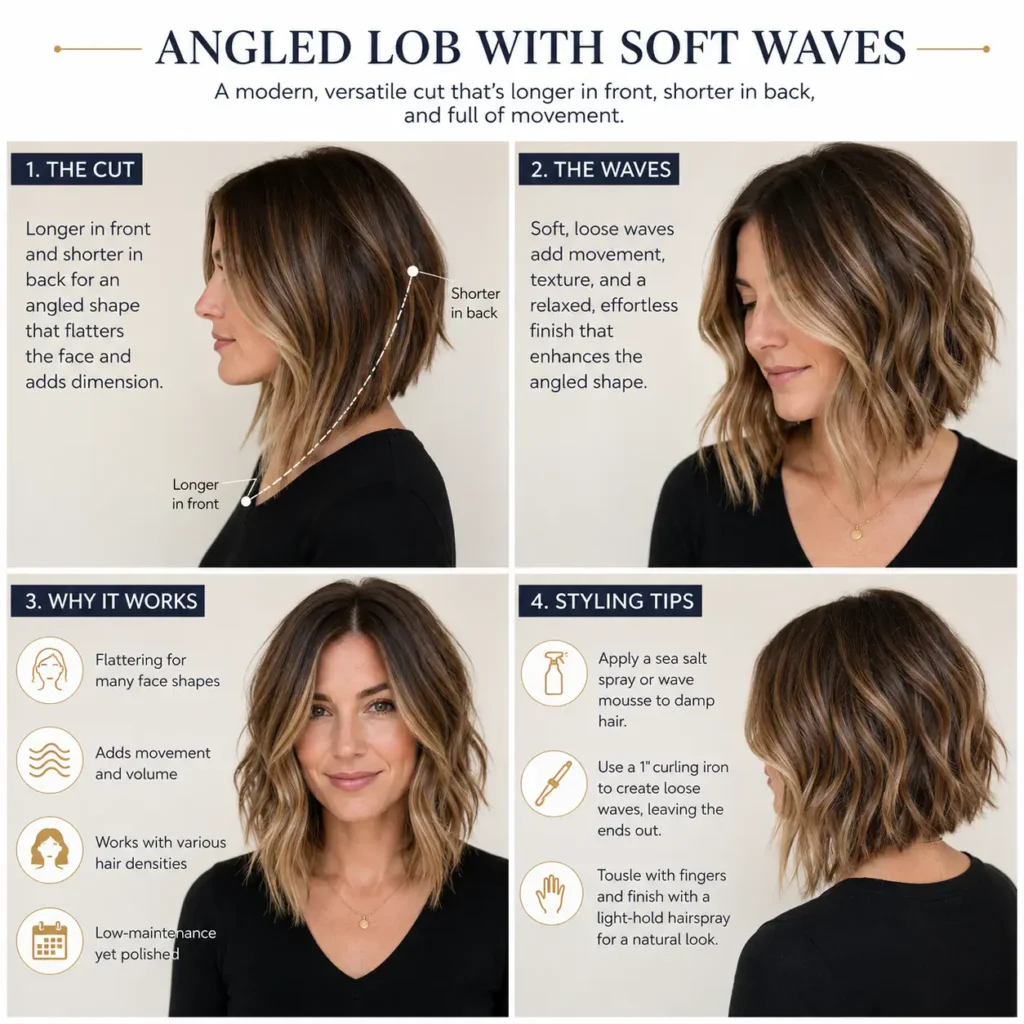
An angled lob with soft waves combines a longer front, shorter back, and loose texture for a polished shape that still feels relaxed. The cut adds movement around the face, while waves soften the A-line structure and make the style adaptable across many hair densities and face shapes.
Shape and Visual Balance:
• Longer front pieces create movement while subtly elongating facial proportions.
• Shorter back sections keep the lob light and polished.
• Soft waves blur sharp angles for relaxed, dimensional texture.
• A collarbone length preserves versatility without sacrificing the angled shape.
• Minimal layering helps maintain density through the perimeter.
Cutting and Styling Approach:
• Ask for a gradual A-line instead of dramatic stacking.
• Fine hair benefits from restrained layers and fuller ends.
• Thick hair can use internal shaping to reduce bulk.
• Create loose bends with a medium-barrel curling iron.
• Alternate wave directions, leaving ends straighter for modern texture.
Maintenance and Face-Framing Benefits:
• Use heat protectant before hot tools to limit damage.
• Texture spray refreshes softness without making waves overly stiff.
• Trim every six to eight weeks to preserve angles.
• Heart and round faces benefit from front-lengthening proportions.
• Square faces often suit softer waves around the jawline.
5. Textured Shag with Long Face-Framing Layers
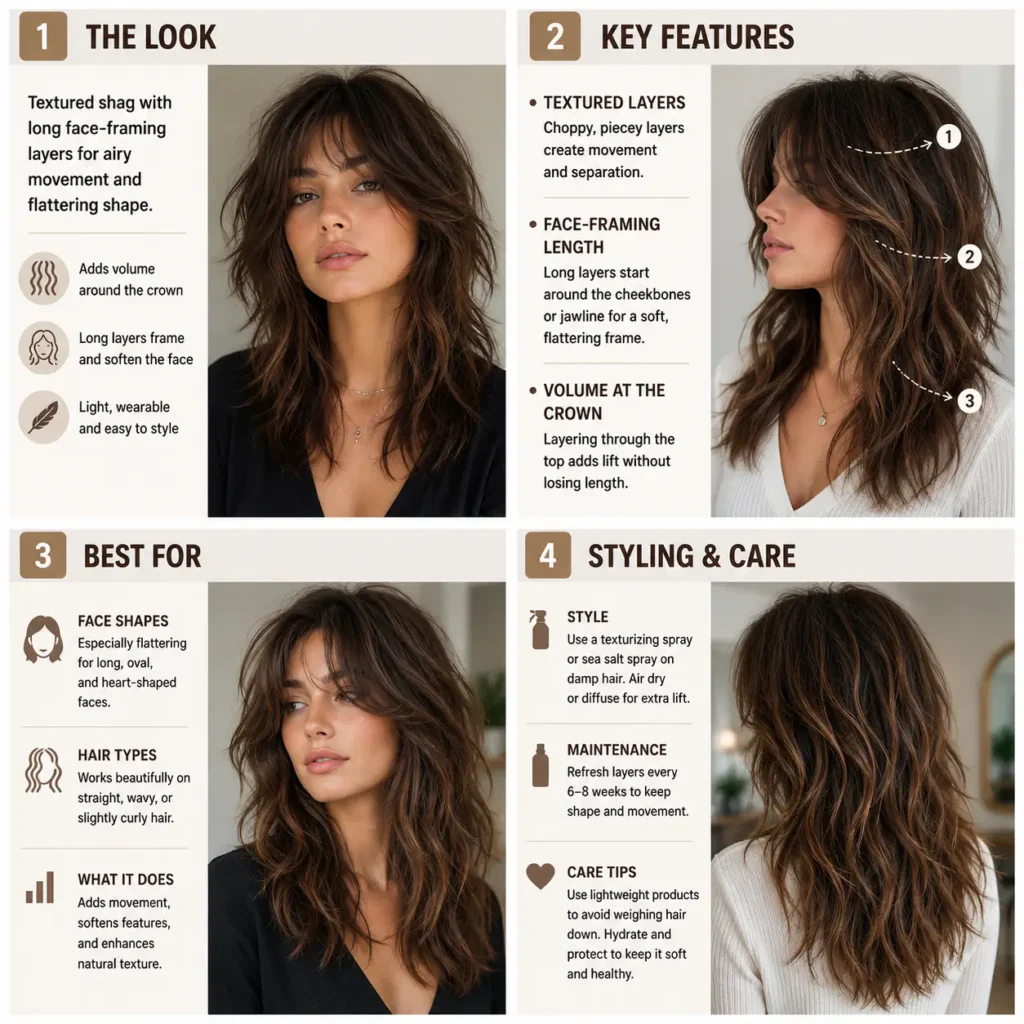
A textured shag with long face-framing layers blends airy movement, soft separation, and flattering shape without sacrificing overall length. The style works especially well for adding volume around the crown while keeping the front light, wearable, and easy to personalize.
Shape and Visual Movement:
• Choppy internal layers create lift without shortening overall length.
• Long face-framing pieces soften cheeks and highlight bone structure.
• Tapered ends keep the shag airy, loose, and modern.
• Crown layers add texture while preventing heavy, flat roots.
• Natural bends enhance separation and emphasize the cut’s movement.
Cutting and Styling Technique:
• Slide cutting creates softness through longer framing sections.
• Point-cut ends prevent blunt lines around the face.
• Diffusing waves enhances texture without collapsing crown volume.
• Lightweight mousse supports movement without making layers feel stiff.
• A round brush can polish fringe and cheekbone layers.
Wearability and Maintenance:
• Medium to thick hair holds shaggy texture particularly well.
• Fine hair benefits from restrained layering near lower lengths.
• Trims every eight to twelve weeks preserve balanced shaping.
• Dry shampoo helps refresh volume between wash days.
• Heat protectant preserves softness when styling face-framing sections.
6. Side-Swept Pixie with Crown Volume
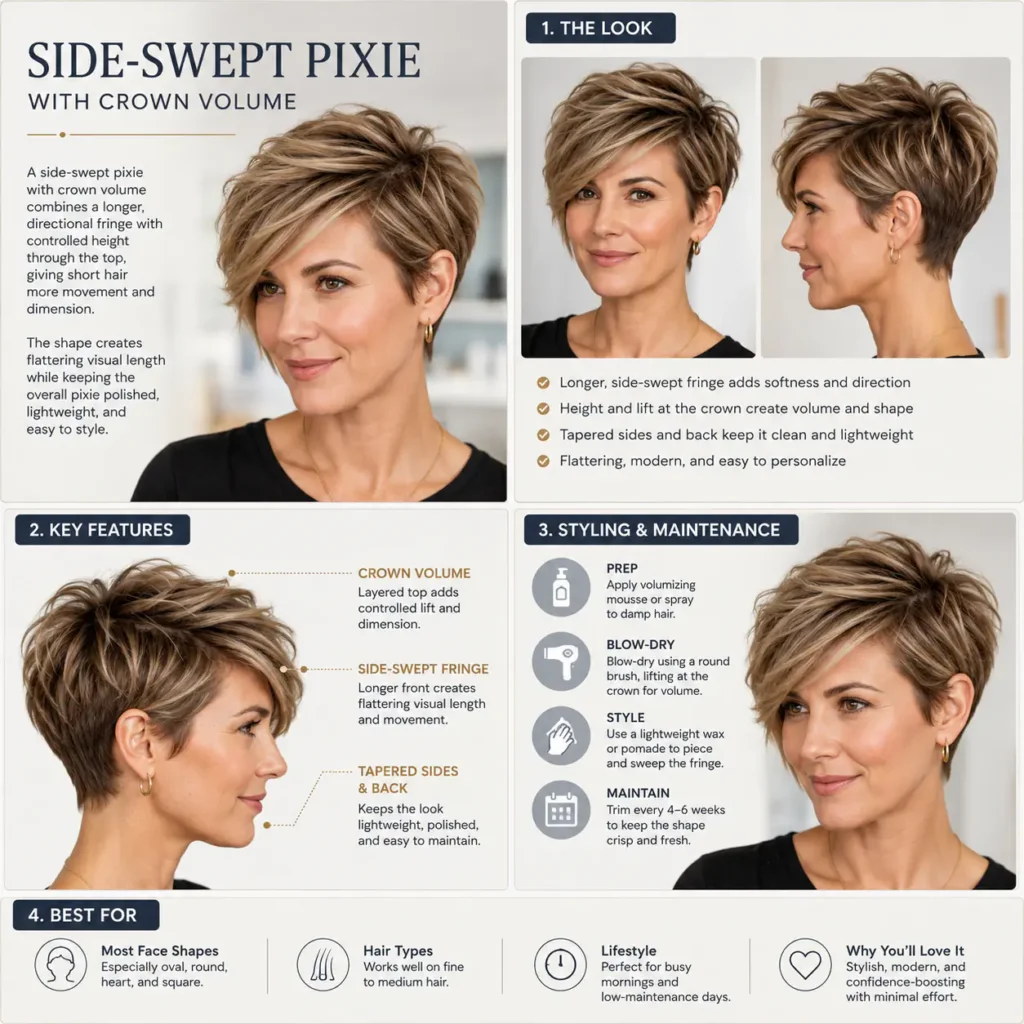
A side-swept pixie with crown volume combines a longer, directional fringe with controlled height through the top, giving short hair more movement and dimension. The shape creates flattering visual length while keeping the overall pixie polished, lightweight, and easy to style.
Shape and Visual Balance:
• Longer top layers sweep diagonally, creating softness around features.
• Crown height keeps the pixie airy instead of flattened.
• Shorter sides sharpen contrast while keeping the silhouette polished.
• A deep side part emphasizes movement through the fringe.
• Piecey ends prevent the swept section from looking heavy.
Cutting and Styling Technique:
• Keep extra length through the crown and front sections.
• Use graduated layers to support lift without bulky stacking.
• Apply lightweight mousse at roots before directional blow-drying.
• Lift crown roots upward, then direct fringe sideways smoothly.
• Finish with pliable paste for separation and controlled texture.
Maintenance and Hair Compatibility:
• Fine hair gains dimension when crown layers stay lightweight.
• Thicker hair needs internal weight removal for easier lift.
• Round faces benefit from vertical height and diagonal fringe.
• Trim every four to six weeks to preserve shape.
• Refresh volume with dry shampoo between regular wash days.
7. Tapered Pixie with Piecey Fringe
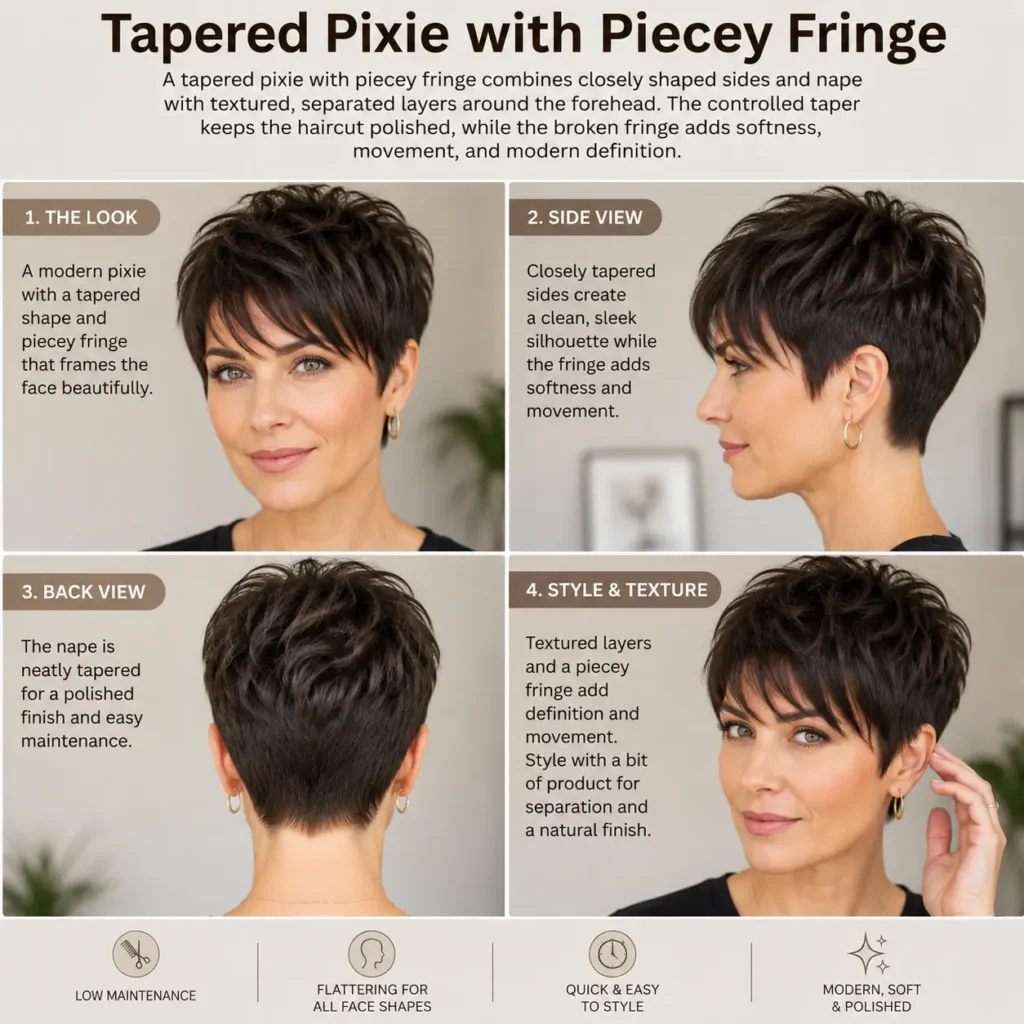
A tapered pixie with piecey fringe combines closely shaped sides and nape with textured, separated layers around the forehead. The controlled taper keeps the haircut polished, while the broken fringe adds softness, movement, and modern definition.
Shape and Texture Balance:
• Closely tapered sides create a clean, sculpted pixie silhouette.
• Longer crown layers provide movement without creating excessive bulk.
• Piecey fringe softens the forehead and adds casual dimension.
• Textured ends prevent the short haircut appearing overly severe.
Cutting and Styling Approach:
• Point cutting helps create separated, naturally irregular fringe pieces.
• Lightweight styling paste defines texture without flattening short layers.
• Finger styling keeps individual fringe sections loose and dimensional.
• Gentle blow drying adds crown lift while controlling direction.
Suitability and Upkeep:
• Straight or slightly wavy textures showcase piecey separation beautifully.
• Oval and heart faces complement the tapered proportions naturally.
• Regular four-to-six-week trims preserve the neckline and fringe shape.
• Minimal product prevents waxy buildup and maintains airy texture.
8. Asymmetrical Bob with an Elongated Front
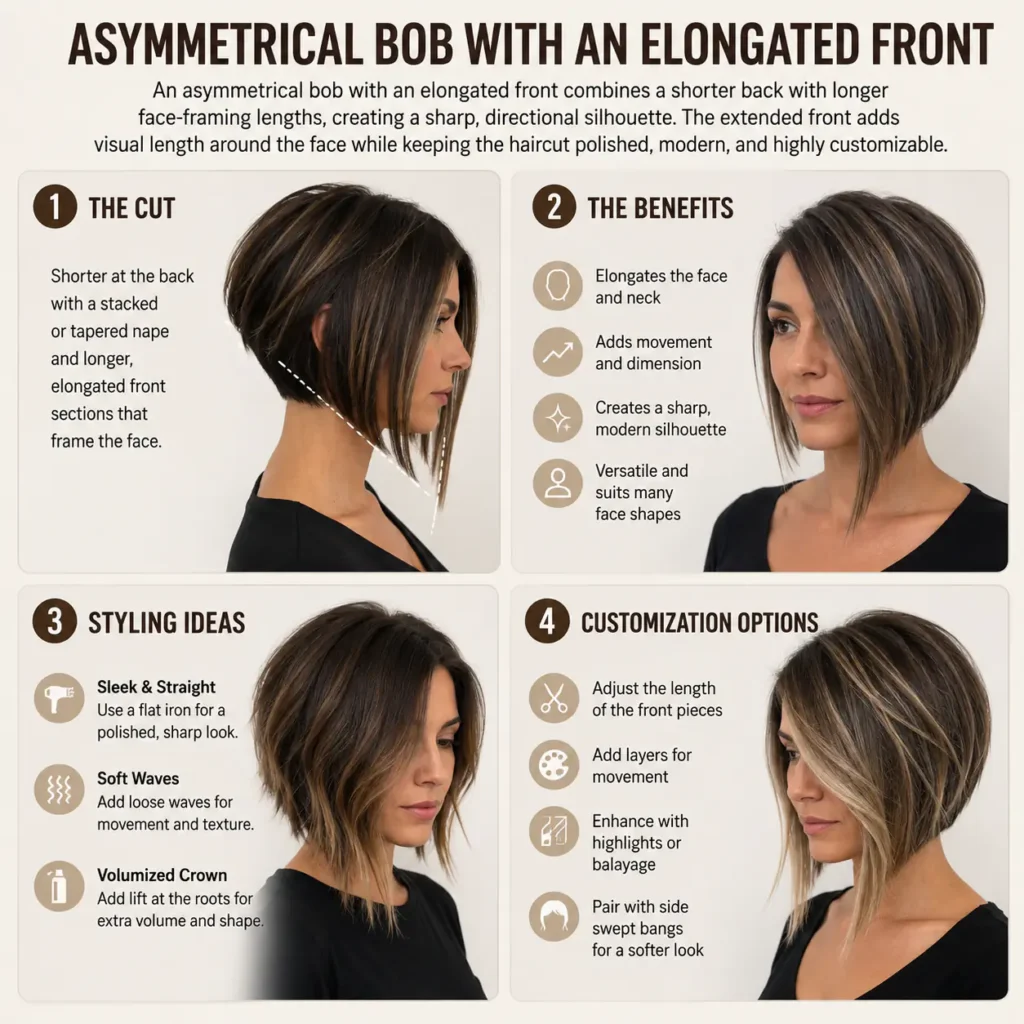
An asymmetrical bob with an elongated front combines a shorter back with longer face-framing lengths, creating a sharp, directional silhouette. The extended front adds visual length around the face while keeping the haircut polished, modern, and highly customizable.
Visual Shape and Structure:
• The shorter back creates lift while emphasizing forward length.
• Longer front pieces frame the jaw with deliberate movement.
• A side part strengthens the haircut’s asymmetrical visual balance.
• Blunt ends make the angle appear cleaner and sharper.
Cutting and Styling Approach:
• Ask for clear graduation from shorter back toward front.
• Thick hair may need internal weight removal for movement.
• Layers can add volume without weakening the forward slope.
• Blow-dry the front smooth to showcase the elongated angle.
Maintenance and Wearability:
• Regular trims preserve the sharp line and uneven proportions.
• Straight textures display the angle most clearly between appointments.
• Wavy hair softens the silhouette while retaining directional movement.
• Extra front length can visually elongate the jawline area.
• Heat protectant helps limit dryness during frequent smoothing sessions.
9. Piecey Bob with Off-Center Bangs
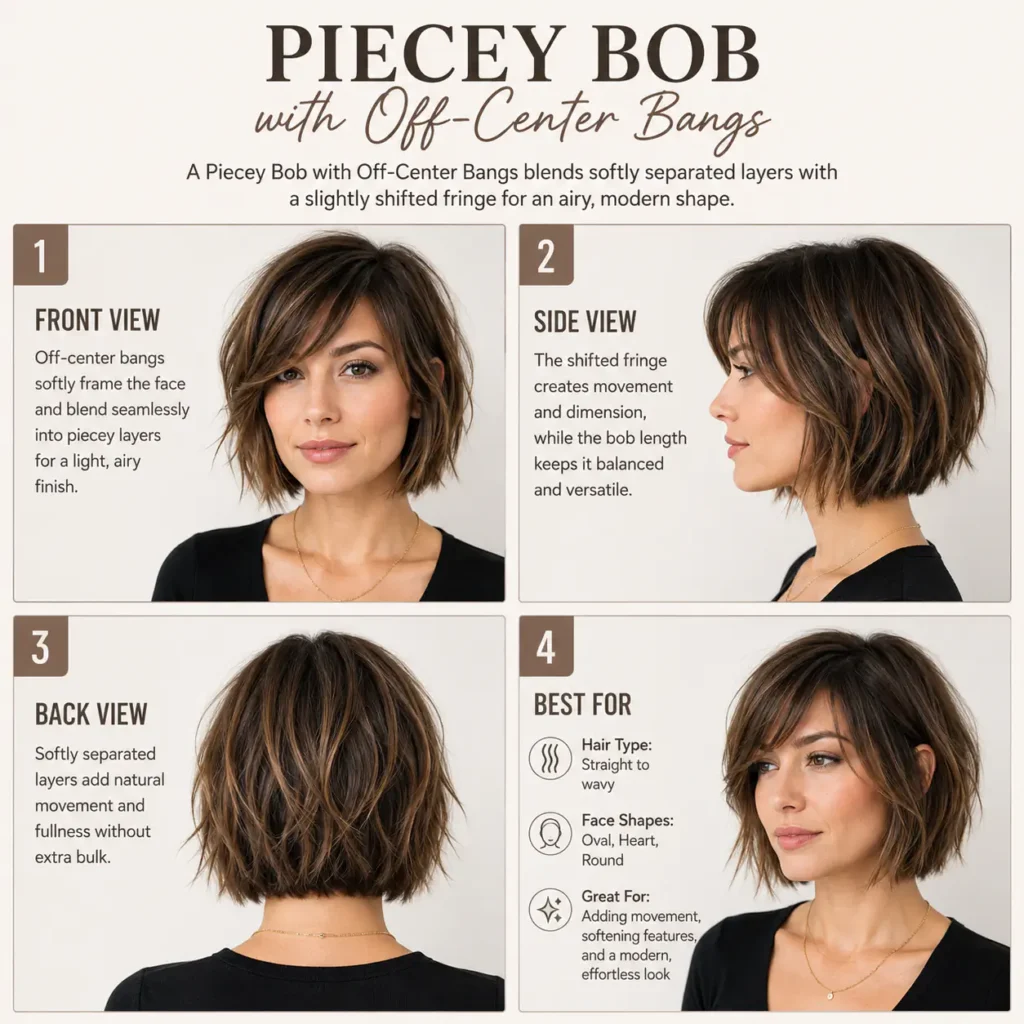
A Piecey Bob with Off-Center Bangs blends softly separated layers with a slightly shifted fringe for an airy, modern shape. The cut adds movement without sacrificing fullness, making it especially effective on straight to softly wavy textures.
Cut Shape and Visual Texture:
• Fine, separated layers keep the bob light and dimensional.
• An off-center fringe softens symmetry around the forehead naturally.
• Slightly jagged ends create movement without looking overly shaggy.
• Chin-skimming length keeps the silhouette crisp yet relaxed.
Cutting and Styling Technique:
• Ask for light point-cutting to separate the perimeter cleanly.
• Keep bangs long enough to sweep beside one brow.
• Texturizing spray enhances separation without flattening natural volume.
• Twist small sections while drying for casual, irregular movement.
Suitability and Everyday Maintenance:
• Straight and softly wavy hair shows piecey detail best.
• Fine hair benefits from blunt weight beneath light layering.
• Thick hair may need internal removal to reduce bulk.
• Refresh fringe placement daily with fingers or vent brush.
• Trim every six to eight weeks to preserve shape.
10. Shoulder-Length C-Cut with Jaw-Skimming Layers
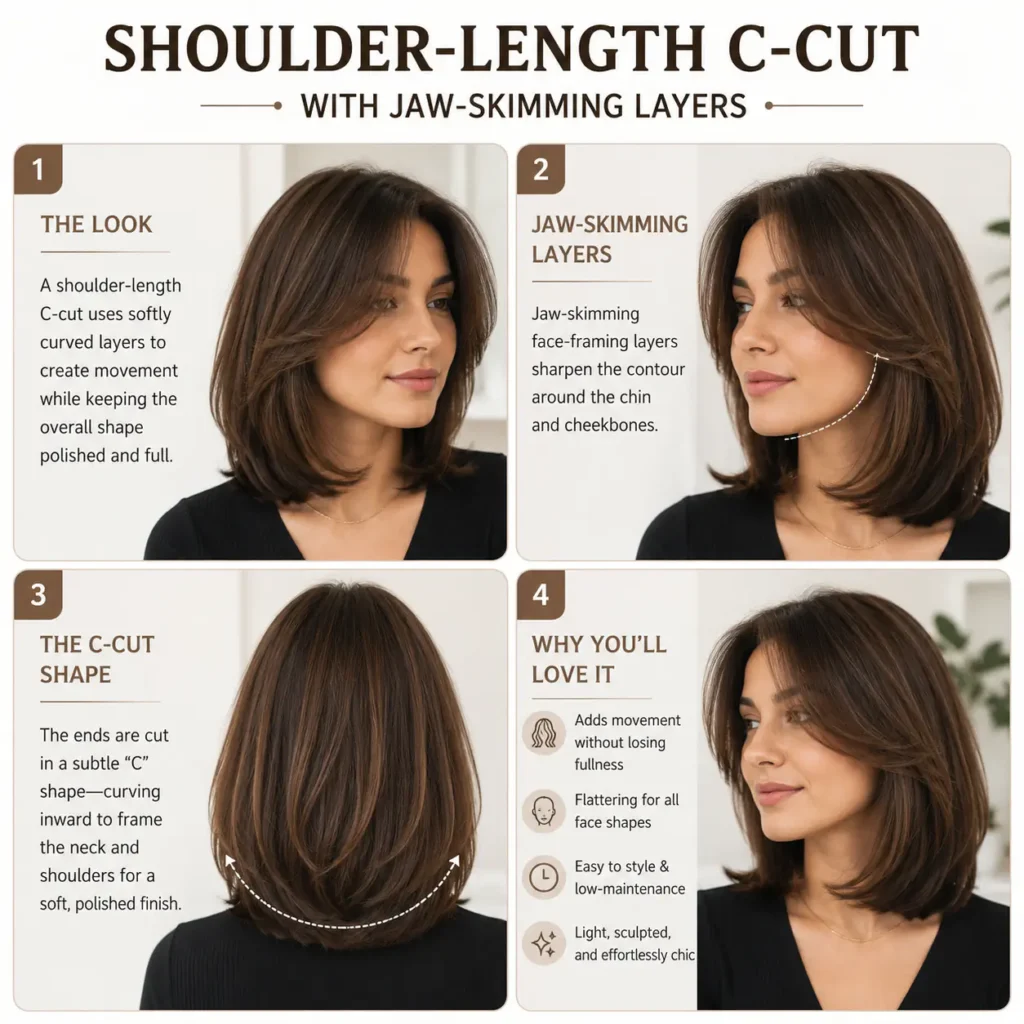
A shoulder-length C-cut uses softly curved layers to create movement while keeping the overall shape polished and full. Jaw-skimming face-framing layers sharpen the contour around the chin and cheekbones, giving medium-length hair a lighter, more sculpted finish.
Shape and Visual Impact:
• Curved layers create a rounded silhouette without sacrificing fullness.
• Jaw-skimming pieces define cheekbones while softening stronger facial angles.
• Shoulder-length ends keep the haircut balanced, polished, and versatile.
• Subtle graduation adds movement without making ends appear thin.
Cutting and Styling Technique:
• Ask for connected C-shaped layers rather than choppy separation.
• Start face-framing layers near the jaw for defined contour.
• Point cutting softens layer edges and improves natural movement.
• A round-brush blowout enhances inward curves and airy bounce.
Suitability and Maintenance:
• Medium to thick hair supports layered shape especially well.
• Fine hair benefits from fewer layers preserving perimeter density.
• Natural waves emphasize curved movement with minimal daily styling.
• Trim every six to eight weeks to maintain framing.
11. Long Shag with Wispy Curtain Fringe
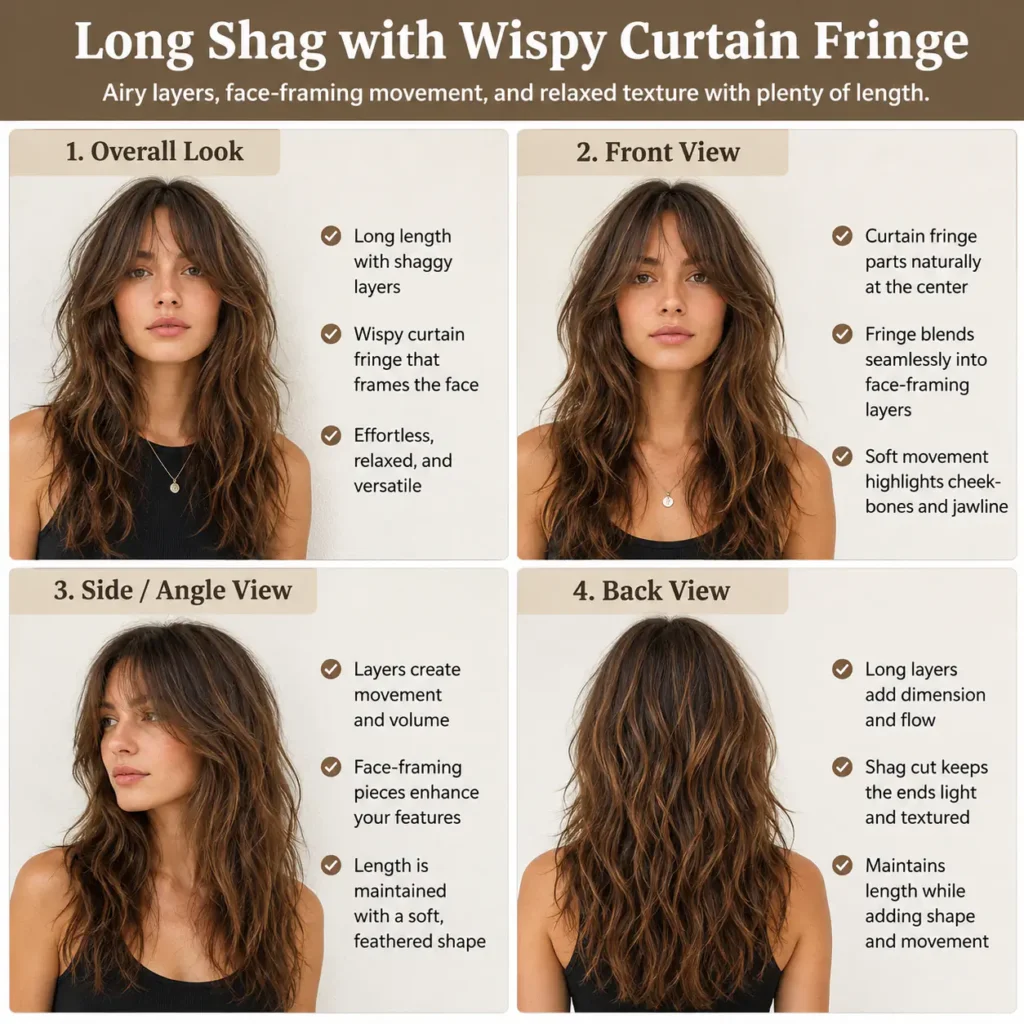
A long shag with wispy curtain fringe combines airy layers, face-framing movement, and relaxed texture while preserving plenty of overall length. The softer modern shape feels effortless and versatile, especially when the fringe blends naturally into flowing layers.
Signature Shape and Movement:
• Soft crown layers create lift without sacrificing overall length.
• Wispy curtain fringe opens the face and softens features.
• Feathered ends keep long hair airy, textured, and mobile.
• Face-framing pieces blend naturally into the shagged perimeter.
Layering and Cutting Approach:
• Ask for connected layers that remove weight strategically.
• Keep fringe longer near cheekbones for effortless curtain movement.
• Point cutting softens edges and prevents bulky layer lines.
• Fine hair needs lighter layering to preserve visible density.
• Thicker textures benefit from interior layers removing excess bulk.
Styling and Maintenance Routine:
• Air-dry waves with mousse to emphasize natural shag texture.
• Blow-dry fringe with a round brush for soft separation.
• Use lightweight texture spray instead of heavy smoothing products.
• Trim fringe regularly to maintain its airy, eye-framing shape.
• Schedule periodic trims before layers lose movement and balance.
12. Wavy Lob with an Off-Center Part
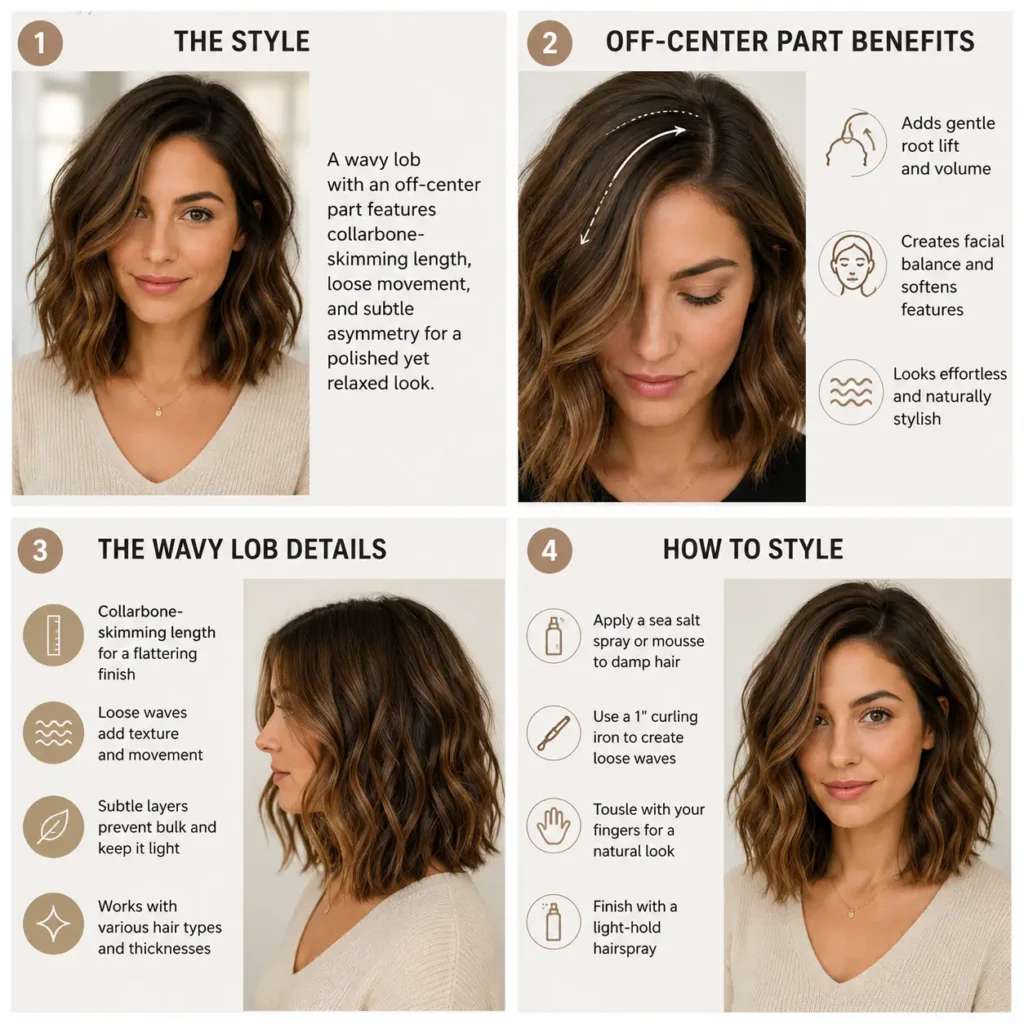
A wavy lob with an off-center part combines collarbone-skimming length, loose movement, and subtle asymmetry for a polished style that still feels relaxed. The shifted part adds gentle root lift and facial balance, while soft waves give the long bob texture without looking overstyled.
Shape and Visual Balance:
• Collarbone-length ends keep the lob modern, light, and versatile.
• An off-center part creates subtle asymmetry and natural root lift.
• Loose S-shaped waves add movement without shrinking overall length.
• Soft face-framing pieces prevent the silhouette from feeling heavy.
Cutting and Styling Approach:
• Ask for collarbone length with lightly textured, weight-balanced ends.
• Keep layering subtle so waves retain fullness through ends.
• Style midlengths with a large barrel, leaving tips straighter.
• Alternate wave directions for softer, less uniform movement.
• Finish with lightweight texture spray instead of heavy oils.
Wearability and Maintenance:
• This shape flatters oval, heart, and softly rounded faces.
• Fine hair benefits from minimal layers that preserve density.
• Thick hair may need internal weight removal for movement.
• Refresh waves with water and light mousse between washes.
• Schedule trims every eight to ten weeks for shape.
13. Long Layers with Grown-Out Side Bangs
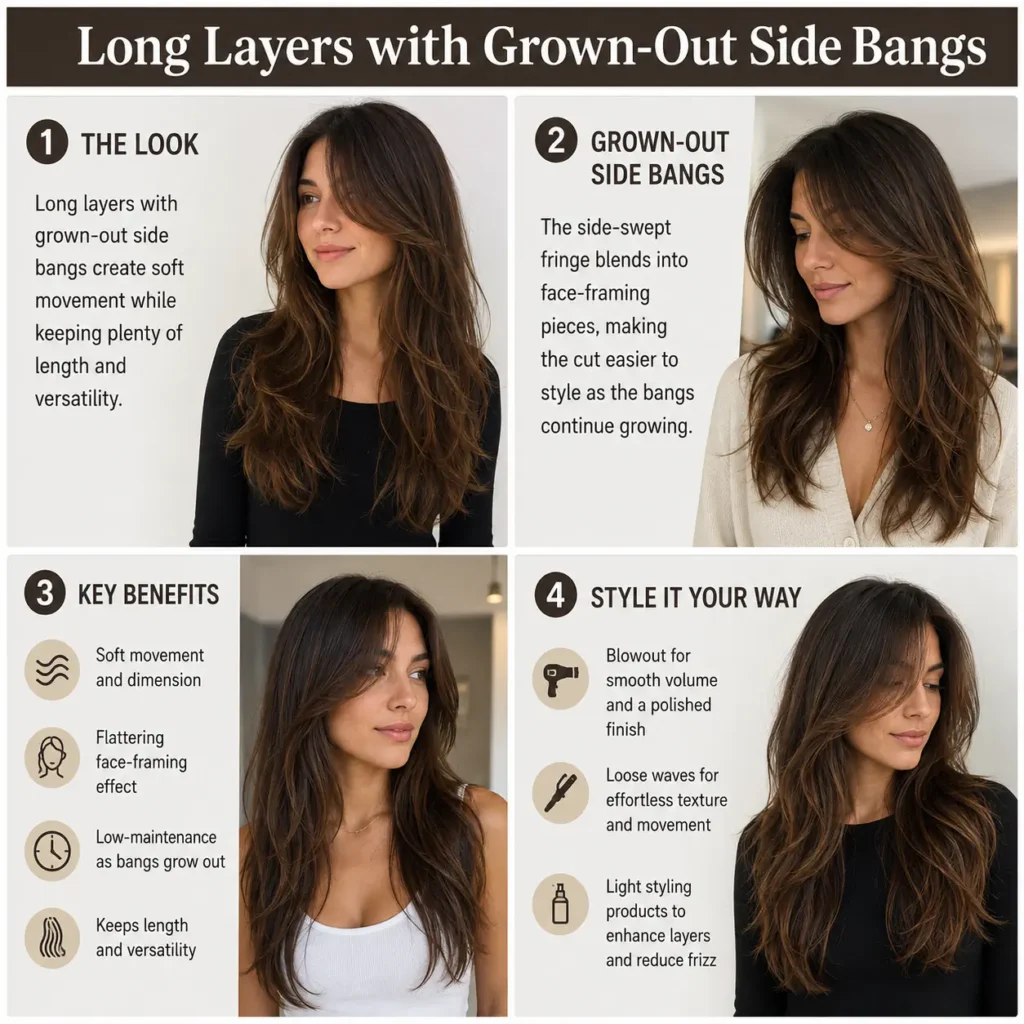
Long layers with grown-out side bangs create soft movement while keeping plenty of length and versatility. The side-swept fringe blends into face-framing pieces, making the cut easier to style as the bangs continue growing.
Shape and Visual Effect:
• Long layers create movement while preserving overall hair length.
• Grown-out side bangs blend softly into face-framing layers.
• The sweeping fringe adds shape without feeling overly dramatic.
• Layered ends reduce heaviness and encourage natural-looking bounce.
Cutting and Styling Approach:
• Ask for cheekbone-level framing that gradually connects downward.
• Diagonal cutting helps side bangs fall across naturally.
• A round brush can add lift without stiff volume.
• Lightweight styling products prevent fringe from becoming flat or greasy.
• Soft point-cutting keeps transitions blended instead of visibly choppy.
Wearability and Maintenance:
• This cut suits straight, wavy, and softly textured hair.
• Longer bangs offer flexibility for side parts or updos.
• Regular trims keep layers polished without shortening overall length.
• Drying bangs away from their part boosts lasting movement.
• Fine hair benefits from restrained layering to protect density.
14. Curly Shoulder-Length Layers with Crown Lift
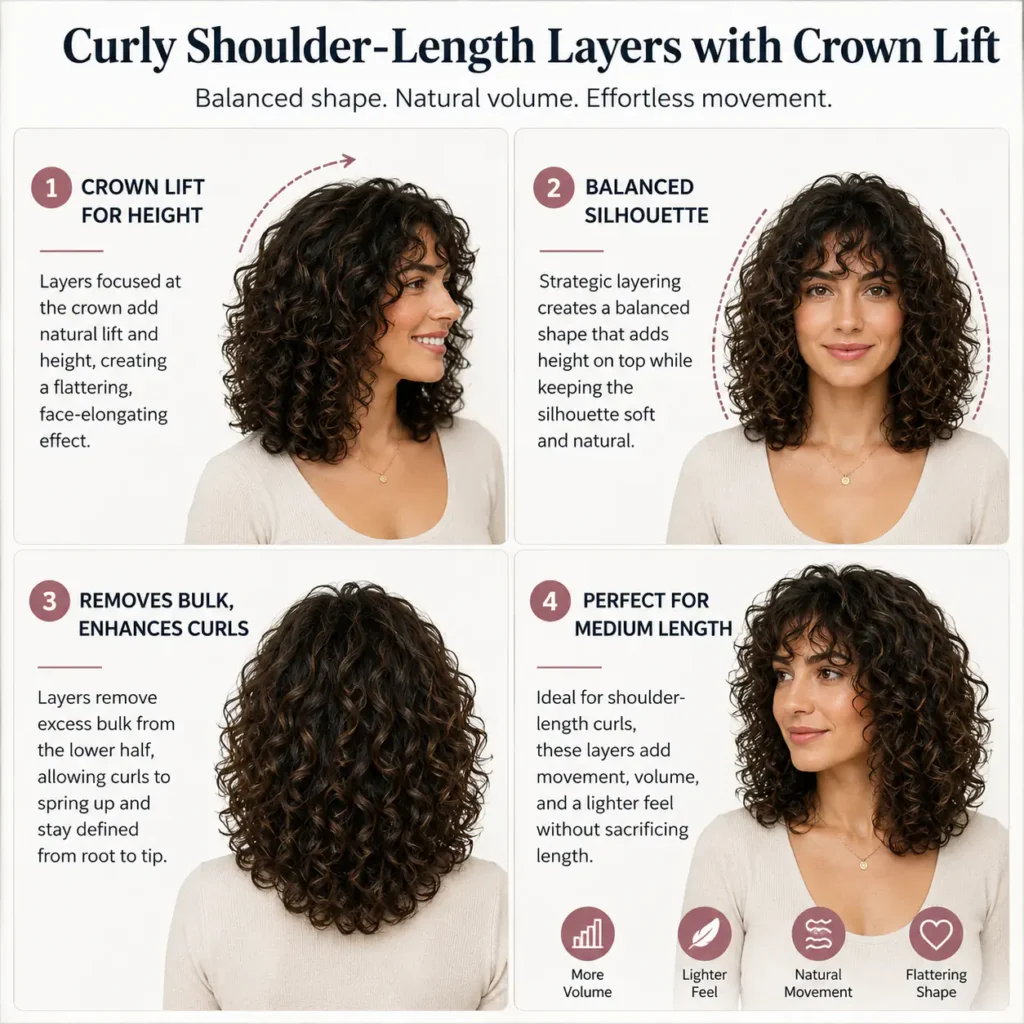
Curly shoulder-length layers with crown lift create a balanced silhouette that adds height while keeping natural curl movement soft and defined. Strategic layering removes lower bulk, encourages root volume, and gives medium-length curls a lighter, more flattering shape.
Shape and Volume:
• Shoulder-length curls gain movement through rounded, graduated layering.
• Shorter crown layers create lift without sacrificing overall fullness.
• Face-framing pieces soften the shape and highlight natural curl definition.
• Balanced layering prevents triangular bulk around the lower perimeter.
Cutting and Layer Placement:
• Dry curl-by-curl cutting preserves individual pattern and natural spring.
• Crown layers should stay long enough to avoid frizz.
• Graduation around the sides maintains shape without excessive width.
• Minimal thinning protects density, especially on fine curly hair.
Styling and Maintenance:
• Apply lightweight mousse at roots for controlled crown volume.
• Diffuse upside down briefly, then finish with upright drying.
• Refresh flattened crown sections using water and curl cream.
• Schedule trims every eight to twelve weeks for balance.
• Satin pillowcases help reduce overnight frizz and preserve definition.
15. Long Waves with Jaw-Length Face Framing
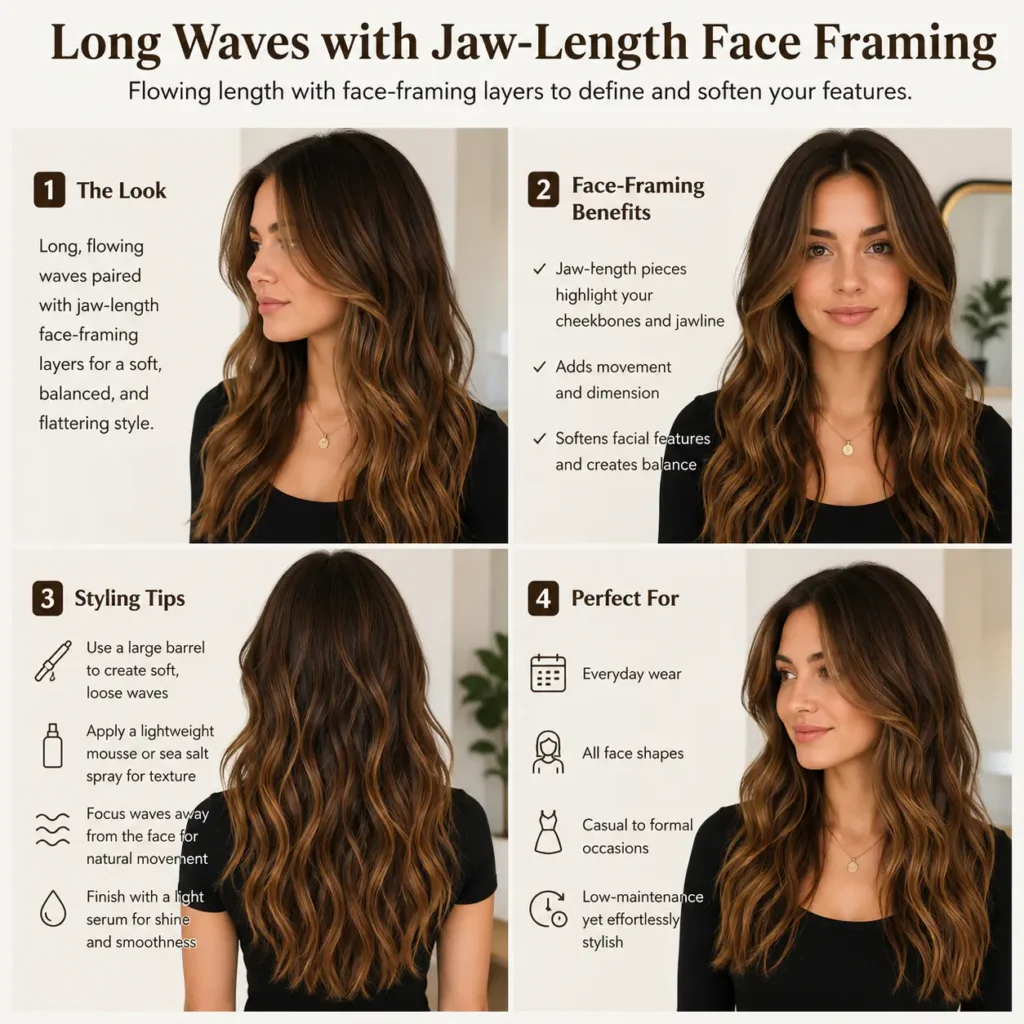
Long waves with jaw-length face framing combine flowing length with strategically placed layers that define facial features. The shorter front pieces add movement around the jaw while keeping the overall hairstyle soft, balanced, and versatile.
Shape and Visual Effect:
• Jaw-length layers soften the face while preserving overall length.
• Long waves create movement without making ends appear bulky.
• Framing pieces highlight cheekbones, lips, and the jawline naturally.
• Soft bends keep the haircut relaxed instead of overly sculpted.
Cutting and Styling Technique:
• Face-framing sections should begin around the jaw, not chin.
• Long layers blend downward to prevent disconnected, shelf-like pieces.
• A large-barrel iron creates loose waves with smoother separation.
• Curling away from the face opens features and adds lift.
• Alternate wave directions through lengths for fuller, lived-in texture.
Suitability and Maintenance:
• This shape flatters oval, round, heart, and square faces.
• Fine hair benefits from light layering that protects density.
• Thick hair may need internal weight removal for movement.
• Trim face-framing pieces every eight to ten weeks consistently.
• Heat protectant and light serum help waves stay polished.
16. Below-the-Jaw Sleek Lob with Subtle Internal Layers
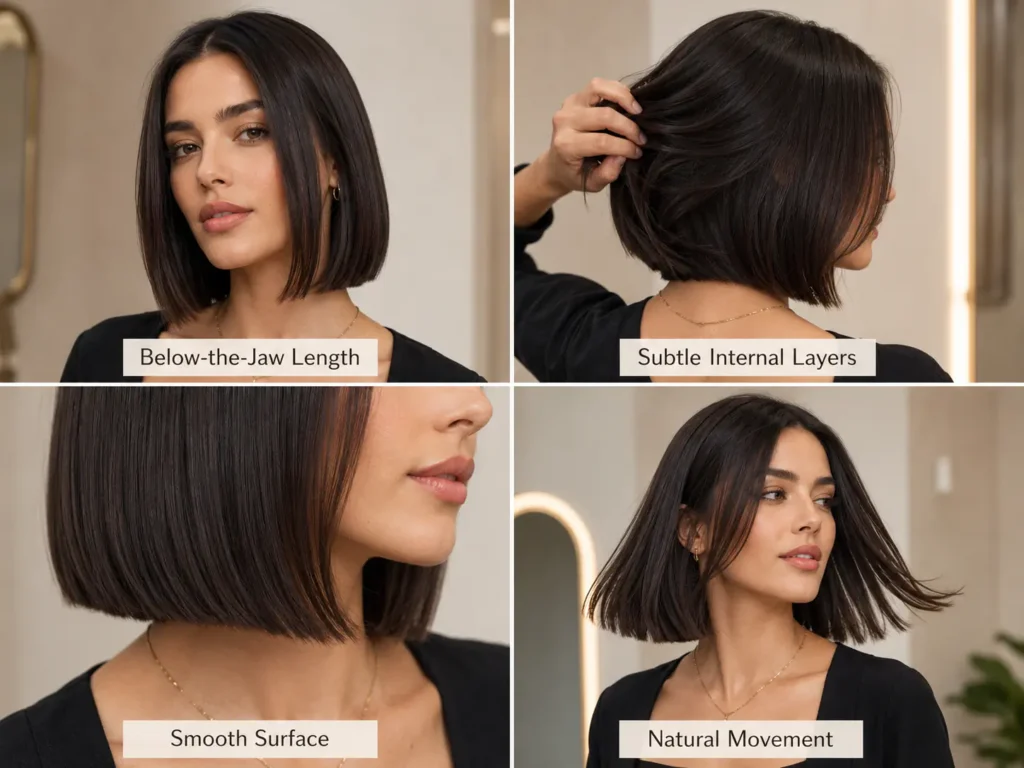
A below-the-jaw sleek lob combines a crisp, elongated outline with subtle internal layers that remove excess weight while keeping the surface smooth. The result is a polished, low-bulk haircut that moves naturally, styles cleanly, and delivers modern structure without obvious layering.
Silhouette and Layering Effect:
• The length sits below the jaw, creating clean elongation.
• Subtle internal layers remove bulk without disrupting sleek edges.
• A blunt perimeter keeps the lob polished and structured.
• Minimal surface layering preserves smooth movement and reflective shine.
Cutting and Styling Technique:
• Precision cutting works best on straight or lightly wavy hair.
• Internal point cutting softens density while maintaining visible fullness.
• Blow dry downward with tension for a glassy finish.
• Flat ironing small sections enhances alignment without flattening volume.
Maintenance and Best Fit:
• Trims every six to eight weeks preserve the sharp outline.
• Lightweight smoothing products control frizz without weighing layers down.
• This shape flatters fine to medium densities especially well.
• Longer face shapes benefit from keeping ends slightly fuller.
17. Soft Wolf Cut with Long Curtain Fringe
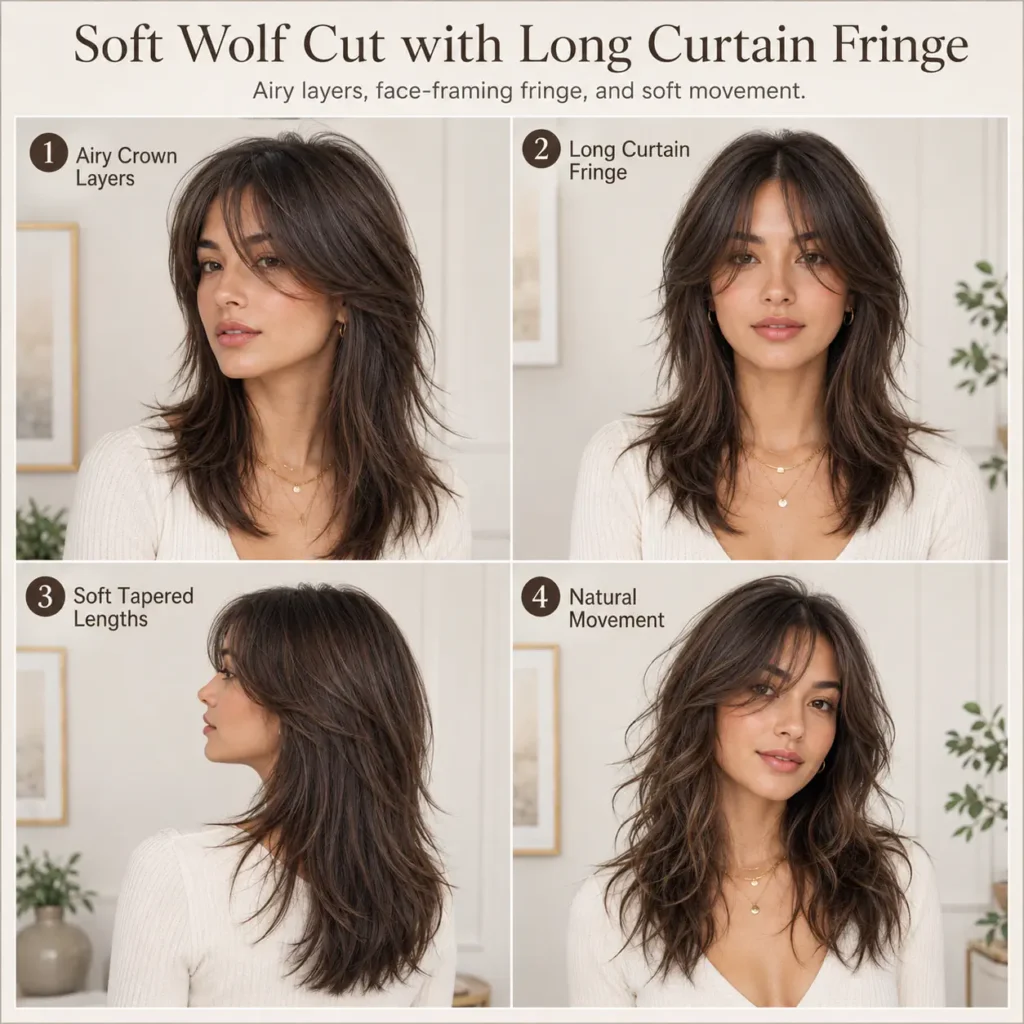
A soft wolf cut with long curtain fringe combines airy crown layers, tapered lengths, and face-framing movement for a relaxed shape that feels polished rather than heavily shagged. The longer fringe keeps the haircut versatile, while softer layering preserves length and creates natural movement across straight, wavy, or lightly curly textures.
Shape and Visual Balance:
• Soft crown layers create lift without excessive choppy volume.
• Longer curtain fringe opens the face and blends seamlessly.
• Tapered ends keep the silhouette light, fluid, and wearable.
• Face-framing pieces connect fringe smoothly into longer side layers.
Cutting and Styling Approach:
• Ask for soft graduation instead of aggressively disconnected layers.
• Keep curtain fringe long enough to tuck behind ears.
• Blow-dry fringe away from face using a round brush.
• Texture spray enhances separation without making layers feel stiff.
Suitability and Maintenance:
• Medium to thick hair holds layered movement especially well.
• Fine hair benefits from fewer layers around lower lengths.
• Wavy textures can air-dry beautifully with lightweight styling cream.
• Trim fringe regularly to preserve its cheekbone-framing flow.
18. Asymmetrical Bixie with Side-Swept Bangs
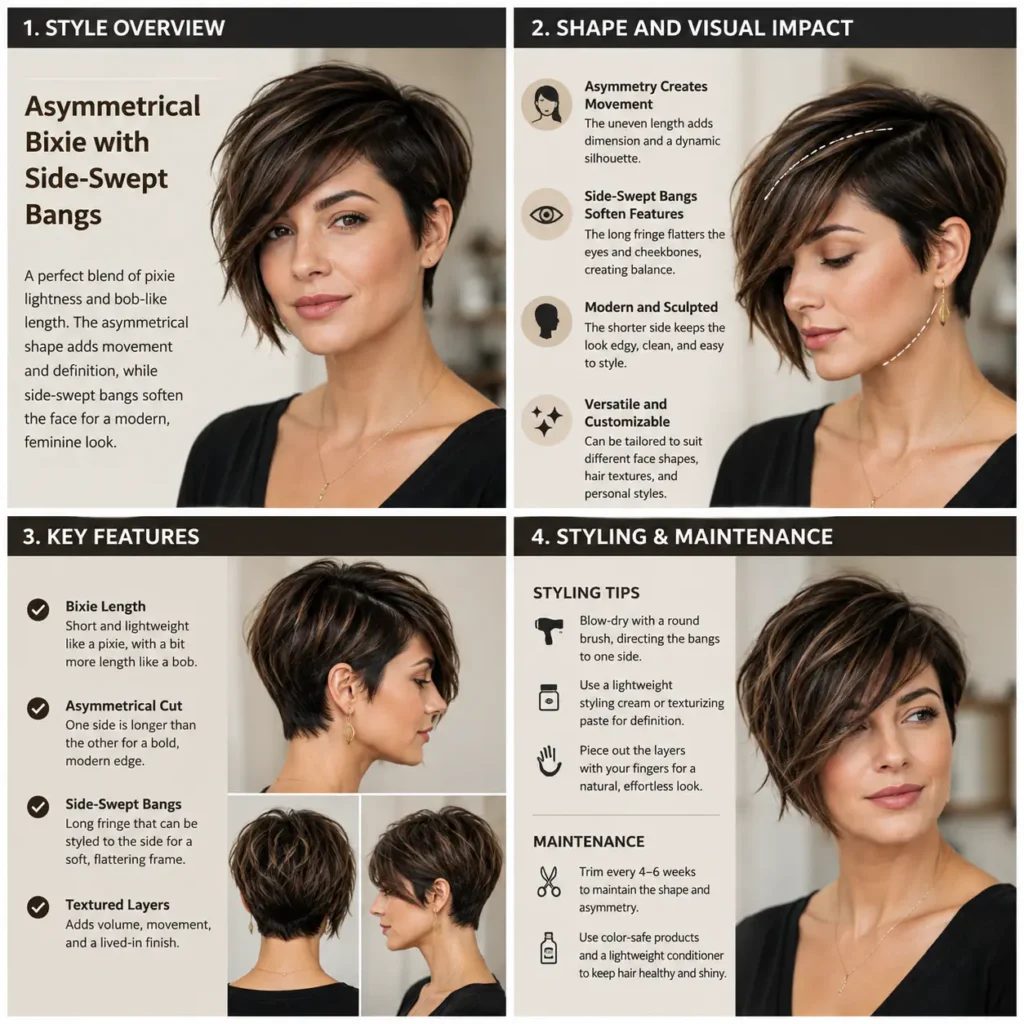
An asymmetrical bixie with side-swept bangs blends pixie lightness with bob-like length, using an uneven silhouette to create movement and definition. The longer fringe softens facial features while the shorter side keeps the haircut modern, sculpted, and easy to personalize.
Shape and Visual Impact:
• Uneven side lengths create a sharp, directional silhouette.
• Longer bangs sweep diagonally, softening cheekbones and forehead.
• Layered crown sections add movement without excessive bulk.
• Tapered shorter areas keep the bixie clean and lightweight.
Cutting and Styling Approach:
• Keep extra length where the fringe naturally falls.
• Point cutting softens edges while preserving intentional asymmetry.
• Blow-dry bangs sideways using gentle tension for controlled movement.
• Lightweight mousse or cream defines texture without stiffness.
Best Fit and Maintenance:
• Straight and wavy textures showcase the imbalance clearly.
• Fine hair gains fullness when ends remain lightly textured.
• Rounder faces can gain length from diagonal fringe placement.
• Regular trims preserve the neckline, fringe, and uneven shape.
19. Curly Pixie with Tapered Sides and Height
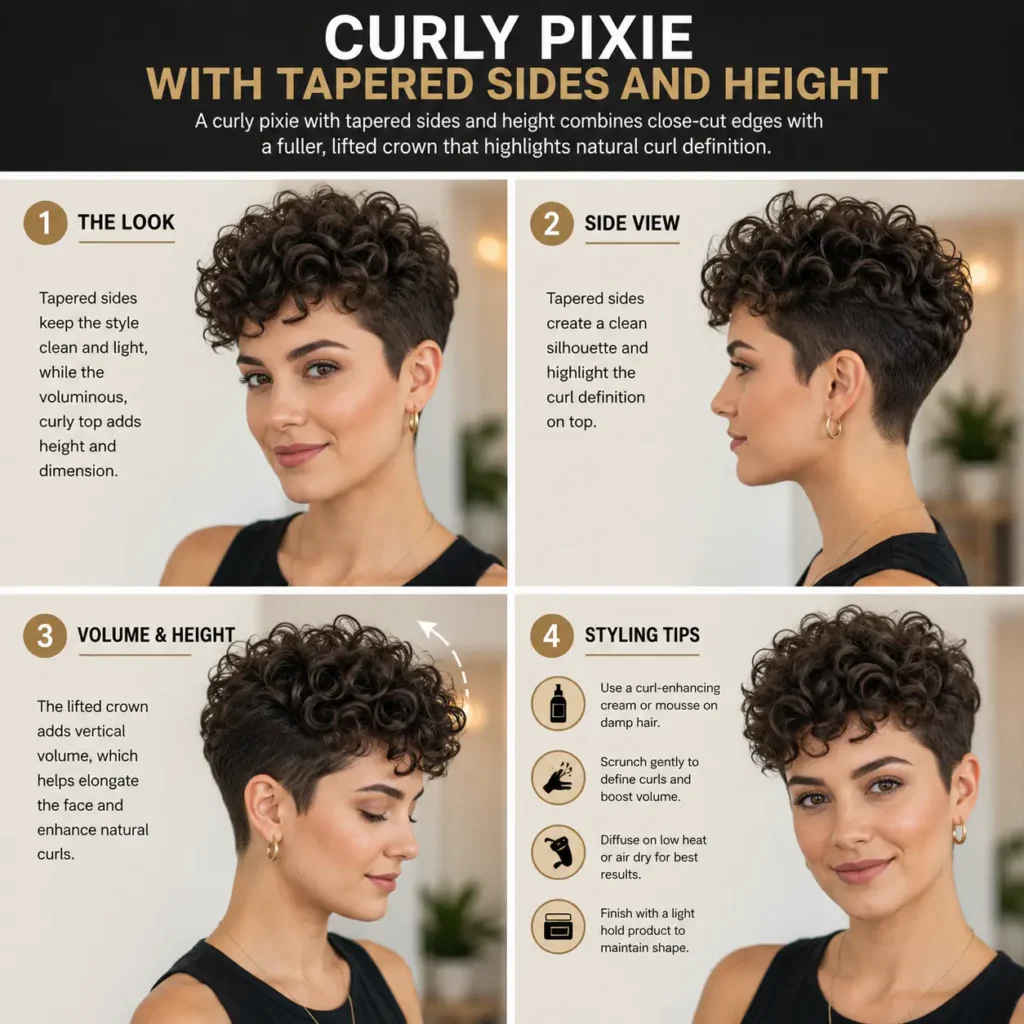
A curly pixie with tapered sides and height combines close-cut edges with a fuller, lifted crown that highlights natural curl definition. The contrast keeps the hairstyle polished and lightweight while adding vertical volume that can visually lengthen the face.
Shape and Texture Balance:
• Tapered sides keep the silhouette neat while curls rise.
• Extra height creates lift and elongates rounder face shapes.
• Defined curls add movement without overwhelming the cropped shape.
• Shorter sides sharpen contrast against a fuller textured crown.
Cutting and Styling Technique:
• Ask for gradual tapering around temples and neckline.
• Keep crown length longer to preserve curl formation.
• Use curl cream sparingly to enhance separation and softness.
• Diffuse upward at low heat to encourage lasting height.
Maintenance and Wearability:
• Schedule trims every four to six weeks for shape.
• Moisturizing products help prevent dryness on exposed curl ends.
• This cut flatters oval, heart, and round faces.
• Satin protection overnight reduces frizz and preserves crown volume.
20. Voluminous Blowout Layers with Blended Curtain Bangs
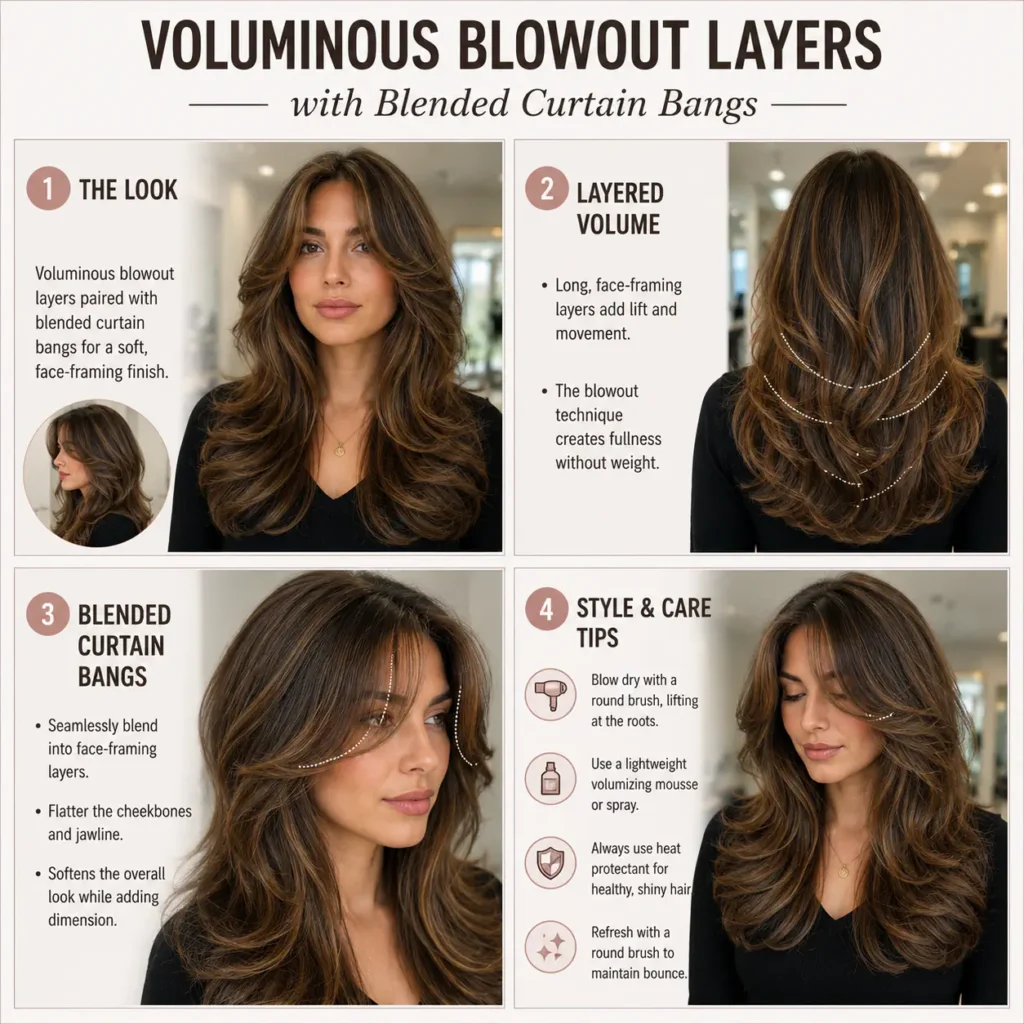
Voluminous blowout layers with blended curtain bangs combine airy movement, face-framing softness, and polished fullness without making the haircut feel heavy. The layered shape supports bounce through the lengths, while seamless bangs create a flattering transition around the cheekbones and jawline.
Shape and Visual Movement:
• Long layers create lift while preserving overall hair density.
• Blended curtain bangs sweep softly into cheekbone-length framing pieces.
• Rounded ends enhance bounce and make blowouts appear fuller.
• Face-framing layers prevent volume from looking bulky near features.
Cutting and Styling Technique:
• Stylists cut internal layers strategically to encourage natural movement.
• Curtain bangs should connect gradually into surrounding front layers.
• Round-brush blow-drying directs roots upward and curves ends outward.
• Large rollers can reinforce crown height after heat styling.
Maintenance and Best Suitability:
• Medium to thick hair holds this shape most effortlessly.
• Fine hair benefits from lighter layers and root volume.
• Trim curtain bangs every six weeks to preserve balance.
• Use lightweight mousse to maintain fullness without weighing layers.
• Heat protectant helps preserve softness during frequent blow-drying sessions.
| Maintenance AspectFrequencyKey ProductsPurpose | |||
|---|---|---|---|
| Shape-preserving trim | Every 6-10 weeks | Lightweight leave-in conditioner | Keeps layers and ends defined |
| Bang or fringe refresh | Every 3-5 weeks | Dry shampoo, light styling cream | Maintains flattering fringe placement |
| Washing routine | 2-4 times weekly | Gentle shampoo, conditioner | Preserves softness and natural movement |
| Heat styling | As needed | Heat protectant, lightweight mousse | Creates lift without unnecessary damage |
| Crown volume styling | 2-4 styling days weekly | Root-lift spray or volumizing mousse | Adds vertical height and movement |
| Texture enhancement | As needed | Texturizing spray or curl cream | Defines waves, layers, or piecey ends |
| Deep conditioning | Once weekly | Hydrating hair mask | Keeps longer layers smooth and healthy |
| End protection | After washing | Lightweight serum or hair oil | Controls frizz and polished split-looking ends |
FAQs
1. What hairstyle is most flattering for a round face?
There is no single best cut, but long layers, textured lobs, side-swept pixies, asymmetrical shapes, and face-framing styles are consistently recommended. Layer placement and volume can help create vertical movement and definition instead of concentrating fullness around the cheeks.
2. Do curtain bangs look good on round faces?
Yes. Longer, airy curtain bangs can work especially well because they open through the center and create soft diagonal lines around the face. For a customized result, the length and taper should be adjusted to your cheekbones, jawline, hair density, and natural texture.
3. Can someone with a round face wear short hair?
Absolutely. A short haircut does not have to emphasize facial width. A side-swept pixie, tapered pixie, or asymmetrical bixie can create height at the crown, texture through the top, and diagonal movement around the forehead and cheek area.
4. Are bob haircuts suitable for round faces?
Yes, when the shape is customized. Layered, angled, asymmetrical, and longer bobs can introduce movement and structure. Keeping the strongest line below the chin or using elongated front pieces is especially useful when you want to avoid concentrating visual width at the cheeks.
5. Where should face-framing layers start on a round face?
Jaw-length or slightly below-the-chin layers are a dependable starting point because they can direct the eye downward without adding excessive volume at the widest part of the cheeks. Your stylist should still adjust the placement for your texture, density, and the features you want to emphasize.
Conclusion
Finding the best hairstyles for round faces is not about following a rigid list of rules. It is about choosing a shape that works with your natural features, hair texture, and daily routine. Long face-framing layers can create soft movement, a textured lob can add structure, and a side-swept pixie can bring lift and definition without sacrificing personality. Even bangs can work beautifully when their length, weight, and placement are customized.
Before your next appointment, save two or three styles from this list that match your current length and maintenance comfort level. Then talk with your stylist about where the layers should begin, how much volume you want at the crown, and whether curtain, wispy, or side-swept fringe suits your texture best.
The most flattering haircut is ultimately the one that makes styling easier and helps you feel confident when you catch your reflection. Whether you want a subtle refresh or a noticeable transformation, these 20 round face hairstyles give you a strong starting point for creating a look that feels current, balanced, and completely personal.
Related posts
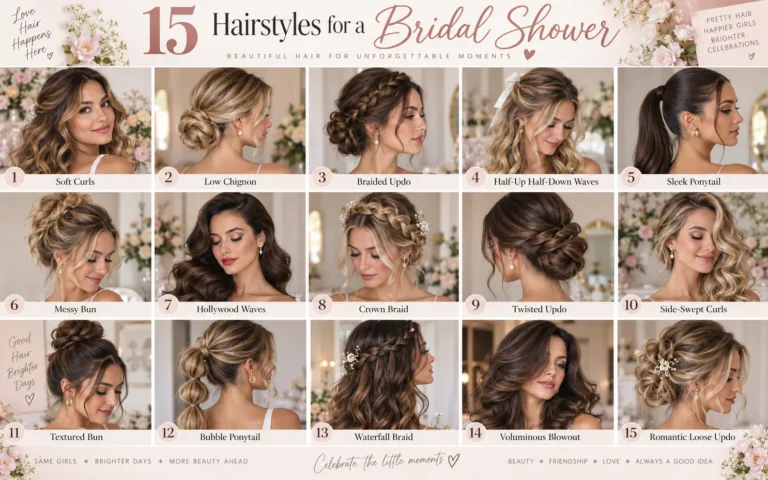 15 Hairstyles for a Bridal Shower
Discover 15 hairstyles for a bridal shower, from soft waves and chic buns to bows, braids, and ponytails for a polished, photo-ready bride-to-be. Your bridal shower…
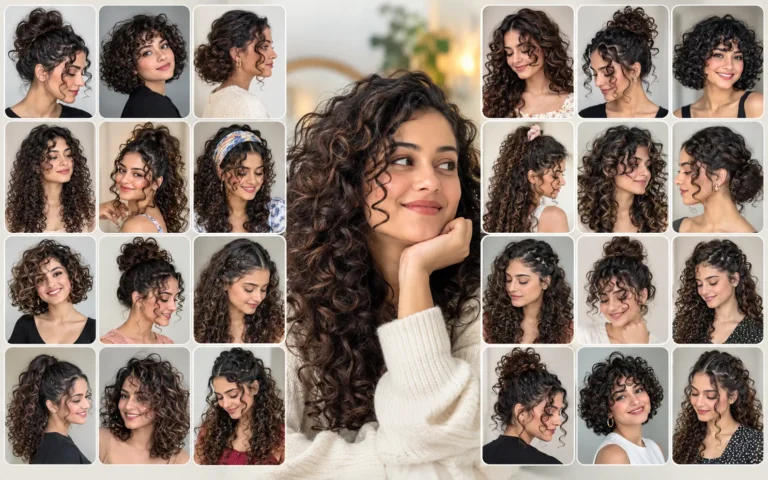 21 Hairstyles for Curly Hair
Discover 21 hairstyles for curly hair, from bouncy bobs and layered shags to easy updos, with fresh ideas for defined, effortless, beautiful curls. Curly hair has…
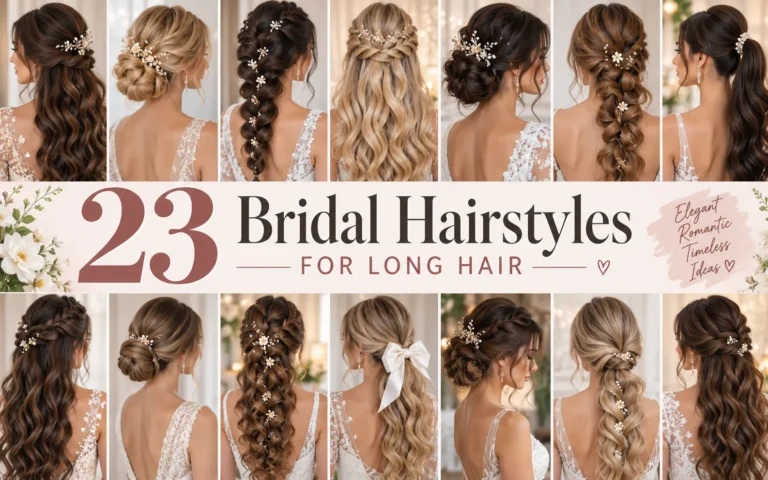 23 Bridal Hairstyles for Long Hair
Discover 23 bridal hairstyles for long hair, from Hollywood waves and romantic half-up styles to elegant buns, braids, and modern ponytails. Long hair gives a bride…