
How to Choose Nonstick Cookware Set
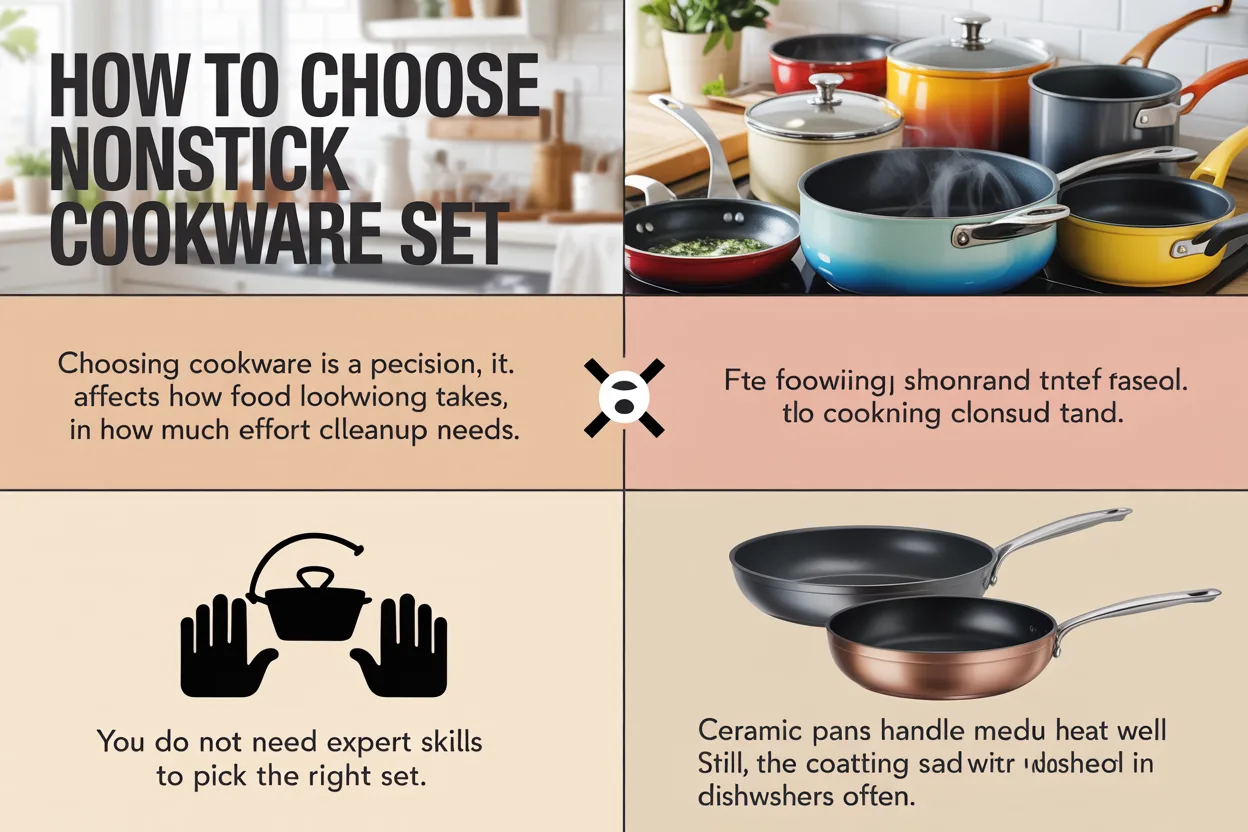
Learn how to choose nonstick cookware set that fits your cooking style, budget, and health needs. This clear guide explains materials, coatings, safety, and care for everyday home cooks.
How to Choose Nonstick Cookware Set for Daily Cooking
Choosing cookware is a personal decision. It affects how food tastes, how long cooking takes, and how much effort cleanup needs. Many home cooks prefer nonstick pans because they make daily meals easier and faster. Eggs slide out, pancakes flip clean, and oil use stays low.
Still, many shoppers feel confused at the store or online. Labels promise safety, durability, and performance, yet prices vary a lot. This guide explains how to choose nonstick cookware set in a simple and friendly way, using clear language and real experience from everyday kitchens.
You do not need expert skills to pick the right set. You only need to know what matters most to you, how you cook, and what features truly help at home.
“Good cookware does not make you a chef, but it makes cooking calmer and more enjoyable.”
Maria Collins, Home Cooking Writer
Why Nonstick Cookware Is So Popular
Nonstick cookware has become common in modern kitchens for good reasons. It saves time, reduces mess, and supports healthier meals.
Most people use nonstick pans for breakfast foods, quick lunches, and light dinners. The smooth surface helps food release easily, even with little oil. Cleaning takes minutes instead of scrubbing.
Nonstick cookware also suits beginners. You can focus on learning heat control and timing without worrying about food sticking. For families, it helps reduce stress during busy mornings and evenings.
Types of Nonstick Coatings Explained
Before you choose nonstick cookware set, it helps to know the coating types. Each has pros and limits.
PTFE Based Coatings
PTFE coatings are often known by brand names. They offer very smooth cooking surfaces and excellent food release.
These coatings work best at low to medium heat. They are easy to clean and lightweight. Modern versions are made without harmful chemicals that raised concerns in the past.
They are ideal for eggs, fish, and delicate foods.
Ceramic Coatings
Ceramic coatings appeal to people who want a more natural option. They are made from sand based materials and feel smooth at first use.
Ceramic pans handle medium heat well and look attractive. Still, the coating may wear faster if used roughly or washed in dishwashers often.
They suit light cooking and careful handling.
Hard Anodized Nonstick
Hard anodized cookware starts with aluminum that is treated for strength. A nonstick layer is added on top.
These pans are heavier, heat evenly, and resist scratches better. They often last longer than basic nonstick pans.
They are a good choice for frequent cooks.
Cookware Materials and Why They Matter
The base material affects how a pan heats and feels in your hand.
Aluminum
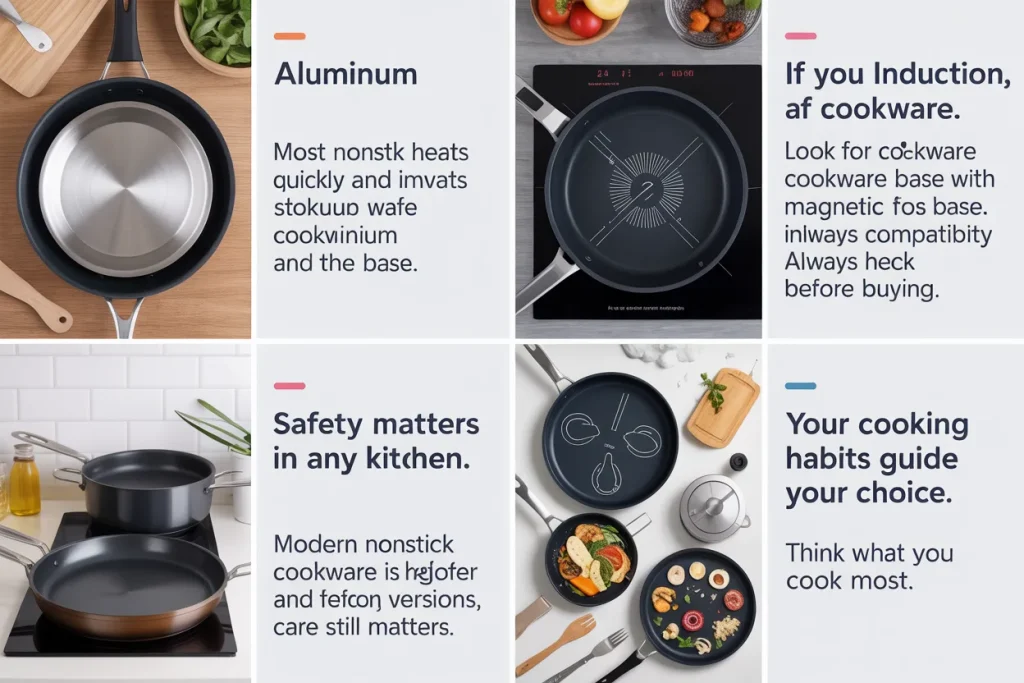
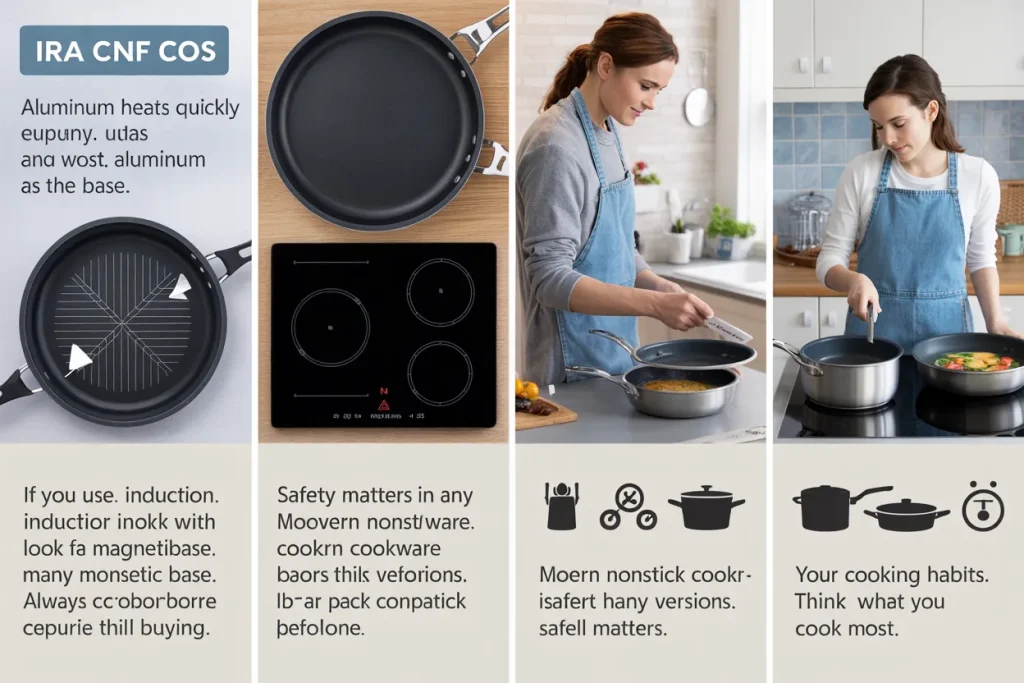
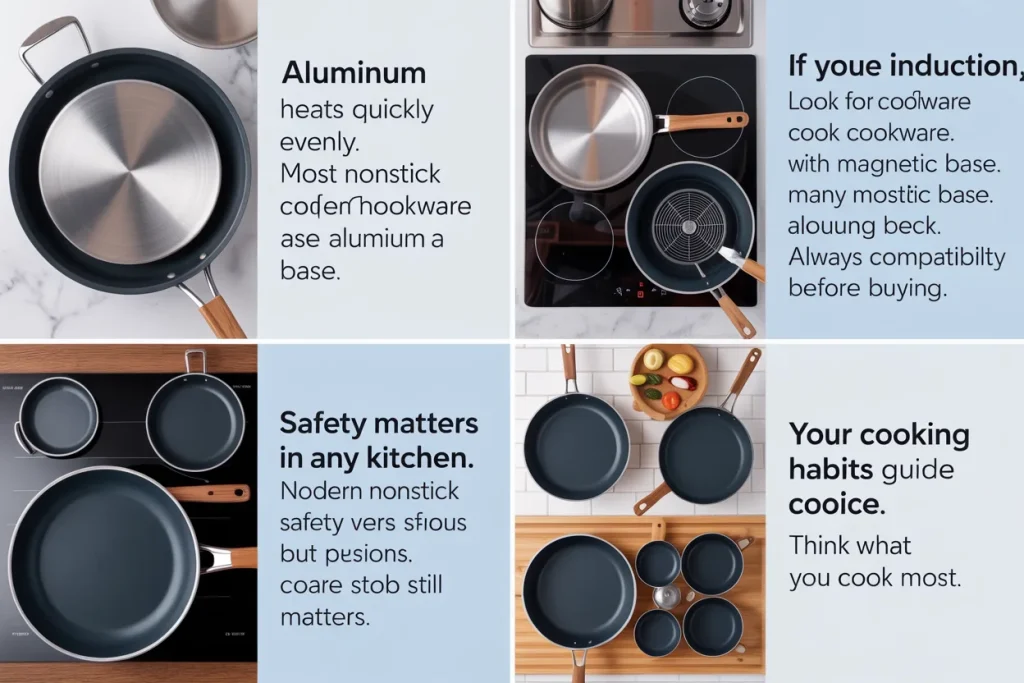
Aluminum heats quickly and evenly. Most nonstick cookware uses aluminum as the base.
It is lightweight and affordable. For daily cooking, aluminum pans feel easy to handle.
Stainless Steel with Nonstick Layer
Some sets combine stainless steel bodies with a nonstick interior. These pans feel sturdy and work well on many stovetops.
They heat a bit slower but keep heat steady.
Induction Compatible Bases
If you use induction, look for cookware with a magnetic base. Many modern nonstick sets include this feature.
Always check compatibility before buying.
Safety and Health Considerations
Safety matters in any kitchen. Modern nonstick cookware is safer than older versions, but care still matters.
Avoid overheating empty pans. High heat can damage coatings over time. Use medium heat for best results.
Choose sets labeled free from older harmful chemicals. Most trusted brands now meet safety standards.
Use wooden, silicone, or nylon utensils. Metal tools can scratch coatings and shorten lifespan.
“Safe cookware supports healthy habits, but good care makes the real difference.”
Daniel Reed, Kitchen Safety Educator
Heat Performance and Cooking Style
Your cooking habits guide your choice. Think about what you cook most.
If you cook eggs, crepes, or fish often, smooth nonstick pans shine. For stir frying or browning meats, you may need higher heat tolerance.
Some nonstick pans work better for slow cooking. Others handle quick sautés well.
Knowing your daily meals helps you choose nonstick cookware set that fits real life, not marketing claims.
Handle Design and Comfort
Handles affect comfort and control.
Look for handles that stay cool during cooking. Riveted handles feel sturdy but can trap food near rivets. Welded handles clean more easily.
Grip shape matters. Try holding a pan if possible. It should feel balanced, not heavy at the front.
Oven safe handles add flexibility for recipes that start on the stove and finish in the oven.
What Should a Good Set Include
Cookware sets vary in size and pieces. Buying more than you need wastes space.
Most homes do well with:
- One small frying pan
- One medium frying pan
- One saucepan with lid
- One larger pan or saute pan
Lids help control moisture and heat. Glass lids let you see food without lifting.
Avoid sets with too many duplicate pieces.
Price Range and Long Term Value
Price does not always equal quality. Still, very cheap sets often wear out fast.
Think of cookware as a long term kitchen tool. Paying a bit more for better materials can save money later.
Check warranties and brand reputation. Brands that stand behind products usually care about quality.
A good set lasts several years with proper care.
Care and Maintenance Tips
Proper care extends lifespan.
Wash by hand when possible. Avoid abrasive sponges.
Store pans with soft liners if stacked.
Use low to medium heat. Let pans cool before washing.
Good care keeps the nonstick surface smooth longer.
Common Mistakes to Avoid
Many buyers make simple mistakes.
Buying based on looks only can disappoint later. Ignoring stove compatibility causes issues.
Using metal tools damages coatings quickly.
Assuming all nonstick pans work the same leads to frustration.
Learning how to choose nonstick cookware set avoids these problems.
Comparing Popular Nonstick Coating Types
Table 1: Nonstick Coating Comparison
| Coating Type | Heat Tolerance | Ease of Cleaning | Durability |
|---|---|---|---|
| PTFE Based | Low to Medium | Very Easy | Moderate |
| Ceramic | Medium | Easy | Lower |
| Hard Anodized | Medium | Easy | Higher |
This table helps compare common options without confusion.
Set Size and Household Needs
Table 2: Choosing Set Size
| Household Size | Recommended Pieces | Best Use |
|---|---|---|
| 1 to 2 People | 3 to 4 Pieces | Daily meals |
| 3 to 4 People | 5 to 7 Pieces | Family cooking |
| Large Family | 7 to 10 Pieces | Frequent meals |
Choose size based on cooking habits, not just family size.
Expert Advice from Real Kitchens
“The best cookware feels natural to use and fits your routine, not the other way around.”
Linda Gomez, Culinary Instructor
Listening to experienced cooks helps avoid marketing noise.
Environmental and Ethical Factors
Some buyers care about eco impact. Look for brands that reduce packaging and follow safety standards.
Long lasting cookware creates less waste.
Even small choices help.
How to Match Cookware with Your Stove
Gas stoves suit most cookware types. Electric stoves work well with flat bottoms.
Induction needs magnetic bases.
Always confirm compatibility to avoid returns.
Shopping Online Versus In Store
Online shopping offers reviews and price comparison. In store shopping lets you feel weight and balance.
Both have benefits. Reading user reviews gives insight into real use.
Look for feedback about durability after months of use.
How Often Should You Replace Nonstick Cookware
Most nonstick pans last three to five years with good care.
If food starts sticking or coating peels, replacement is safer.
Regular inspection helps.
Final Buying Checklist
Before you buy, ask yourself:
- Does it match my stove
- Is the coating safe and durable
- Does the handle feel comfortable
- Does the set include what I need
- Is the price fair for quality
Answering these helps you choose nonstick cookware set wisely.
Frequently Asked Questions
Is nonstick cookware safe for daily use
Yes, modern nonstick cookware is safe when used at recommended temperatures and cared for properly.
Can I use nonstick pans in the oven
Some pans are oven safe up to certain temperatures. Always check manufacturer guidelines.
Which coating lasts the longest
Hard anodized nonstick often lasts longer with proper care.
Do I need a full set or individual pans
Many people do better buying a small set or individual pans based on needs.
How do I know when to replace a pan
If the coating peels or food sticks often, it is time to replace.
Conclusion
Choosing cookware should feel simple, not stressful. Learning how to choose nonstick cookware set gives confidence and saves money over time. Focus on coating type, material, safety, and comfort. Match cookware to how you cook, not trends.
Good nonstick cookware supports daily meals, reduces cleanup, and makes cooking more pleasant. With the guidance above, you can make a smart choice that fits your kitchen and lifestyle.
Cooking should feel calm and enjoyable. The right cookware helps make that happen.
Related posts
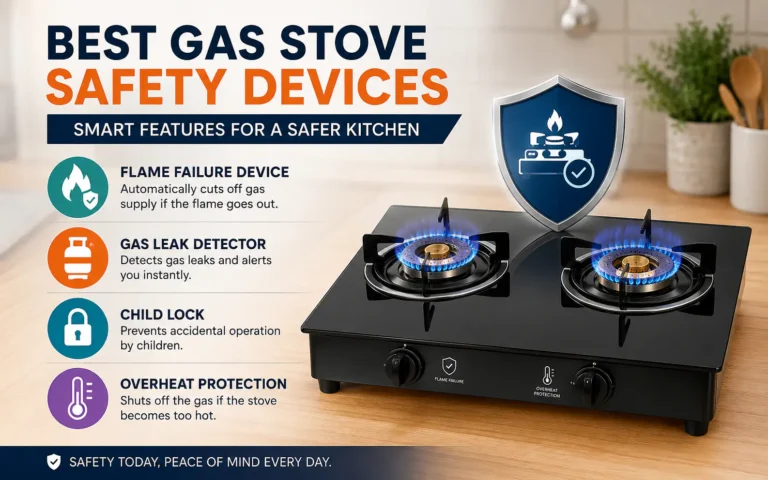 Best Gas Stove Safety Devices for 2026: Child and Pet Proofing Solutions
Keep your kitchen secure with our 2026 guide to the best gas stove safety devices. Compare top-rated knob covers for child and pet proofing your home.…
 Top Water Purifier for Kitchen Choices in 2026
Looking for the top water purifier for kitchen use? Explore our 2026 guide to the best faucet-mount, pitcher, and under-sink systems for cleaner drinking water. Finding…
 Top Kitchen Tissue for Daily Cleaning: 2026 Buyer Guide
Find the top kitchen tissue for daily cleaning in 2026. We compare five popular paper towel options to help you choose the right strength and value…