
How To Use An Air Fryer Properly
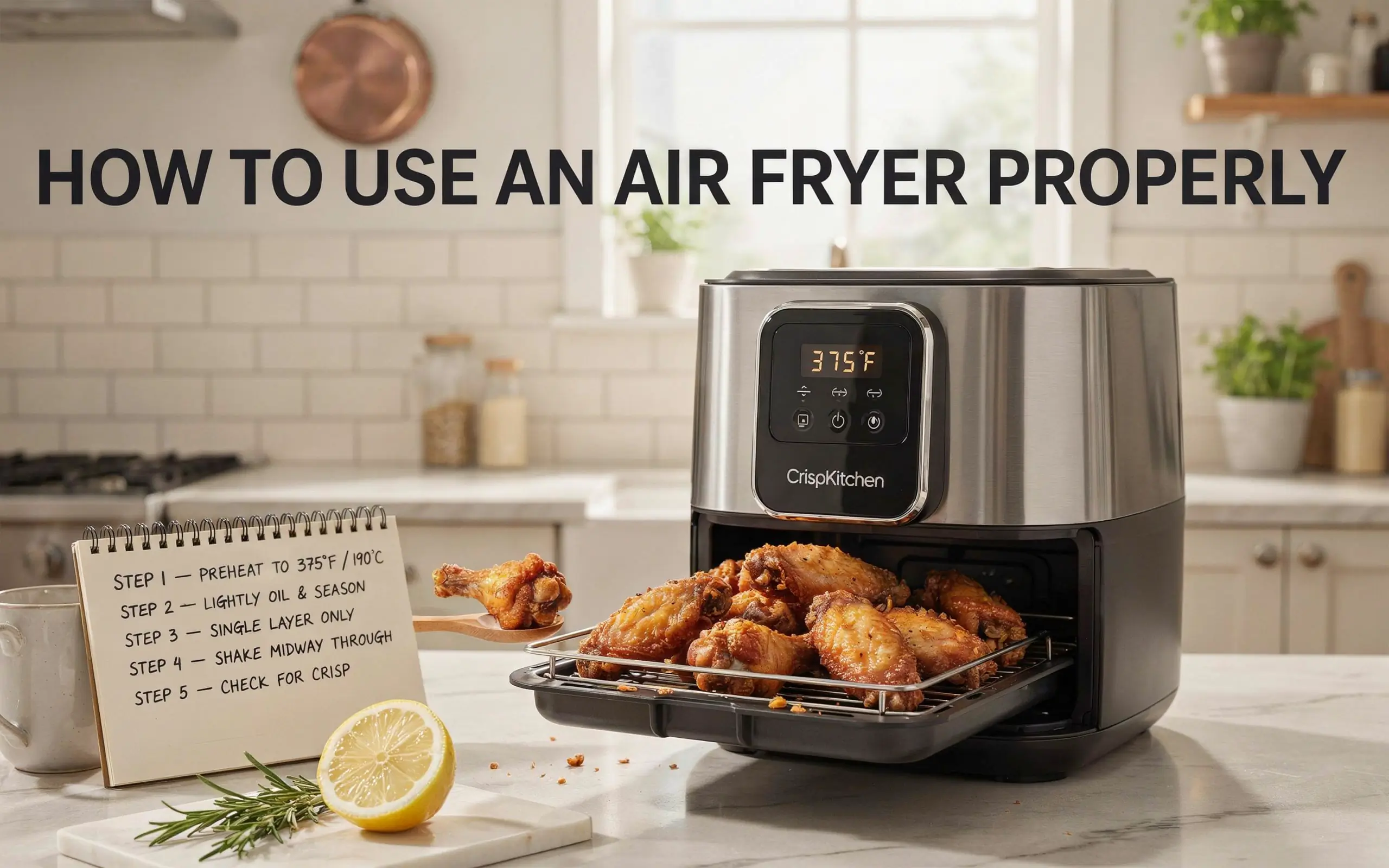
Learn how to use an air fryer properly with this complete beginner’s guide. Discover essential tips, cooking times, and maintenance advice to get perfect results every time.
Walking into your kitchen and seeing a new air fryer sitting on the counter can feel exciting and a bit confusing at the same time. You have heard amazing things about this appliance. People say it makes food crispy without using much oil. They say it cooks faster than a regular oven. But now you have one, and you are not sure where to start. This is a common feeling. Many people buy an air fryer with great intentions, only to let it gather dust because they feel unsure about how it works. The good news is that using an air fryer is simpler than it looks. Once you learn a few basic rules, you will wonder how you ever cooked without one.
Learning to use an air fryer properly changes the way you cook. It opens up new possibilities for quick meals, healthy snacks, and delicious sides. This guide is here to help you become confident with your new appliance. We will cover everything from setup to cleaning. We will talk about cooking times, temperature settings, and common mistakes. By the end of this article, you will know exactly how to use an air fryer properly every single time you turn it on. Let’s get started with the basics and build your skills step by step.
What Exactly Is an Air Fryer?
An air fryer is a small kitchen appliance that cooks food by circulating hot air around it. Think of it as a compact convection oven that sits on your countertop. The machine has a heating element near the top and a powerful fan. This fan blows the hot air down and around the food at high speed. The rapid circulation creates a crispy outer layer while keeping the inside moist and tender. This process mimics deep frying but uses much less oil.
The cooking basket is where the magic happens. Most air fryers come with a removable basket that slides into the main unit. The basket has holes in the bottom to allow air to flow freely. Some models include a divider that lets you cook two different foods at once. Others have rotating accessories for roasting chicken or baking bread. Understanding the basic parts of your air fryer helps you use it properly from the start.
Getting Started: Your First Steps
Before you cook anything, you need to prepare your air fryer for use. This initial setup is simple but important.
Remove All Packaging
Air fryers come with various packaging materials inside and outside. Some have foam inserts, plastic wraps, or cardboard pieces. Remove everything carefully. Check inside the basket and any accessories for tape or stickers. Some models have a protective film on the digital display or control panel. Peel this off before you start.
Wash the Basket and Accessories
The basket and any included accessories need a good wash before first use. Use warm soapy water and a soft sponge. Rinse them thoroughly and dry them with a clean towel. Do not use abrasive scrubbers or harsh chemicals. These can damage the non-stick coating. Many air fryer baskets are dishwasher safe, but check your manual to be sure. Hand washing usually extends the life of the non-stick surface.
Place Your Air Fryer on a Stable Surface
Your air fryer needs a flat, heat-resistant surface. Leave at least five inches of space around the appliance. The back and sides need airflow to prevent overheating. Do not place it under cabinets that could get hot. Avoid using it near curtains or other flammable items. Keep it away from the edge of the counter to prevent accidents.
Run an Initial Test Cycle
Most manufacturers recommend running an empty test cycle before cooking food. This burns off any manufacturing residues. Set your air fryer to 400 degrees Fahrenheit for about 10 minutes. Let it run empty. You might notice a slight smell or a bit of smoke. This is normal and will go away after the first use. After the cycle finishes, let the appliance cool. Wash the basket again to remove any remaining residue.
How to Use an Air Fryer Properly: The Core Tips
Now that your air fryer is ready, let’s talk about how to use it properly. These core tips apply to almost every food you will cook.
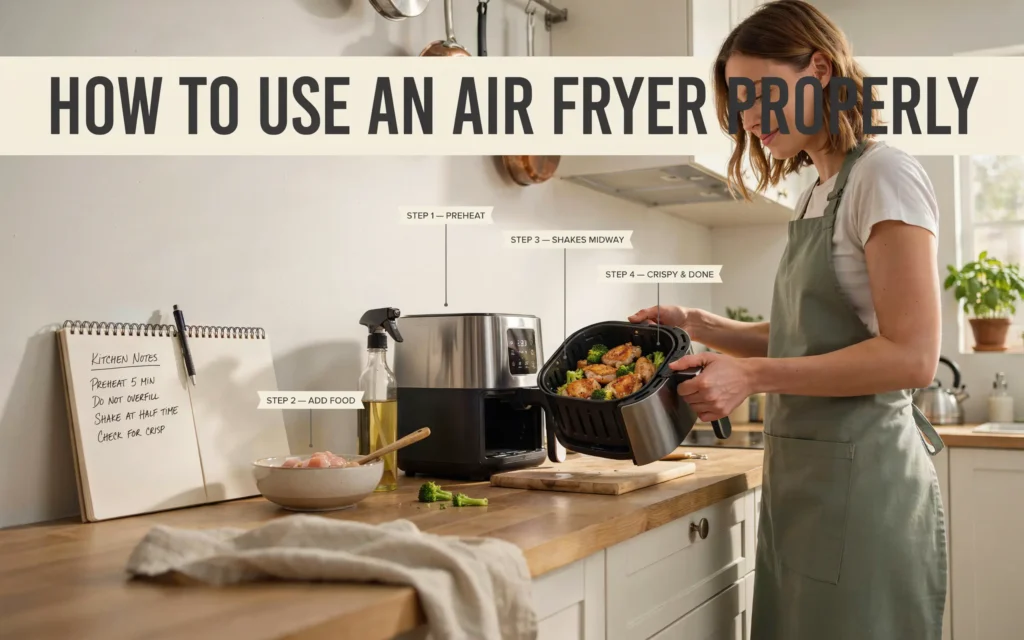
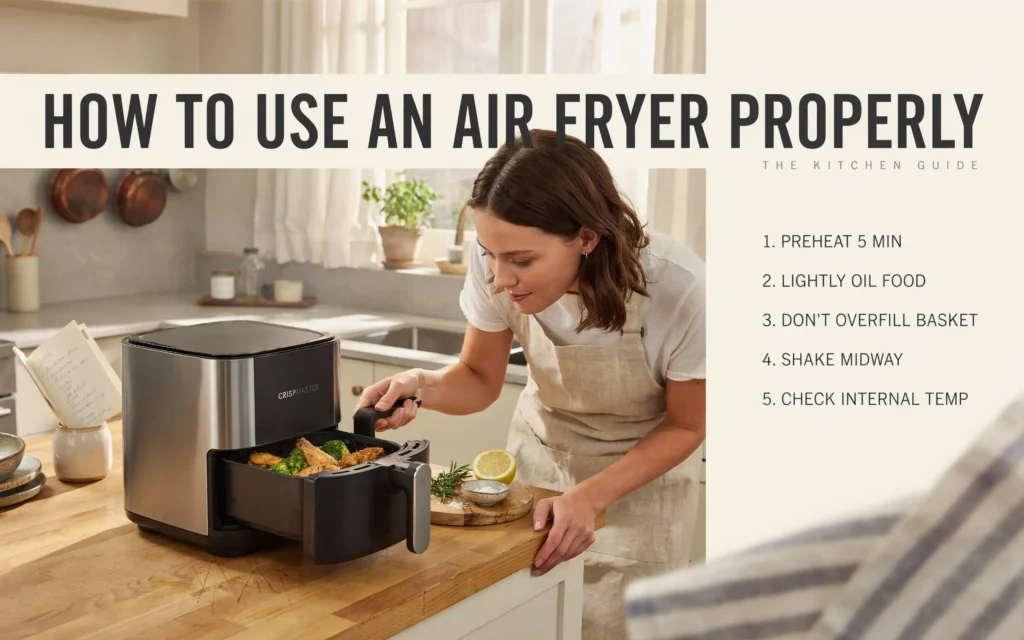
Preheat Your Air Fryer
Preheating makes a big difference in your cooking results. Most air fryers heat up quickly, often in three to five minutes. Preheating ensures that the food starts cooking immediately at the right temperature. This is especially important for frozen foods, breaded items, and pastries. A preheated air fryer gives you that crispy exterior and avoids soggy results. Some air fryers have a preheat function built in. If yours does not, just run it empty for three to five minutes at your cooking temperature.
Avoid Overcrowding the Basket
This is one of the most common mistakes people make. Putting too much food in the basket blocks the hot air from circulating. This leads to uneven cooking and less crispy results. The food might steam instead of fry because the moisture has nowhere to go. A good rule is to fill the basket no more than halfway. For foods like French fries, spread them in a single layer. If you have a lot of food, cook it in batches. Yes, it takes a little more time, but the results are worth it.
Shake or Flip Your Food
Most air fryer recipes call for shaking or flipping the food halfway through cooking. This step ensures even browning and crispiness. The hot air needs to reach all sides of the food. For small items like fries or vegetables, simply shake the basket. For larger items like chicken breasts or fish fillets, use tongs to turn them over. Some air fryers have a reminder beep that tells you when to shake. If yours does not, set a timer on your phone to remind you.
Use a Little Oil
Air fryers use much less oil than deep fryers, but you still need some oil for best results. A light coating of oil helps food crisp up and brown nicely. Use a spray bottle or a brush to apply oil evenly. Olive oil, avocado oil, and vegetable oil all work well. Stay away from aerosol cooking sprays. These can damage the non-stick coating over time. One or two teaspoons of oil is usually enough for most recipes. Remember, the goal is to use an air fryer properly, not to eliminate oil entirely.
Check Food Early
Air fryers cook faster than traditional ovens. This means your food might be done earlier than you expect. Always check your food a few minutes before the recommended time. You can always add more time if needed. But you cannot uncook a meal that has burned. Use a meat thermometer to check the internal temperature of meat and poultry. This ensures safety and prevents overcooking.
Understanding Temperature and Time Settings
Getting the temperature and time right is essential to use an air fryer properly. Different foods need different settings. Here is a basic guide to help you get started.
Standard Temperature Ranges
Most air fryers work between 180 and 400 degrees Fahrenheit. Lower temperatures work for delicate foods like fish or baked goods. Higher temperatures work for foods that need a crispy exterior. Here is a simple breakdown:
| Food Type | Temperature Setting | Approximate Time |
|---|---|---|
| Vegetables | 375°F – 400°F | 8 – 15 minutes |
| Chicken (boneless) | 380°F – 400°F | 12 – 18 minutes |
| Chicken (bone-in) | 360°F – 380°F | 20 – 30 minutes |
| Fish and Seafood | 350°F – 370°F | 8 – 12 minutes |
| French Fries (frozen) | 400°F | 12 – 18 minutes |
| Baked Goods | 320°F – 350°F | 8 – 15 minutes |
| Reheating Food | 350°F | 3 – 6 minutes |
These times are approximate. Always check your food and adjust as needed.
Converting Oven Recipes
You can adapt almost any oven recipe for your air fryer. The general rule is to lower the temperature by 25 degrees and reduce the cooking time by about 20 percent. For example, if an oven recipe says 400 degrees for 30 minutes, try 375 degrees for about 24 minutes in the air fryer. Check early and adjust as needed. Keep notes on what works for your specific model. Each air fryer cooks a little differently.
How to Use an Air Fryer Properly with Different Foods
Let’s break down how to use an air fryer properly for various food categories. Each type has its own best practices.
Cooking Vegetables
Vegetables cook wonderfully in an air fryer. They become caramelized and tender with crispy edges. Start with fresh vegetables like broccoli, cauliflower, zucchini, or bell peppers. Cut them into uniform pieces. Toss them with a teaspoon of oil and your favorite seasonings. Spread them in a single layer in the basket. Cook at 375 to 400 degrees for about 10 to 15 minutes. Shake the basket halfway through. The vegetables are ready when they are golden brown and tender.
Cooking Chicken
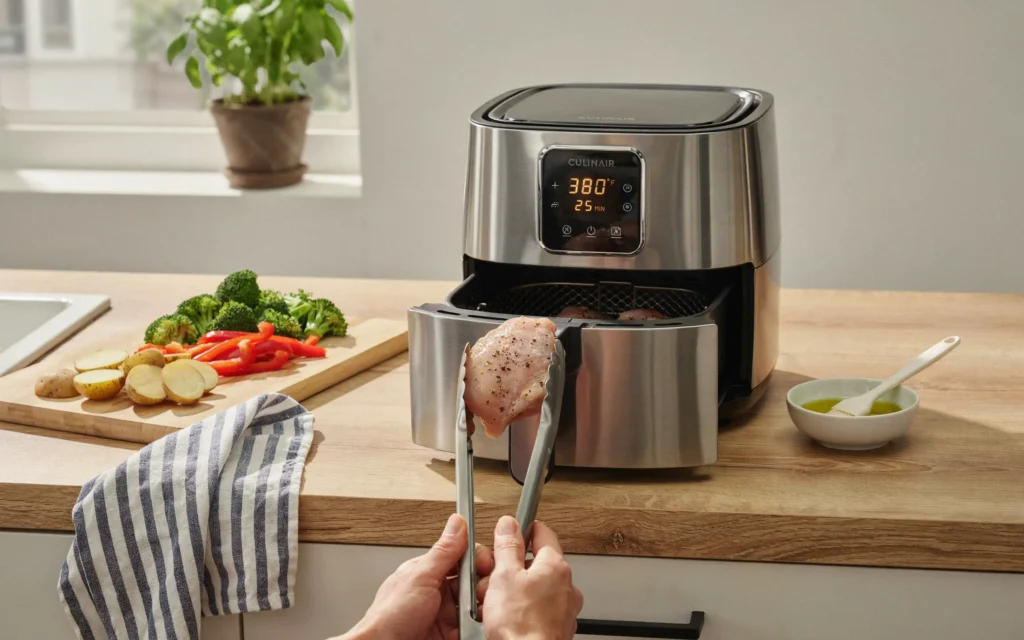
Chicken is one of the most popular foods to cook in an air fryer. It comes out juicy inside with a crispy skin or coating. For chicken breasts, pound them to an even thickness for uniform cooking. Season them well and brush with a little oil. Cook at 380 degrees for 12 to 18 minutes, flipping halfway. Check that the internal temperature reaches 165 degrees. For chicken wings, cook at 400 degrees for about 20 to 25 minutes. Shake the basket every five minutes for the crispiest skin.
Cooking Frozen Foods
Frozen foods are perfect for the air fryer. You do not need to thaw them first. This is one of the great conveniences of this appliance. Frozen French fries, chicken nuggets, fish sticks, and spring rolls all cook quickly and become crispy. Shake the basket regularly to ensure even cooking. Follow the package instructions as a starting point but reduce the time slightly. Check early and adjust. The air fryer brings frozen foods to life with a texture that rivals deep frying.
Cooking Fish and Seafood
Fish and seafood cook quickly in an air fryer. They remain moist and flaky. Salmon fillets cook well at 370 degrees for about 10 to 12 minutes. Shrimp take even less time, about 5 to 8 minutes at 380 degrees. Coat seafood lightly with oil and season before cooking. Be careful not to overcook fish because it dries out quickly. Check for doneness a minute or two early.
Baking and Desserts
Many people do not realize you can bake in an air fryer. Small cakes, muffins, cookies, and even bread all work well. Use an oven-safe pan that fits inside the basket. Lower the temperature by about 25 degrees compared to a regular oven. Check for doneness early because air fryers bake quickly. The circulating hot air gives baked goods a lovely golden top. This is a fun way to use an air fryer properly for treats and sweets.
Common Mistakes and How to Avoid Them
Everyone makes mistakes when learning something new. Here are some common air fryer errors and how to fix them.
Not Preheating
Skipping the preheat step leads to uneven cooking. Your food might not get as crispy as you want. Always preheat unless your recipe specifically says not to. This small step makes a big difference.
Using Too Much Oil
More oil does not mean better results. In fact, too much oil can make food greasy and cause smoking. Use just one or two teaspoons. The air fryer works by circulating hot air, not by submerging food in oil.
Not Drying Food Before Cooking
Moisture is the enemy of crispiness. Pat dry vegetables, meat, and seafood before cooking. Remove excess marinade or moisture. This helps the food brown and crisp properly.
Opening the Basket Too Often
It is tempting to check on your food constantly. But opening the basket releases hot air and increases cooking time. Trust the process and only open the basket when you need to shake or flip the food. Let the machine do its work.
Forgetting to Clean Regularly
A dirty air fryer affects cooking performance and can cause smoke. Grease and food particles build up over time. Clean the basket and pan after every use. Wipe down the inside of the machine regularly. This keeps your appliance in good working order.
How to Use an Air Fryer Properly for Healthy Cooking
One of the main reasons people buy air fryers is for healthier meals. The appliance lets you achieve crispy textures without deep frying. But to use an air fryer properly for healthy cooking, you need to make smart choices.
Choose Healthy Oils
Some oils handle high heat better than others. Avocado oil, light olive oil, and grapeseed oil have high smoke points. They work well in an air fryer. Use them in moderation. A little oil helps with browning and flavor. The air fryer uses much less oil than traditional frying methods. This reduces calories and fat significantly.
Cook More Vegetables
The air fryer makes vegetables taste amazing. The high heat brings out natural sugars and creates a delicious char. Try vegetables like Brussels sprouts, asparagus, and green beans. Toss them with a small amount of oil and your favorite spices. They cook quickly and make a nutritious side dish.
Reduce Processed Foods
While the air fryer is great for frozen convenience foods, try to use it for whole foods too. Fresh chicken, fish, and vegetables give you more nutrients and fewer additives. Homemade seasoning lets you control the salt and sugar content. This is how to use an air fryer properly for truly healthy eating.
Cleaning and Maintenance Tips
Taking care of your air fryer ensures it lasts for years. Regular cleaning also helps you use an air fryer properly and safely.
Clean After Every Use
The basket and pan need cleaning after each cooking session. Let them cool down completely first. Then wash them with warm soapy water. Use a soft sponge to avoid scratching the non-stick coating. Dry everything thoroughly before putting it back in the machine. This prevents rust and keeps the coating intact.
Wipe the Interior
The inside of the air fryer can collect grease splatters. Wipe it down with a damp cloth after the machine cools. Pay attention to the heating element area. Do not use abrasive cleaners or scrubbers. A gentle wipe keeps the appliance clean and reduces smoke during cooking.
Deep Clean Monthly
Once a month, give your air fryer a deeper clean. Soak the basket and pan in warm soapy water for 15 minutes. Use a soft brush to remove any stuck food. Wipe the interior with a solution of water and mild detergent. Some people use baking soda paste for tough stains. Check your manual for specific cleaning recommendations.
Check for Wear
Inspect the non-stick coating regularly. If you see scratches or peeling, it might be time to replace the basket. Damaged coating can flake into food. Most manufacturers sell replacement parts. Taking care of your accessories helps you use an air fryer properly for years to come.
Quick Reference Table: Cooking Times and Temperatures
Here is a quick reference for common foods. Use this as a starting point and adjust based on your specific air fryer.
| Food | Temperature | Time | Shake/Flip |
|---|---|---|---|
| French Fries (frozen) | 400°F | 12-18 min | Shake twice |
| Chicken Wings | 400°F | 20-25 min | Shake every 5 min |
| Salmon Filet | 370°F | 10-12 min | Flip once |
| Broccoli | 375°F | 10-12 min | Shake halfway |
| Chicken Breast | 380°F | 12-18 min | Flip once |
| Muffins | 330°F | 10-12 min | No shaking |
| Spring Rolls | 380°F | 8-10 min | Flip once |
Tips from Real Users
Learning from others can help you use an air fryer properly. Here are some experiences from people who use their air fryers regularly.
“My air fryer changed how I cook dinner. I can make crispy chicken in under 20 minutes. My family loves it, and I love how easy cleanup is.” – Susan R.
“I used to burn food in my air fryer because I did not preheat. Now I always preheat for three minutes. Everything comes out perfect.” – Mark T.
“The best thing I ever did was buy a spray bottle for oil. It gives a light, even coating without damaging the basket.” – Lisa K.
These simple tips come from real experience. They show that small changes make a big difference.
Frequently Asked Questions
Do I need to preheat my air fryer every time?
Yes, preheating helps your food cook evenly and get crispy. Most air fryers heat up in three to five minutes. Preheating is especially important for foods like frozen items, breaded foods, and baked goods. Some air fryer models have a preheat button. If yours does not, just run it empty at your cooking temperature for a few minutes.
Can I use aluminum foil or parchment paper in my air fryer?
Yes, you can use foil or parchment paper. Make sure they are weighed down by food so they do not blow around. Do not cover the entire basket because this blocks air circulation. Use pieces that fit inside the basket without blocking the airflow. Never let foil touch the heating element.
How much oil should I use?
One or two teaspoons of oil is usually enough. Lightly coat the food, not the basket. Use a spray bottle or brush for even application. Avoid aerosol cooking sprays because they can damage the non-stick coating. Oil helps with browning and crispiness but you do not need much.
Is it safe to put food in the air fryer without oil?
Yes, but the food might not get as crispy or brown. Some foods like fresh vegetables need a little oil for best results. Other foods like frozen items already have oil. You can experiment to find what works best for you.
Why is my air fryer smoking?
Smoking usually happens when there is too much oil or built-up grease. Make sure you use only a light coating of oil. Clean the basket and interior regularly. If smoking occurs, turn off the air fryer and let it cool. Check for food debris or oil residue and clean as needed.
Can I cook two different foods at once?
Some air fryers come with a divider that lets you cook two foods at the same time. If your model does not have this, you can still cook different foods together. Just consider their cooking times and temperatures. Place foods with similar requirements in the basket. Shake or flip as needed.
What if my food is not getting crispy?
If your food is not crispy, check a few things. First, make sure you preheated the air fryer. Second, check that you did not overcrowd the basket. Third, try using a little more oil or cooking for a few extra minutes. Finally, shake or flip the food halfway through to expose all sides to the hot air.
Can I cook raw meat from frozen?
Yes, you can cook frozen meat in the air fryer. The cooking time will be longer. Check the internal temperature to ensure safety. Poultry should reach 165 degrees, and ground meats should reach 160 degrees. Always use a meat thermometer.
How do I clean the heating element?
Clean the heating element carefully. Wait until the air fryer is completely cool. Use a damp cloth to wipe away any grease. Do not use abrasive cleaners. Some models have a removable heating element. Check your manual for specific instructions.
What size air fryer do I need?
This depends on your household size. A 2 to 3-quart air fryer works for one or two people. A 4 to 5-quart air fryer suits a family of three or four. Larger families might want a 6-quart or bigger model. Consider the counter space you have available too.
Conclusion
Learning how to use an air fryer properly opens up a world of quick, healthy, and delicious cooking. The appliance is simple to operate once you understand a few basic principles. Remember to preheat, avoid overcrowding, use a little oil, and shake or flip your food. These small steps ensure crispy, evenly cooked meals every time.
The air fryer works well with a wide variety of foods. From vegetables to chicken, fish to baked goods, the possibilities are endless. The appliance cooks faster than an oven and uses less energy. It also makes cleanup easier because most parts are dishwasher safe.
Take the time to experiment with your air fryer. Try different recipes and adjust temperatures and times to suit your taste. Keep notes on what works best for your specific model. Each air fryer has its own personality. Learning yours makes you a more confident cook.
The goal is to enjoy your cooking and feel good about the meals you prepare. With practice, using an air fryer properly becomes second nature. You will start to create meals that are crispy, flavorful, and healthier than traditional frying. So go ahead, preheat your air fryer, and start cooking. Your kitchen adventures are just beginning.
Remember, the best way to use an air fryer properly is to use it often. The more you cook, the more you learn. Your family will appreciate the tasty meals, and you will appreciate the simplicity. Enjoy the process and happy air frying.
Related posts
 Best Gas Stove Safety Devices for 2026: Child and Pet Proofing Solutions
Keep your kitchen secure with our 2026 guide to the best gas stove safety devices. Compare top-rated knob covers for child and pet proofing your home.…
 Top Water Purifier for Kitchen Choices in 2026
Looking for the top water purifier for kitchen use? Explore our 2026 guide to the best faucet-mount, pitcher, and under-sink systems for cleaner drinking water. Finding…
 Top Kitchen Tissue for Daily Cleaning: 2026 Buyer Guide
Find the top kitchen tissue for daily cleaning in 2026. We compare five popular paper towel options to help you choose the right strength and value…