
How to Balance Cardio and Weights for Best Results
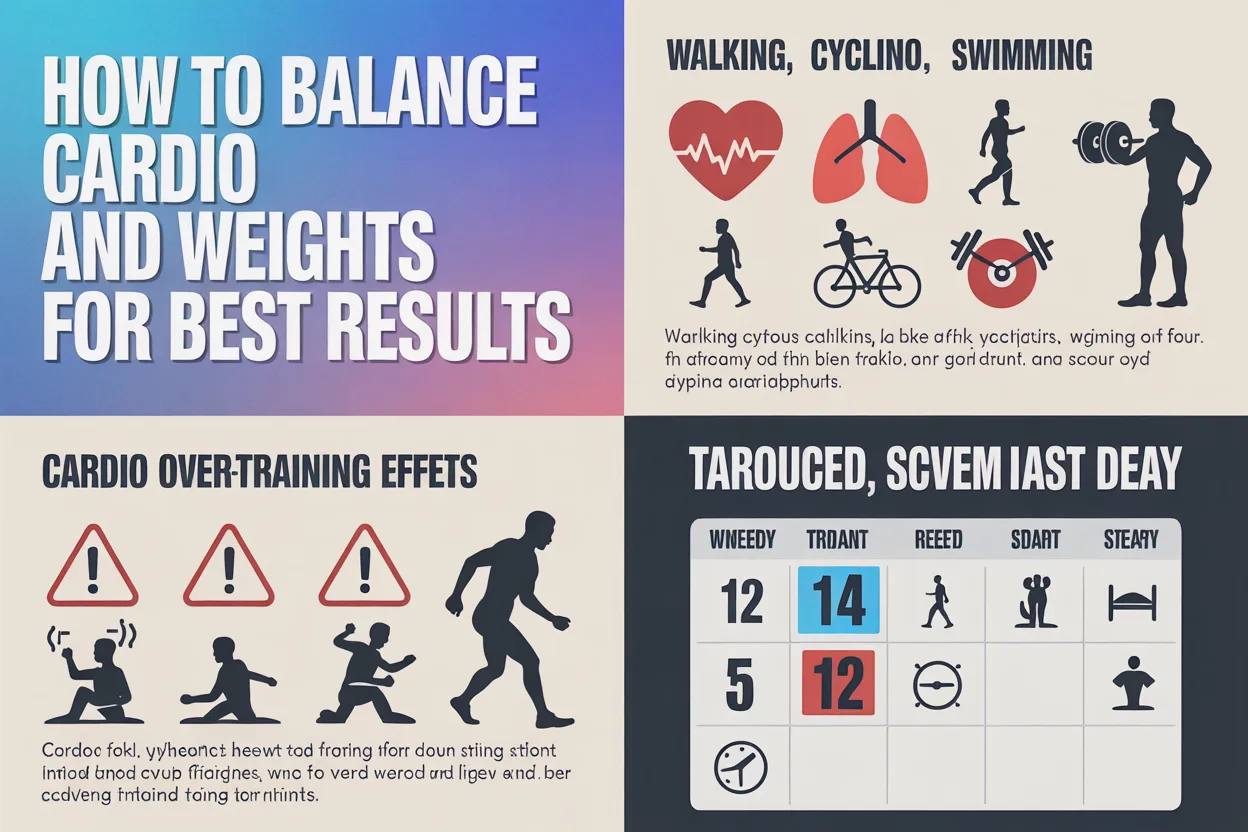
Learn clear steps to balance cardio and weights for fat loss, strength, and heart health. This guide explains how to balance cardio and weights safely and simply for all fitness levels.
Many people ask how to balance cardio and weights without feeling tired, sore, or stuck. Some do long runs and skip lifting. Others lift heavy and avoid cardio. Both paths can slow progress. A smart mix helps the heart, muscles, joints, and mood. It also fits busy lives and real bodies.
This guide explains how to balance cardio and weights in a clear way. You will learn what each type of exercise does, how to mix them in a week, and how to adjust for goals like fat loss, strength, or health. The advice here comes from real gym floors, home workouts, and outdoor sessions across cities, suburbs, and small towns. The ideas work whether you train at a gym, park, or living room.
You will also see simple plans, short tables, and common mistakes to avoid. The language stays easy, friendly, and practical. By the end, you will know how to balance cardio and weights with calm and confidence.
“Fitness works best when it fits your life, not when it fights it.”
James Clear
Why Cardio and Weights Both Matter
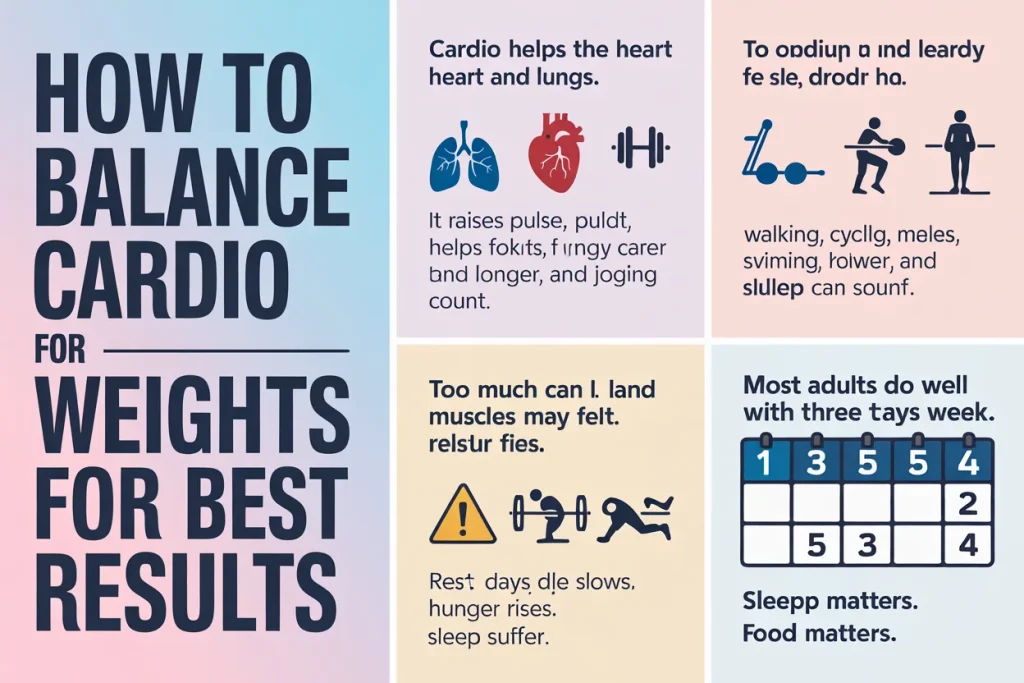
Cardio helps the heart and lungs. It raises pulse, moves blood, and helps you last longer in daily tasks. Walking, cycling, swimming, and jogging all count.
Weights build muscle and bone. They help posture, balance, and daily strength. Lifting also helps manage blood sugar and supports joints.
Doing one without the other leaves gaps. Cardio alone may lead to muscle loss. Weights alone may limit heart health. Learning how to balance cardio and weights fills those gaps.
What Happens If You Do Too Much of One
Too much cardio can lead to fatigue. Muscles may feel flat. Recovery slows. Hunger rises. Sleep can suffer.
Too much lifting without cardio can leave the heart undertrained. Stairs feel hard. Endurance drops. Blood pressure may rise.
Balance brings steady energy. It also lowers injury risk. This is why many coaches teach people to balance cardio and weights rather than choose sides.
Goals Shape the Right Balance
Your goal decides the mix. There is no single plan for all.
Fat Loss Goals
Fat loss works best with both types. Cardio burns calories. Weights keep muscle. Muscle helps burn more calories at rest.
A steady plan helps you balance cardio and weights without burnout. Short cardio sessions mixed with full body lifts often work well.
Strength Goals
Strength needs more lifting days. Cardio still matters but stays lighter. Think brisk walks or short bike rides.
This way, you still balance cardio and weights while protecting recovery.
Health and Energy Goals
For general health, a near even split works well. This supports heart health, strength, and mood. It also fits most schedules.
How Many Days Per Week Should You Train
Most adults do well with three to five training days per week. Rest days matter. Sleep matters. Food matters.
Here is a simple weekly view.
Weekly Balance Examples
| Goal | Cardio Days | Weight Days |
|---|---|---|
| Fat loss | 3 | 3 |
| Strength | 2 | 4 |
| Health | 3 | 3 |
This table helps you balance cardio and weights in a clear way. You can shift days as life changes.
Cardio Types That Work Well With Weights
Not all cardio feels the same. Some types fit lifting better.
Low Impact Cardio
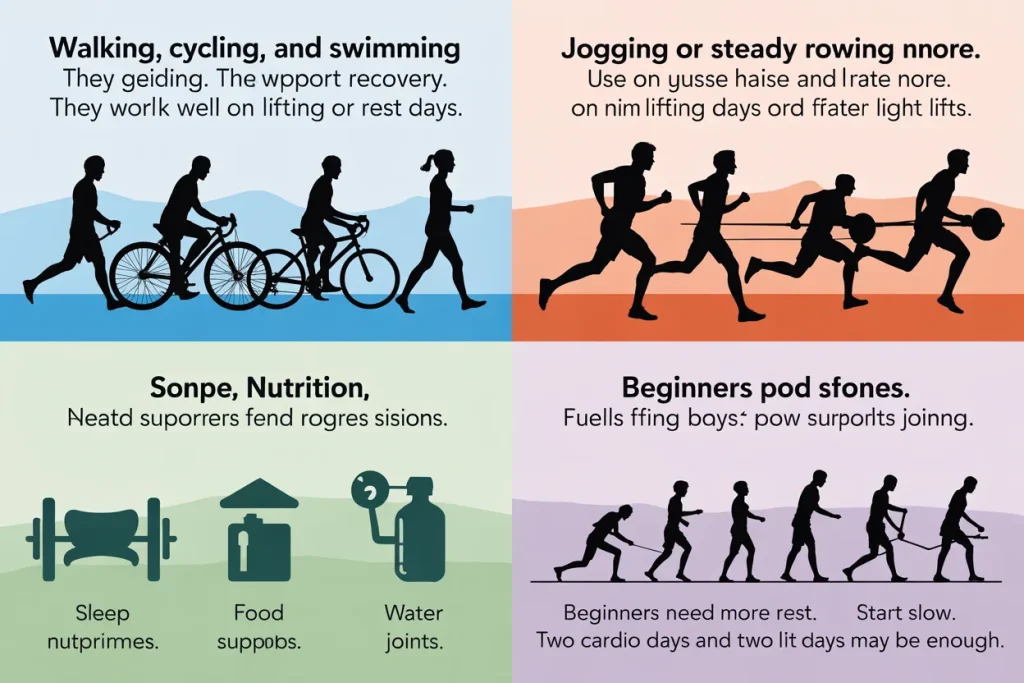
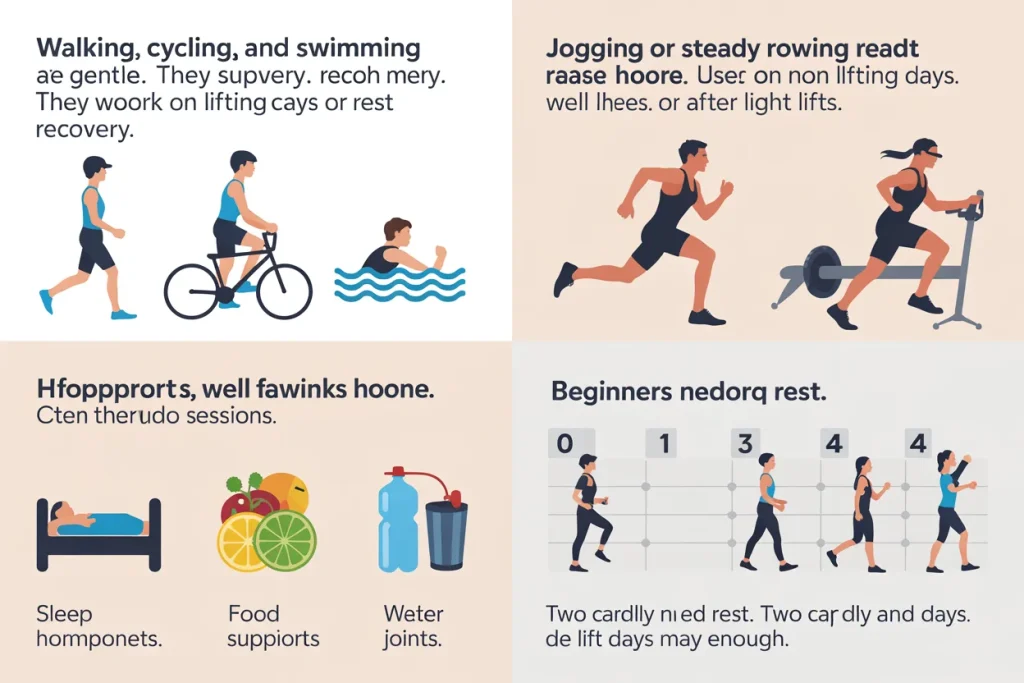
Walking, cycling, and swimming are gentle. They support recovery. They work well on lifting days or rest days.
These help you balance cardio and weights without stress on joints.
Moderate Cardio
Jogging or steady rowing raises heart rate more. Use these on non lifting days or after light lifts.
Short Intense Cardio
Short bursts like hill sprints are tough. Use them with care. Place them away from heavy leg days.
Weight Training Styles That Support Balance
Weights also vary in style.
Full Body Lifts
Full body sessions train many muscles at once. They save time. They work well with cardio plans.
Upper and Lower Splits
Splits allow focus. They also help recovery. You can add cardio on upper days to balance cardio and weights with ease.
Light Resistance Days
Bands and light dumbbells count. They support joints and posture. These days pair well with longer cardio.
Order Matters: Cardio Before or After Weights
Many people ask which comes first. The answer depends on the goal.
If strength is the goal, lift first. Fresh muscles lift better. Add cardio later.
If heart health is the goal, cardio first can work. Keep lifts lighter.
If both matter, split sessions. Lift on some days. Do cardio on others. This is a simple way to balance cardio and weights.
“Consistency beats intensity when fitness is for life.”
Michelle Segar
How Long Should Each Session Be
Time matters. Long sessions can drain energy. Short ones fit busy lives.
Cardio can be 20 to 40 minutes. Weights can be 30 to 60 minutes.
You do not need more to balance cardio and weights. Quality matters more than length.
Rest and Recovery Are Part of Balance
Rest days rebuild muscles and calm the nervous system. Without rest, progress slows.
Sleep supports hormones. Food fuels sessions. Water supports joints.
Balance is not only about training days. It is also about recovery days.
Common Mistakes to Avoid
Many people struggle because of simple errors.
One error is doing hard cardio every day. Another is skipping warm ups. Another is lifting heavy with poor form.
Avoid copying plans from social media. Bodies differ. Schedules differ.
Learn to balance cardio and weights based on your own life.
Sample Week for Busy Adults
Here is a simple plan that fits work and family.
Simple Weekly Plan
| Day | Session |
|---|---|
| Monday | Full body weights |
| Tuesday | Brisk walk 30 min |
| Wednesday | Upper body weights |
| Thursday | Rest or stretch |
| Friday | Lower body weights |
| Saturday | Cycle or swim |
| Sunday | Rest |
This plan helps balance cardio and weights without long gym hours.
Home Workouts vs Gym Workouts
Both settings work.
At home, body weight and bands work well. Walking or stairs cover cardio.
At the gym, machines and free weights add variety. Treadmills and bikes help on bad weather days.
The place does not matter. The plan does. Focus on how to balance cardio and weights where you are.
Age and Fitness Level Adjustments
Beginners need more rest. Start slow. Two cardio days and two lift days may be enough.
Older adults benefit from balance work and light weights. Cardio can be walking or swimming.
Athletes may need more sessions. Even then, rest matters.
Balance changes with age. The goal stays the same. Learn how to balance cardio and weights for your stage of life.
Signs Your Balance Is Working
You feel steady energy. Sleep feels better. Strength rises slowly. Cardio feels easier.
If you feel drained, adjust. Reduce volume. Add rest.
The right mix lets you balance cardio and weights with calm and control.
Nutrition Supports the Balance
Food fuels training. Protein supports muscle. Carbs support cardio. Fats support health.
You do not need complex rules. Eat regular meals. Drink water. Listen to hunger.
Good food helps you balance cardio and weights without stress.
Mental Benefits of a Balanced Plan
Movement helps mood. Cardio clears the mind. Weights build confidence.
A mixed plan reduces boredom. It also builds routine.
“Movement is medicine for the body and the mind.”
Kelly McGonigal
Frequently Asked Questions
How many cardio sessions do I need each week?
Most people do well with two to three sessions. Adjust based on goals and energy.
Can I do cardio and weights on the same day?
Yes. Many people do. Keep one session lighter if both are hard.
Is walking enough cardio?
Yes for many goals. Walking supports heart health and recovery.
Will cardio hurt muscle growth?
Too much hard cardio can. A smart plan helps balance cardio and weights without harm.
Do I need special equipment?
No. Body weight, bands, and shoes are enough for most plans.
Conclusion
Learning how to balance cardio and weights is about respect for the body. Cardio supports the heart and mind. Weights support strength and bone. Together, they support life.
There is no perfect split. There is only a plan that fits your goals, time, and energy. Start simple. Adjust slowly. Rest well. Eat well.
With steady effort, you can balance cardio and weights in a way that feels good and lasts for years.
Related posts
 Understanding Fitness Checkup Consultation Cost and Professional Assessment Resources for 2026
Explore Understanding fitness checkup consultation cost factors and professional assessment resources to help you make informed decisions about your health and training goals. Navigating the world…
 Gym Membership Discount Price Alternatives for 2026 Home Fitness
Looking for a gym membership discount price Alternatives? Explore smart home fitness alternatives and equipment to save money and build your own workout space in 2026.…
 Buy Home Workout Sliders: 2026 Guide to Core Fitness Tools
Looking to buy home workout sliders? Compare top-rated gliding discs and core trainers to find the right equipment for your 2026 fitness routine. Adding core sliders…