
Best Cat Food for Indoor Cats

Choosing the right cat food for indoor cats helps manage weight, hairballs, and digestion while keeping energy steady. This guide explains the best cat food for indoor cats with clear advice, ingredient tips, and feeding help for everyday pet parents.
Indoor cats live a comfortable life, but that comfort comes with special needs. They move less, sleep more, and rely fully on us for balanced meals. Feeding the wrong food can lead to weight gain, hairballs, dull coats, or tummy trouble. That is why finding the best cat food for indoor cats matters so much.
This guide is written for real cat parents. It focuses on simple explanations, clear ingredient advice, and honest help. You will learn how indoor cats differ from outdoor cats, what nutrients they truly need, and how to read labels without stress. The goal is to help you choose cat food for indoor cats that supports long term health and daily comfort.
As veterinarian Dr. Lisa Pierson says,
“Food is the most powerful tool we have to support a cat’s health over their lifetime.”
Why Indoor Cats Have Different Nutrition Needs
Indoor cats burn fewer calories. They do not hunt, climb trees, or roam large areas. This lower activity level changes how their bodies use food in daily life.
Most indoor cats need fewer calories but more fiber. Fiber helps manage hairballs and supports digestion. Indoor cats also need controlled fat levels to avoid weight gain. Many develop joint stiffness as they age, so joint support becomes more important over time.
Another concern is boredom eating. Indoor cats may eat even when they are not hungry. The best cat food for indoor cats helps cats feel full while keeping calories in check.
Nutrition expert Susan Thixton explains,
“Indoor cats thrive on diets that balance satisfaction with calorie control, without sacrificing protein quality.”
What Makes Cat Food Ideal for Indoor Cats
High Quality Animal Protein
Cats are carnivores by nature. They need animal protein to support muscle strength, healthy organs, and steady energy. Chicken, turkey, salmon, or lamb should appear as the first ingredient on the label.
Avoid foods where corn or wheat appears first. These ingredients add calories but little nutritional value. The best cat food for indoor cats always begins with real meat sources.
Controlled Calories and Fat
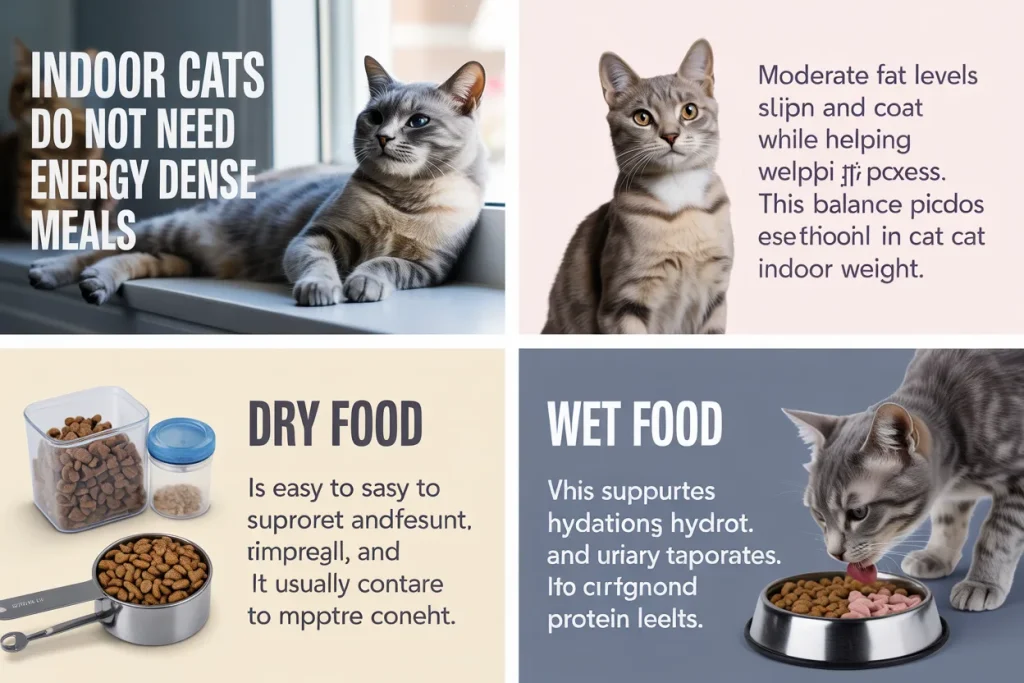
Indoor cats do not need energy dense meals. Foods made for outdoor or very active cats often cause weight gain indoors. Choose foods with clearly listed calorie information.
Moderate fat levels support skin and coat health while helping prevent excess weight. This balance is essential in cat food for indoor cats.
Fiber for Hairball Control
Indoor cats groom themselves often. Swallowed hair can collect in the stomach and lead to hairballs. Added fiber from pumpkin, beet pulp, or cellulose helps move hair through the digestive tract.
Fiber also helps cats feel satisfied after meals, which supports weight control.
Dry Food vs Wet Food for Indoor Cats
Many cat owners wonder which option is better. The answer depends on your cat’s habits and health needs.
Dry Food Benefits
Dry food is easy to store and simple to measure. It may help reduce plaque buildup through chewing. Many indoor cat formulas are available in dry form.
However, dry food contains little moisture. Cats naturally drink less water, which may affect kidney and urinary health over time.
Wet Food Benefits
Wet food has high moisture content. This supports hydration and urinary tract health. It usually contains fewer carbohydrates and higher protein levels.
Many experts agree that wet food suits indoor cats well, especially those prone to weight gain or urinary issues.
Veterinarian Dr. Karen Becker states,
“Moisture rich diets support kidney and bladder health, especially in indoor cats.”
Many owners choose a mixed feeding approach to provide balance and variety.
Best Cat Food for Indoor Cats by Life Stage
Kittens Living Indoors
Kittens need higher calories and protein for growth. Choose food labeled for kittens, even if they live indoors. These formulas support brain development and strong bones.
Adult Indoor Cats
Adult indoor cats benefit from maintenance formulas. These foods focus on weight control, hairball care, and digestive comfort. This is where cat food for indoor cats labeling matters most.
Senior Indoor Cats
Senior cats often need easy to digest protein and added joint support. Lower phosphorus levels support kidney health. Soft textures can help cats with dental changes.
Ingredients to Look For and Ingredients to Avoid
Helpful Ingredients
- Named animal proteins such as chicken or salmon
- Natural fiber sources like pumpkin
- Omega fatty acids for skin and coat health
- Taurine for heart and eye health
- Balanced vitamins and minerals
Ingredients to Limit or Avoid
- Artificial colors
- Excess fillers
- Added sugars
- Unclear meat by products
Reading labels carefully helps you choose the best cat food for indoor cats with confidence.
Key Nutrients for Indoor Cats
| Nutrient | Why It Matters | Ideal Source |
|---|---|---|
| Protein | Muscle and energy | Chicken, turkey |
| Fiber | Hairball control | Pumpkin, beet pulp |
| Fat | Skin and coat health | Fish oil |
| Taurine | Heart health | Animal protein |
| Moisture | Hydration | Wet food |
How Often Should Indoor Cats Eat
Most adult indoor cats do well with two measured meals per day. Free feeding often leads to overeating and weight gain.
Kittens require more frequent meals. Senior cats may prefer smaller portions spread throughout the day.
Always follow calorie guidelines and adjust based on your cat’s activity level. Even the best cat food for indoor cats needs proper portions to be effective.
Special Health Needs of Indoor Cats
Weight Management
Extra weight puts pressure on joints and internal organs. Indoor formulas usually contain fewer calories while maintaining fullness.
Urinary Health
Indoor cats may drink less water. Wet food and balanced minerals help support urinary health.
Sensitive Digestion
Some indoor cats have sensitive stomachs. Limited ingredient diets may help reduce digestive discomfort.
Dry vs Wet Cat Food Comparison
| Feature | Dry Food | Wet Food |
|---|---|---|
| Moisture | Low | High |
| Storage | Easy | Refrigeration needed |
| Cost | Lower | Higher |
| Weight Control | Moderate | Strong |
| Hydration Support | Low | High |
How to Switch Cat Food Safely
Cats have sensitive digestive systems. Sudden food changes may cause stomach upset.
Start by mixing 25 percent new food with the current food for two days. Increase to 50 percent for the next two days. Then move to 75 percent new food. Complete the switch after one week.
Monitor appetite, stool quality, and energy levels during the transition.
How to Tell if Your Indoor Cat Is Thriving
Healthy indoor cats show clear signs.
- Smooth, shiny coat
- Stable weight
- Consistent appetite
- Playful behavior
- Regular litter box habits
If these signs are present, your cat food for indoor cats choice is working well.
Common Myths About Feeding Indoor Cats
Indoor cats need very little food
They need fewer calories, not fewer nutrients.
Grain free food is always better
Some cats digest grains well. Protein quality matters more.
All indoor cat foods are the same
Formulas differ greatly in quality and balance.
Frequently Asked Questions
How do I know if my indoor cat is overweight
You should feel the ribs without pressing hard. Your veterinarian can confirm ideal weight.
Can indoor cats eat outdoor cat food
They can, but it often contains more calories than needed.
Is wet food better for indoor cats
Wet food supports hydration and weight control, though dry food can still fit well.
How many calories does an indoor cat need
Most adult indoor cats need about 200 to 250 calories per day, depending on size and activity.
Should I give treats
Treats are fine in small amounts. Keep them under 10 percent of daily calories.
Conclusion
Choosing the best cat food for indoor cats is one of the most caring choices you can make. Indoor cats depend fully on their owners for proper nutrition. The right food supports healthy weight, digestion, coat condition, and long term wellness.
Focus on quality protein, controlled calories, and helpful fiber. Read labels carefully and serve measured portions. Every cat is unique, so observe how your cat responds and consult your veterinarian when needed.
By choosing the right cat food for indoor cats, you support a happier, healthier life for your companion.
Related posts
 Best Pet Supplies Online: 2026 Essentials for Every Companion
Discover the best pet supplies online for 2026. We review top-rated toys, grooming tools, and walking gear to help you make the right choice for your…
 Best Pet Care Products for Beginners in 2026
Discover the best pet care products for beginners to keep your home clean and your pets comfortable. Simple, effective solutions for daily grooming and hygiene. Welcoming…
 Best Pet Care Kit for Home Use: 2026 Grooming Essentials
Find the best pet care kit for home use in 2026. Compare top-rated clippers, grooming vacuums, and scissor sets to keep your pets clean and comfortable.…