
How to Use Vegetable Slicer Safely and Easily
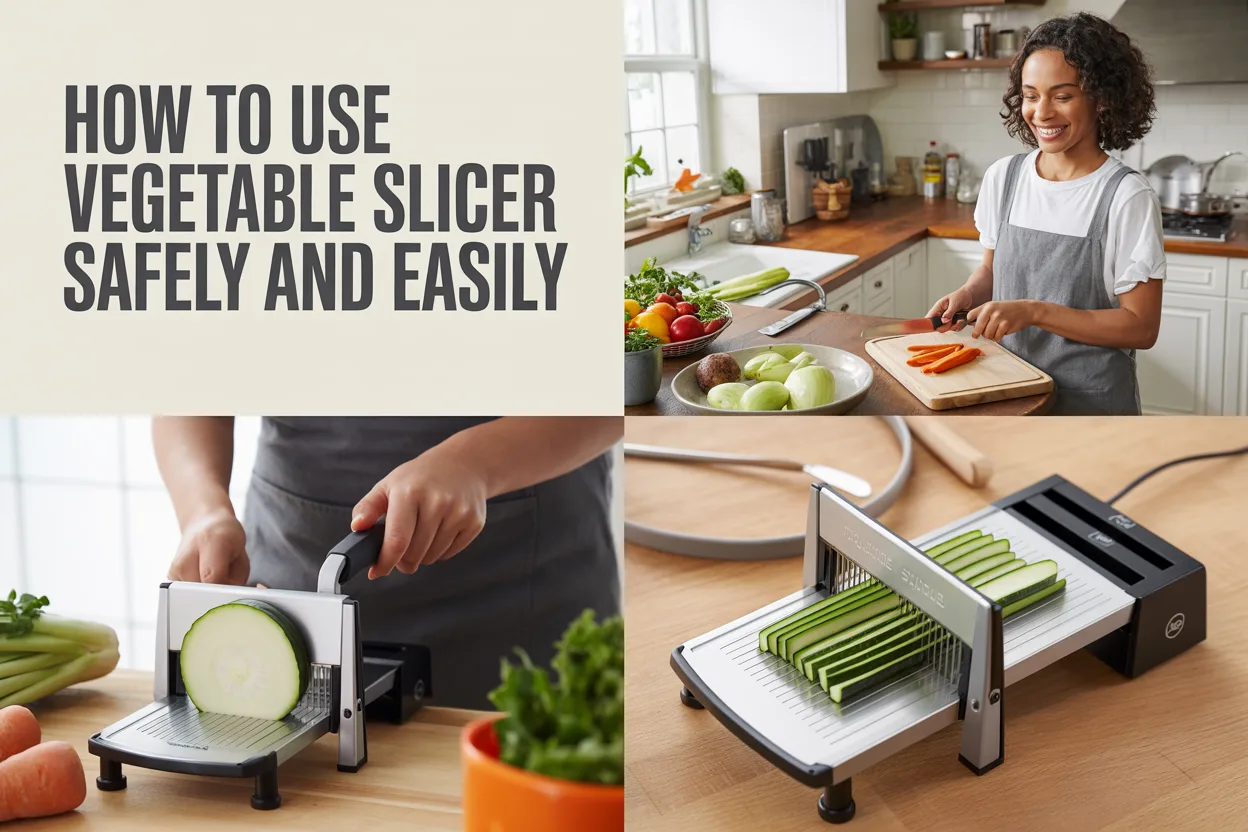
If you want to learn how to use vegetable slicer tools at home, this guide explains safe steps, blade choices, cleaning tips, and ways to use vegetable slicer options for fast prep and even cuts.
Cooking at home can feel calm and joyful when prep work is simple. Cutting vegetables by hand takes time and energy, and uneven pieces can change how food cooks. That is why many home cooks prefer slicers. If you are learning how to use vegetable slicer tools for daily meals, this guide will help you feel confident from the first slice.
A vegetable slicer helps you cut food faster, keep pieces even, and reduce strain on your hands. This article explains every step in clear and friendly language. You will learn how to choose the right slicer, prepare food, stay safe, clean it well, and store it correctly. By the end, you will know how to use vegetable slicer tools with ease and care.
As home cook and food writer Maria Lopez says,
“Simple tools bring calm into the kitchen when you know how to handle them.”
What Is a Vegetable Slicer and Why It Helps
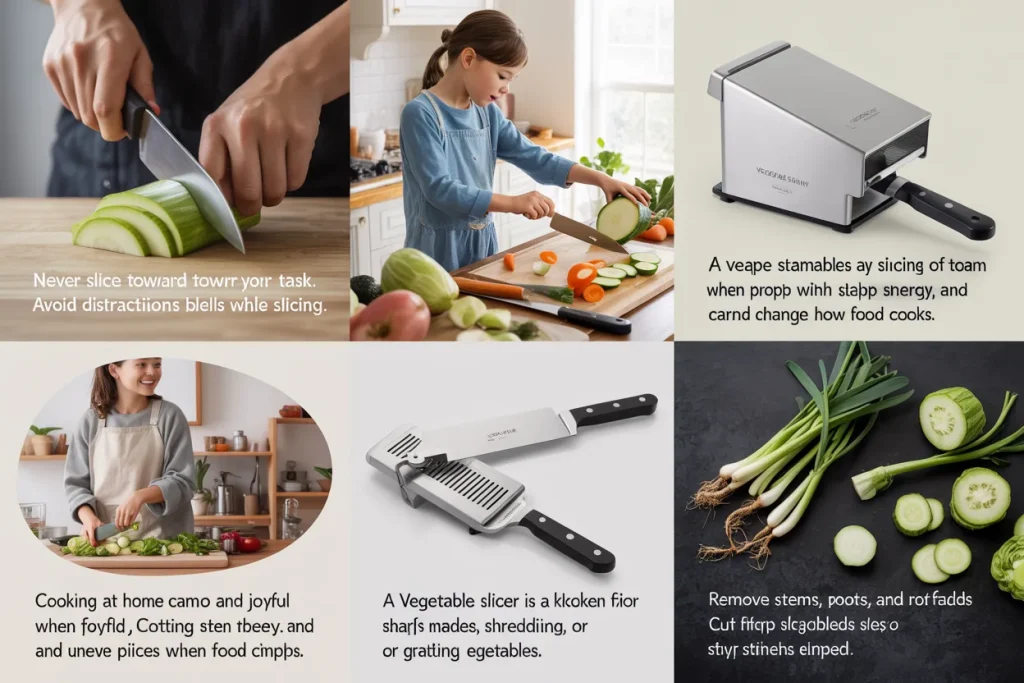
A vegetable slicer is a kitchen tool with sharp blades made for slicing, shredding, or grating vegetables. Some models also handle fruits. These tools help save time and keep slices even, which improves cooking results.
Benefits of Using a Vegetable Slicer
A slicer gives you speed and control. It reduces prep time, which makes cooking less stressful. Even slices cook at the same rate, so meals taste better. It also helps people with weak grip strength or joint pain.
Many cooks choose to use vegetable slicer tools because they reduce effort and keep fingers away from knives.
Types of Vegetable Slicers You Can Choose
Before learning how to use vegetable slicer tools, it helps to know the main types available. Each type suits different needs.
Common Types Explained
| Type of Slicer | Best For | Skill Level |
|---|---|---|
| Mandoline slicer | Thin, even slices | Medium |
| Handheld slicer | Quick small jobs | Easy |
| Box slicer | Grating and slicing | Easy |
| Electric slicer | Large batches | Easy |
A mandoline gives clean, flat cuts but needs care. A handheld slicer works well for small meals. Box slicers are simple and stable. Electric slicers save time for large prep.
Chef Alan Brooks shares,
“Choose a slicer that fits your cooking style, not the one that looks fancy.”
How to Prepare Vegetables Before Slicing
Preparation keeps slicing smooth and safe. Good prep also protects the blades and gives better results.
Washing and Drying
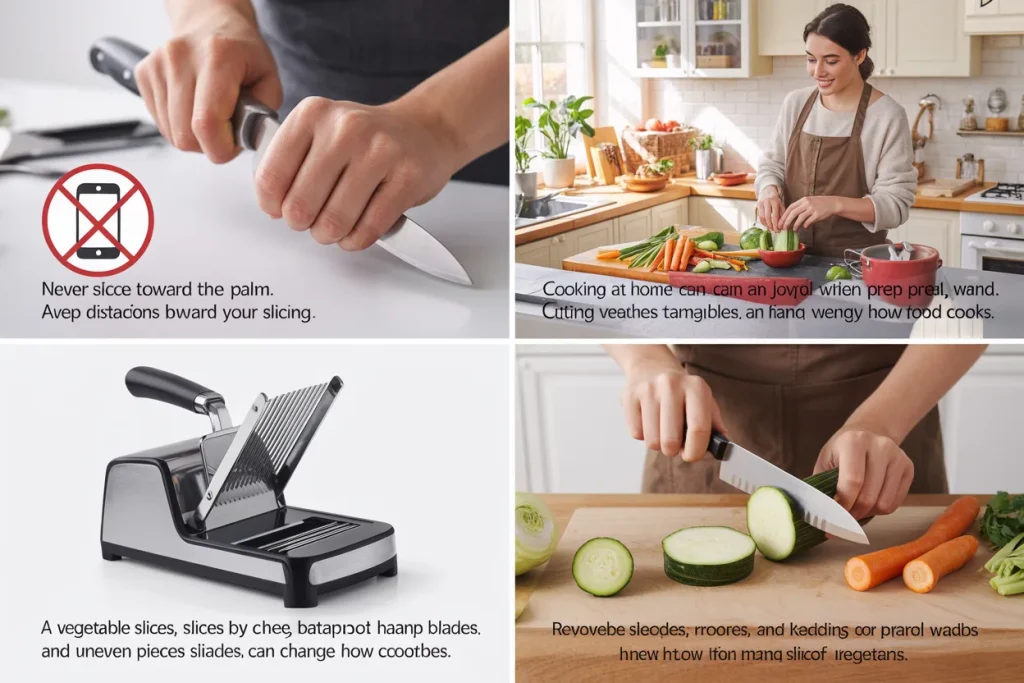
Wash vegetables under clean water to remove dirt. Dry them well with a towel. Wet food can slip and cause uneven cuts.
Trimming and Peeling
Remove stems, roots, and rough skins if needed. Cut large vegetables into smaller pieces so they fit the slicer opening. This step makes it easier to use vegetable slicer tools without force.
Step by Step Guide on How to Use a Vegetable Slicer
This section explains the core process in simple steps. Follow these steps each time.
Step 1: Set Up the Slicer
Place the slicer on a flat surface. If it has suction feet, press them down. A stable base prevents slipping.
Step 2: Choose the Blade
Select the blade that matches your goal. Thin slices work for salads. Thick slices suit stir fry. Shredding blades help with slaws.
Step 3: Use a Food Holder
Always use the hand guard or holder that comes with the slicer. It protects your fingers and keeps food steady.
Step 4: Start Slicing Slowly
Move the vegetable across the blade in smooth strokes. Do not rush. Let the blade do the work.
Step 5: Finish Safely
Stop when the piece gets small. Do not try to slice the last bit by hand. This habit keeps your fingers safe when you use vegetable slicer tools.
Safety Tips You Should Never Skip
Safety matters more than speed. Sharp blades need respect.
Key Safety Rules
| Safety Tip | Why It Matters |
|---|---|
| Use hand guard | Prevents cuts |
| Slice slowly | Keeps control |
| Keep fingers dry | Avoid slips |
| Store blades safely | Protects hands |
Never slice toward your palm. Keep focus on the task. Avoid distractions like phones while slicing.
Food safety coach Linda Green says,
“Slow hands are safe hands in any kitchen.”
How to Use a Vegetable Slicer for Common Foods
Different vegetables need slightly different handling. Here are simple tips for popular items.
Potatoes
Potatoes slice well on mandolines. Cut them in half if large. Use steady pressure to get even rounds.
Carrots
Carrots work best when trimmed flat on one side. This helps them stay steady while slicing.
Cucumbers
Cucumbers slice easily. Dry the skin first so it does not slip. Thin slices work well for salads.
Onions
Cut onions in half and remove the skin. Hold firmly with the guard to avoid slipping.
Each food reacts differently, but practice makes it easier to use vegetable slicer tools with confidence.
Cleaning and Maintaining Your Vegetable Slicer
Cleaning keeps blades sharp and food safe. Do not skip this step.
Cleaning Right After Use
Rinse the slicer right away under warm water. Food left to dry becomes harder to remove. Use a soft brush to clean blades. Avoid touching sharp edges directly.
Drying and Storage
Dry all parts fully before storage. Moisture can cause rust. Store blades in covers or cases if provided.
Proper care makes it easier to use vegetable slicer tools for years.
Common Mistakes and How to Avoid Them
Many beginners make the same mistakes. Learning them early saves trouble.
One mistake is using too much force. Let the blade slice naturally. Another mistake is skipping the hand guard. This leads to injuries. Also avoid slicing soft food with a dull blade, as it can tear instead of cut.
Take your time and stay mindful each time you use vegetable slicer tools.
How to Choose the Right Vegetable Slicer for Your Kitchen
Choosing the right slicer helps you enjoy cooking more.
What to Look For
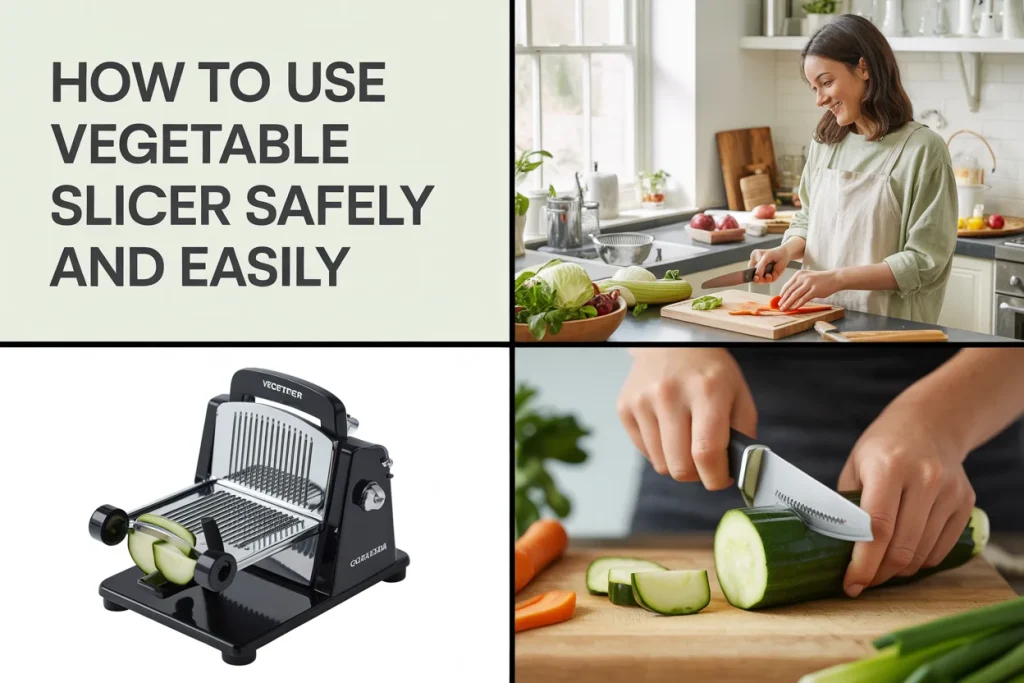
Look for sharp stainless steel blades, non slip bases, and easy cleaning. Simple designs often work best for home use. Check reviews from real users.
A slicer that fits your needs will encourage you to use vegetable slicer tools often and with comfort.
Benefits for Meal Prep and Healthy Eating
A slicer makes healthy eating easier. When prep is fast, you are more likely to cook fresh meals. Even cuts also help food cook evenly, which improves taste and texture.
Families often add more vegetables to meals once they use vegetable slicer tools regularly. It removes one big barrier, which is prep time.
Frequently Asked Questions
Is a vegetable slicer safe for beginners?
Yes, it is safe when used with the hand guard and slow movements. Start with easy vegetables and build confidence.
Can I slice fruits with a vegetable slicer?
Many slicers work well with firm fruits like apples and pears. Soft fruits may not slice cleanly.
How often should I clean the slicer?
Clean it after every use. This keeps food safe and blades sharp.
Do I need special gloves?
Cut resistant gloves add safety, especially for mandoline slicers. They are helpful but not required if you use the guard.
Why are my slices uneven?
Uneven slices often come from uneven pressure or dull blades. Check blade sharpness and move slowly.
Conclusion
Learning how to use vegetable slicer tools can change how you feel about cooking. With the right steps, safety habits, and care, this simple tool saves time and energy. It helps you prepare meals with ease and enjoy fresh food more often.
Take time to practice, clean it well, and respect the blades. Once you feel comfortable, you will reach for it often. A good slicer, used with care, becomes a trusted part of your kitchen routine.
Related posts
 Best Under Sink Organizers Kitchen 2026: Practical Storage Solutions
Find the best under sink organizers kitchen in 2026. Compare top-rated pull-out bins, L-shaped racks, and protective mats to maximize your cabinet space. The space under…
 Best Kitchen Cabinet Storage Solutions for 2026
Organize your kitchen efficiently with our Best Kitchen Cabinet Storage Solutions. Compare the best organizers for lids, pans, and spices to maximize your space. A cluttered…
 Top Rated Kitchen Shelf Organizers for 2026
Discover the top rated kitchen shelf organizers for 2026. Compare durable racks, magnetic shelves, and tiered storage to maximize your pantry and counter space. A cluttered…