
How to Lose Fat Without Losing Muscle
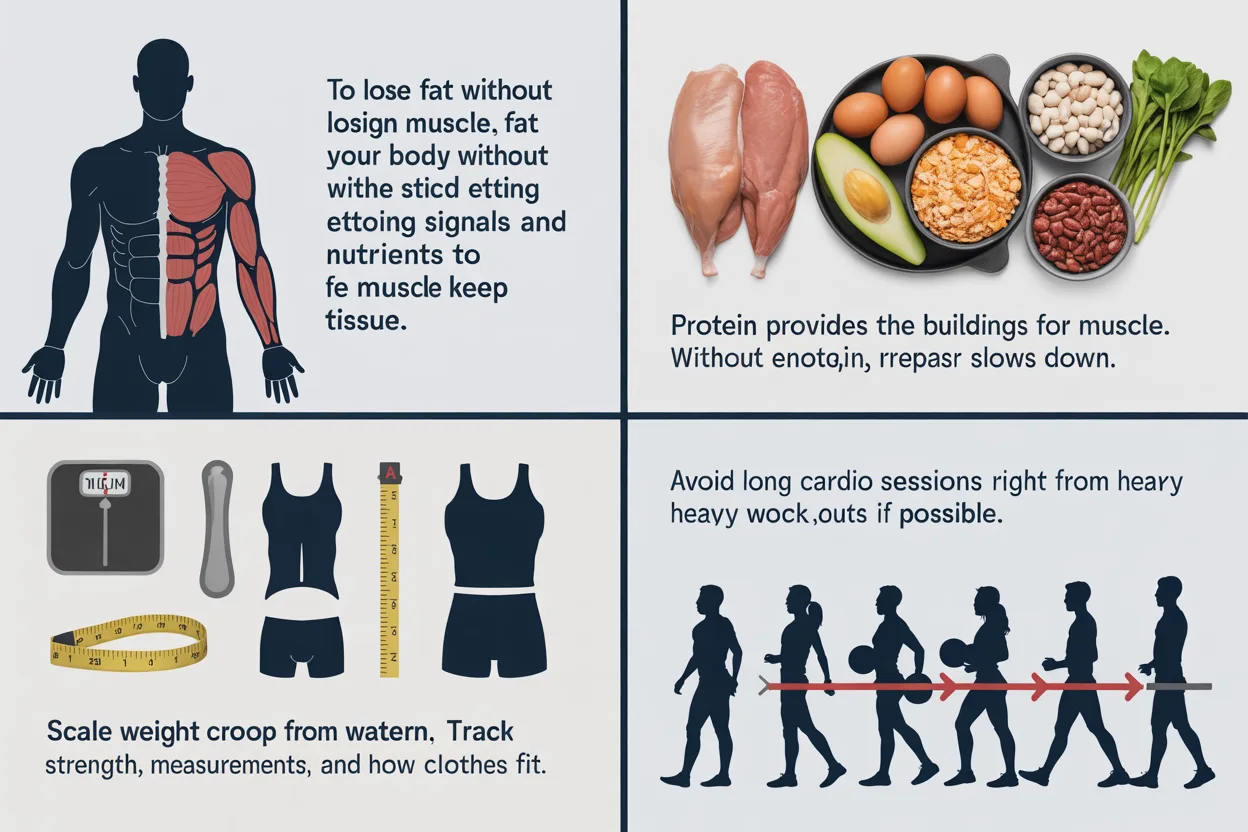
Learn proven ways to lose fat without losing muscle through smart nutrition, strength training, and recovery habits that support long term health and strength.
Many people want to look leaner, feel lighter, and improve health. The challenge is doing this without losing hard earned muscle. Fat loss and muscle loss often happen together when the body is stressed, underfed, or trained the wrong way. The good news is that it is possible to lose fat without losing muscle if you follow the right process.
This guide explains how the body burns fat, how muscle is protected, and what daily habits make the biggest difference. The goal is simple, safe, and realistic fat loss that keeps your body strong. Everything here is based on real experience, science backed methods, and practical steps you can follow.
You do not need extreme diets, endless cardio, or supplements to succeed. You need balance, patience, and consistency.
As strength coach Bret Contreras says,
“Muscle is earned through smart training and protected through smart recovery.”
How to Lose Fat Without Losing Muscle
To lose fat without losing muscle, your body must burn stored fat while still getting enough signals and nutrients to keep muscle tissue. This happens when nutrition, training, and recovery work together.
Fat loss should be slow and controlled. Fast weight loss often leads to muscle loss. A steady approach helps your body adapt while staying strong.
Why Muscle Loss Happens During Fat Loss
Muscle loss is not random. It happens for clear reasons.
Eating Too Few Calories
Very low calorie diets push the body into survival mode. When energy is too low, the body breaks down muscle for fuel.
Lack of Strength Training
Without resistance training, the body has no reason to keep muscle. Cardio alone does not protect muscle mass.
Low Protein Intake
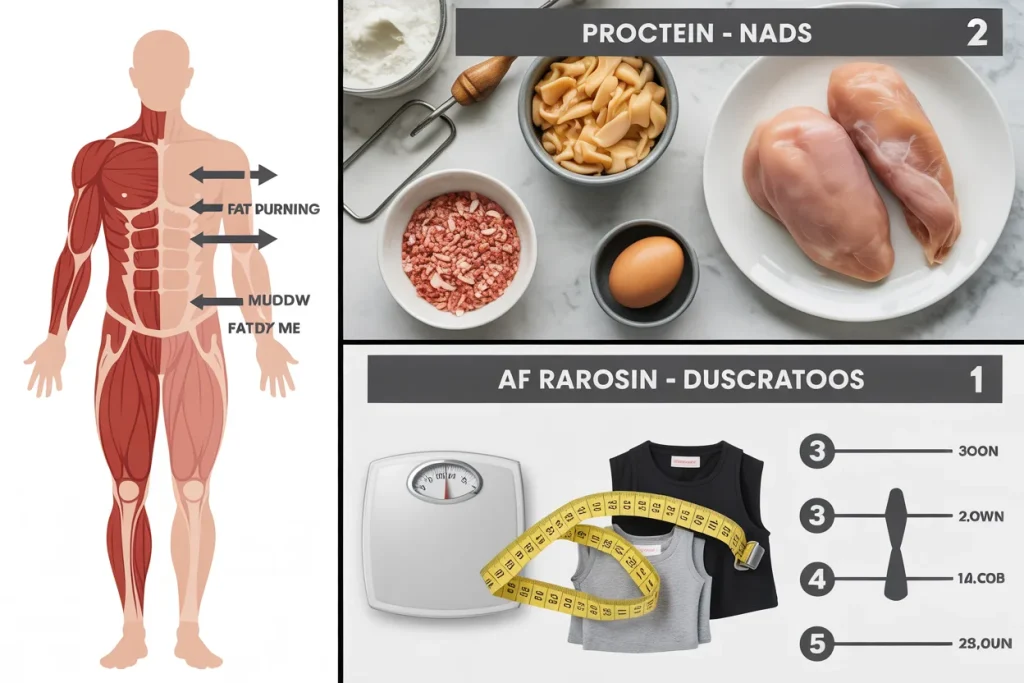
Protein provides the building blocks for muscle. Without enough protein, muscle repair slows down.
Poor Sleep and High Stress
Lack of sleep and constant stress raise cortisol. High cortisol levels increase muscle breakdown over time.
Understanding these causes helps you avoid common mistakes while working to lose fat without losing muscle.
Calorie Deficit Done the Right Way
A calorie deficit is required for fat loss. The key is keeping it moderate.
Choose a Small Deficit
A daily deficit of 300 to 500 calories is ideal. This allows fat loss without stressing the body.
Avoid Extreme Diets
Crash diets promise fast results but often lead to muscle loss, low energy, and rebound weight gain.
Track Progress, Not Just Weight
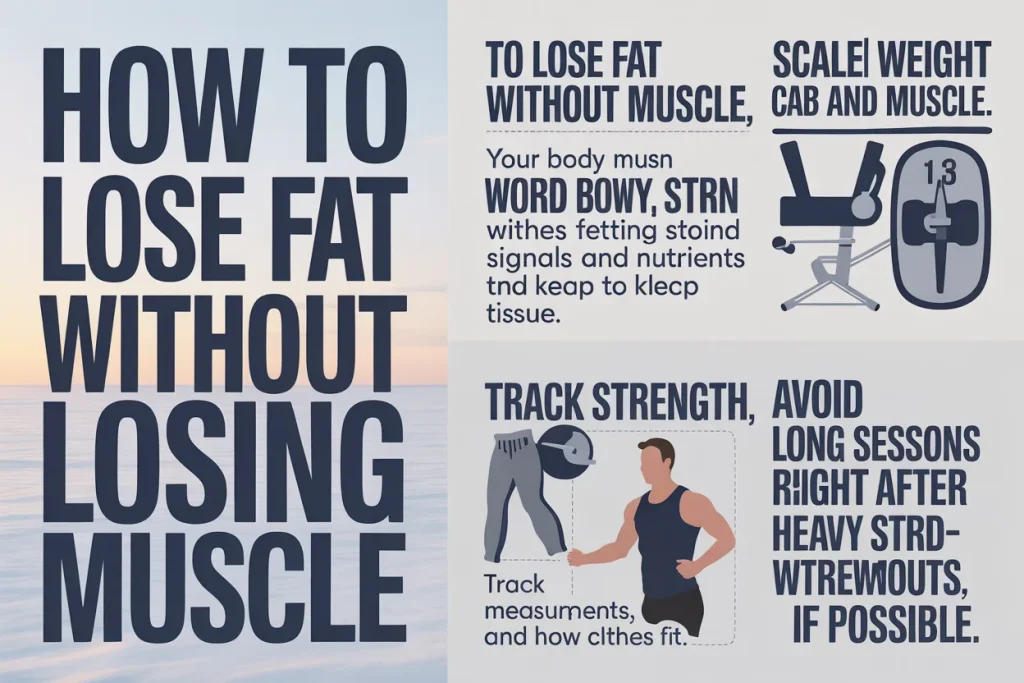
Scale weight can drop from water and muscle. Track strength, measurements, and how clothes fit.
As nutrition expert Alan Aragon says,
“Fat loss works best when the body does not feel threatened.”
Protein Intake for Muscle Protection
Protein is the most important nutrient when trying to lose fat without losing muscle.
How Much Protein Do You Need
Aim for 1.6 to 2.2 grams of protein per kilogram of body weight per day. This range supports muscle repair and fullness.
Best Protein Sources
Choose whole foods that digest well and provide nutrients.
| Protein Source | Benefits |
|---|---|
| Eggs | Complete protein and easy to cook |
| Chicken breast | Lean and high protein |
| Fish | Protein plus healthy fats |
| Greek yogurt | Protein and gut support |
| Lentils | Plant protein and fiber |
Spread protein intake evenly across meals for best results.
Strength Training Is Non Negotiable
Strength training tells your body to keep muscle. Without it, muscle loss is likely.
Focus on Compound Movements
Exercises that work many muscles at once are most effective.
Examples include squats, presses, rows, and deadlifts.
Train 3 to 5 Days Per Week
You do not need daily workouts. Consistent, focused sessions work better than overtraining.
Progressive Overload Matters
Try to maintain or slowly improve strength while cutting fat. This signals muscle preservation.
As trainer Jeff Nippard says,
“Lifting weights is the strongest message you can send your body to hold onto muscle.”
Cardio Without Muscle Loss
Cardio can help burn calories, but too much can harm muscle.
Choose Smart Cardio Types
Low intensity walking and short interval sessions are safer than long daily runs.
Limit Cardio Volume
Three to four cardio sessions per week is enough for most people.
Time Cardio Properly
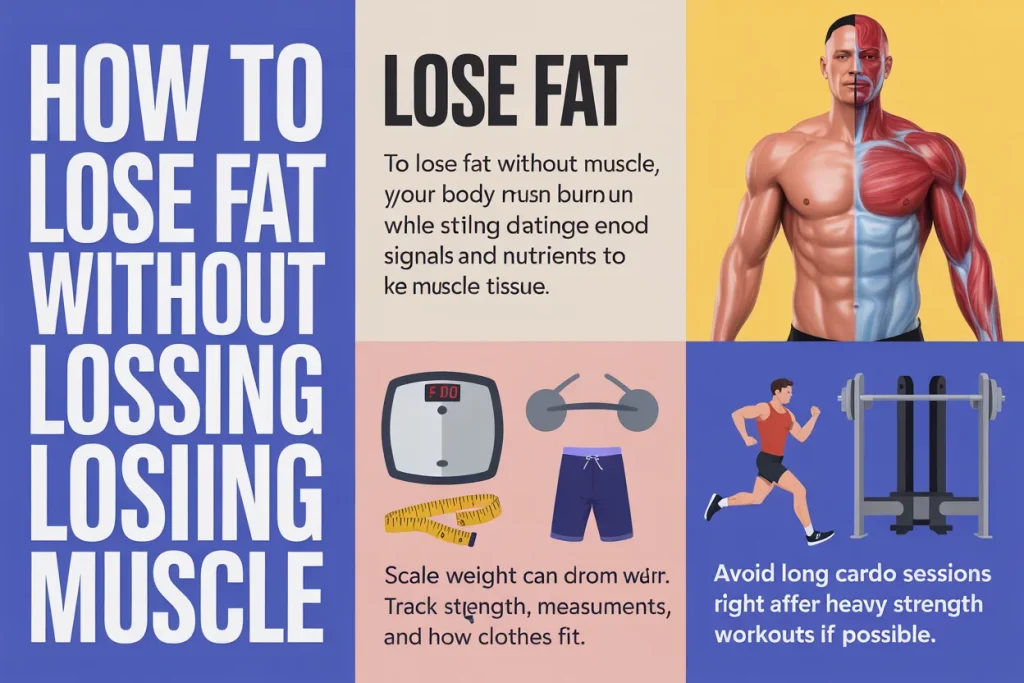
Avoid long cardio sessions right after heavy strength workouts if possible.
The goal is balance while you work to lose fat without losing muscle.
Carbs and Fats Still Matter
Cutting carbs and fats too low can hurt performance and hormones.
Carbs Support Training
Carbohydrates fuel workouts and help maintain strength.
Healthy Fats Support Hormones
Fats support testosterone, estrogen, and joint health.
| Nutrient | Role in Fat Loss |
|---|---|
| Carbohydrates | Energy and workout performance |
| Fats | Hormone balance |
| Fiber | Digestion and fullness |
| Water | Recovery and metabolism |
Balance matters more than restriction.
Recovery and Sleep Protect Muscle
Muscle is not built during workouts. It grows and repairs during rest.
Sleep 7 to 9 Hours
Quality sleep lowers cortisol and supports fat burning hormones.
Rest Days Are Productive
Rest days allow muscles to recover and come back stronger.
Manage Daily Stress
Simple habits like walking, breathing exercises, and relaxing hobbies help protect muscle.
Ignoring recovery makes it harder to lose fat without losing muscle.
Supplements That May Help
Supplements are optional, not required. Some can support your plan.
Protein Powder
Useful if you struggle to meet protein needs with food.
Creatine
Supports strength and muscle fullness even during fat loss.
Caffeine
Can improve workout performance when used moderately.
Always focus on food and training first.
Common Mistakes to Avoid
Chasing Fast Results
Fat loss takes time. Fast changes often lead to muscle loss.
Training Too Much
More is not always better. Overtraining increases injury and muscle breakdown.
Ignoring Strength Levels
If strength drops fast, muscle loss may be happening.
Consistency helps you lose fat without losing muscle safely.
Weekly Fat Loss Strategy Example
Here is a simple structure you can adapt.
| Day | Activity |
|---|---|
| Monday | Strength training |
| Tuesday | Walking or light cardio |
| Wednesday | Strength training |
| Thursday | Rest or stretching |
| Friday | Strength training |
| Saturday | Optional cardio |
| Sunday | Rest |
This balance supports fat loss and muscle retention.
Frequently Asked Questions
Can beginners lose fat and gain muscle at the same time
Yes. Beginners often experience body recomposition where fat drops and muscle increases together.
How fast should fat loss be
A loss of 0.5 to 1 percent of body weight per week is safe.
Is fasting safe for muscle retention
Fasting can work for some people, but protein intake and training quality must stay high.
Do women need a different approach
The core principles are the same. Women may need slightly higher fat intake for hormonal health.
How long does it take to see results
Visible changes often appear within 4 to 8 weeks with consistency.
Long Term Mindset for Success
Fat loss is not a short phase. Sustainable habits create lasting results.
Focus on strength, energy, and health rather than scale weight alone. Small improvements add up.
If you stay patient, you will lose fat without losing muscle and feel stronger over time.
Conclusion
Learning how to lose fat without losing muscle is about respecting how the body works. Eat enough protein, train with purpose, sleep well, and avoid extreme methods. Fat loss should support your life, not control it.
When you choose steady progress over shortcuts, your body responds better. You keep strength, protect muscle, and improve confidence.
The path is simple, but it requires consistency. Follow these steps, trust the process, and your results will last.
Related posts
 Understanding Fitness Checkup Consultation Cost and Professional Assessment Resources for 2026
Explore Understanding fitness checkup consultation cost factors and professional assessment resources to help you make informed decisions about your health and training goals. Navigating the world…
 Gym Membership Discount Price Alternatives for 2026 Home Fitness
Looking for a gym membership discount price Alternatives? Explore smart home fitness alternatives and equipment to save money and build your own workout space in 2026.…
 Buy Home Workout Sliders: 2026 Guide to Core Fitness Tools
Looking to buy home workout sliders? Compare top-rated gliding discs and core trainers to find the right equipment for your 2026 fitness routine. Adding core sliders…