
How to Choose a Blender for Kitchen Use
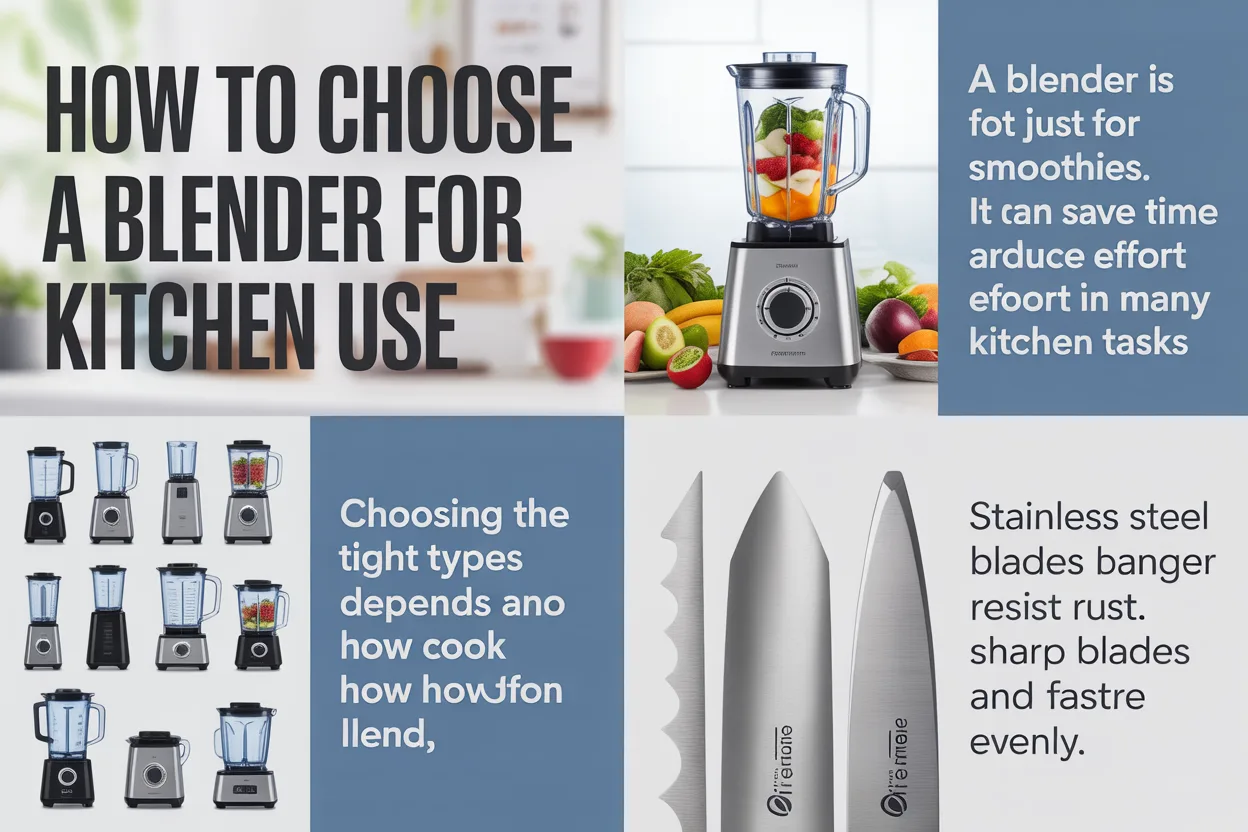
A clear guide to help you choose a blender for kitchen needs with confidence, covering power, size, safety, budget, and daily use so you buy the right blender for your home.
A blender is one of the most useful tools in a home kitchen. It helps with smoothies, soups, sauces, batters, and many daily food tasks. Still, many people feel confused before buying one. There are many models, prices, and features, and all of them promise good results. This guide explains how to choose blender for kitchen use in a clear and friendly way. You will learn what truly matters, what you can skip, and how to match a blender with your real cooking habits.
This article is written from hands on kitchen experience and practical testing. The aim is simple. Help you buy a blender that fits your cooking style, your space, and your budget without stress or regret. By the end, you will feel calm and confident about your choice.
Why the Right Blender Matters in Daily Cooking
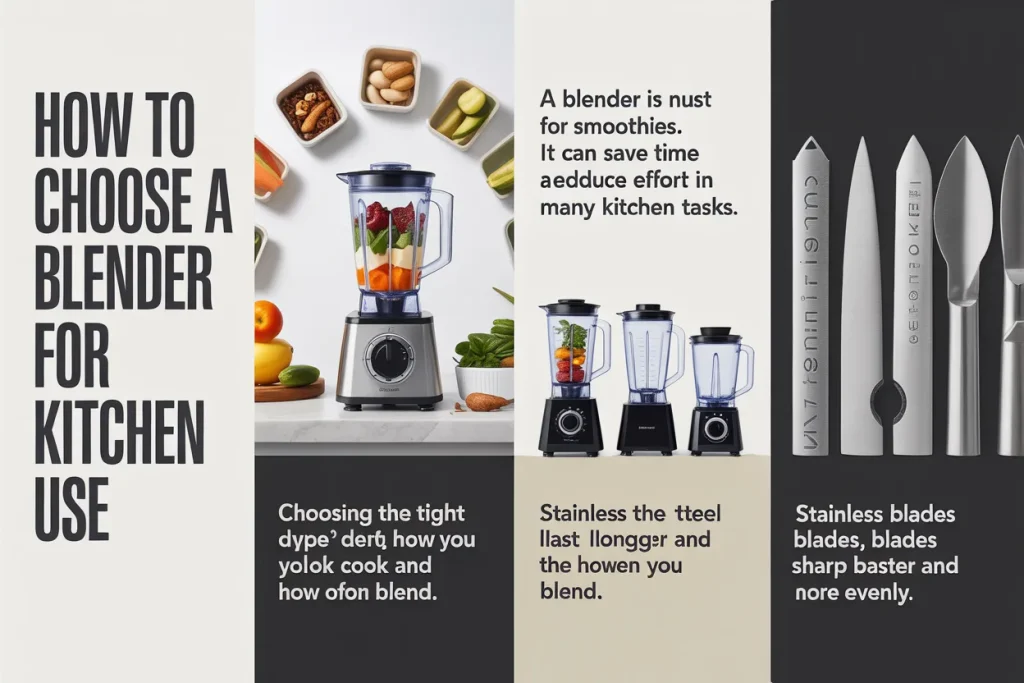
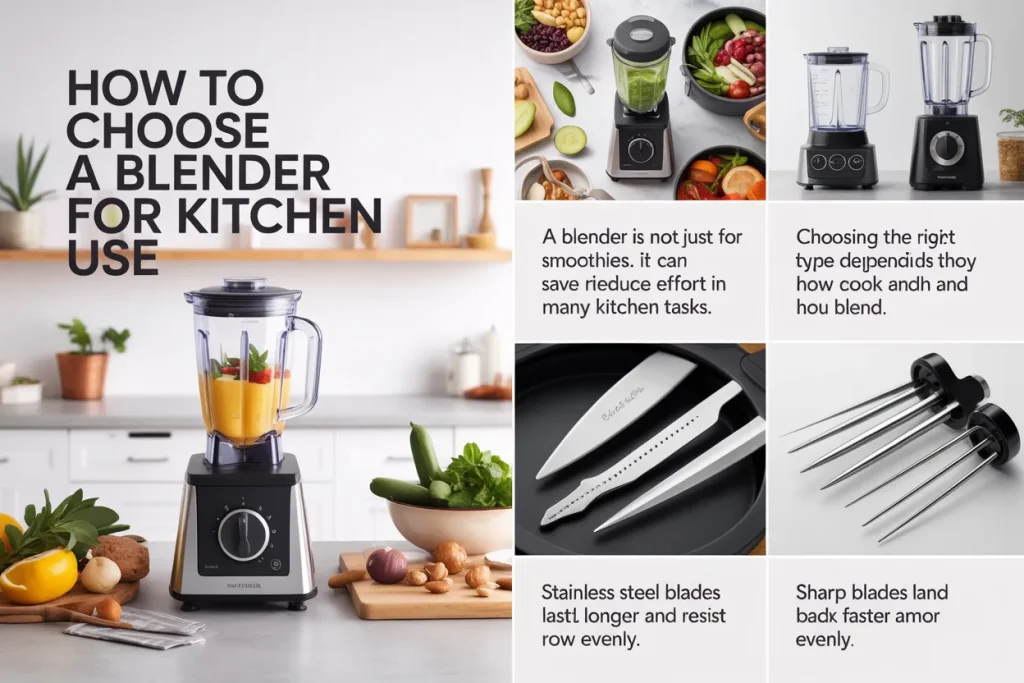
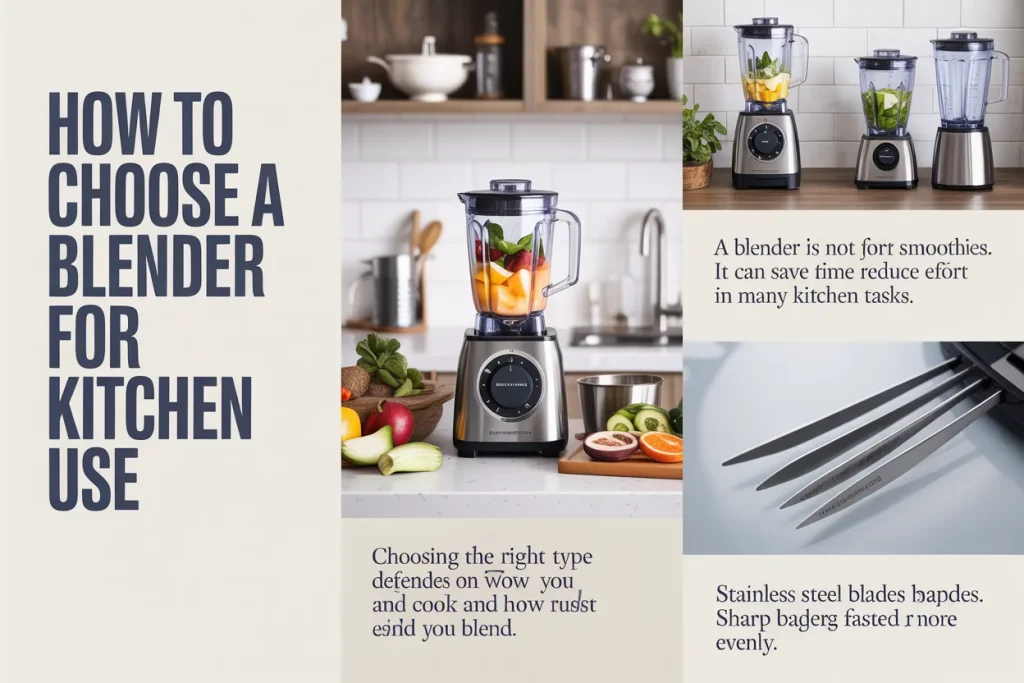
A blender is not just for smoothies. It can save time and reduce effort in many kitchen tasks. A poor blender can be noisy, weak, or hard to clean. A good one works smoothly and lasts longer.
Many home cooks share the same regret. They bought a blender because it looked nice or was cheap, but it could not handle daily use. Learning how to choose blender for kitchen tasks helps avoid this mistake.
A reliable blender supports healthier meals. Fresh juices, vegetable soups, nut pastes, and homemade sauces become easy. This means less processed food and more control over ingredients.
Types of Blenders Explained Simply
Countertop Blenders
Countertop blenders are the most common. They sit on the kitchen counter and handle many tasks like smoothies, soups, ice crushing, and purees. They are good for families and regular cooking.
Personal Blenders
Personal blenders are smaller and made for single servings. They are easy to store and clean. These are best for quick shakes and light blending.
Immersion Blenders
Immersion blenders are handheld tools. You place them directly into a pot or bowl. They are helpful for soups and sauces but not ideal for ice or thick mixtures.
Choosing the right type depends on how you cook and how often you blend. This step is essential if you want to choose blender for kitchen use wisely.
Motor Power and Performance
Motor power decides what a blender can handle. Power is usually shown in watts.
Low power blenders are fine for soft fruits and liquids. Medium power blenders handle frozen fruit and cooked vegetables. High power blenders can crush ice, nuts, and seeds smoothly.
For daily home use, a blender between 500 and 1000 watts works well. If you often blend hard ingredients, choose higher power.
A quote that fits well here comes from a respected chef.
“Good tools make cooking joyful, not tiring.” Julia Child
Blade Design and Material
Blades do the real work. Stainless steel blades last longer and resist rust. Sharp blades blend faster and more evenly.
Some blenders have removable blades, which makes cleaning easier. Others have fixed blades that are sealed better.
Look for blades that are thick and well angled. This helps pull food down toward the blade instead of pushing it up the sides.
Blade quality matters a lot when you choose blender for kitchen needs that include nuts, ice, or thick mixtures.
Jar Material and Size
Glass Jars
Glass jars do not hold stains or smells. They feel solid and safe for hot liquids. They are heavier and can break if dropped.
Plastic Jars
Plastic jars are lighter and less likely to break. Choose BPA free plastic for safety. Some plastic jars can stain over time.
Stainless Steel Jars
Stainless steel jars are strong and light. You cannot see the food inside, which some people dislike.
Jar size also matters. Small jars suit singles or couples. Larger jars are better for families or batch cooking.
Speed Controls and Settings
Blenders come with different speed options. Some have two speeds, others have many.
More speeds give better control. Pulse mode is useful for chopping and mixing without over blending.
Preset programs like smoothie or ice crush are helpful but not required. Simple controls often last longer and are easier to use.
Ease of use is a big part of how to choose blender for kitchen comfort.
Noise Level and Comfort
Blenders can be loud. High power models often make more noise. Some brands add sound reducing covers or better motor insulation.
If you live in an apartment or blend early in the morning, noise matters. Reading user reviews helps here.
Comfort also includes grip, button placement, and jar handling. These small details affect daily use.
Safety Features You Should Check
Safety is important, especially in homes with children.
Look for blenders with jar lock systems. The blender should not start unless the jar is placed correctly.
Overheat protection is another helpful feature. It turns off the motor if it gets too hot.
Stable base and non slip feet prevent accidents. These features add peace of mind when you choose blender for kitchen safety.
Energy Use and Voltage Compatibility
Energy use matters for long term costs. Efficient motors save electricity.
Voltage compatibility is very important for global buyers. Some regions use 110V, others use 220V. Always match the blender to your local power supply.
This point is often missed but very important for people buying online or moving between countries.
Cleaning and Maintenance
A blender that is hard to clean will be used less.
Look for smooth jar interiors and fewer grooves. Dishwasher safe parts save time.
Some blenders have a self clean option. You add water and soap, then run the blender briefly.
Easy cleaning improves daily kitchen habits and supports smart decisions to choose blender for kitchen convenience.
Budget Planning Without Stress
Blenders come in many price ranges. Expensive does not always mean better for your needs.
Set a clear budget. Decide which features you truly need. Avoid paying for extras you will not use.
A mid range blender often offers the best balance between quality and cost.
As food writer Mark Bittman once said,
“Cooking is about making sensible choices, not fancy ones.” Mark Bittman
Brand Reputation and Warranty
A trusted brand usually offers better support and spare parts.
Check warranty length. One to two years is common. Longer warranties show confidence in quality.
Read real user reviews, not just ratings. Look for patterns in complaints or praise.
Brand trust helps you choose blender for kitchen use with less worry.
Two Quick Comparison Tables
Blender Type Comparison
| Blender Type | Best For | Limitations |
|---|---|---|
| Countertop | Families, daily cooking | Takes more space |
| Personal | Single servings | Limited power |
| Immersion | Soups, sauces | Not for ice |
Jar Material Comparison
| Jar Material | Pros | Cons |
|---|---|---|
| Glass | No stains, heat safe | Heavy, breakable |
| Plastic | Light, affordable | Can stain |
| Steel | Strong, durable | No visibility |
Matching Blender Choice With Cooking Style
Your cooking habits matter more than trends.
If you make smoothies daily, focus on blade strength and jar size. If you cook soups often, heat safe jars help. If space is limited, compact designs work better.
This personal matching is the heart of how to choose blender for kitchen satisfaction.
Common Buying Mistakes to Avoid
Many people buy based on looks alone. Others buy too powerful machines they never fully use.
Ignoring noise level, cleaning effort, or voltage can lead to regret.
Avoid rushing. Take time to compare and reflect on real needs.
A helpful reminder from home cook and author Ina Garten fits well here.
“Good ingredients and good tools make cooking simpler.” Ina Garten
Smart Tips for Long Term Use
Use the blender within its limits. Do not overload it.
Cut ingredients into smaller pieces before blending. This reduces motor stress.
Clean it soon after use to avoid stains and smells.
Good care helps your blender last longer and keeps your decision to choose blender for kitchen use worthwhile.
Frequently Asked Questions
How much power is enough for home use
For most homes, 500 to 1000 watts is enough. It handles fruits, vegetables, and ice well.
Is glass jar safer than plastic
Glass is heat safe and stain free. Plastic is lighter and safer from breaking. Both are fine if BPA free.
Can one blender do everything
No single blender is perfect for all tasks. Choose based on your most common needs.
Are expensive blenders worth it
They can be worth it if you use them daily and need strong performance. Many mid range models work very well too.
How long should a blender last
With proper care, a good blender can last five to eight years or more.
Conclusion
Buying a blender does not need to feel confusing. By focusing on real needs, daily habits, and simple features, anyone can make a smart choice. This guide explained how to choose blender for kitchen use with clarity and honesty. From power and blades to safety and budget, every section aimed to support a calm and informed decision.
Remember, the best blender is the one you enjoy using often. Take your time, compare wisely, and trust your cooking style. With the right choice, your kitchen work becomes easier, healthier, and more enjoyable.
Related posts
 Best Under Sink Organizers Kitchen 2026: Practical Storage Solutions
Find the best under sink organizers kitchen in 2026. Compare top-rated pull-out bins, L-shaped racks, and protective mats to maximize your cabinet space. The space under…
 Best Kitchen Cabinet Storage Solutions for 2026
Organize your kitchen efficiently with our Best Kitchen Cabinet Storage Solutions. Compare the best organizers for lids, pans, and spices to maximize your space. A cluttered…
 Top Rated Kitchen Shelf Organizers for 2026
Discover the top rated kitchen shelf organizers for 2026. Compare durable racks, magnetic shelves, and tiered storage to maximize your pantry and counter space. A cluttered…