
Choosing The Right Kitchen Ventilation
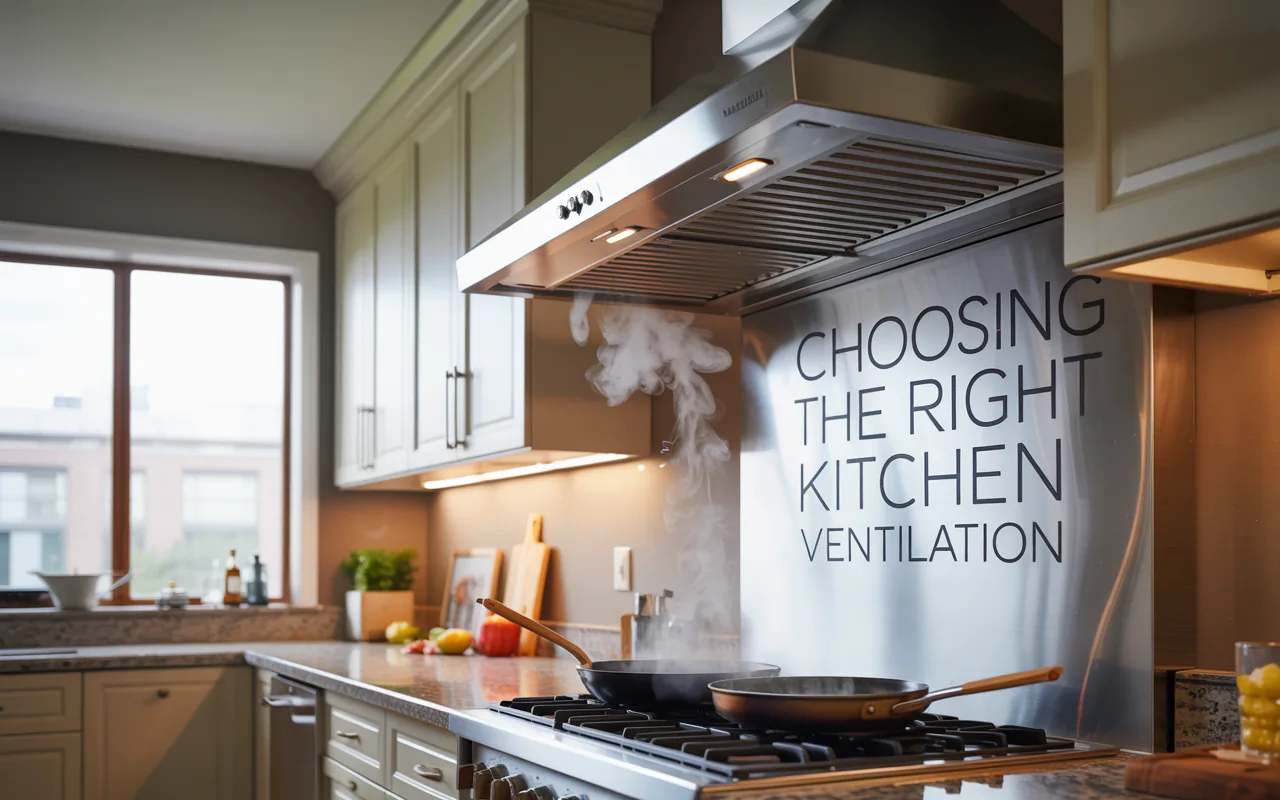
Learn how choosing the right kitchen ventilation keeps your home fresh and safe. We explain types, sizes, filters, and costs in plain English.
Cooking is fun. But smoke, grease, and smells stay in your kitchen for hours. You need a good way to clear the air. That is why choosing the right kitchen ventilation matters for every home. A proper system removes steam, odor, and tiny grease particles. It also stops mold and keeps your cabinets clean.
Many people ignore their kitchen fan until something goes wrong. Then they notice yellow stains on the wall or a strange smell that never leaves. Do not wait for that to happen. Let us talk about how to pick a system that works for your cooking style, kitchen size, and budget.
I have helped friends and family pick range hoods for years. I also studied basic air flow rules. This guide gives you real, useful steps. No hard words. No extra fluff. Just clear help for choosing the right kitchen ventilation.
“Good air in the kitchen is as important as good food. A simple hood can save your walls, your lungs, and your mood.”
— Linda Greene, home efficiency writer
Why Your Kitchen Needs Proper Air Flow
Every time you cook, you release moisture and tiny oil droplets. If those stay inside, they stick to surfaces. Over time, paint peels. Wood cabinets get a sticky film. The air feels heavy.
Breathing greasy air is not good for you either. It can bother your throat and eyes. People with asthma or allergies feel it more.
A good ventilation system pulls dirty air out or cleans it before sending it back. This keeps your kitchen dry and fresh. It also stops smells from moving to other rooms.
So choosing the right kitchen ventilation is not a luxury. It is a basic need for a healthy home.
Types of Kitchen Ventilation Systems
You have three main choices. Each works for different kitchens.
1. Ducted Range Hoods
These connect to a pipe that goes outside. They pull smoke and steam through a filter and push it out of your house. This is the best option for heavy cooking. It removes heat, moisture, and smells completely.
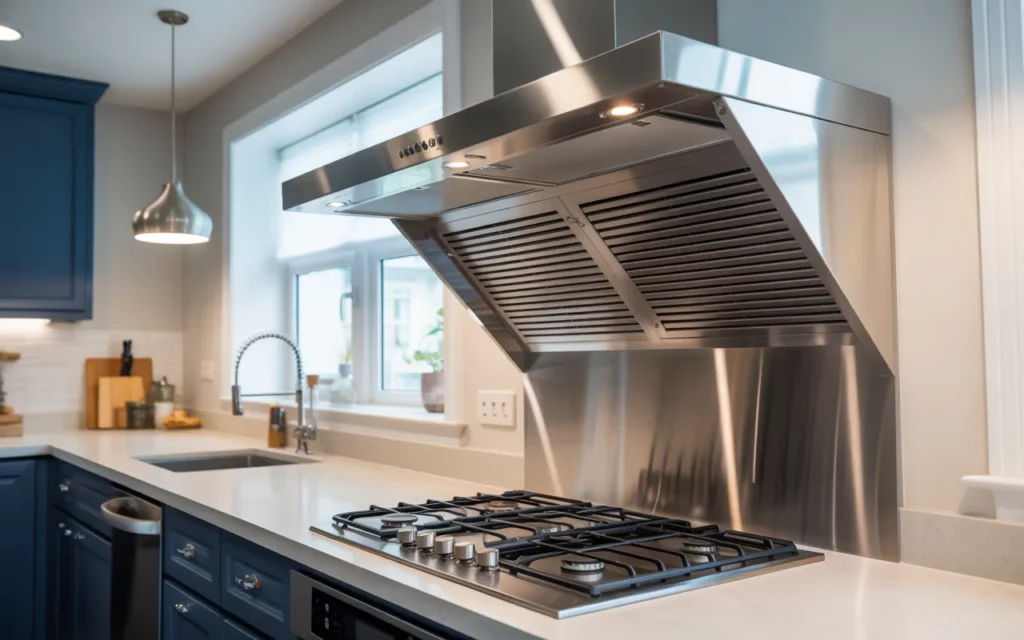
Ducted hoods come in many styles. Wall-mounted ones sit above a stove. Under-cabinet ones fit below upper cabinets. Island hoods hang from the ceiling.
The main work is installing the duct pipe. If your kitchen already has a vent to the outside, this is easy. If not, you need a professional.
2. Ductless (Recirculating) Range Hoods
These do not send air outside. Instead, they pull air through charcoal or carbon filters. The filters trap smells and some grease. Then the hood blows clean air back into the kitchen.
Ductless hoods are simpler to install. You do not need new holes in the wall. They cost less upfront. But the filters need changing every few months. Also, they do not remove heat or moisture. So your kitchen stays warm and humid after boiling pasta for a long time.
These work best for small kitchens or apartments where you cannot cut into the wall.
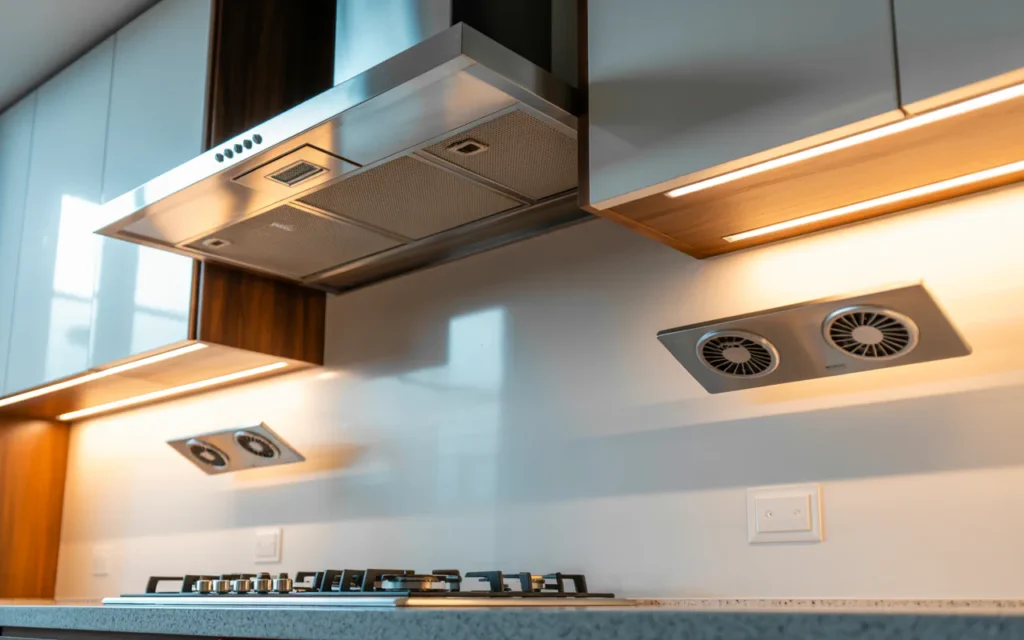
3. Downdraft Ventilation
These sit behind or next to the cooktop. A fan pulls air down and either sends it outside or through a filter. Downdraft systems are good for island cooktops where a ceiling hood looks odd.
They are less powerful than overhead hoods. Smoke naturally rises, so pulling it down takes more effort. But for light cooking, they are fine.
Here is a quick table to compare the three types.
| Type | Best For | Removes Heat? | Filter Change Needed | Install Difficulty |
|---|---|---|---|---|
| Ducted | Heavy cooking, big kitchens | Yes | No (metal filters washable) | Medium to Hard |
| Ductless | Small kitchens, apartments | No | Yes (carbon filters) | Easy |
| Downdraft | Island cooktops, modern design | Sometimes | Yes | Hard |
How to Measure for the Right Size
Size is a big part of choosing the right kitchen ventilation. A tiny hood over a large stove will not catch all the smoke. A huge hood over a small stove wastes energy and money.
Use this simple rule. The hood should be as wide as your cooktop or wider. If your stove is 30 inches, get a 30 inch or 36 inch hood. A 36 inch hood catches steam from front and back burners better.
Also check the depth. The hood should reach a few inches past the front of the stove. This helps catch rising smoke before it drifts into the room.
Mounting height matters too. For gas stoves, put the hood 24 to 30 inches above the cooktop. For electric or induction, 20 to 24 inches is fine. Too high and the fan loses power. Too low and you hit your head.
“Measure your cooktop twice before buying any hood. I have seen so many people buy the wrong size and regret it.”
— Mark Hollis, kitchen remodel contractor
Understanding Fan Power (CFM)
CFM means cubic feet per minute. It tells you how much air the fan moves. Higher CFM means more power.
How much CFM do you need? A basic formula works well. For electric stoves, use 100 CFM for every 12 inches of cooktop width. So a 30 inch electric stove needs about 250 CFM.
For gas stoves, use 100 CFM for every 10 inches. A 30 inch gas stove needs about 300 CFM.
If you cook a lot of spicy food or fry often, add 50 to 100 CFM extra. If your kitchen is open to the living room, also add more power.
Do not buy a 1200 CFM hood for a small apartment. It will be loud and pull air too fast. That can mess with your furnace or water heater vents.
For most homes, 300 to 600 CFM is plenty.
Noise Levels Matter
A powerful fan is good. But a loud fan is annoying. Noise is measured in sones. Lower sones mean quieter operation.
One sone is like a quiet fridge. Four sones is like normal talking. Eight sones is loud like a vacuum cleaner.
Look for hoods with 1.5 to 4 sones. Many brands list both CFM and sones. A 400 CFM hood at 3 sones is a good balance.
If you cook while talking to family or watching TV, pick a quieter model. Some hoods have multiple speeds. You can use low speed for light cooking and high speed for heavy frying.
Filter Types and Cleaning
Filters catch grease before they damage the fan or the duct. There are two main types.
Metal Mesh Filters
These are thin layers of aluminum or stainless steel. They trap large grease particles. You can wash them in the sink with hot soapy water or put them in the dishwasher.
Metal filters last for years. They are the most common type for ducted hoods.
Baffle Filters
These have curved metal strips. They are better at catching grease than mesh filters. Baffle filters are easier to clean because grease drips down into a tray. They cost more but work great for heavy cooking.
Carbon Filters
These are for ductless hoods. They have activated charcoal that absorbs smells. You cannot wash carbon filters. You must replace them every 3 to 6 months depending on how much you cook.
New carbon filters cost around $15 to $40 each. Factor that into your budget when choosing the right kitchen ventilation for a ductless system.
Here is a simple filter comparison.
| Filter Type | Works With | Washable? | How Often to Replace | Best For |
|---|---|---|---|---|
| Metal Mesh | Ducted | Yes | Every 2-3 years | General cooking |
| Baffle | Ducted | Yes | Every 3-5 years | Heavy frying, Indian/Chinese food |
| Carbon | Ductless | No | Every 3-6 months | Small kitchens, light cooking |
Style and Design Choices
Ventilation does not have to look ugly. Many hoods look nice and become a focal point in the kitchen.
Under Cabinet Hoods
These hide under your upper cabinets. They are simple and cheap. Most are made of stainless steel or white painted metal. Good for small budgets.
Wall Mount Chimney Hoods
These attach to the wall and have a tall chimney cover. They look modern and powerful. Often seen in open concept kitchens.
Island Hoods
These hang from the ceiling above a stove on an island. They need strong mounting. Island hoods make a statement. They cost more because the duct pipe runs through the ceiling.
Insert Hoods
These go inside a custom wood hood or cabinet. You build a decorative cover around the insert. This gives you a unique look with hidden fan parts.
Pop Up Hoods
These rise from the countertop behind the stove. When not in use, they hide flat. Pop up hoods are rare and expensive. They work for people who want nothing hanging above the stove.
Pick a style that fits your kitchen layout. Do not buy an island hood if you have a wall stove. Do not buy a pop up if you cook heavy meals daily because they have low power.
“I always tell my clients to buy a hood that is easy to clean. A fancy shape with many corners collects grease fast. Flat surfaces are your friend.”
— Sandra Lee, professional home cleaner
Installation Tips and Costs
Installation can cost as much as the hood itself. Know what you are getting into.
If you already have a duct to the outside, replacing an old hood is easy. You can do it yourself in an afternoon. Cost is just the new hood.
If you need new ductwork, hire a professional. Cutting through walls or ceilings requires tools and safety knowledge. Duct installation costs $200 to $800 depending on how far the pipe runs.
Ductless hoods are the cheapest to install. You just mount the hood and plug it in. No holes needed. Many people install them alone.
Downdraft systems are the hardest. They need space under the floor or inside the cabinet. This often requires a carpenter or electrician.
Always check the electrical needs. Most hoods plug into a standard outlet. Some hardwire directly. If you are not comfortable with wiring, call an electrician.
Maintenance for Long Life
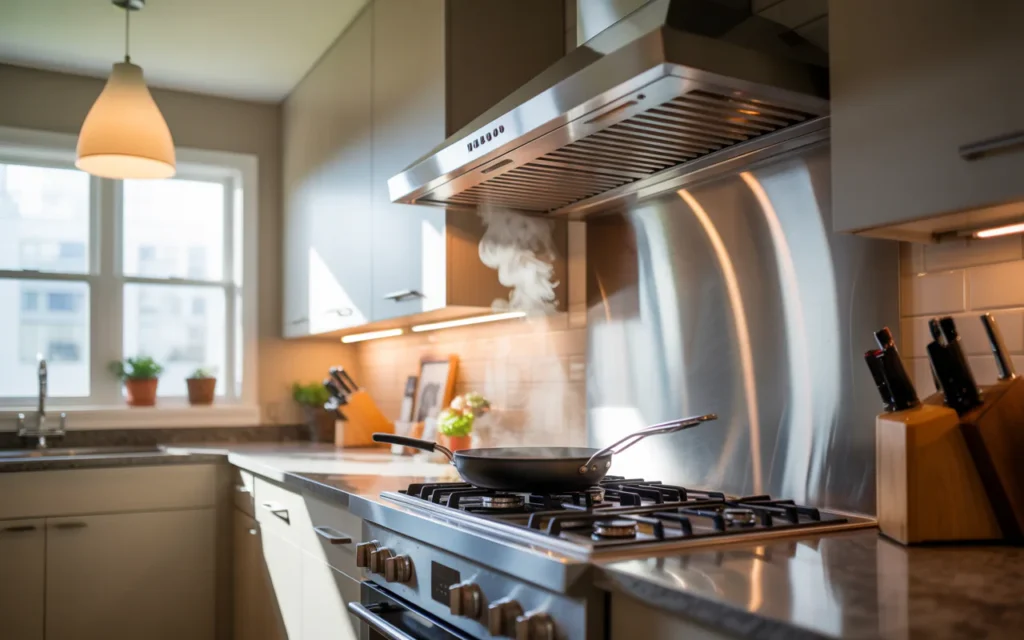
A hood works better when you keep it clean. Grease buildup reduces fan power and can start a fire if it gets too thick.
Clean metal or baffle filters every month if you cook daily. Soak them in hot water with dish soap. Scrub with a soft brush. Let them dry fully before putting back.
Wipe the outside of the hood weekly. Use a degreaser or a mix of vinegar and water. Pay attention to the edges and the bottom where grease drips.
Check the duct pipe once a year. Look for cracks or loose connections. If you see grease dripping from the pipe, clean it or call a professional.
For ductless hoods, set a calendar reminder to change the carbon filter. Write the date on the filter with a marker so you do not forget.
Common Mistakes People Make
Many people rush when choosing the right kitchen ventilation. Here are errors to avoid.
Buying a hood that is too small. A 24 inch hood over a 30 inch stove leaves two burners uncovered. Smoke from those burners goes straight to the ceiling.
Ignoring noise levels. You buy a cheap loud hood. Then you never turn it on because it hurts your ears. A quiet hood that you actually use is better than a powerful loud one you avoid.
Forgetting about make up air. If your hood moves more than 400 CFM, it can suck air back down your chimney or water heater vent. This pulls carbon monoxide inside. Some building codes require a separate make up air system for high CFM hoods.
Buying ductless for heavy frying. Ductless hoods do not remove moisture or heat. Your kitchen will stay sticky and humid. Spend the extra money for a ducted hood if you cook a lot.
Installing the hood too high. Every inch higher reduces power. Follow the height rules for your stove type.
Budget Planning
You can find hoods from $80 to $2000. Here is what you get at different price points.
Under $150: Basic under cabinet ducted or ductless hoods. Lower CFM (150 to 300). Louder operation. Metal mesh filters. Good for small apartments or light cooking.
$150 to $400: Better build quality. More styles available. CFM from 300 to 500. Quieter motors (4 to 5 sones). Baffle filters in some models. Best for most average homes.
$400 to $800: Stainless steel chimney hoods. CFM 500 to 700. Very quiet (1.5 to 3 sones). LED lights. Remote controls. Island hoods start here.
$800 and up: Professional style hoods. High CFM (800 to 1200). Commercial looks. Ultra quiet. Often need professional installation. Good for serious home cooks.
Remember to add installation cost if you need new ducts or electrical work.
Matching Ventilation to Your Cooking Style
Think about how you actually cook. Do not buy for the person you wish to be. Buy for the cook you are today.
If you boil pasta and make eggs, a 200 CFM ductless hood is fine. If you deep fry fish and stir fry with chili oil, you need 500+ CFM ducted with baffle filters.
Do you bake bread often? That creates steam. A ducted hood removes that moisture. Without it, water drips on your windows and walls.
Do you have an open floor plan? Your kitchen connects to the living room. Any smell or grease travels far. Get a higher CFM hood to catch everything at the source.
Do you have gas burners? They produce carbon monoxide and nitrogen dioxide. You must have a ducted hood that sends these gases outside. Never use a ductless hood with a gas stove.
Frequently Asked Questions
1. Can I install a range hood myself?
Yes if you are replacing an old one with the same size and duct connection. No if you need new ducts or electrical wiring. For safety, hire a pro for gas stove connections.
2. How often should I replace carbon filters in a ductless hood?
Every 3 to 6 months. If you cook daily with strong spices, change every 2 months. A bad filter lets smells pass through.
3. What is the minimum CFM for a gas stove?
Use 100 CFM for every 10 inches of cooktop width. So a 30 inch gas stove needs at least 300 CFM. Add 100 CFM more if you have a powerful burner.
4. Does a range hood need a vent to the outside?
Not always. Ductless hoods recirculate air through carbon filters. But ducted hoods work better because they remove heat, moisture, and gases completely.
5. Why is my range hood not removing smoke?
Three common reasons. The filter is clogged with grease. The hood is mounted too high. The CFM is too low for your stove size. Clean the filter first. Then check the height.
6. Can I use a ductless hood with an induction cooktop?
Yes. Induction cooktops do not produce gas or much heat. A ductless hood works fine for steam and light smells. But it will not remove moisture from boiling water.
7. How do I reduce noise from my kitchen fan?
Run the fan on low speed for normal cooking. Use high speed only for frying or searing. Clean the filters regularly because dirty filters make more noise. Also check that the duct pipe is not loose.
8. What is make up air and do I need it?
Make up air is fresh air brought into your home when a powerful fan pushes air out. If your hood is over 400 CFM, you may need a make up air system. Check your local building code. This prevents backdraft from chimneys or water heaters.
Conclusion
You now know the basics for choosing the right kitchen ventilation. Start with your cooking style. Heavy cooking needs a ducted hood with high CFM and baffle filters. Light cooking can use a ductless hood with carbon filters.
Measure your cooktop width. Add a few inches for better coverage. Check the mounting height. Keep it low enough to catch smoke but high enough to avoid your head.
Match the fan power to your stove type. Gas needs more CFM than electric. Do not forget about noise. A quiet hood is one you will actually turn on.
Set a budget that includes installation if needed. And plan for regular cleaning. A clean hood works better and lasts longer.
Take your time. Look at a few models in person if you can. Listen to the fan at different speeds. Read customer reviews about noise and durability. Then buy with confidence. Your kitchen will smell better, feel fresher, and stay cleaner for years.
Related posts
 Best Under Sink Organizers Kitchen 2026: Practical Storage Solutions
Find the best under sink organizers kitchen in 2026. Compare top-rated pull-out bins, L-shaped racks, and protective mats to maximize your cabinet space. The space under…
 Best Kitchen Cabinet Storage Solutions for 2026
Organize your kitchen efficiently with our Best Kitchen Cabinet Storage Solutions. Compare the best organizers for lids, pans, and spices to maximize your space. A cluttered…
 Top Rated Kitchen Shelf Organizers for 2026
Discover the top rated kitchen shelf organizers for 2026. Compare durable racks, magnetic shelves, and tiered storage to maximize your pantry and counter space. A cluttered…