
How To Check Engine Compression At Home
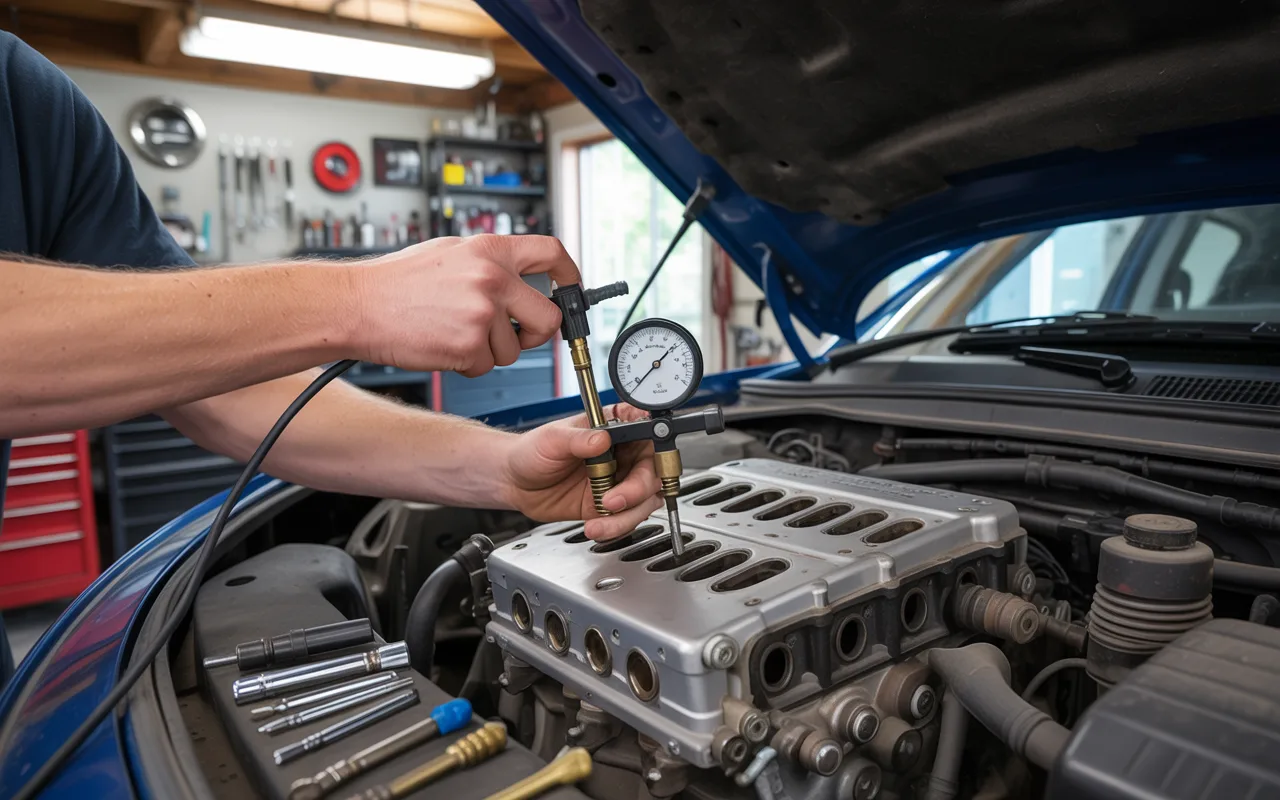
Learning how to check engine compression at home can save you hundreds of dollars in diagnostic fees. This guide shows you the tools, steps, and simple tricks to diagnose engine health yourself.
There is a certain kind of quiet worry that comes with a car that doesn’t run right. Maybe it is hard to start in the morning. Maybe it feels weak when you try to go up a hill, or the check engine light is on, but you are not sure why. Before you take it to a shop and pay for hours of labor, there is one test that tells you the truth about your engine’s health. That test is a compression test.
I remember the first time I tried to figure out why my old truck was losing power. I was nervous. I thought I would have to take apart half the engine. But once I learned how to check engine compression at home, I realized it is one of the most honest tests you can do. It does not lie. It tells you if the inside of your engine is holding pressure like it should or if something is broken.
If you want to know if your engine is worth fixing, or if you just want to understand what is going on under the hood, this guide is for you. We are going to go through everything you need to know to do this safely and accurately.
What Is Engine Compression and Why Does It Matter?
Before we start taking things apart, let us talk about what compression actually is. Inside your engine, you have cylinders. In each cylinder, a piston moves up and down. When the piston goes up, it squeezes a mix of air and fuel into a very small space. That squeezing is compression.
For your engine to make power, that compression needs to be strong. If the pressure is too low, the engine cannot burn the fuel properly. You lose power. You burn more gas. Eventually, the car might not start at all.
Think of it like a bicycle pump. If the pump has a hole in the seal, you push down, but no air gets forced out. Your engine works the same way. If the valves are worn, or the piston rings are bad, the pressure escapes. Checking compression helps you find those leaks without taking the whole engine apart.
“Compression is the foundation of combustion. If you don’t have it, you don’t have power. It is the first thing any real mechanic checks when an engine is acting up.”
— Richard “Ricky” Martinez, ASE Certified Master Mechanic
Tools You Need to Check Engine Compression at Home
The good news is that you do not need a full mechanic shop to do this. You can check engine compression at home with just a few basic tools. Most of these are inexpensive and easy to find at any auto parts store.
| Tool | Purpose |
|---|---|
| Compression Tester | This is the main tool. It has a pressure gauge and a hose that screws into the spark plug hole. |
| Socket Set | To remove the spark plugs. You will need the right size socket for your car. |
| Ratchet and Extension | A long extension helps reach spark plugs that are deep in the engine. |
| Battery Charger (Optional) | A fully charged battery is important for accurate results. If yours is weak, hook up a charger. |
| Notebook and Pen | You will want to write down the pressure numbers for each cylinder. |
You can rent a compression tester from some auto parts stores if you do not want to buy one. Buying one is a good investment though. Once you own it, you can help friends and family check their cars too.
Preparing Your Car for the Test
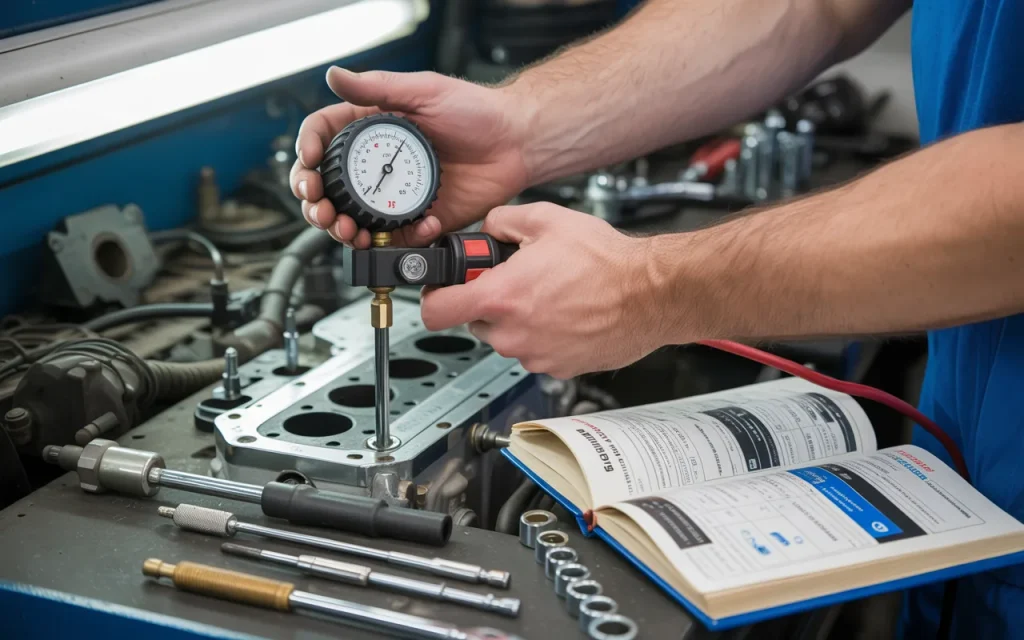
Getting ready is half the work. If you skip the preparation, your results will not be accurate. You might think you have a bad engine when it is really just a dead battery or a stuck throttle. Follow these steps carefully.
Safety First
Let the engine cool down if it was running. You will be working around hot metal parts. Park on a flat surface and set the parking brake. Disconnect the fuel system so the engine does not start. You can usually do this by pulling the fuel pump fuse or relay. Look in your owner’s manual to find which one it is.
Clean the Area
Spark plugs sit in holes called wells. Dirt and debris can fall into the cylinder when you remove the plug. Use a rag or compressed air to clean around each spark plug before you take it out. This small step protects your engine from damage.
Remove All Spark Plugs
This is a step that surprises some people. You need to remove all the spark plugs, not just one. If you leave the other plugs in, the engine will struggle to turn over, and your readings will be low. Take each plug out and lay them in order so you know which cylinder they came from. This is also a good time to look at the spark plugs. Their color can tell you a lot about how the engine is running.
Disable the Ignition
You do not want the engine to start while you are testing. Disable the ignition system so no sparks happen. On many cars, this means disconnecting the ignition coil wires or removing the main ignition fuse.
Open the Throttle
The throttle is what lets air into the engine. If it is closed, the engine cannot pull in enough air to build pressure. You can hold the throttle open manually while someone else cranks the engine. Some people use a stick or a screwdriver to prop it open. Just make sure it is fully open.
Step-by-Step: How to Check Engine Compression at Home
Now we get to the main event. You have your tools, and your car is ready. It is time to do the test. Remember to stay calm and work through each cylinder one at a time.
Step 1: Screw in the Compression Tester
Take the hose from the compression tester and screw it into the first spark plug hole. Use your fingers to tighten it. Do not use a wrench to over-tighten it. You just need a good seal. The hose has a rubber or metal fitting that will seal when it is snug.
Step 2: Crank the Engine
Get in the driver’s seat. Press the gas pedal all the way to the floor to hold the throttle open. Turn the key and let the engine crank over. You will hear it spinning without starting. Let it crank for about five to seven seconds. You will see the needle on the gauge jump up and then stop moving. That final number is the compression reading for that cylinder.
Step 3: Record the Reading
Write down the number for cylinder one. Then release the pressure from the gauge. Most testers have a button you press to let the air out. Then unscrew the hose and move to the next cylinder.
Step 4: Repeat for All Cylinders
Go through each cylinder the same way. Crank the engine for the same amount of time each time. This keeps your test consistent. Write down all the numbers in a list.
“The most common mistake I see is people not opening the throttle fully. If the throttle plate is closed, you are trying to suck air through a straw. Your numbers will be low, and you will think the engine is dead when it is fine.”
— Linda Chen, Automotive Instructor and Shop Owner
Understanding Your Compression Test Results
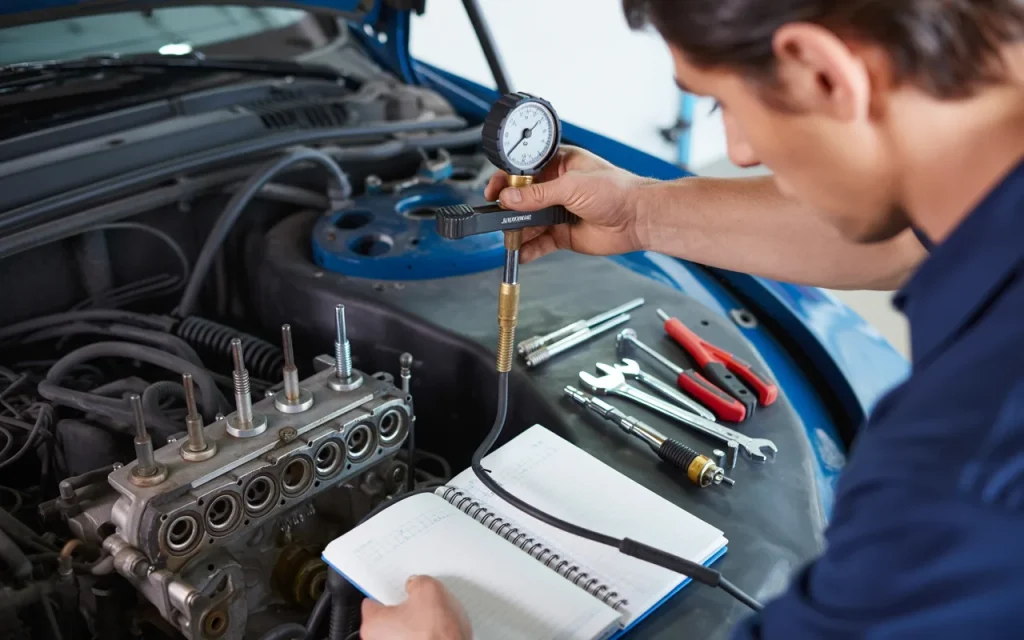
Now you have a list of numbers. What do they mean? A healthy engine should have good pressure across all cylinders. But you are not just looking for a high number. You are looking for consistency.
What Numbers Are Good?
Most gasoline engines should have compression between 120 and 180 psi (pounds per square inch). Some high-performance engines can be higher. Some older engines can be a little lower. The most important rule is that the lowest cylinder should not be more than 10% to 15% lower than the highest cylinder.
For example, if your highest cylinder reads 150 psi, the lowest should not be below 130 psi. If the numbers are all close to each other, your engine is in good shape internally.
Interpreting Common Results
| Result Pattern | What It Usually Means |
|---|---|
| All numbers are high and even | The engine is healthy. Look elsewhere for your problem, like fuel or spark. |
| Two adjacent cylinders are low | The head gasket is likely blown between those two cylinders. |
| One cylinder is much lower than the others | This points to a problem in that specific cylinder, like a bad valve or worn piston rings. |
| All numbers are low but even | This often means the engine is worn out. The timing could also be off. |
Wet Compression Test
If you find a cylinder that is low, you can do a wet test to figure out why. Add a tablespoon of oil into the low cylinder through the spark plug hole. Then test that cylinder again.
If the number goes up, the problem is likely the piston rings. The oil helps seal the rings temporarily. If the number stays the same, the problem is likely in the valves or the head gasket.
Common Problems a Compression Test Reveals
When you learn how to check engine compression at home, you become a detective. The numbers tell a story about what is happening inside. Here are the most common problems this test finds.
Worn Piston Rings
Piston rings seal the piston inside the cylinder. Over time, they wear out. When this happens, pressure escapes past the piston into the crankcase. You might notice blue smoke from the exhaust or the engine burning oil. In a compression test, worn rings usually show up as a cylinder that is low but gets better with the wet test.
Leaking Valves
Valves open and close to let air in and let exhaust out. If a valve burns or does not seal properly, pressure leaks out. This often shows up as a low cylinder that does not change much with the wet test. You might hear a hissing sound from the intake or exhaust when cranking the engine.
Blown Head Gasket
The head gasket seals the cylinder head to the engine block. When it fails, it can leak between two cylinders. In a compression test, this shows up as two cylinders next to each other that both have low readings. You might also see coolant in the oil or white smoke from the exhaust.
Tips for Accurate Results
You can get good results the first time if you keep a few things in mind. These small details make the difference between a test that confuses you and a test that gives you clear answers.
- Use a strong battery. If the battery is weak, the engine will not crank fast enough. Slow cranking gives low readings. Charge the battery or use jumper cables to a running vehicle.
- Crank the same amount each time. Try to count in your head. Five to seven seconds is usually enough. The needle will stop climbing after a few seconds.
- Write everything down. Do not trust your memory. Write the number for each cylinder as soon as you get it.
- Test when the engine is warm if possible. Metal expands when it is hot. A warm engine gives a more accurate picture of how the engine runs when it is at operating temperature. Just be careful not to burn yourself.
“I tell my students that a compression test is like a blood pressure test for your engine. You do not guess. You measure. Once you have the numbers, you can make a smart choice about fixing the car or moving on to something else.”
— James “Jay” Whitmore, Engine Rebuilder with 30 Years Experience
Frequently Asked Questions
Can I check engine compression at home without special tools?
No, you really need a compression tester. It is the only way to measure the pressure inside the cylinder. The tool is not expensive, and it gives you exact numbers that you can trust.
How long does it take to do a compression test?
For a four-cylinder engine, expect about 30 to 45 minutes. For a six or eight-cylinder engine, it might take an hour. Most of the time is spent removing spark plugs and getting to the cylinders.
What if my compression numbers are too high?
Very high compression can happen if there is carbon buildup inside the cylinder. Carbon takes up space, which makes the space for the air smaller. This raises the pressure. In some cases, it can cause knocking or pre-ignition.
Do I need to disconnect the fuel pump?
Yes. You should always disable the fuel system so the engine does not start while you are testing. If the engine starts, it can damage the compression tester and create a safety risk.
Will a compression test tell me if my head gasket is blown?
It can. If two cylinders next to each other have low compression, that is a strong sign of a blown head gasket. A leak-down test is even better for finding head gasket problems, but a compression test is a good first step.
Is a compression test the same as a leak-down test?
No. A compression test measures the peak pressure when the engine cranks. A leak-down test adds air to the cylinder and measures how much leaks out. A leak-down test gives more detail, but a compression test is simpler and a great place to start.
Conclusion
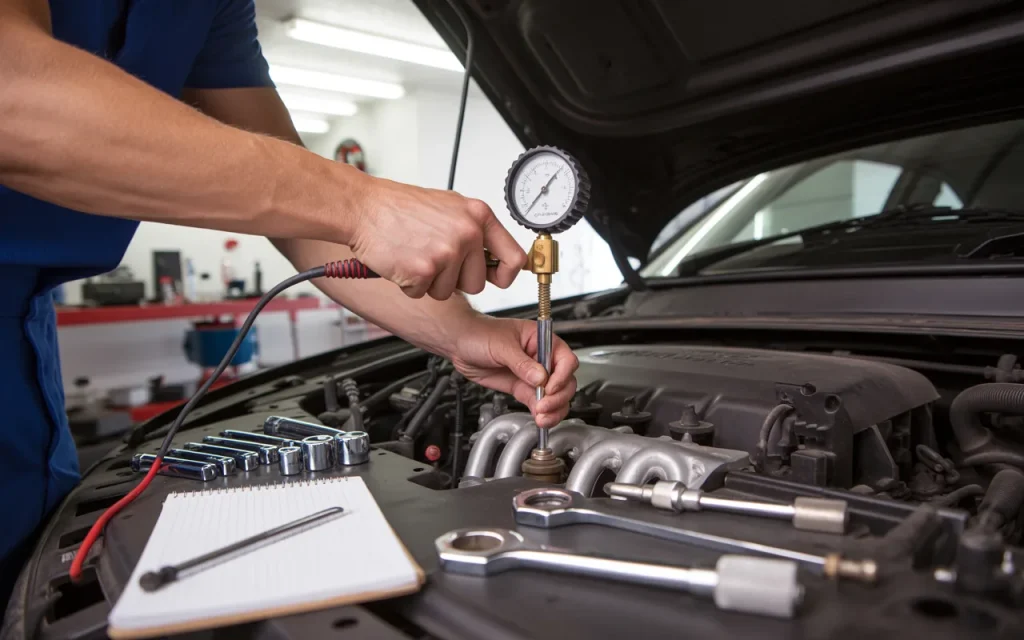
Learning how to check engine compression at home is one of those skills that pays for itself the first time you use it. You do not need to be a professional mechanic. You just need to be patient, follow the steps, and pay attention to the numbers. The test takes less than an hour, but the information you get can save you from making a bad decision on a repair.
If your numbers are good and even, you can stop worrying about the inside of the engine. You can focus on fuel, spark, or other smaller issues. If your numbers are low or uneven, you now know what you are dealing with. You can decide if you want to fix it yourself or if it is time to let the car go.
Every time I do a compression test, I feel a little more confident about my car. There is no guessing. There is no wondering if the mechanic is telling me the truth. The gauge tells me exactly what is going on. That kind of knowledge is powerful. It puts you back in control of your car and your budget.
So gather your tools, give yourself an hour, and run the test. Your engine will tell you its story. And you will finally know what is really going on under the hood.
Related posts
 2026 Torque Wrench Reviews: Choosing the Right Tool for Precision Fastening
Explore our 2026 torque wrench reviews to find the right tool for your automotive, bike, or gunsmithing projects. Compare top models for accuracy and value. Finding…
 Top Automotive Tools for Beginners: Essential Gear for 2026
Discover the top automotive tools for beginners in 2026. Compare essential pry kits, wrench sets, and repair gear to start your DIY car maintenance journey. Starting…
 Top Rated Mechanic Tool Brands for 2026
Explore top rated mechanic tool brands for 2026. Compare reliable socket sets and hand tools to find the right equipment for your home garage or auto…