
Why Is My Puppy So Hyper
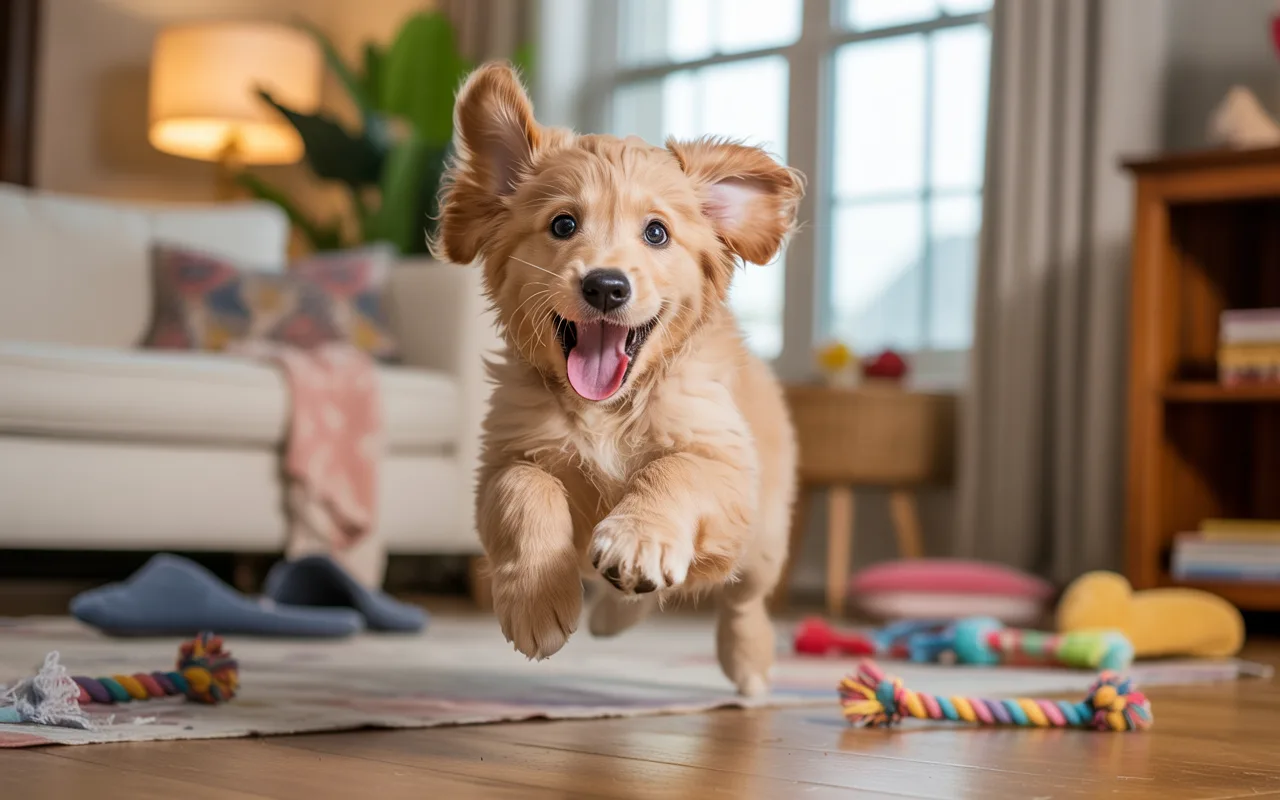
If you are asking why is my puppy so hyper, the answer usually lies in a mix of breed traits, lack of sleep, and unmet needs for exercise or mental games. This guide explains the causes and gives you a clear plan.
If you have found yourself standing in your living room, watching a tiny ball of fur race around the sofa, grab a slipper, and then zoom back the other way, you are not alone. That frantic, joyful chaos is something almost every new puppy owner knows well. You might be asking yourself, why is my puppy so hyper? It is a common question, and the answer is often simpler than you think.
Puppies are not small adult dogs. They are babies exploring a brand new world, full of energy they do not always know how to control. Their bodies are growing fast, and their brains are trying to make sense of everything around them. While a hyper puppy can be exhausting to keep up with, understanding the reasons behind the behavior is the first step to helping both you and your furry friend find a little more calm.
This article is here to help you figure out what is going on. We will look at the real reasons for that wild energy, and I will share some friendly advice based on what works for most puppies. By the end, you will have a clear path forward to help your puppy learn how to settle down without losing that wonderful spark of joy.
The Real Reasons Behind the Zoomies
When you find yourself asking why is my puppy so hyper, it is helpful to remember that this is rarely a sign of a “bad” dog. It is usually a sign of a normal, healthy puppy who is either over-tired, under-stimulated, or simply being a puppy. Let us break down the most common reasons so you can start to understand your puppy’s specific needs.
1. It Is in Their Genes: The Breed Factor
Some puppies are simply built with more energy than others. A puppy’s breed plays a huge role in their natural activity level. Certain breeds were developed for jobs that require high energy and stamina, like herding, hunting, or retrieving.
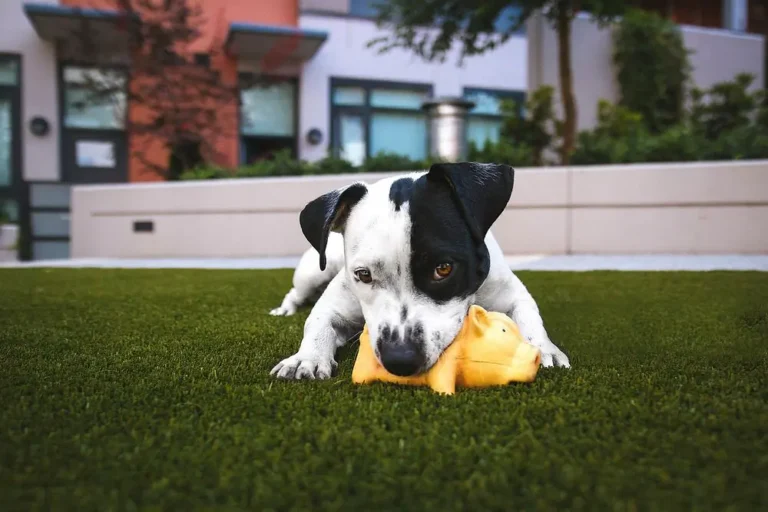
For example, a Border Collie puppy was born to run and work all day. A Jack Russell Terrier has a natural instinct to hunt, which means they are always alert and ready to move. If you have a mix of these breeds, the energy can be just as intense. Knowing your puppy’s background helps set realistic expectations. You are not doing anything wrong; you are just living with a puppy whose ancestors were bred to move constantly.
| High-Energy Breeds | Lower-Energy Breeds |
|---|---|
| Border Collie, Australian Shepherd | Bulldog, Basset Hound |
| Siberian Husky, Dalmatian | Great Dane, Shih Tzu |
| Jack Russell Terrier, Belgian Malinois | Cavalier King Charles Spaniel |
2. The Zoomies: A Sign of Being Over-Tired
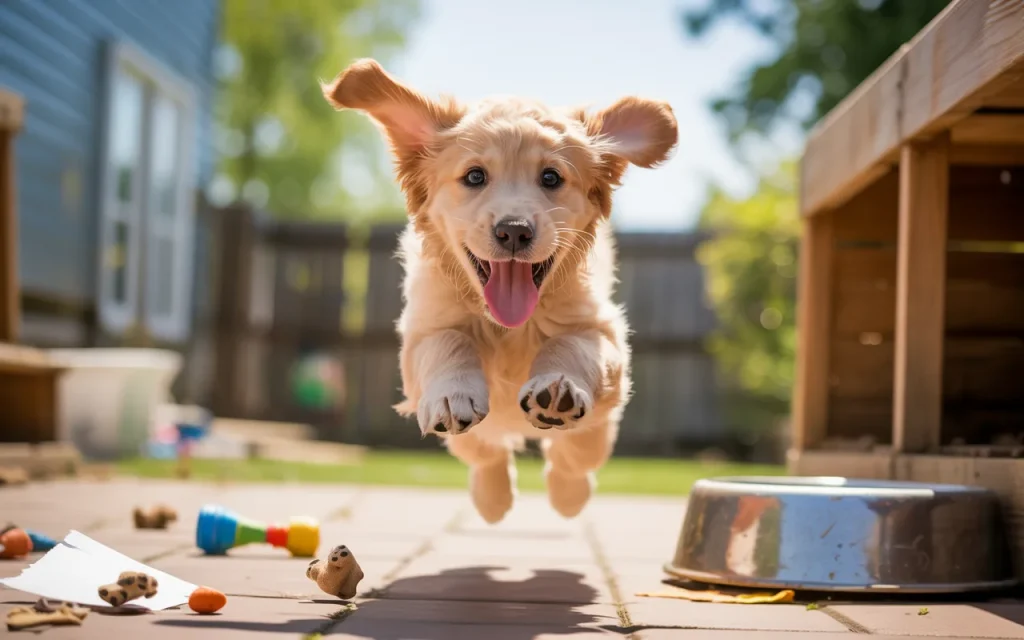
This might sound strange, but a hyper puppy is often a very tired puppy. You might have seen the “zoomies,” which is when a dog suddenly starts running in circles, around furniture, or across the yard like a little tornado. This behavior, officially called Frenetic Random Activity Periods (FRAPs), is often how puppies release built-up energy when they are exhausted.
Think of a toddler who has missed their nap. Instead of slowing down, they get fussy, loud, and run around even more. Puppies are the same. If your puppy has been playing for a while and suddenly seems to lose all control, the answer to why is my puppy so hyper might be that they are actually desperately in need of a nap. They do not yet know how to regulate their own sleep schedule, so they need you to help them.
3. Not Enough Physical Exercise
Puppies have a lot of energy to burn. If they are cooped up inside all day with no outlet, that energy will come out in the form of biting, jumping, and general craziness. A tired puppy is a good puppy, as the saying goes. However, there is a balance to strike.
A short, structured walk or a game of fetch in a safe area can do wonders. But be careful, too much forced exercise, like long runs on pavement, can be bad for their growing joints. The goal is to provide age-appropriate exercise that lets them explore, sniff, and move their bodies. Without this, you will definitely find yourself wondering why is my puppy so hyper at 10 PM when you are trying to relax.
4. A Need for Mental Stimulation
Physical exercise is only half the equation. A puppy’s brain needs a workout too. If a puppy is getting plenty of walks but is still bouncing off the walls, they are likely bored mentally. Dogs are intelligent creatures who need to solve problems and use their senses.
A lack of mental stimulation can lead to destructive behaviors and hyperactivity. When you address this need, you often see a big change. Mental games tire a puppy out faster than physical exercise does because it requires them to focus and think. If you are still asking why is my puppy so hyper, try adding some brain games to their routine.
| Physical Exercise | Mental Stimulation |
|---|---|
| Short walks (5 mins per month of age) | Puzzle toys with hidden treats |
| Supervised fetch in a hallway | Snuffle mats for sniffing meals |
| Off-leash play in a safe yard | Training sessions (sit, stay, touch) |
5. Overstimulation and Too Much Freedom
Sometimes, the environment itself is the problem. A puppy can become overstimulated when there is too much going on around them. Loud noises, new people, or even having the run of the whole house can be overwhelming. When a puppy does not have a clear, safe space to retreat to, they can get “wired” and act hyper as a coping mechanism.
Puppies do not need full access to your entire home. That freedom can actually cause anxiety and overstimulation. They need a calm, safe area, like a crate or a small puppy-proofed room, where they can relax and decompress. If your puppy is constantly on the go and seems unable to settle, the answer to why is my puppy so hyper might simply be that they have too much space and not enough structure.
6. Diet and Sugar
What you feed your puppy can have a direct impact on their energy levels. Some commercial dog foods contain high levels of carbohydrates, sugars, and artificial additives that can cause spikes in energy, similar to a child eating too much candy.
While most high-quality puppy foods are balanced for healthy growth, it is worth checking the ingredients. Treats are another culprit. If you are using a lot of high-sugar treats throughout the day, it can contribute to hyperactivity. A diet with high-quality protein and healthy fats is usually best for sustained, balanced energy. If you have tried everything else and are still wondering why is my puppy so hyper, a look at their food bowl might provide the answer.
7. The Need for a Consistent Routine
Puppies thrive on predictability. When they know what is coming next, they feel safe and secure. Without a consistent routine, a puppy can feel anxious, and anxiety often shows up as hyperactivity. They do not know when they will eat, when they will go out, or when they will get to play, so they stay in a constant state of anticipation.
A simple routine that includes regular times for meals, walks, training, play, and rest can be transformative. When a puppy knows that after breakfast comes a walk, and after the walk comes a nap in their crate, they learn to settle. The structure helps them regulate their own emotions and energy levels. If you are struggling with why is my puppy so hyper, establishing a clear daily schedule is one of the most effective fixes.
“Puppies don’t have an off switch built in. It’s our job as owners to teach them how to settle. We often mistake over-tiredness for too much energy, and that is the biggest mistake we make.”
— Dr. Sophia Yin, Veterinarian and Animal Behaviorist
How to Calm a Hyper Puppy: Practical Steps That Work
Now that you know the reasons behind the question why is my puppy so hyper, let us talk about what you can do about it. The goal is not to eliminate your puppy’s energy. Their enthusiasm is part of what makes them so lovable. The goal is to help them learn to balance that energy with calmness. Here are some friendly, practical steps you can start using today.
The Power of Enforced Naps
One of the most effective tools for managing a hyper puppy is the enforced nap. Because puppies do not know how to settle themselves, you have to do it for them. Think of it like putting a baby down for a nap. You are not punishing them; you are giving them what they need.
If your puppy has been awake for about an hour or so and starts to get mouthy, bitey, or runs around like a maniac, it is nap time. Gently lead them to their crate or a quiet room. Give them a safe chew toy or a stuffed Kong. They will likely whine a little at first, but soon they will fall asleep. After a one to two hour nap, they will wake up calm and refreshed. Many owners who ask why is my puppy so hyper find that enforced naps solve about 80% of the problem.
Create a Calm Environment
Your home environment can either encourage calmness or encourage chaos. To help your puppy settle, create a space that promotes relaxation. This means managing the noise levels, especially during rest times. If you have a busy household, use a white noise machine or calming music to block out sudden sounds.
Also, consider using a crate or a playpen. These tools are not “cages” but safe dens where your puppy can feel secure. When your puppy is out of the crate, keep the area around them calm. If you act calm, your puppy is more likely to follow your lead. Lower your voice, move slowly, and reward them when they are lying down quietly. Changing the environment can directly impact why is my puppy so hyper in your specific home.
Structured Exercise and Play
Instead of letting your puppy run wild all day, try structuring their playtime. Short, focused sessions are much better than hours of unstructured free play. A five-minute training session where they have to think and follow commands can be more tiring than a half-hour of fetch.
Mix up the activities to keep them interesting. One day, you might practice “sit” and “down.” The next, you might hide treats around a room for them to sniff out. Use toys that require thinking, like puzzle feeders. When you do play fetch, keep it to a few throws, then end on a calm note. A structured approach helps answer why is my puppy so hyper by providing exactly what their growing brain and body need.
“Mental exercise is just as important, if not more important, than physical exercise for a hyperactive puppy. A tired brain is a quiet dog.”
— Victoria Stilwell, Dog Trainer and Author
Teach the “Settle” Command
One of the best things you can teach your puppy is how to do nothing. The “settle” command is about rewarding calmness. Have treats ready, and wait for a moment when your puppy is naturally lying down and quiet. Gently and calmly say “settle” and place a treat between their front paws. Do not make a big fuss about it.
Repeat this process throughout the day. You are teaching your puppy that being calm is a good and rewarding thing. Over time, they will learn to choose that calm behavior on their own. If you are consistently asking why is my puppy so hyper, a lack of training in how to be calm might be a big part of the reason. This simple training exercise can change everything.
Review Their Diet and Treats
Take a close look at what your puppy is eating. Are you feeding a high-quality puppy food that is appropriate for their age and size? Read the ingredient list on both their food and their treats. Look for foods where a named meat (like chicken or lamb) is the first ingredient.
Avoid treats that are full of artificial colors, flavors, or excessive sugar. Instead, use small pieces of their regular kibble or healthy, single-ingredient treats like freeze-dried liver. Remember that treats should only make up a small percentage of their daily food intake. A diet adjustment can sometimes be the missing piece of the puzzle when you are trying to understand why is my puppy so hyper.
“A tired dog is a good dog, but a dog that has had its mental and physical needs met is a happy, balanced dog.”
— Cesar Millan, Dog Behaviorist
Frequently Asked Questions
At what age do puppies calm down?
Most puppies start to calm down between 6 months and 2 years of age. The exact timing depends heavily on their breed and individual personality. Small breed puppies often mature faster and may settle down closer to 1 year old. Large and giant breeds are often considered “puppies” for longer, sometimes up to 2 or even 3 years. However, with consistent training and routine, you will see gradual improvements in their ability to settle long before they are fully grown.
Should I ignore my hyper puppy?
Ignoring a hyper puppy can be a good strategy if they are seeking attention. If they are jumping, biting, or barking for your attention, turning your back and ignoring them can teach them that those behaviors do not work. However, you should never ignore a puppy who is overstimulated or over-tired. In that case, they need your help to settle, often through an enforced nap. The key is to know whether they are acting out for attention or because they genuinely need help regulating themselves.
Does neutering or spaying calm a puppy down?
Spaying or neutering can have some effect on behaviors driven by hormones, such as roaming or marking, but it is not a guaranteed solution for general hyperactivity. The primary drivers of a puppy’s energy level are breed, age, and the environment you provide. While the surgery may lead to a slight decrease in activity for some dogs, it should not be relied upon as a cure for hyper behavior. Training and routine remain the most important factors.
How much exercise does a hyper puppy need?
A good rule of thumb for puppies is five minutes of structured exercise per month of age, twice a day. For example, a three-month-old puppy would benefit from two 15-minute walks or play sessions. However, mental exercise is just as important. A combination of a short walk, a training session, and some time with a puzzle toy is often more effective than a long, exhausting walk. Always be careful not to over-exercise a puppy, as too much forced activity can harm their developing joints.
Can a hyper puppy ever be calm?
Yes, absolutely. A hyper puppy can definitely learn to be calm. The key is teaching them how. It is a skill they are not born with. By providing a consistent routine, enough physical and mental exercise, and teaching them a “settle” command, you are giving them the tools they need. With patience and consistency, your puppy will develop the ability to relax and enjoy quiet time. The zoomies and bursts of energy will still happen, especially when they are young, but they will become less frequent and easier to manage.
Conclusion
If you have been pulling your hair out asking why is my puppy so hyper, I hope this article has given you some clarity and a sense of relief. Your puppy is not trying to be difficult. They are simply being a puppy. The reasons behind the chaos are usually a mix of genetics, age, over-tiredness, or unmet needs for exercise and mental stimulation. The good news is that all of these things are within your control.
You now have a toolkit to help. You can start by setting up a consistent routine, using enforced naps to prevent over-tired zoomies, and providing a mix of physical and mental activities. Remember to create a calm environment and consider reviewing their diet. With patience and consistency, you will start to see those moments of calm increase, and the frantic energy will become something you can manage with confidence.
Your puppy is learning how to live in your world, and you are learning how to live with them. It is a team effort. Celebrate the small wins, be patient with the setbacks, and know that this phase will pass. Soon, you will have a calm, well-adjusted companion who still has that spark of joy, just at the right times. You have got this.
Related posts
 Buy Dog Toys Online: Top 2026 Picks for Every Play Style
Looking to buy dog toys online? Explore our 2026 guide to the best durable chews, interactive balls, and plush favorites to keep your pup happy and…
 Buy Dog Food Online: Top 2026 Selections for Every Breed
Looking to buy dog food online? Explore our top 2026 recommendations for dry and wet formulas tailored to different breed sizes, sensitivities, and nutritional needs. Choosing…
 Buy a Dog Harness Online in 2026
Looking to buy a dog harness online? Explore our 2026 guide to finding the right fit, style, and control features for your dog's daily walks. Finding…