
How To Choose Kitchen Knives
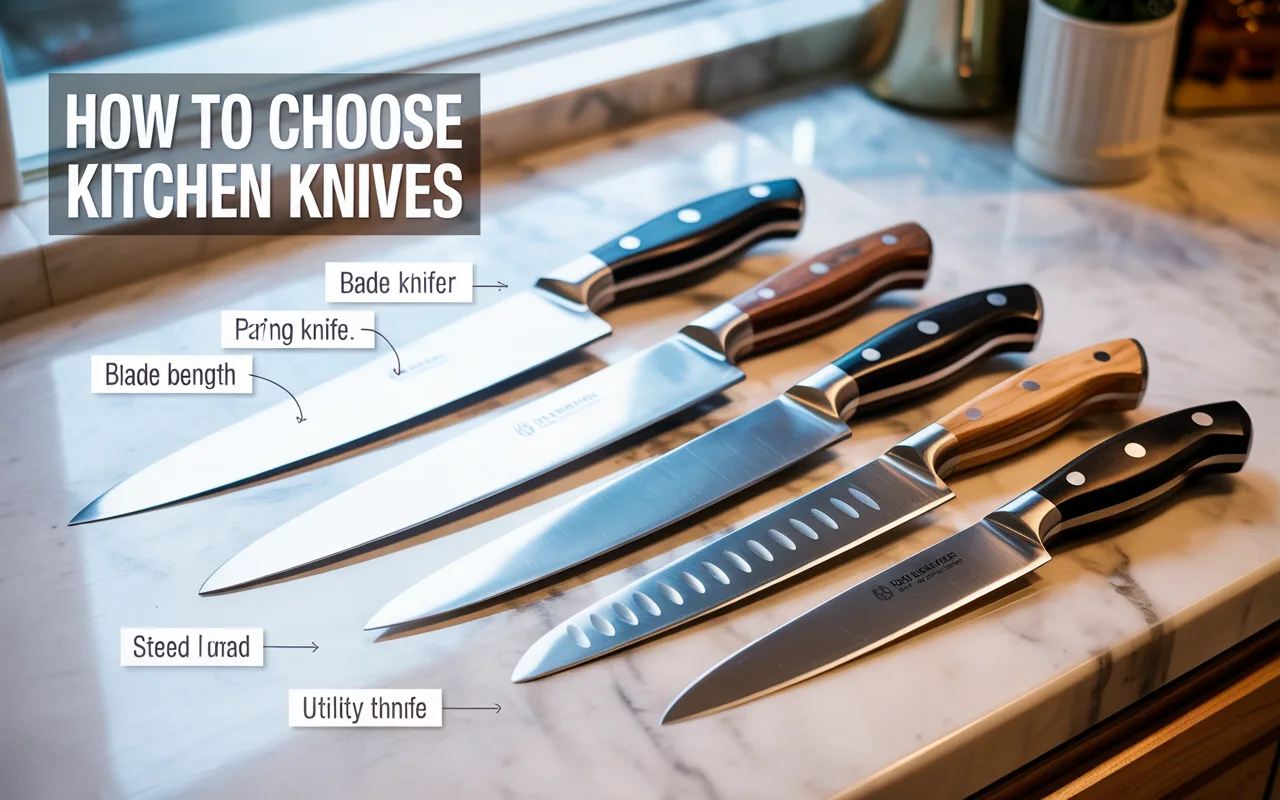
If you need to choose kitchen knives that feel right and last, focus on the blade material, weight, and handle comfort. This guide explains the key features, common types, and simple steps to find the best set for your cooking style and budget.
Walking into a store or scrolling through websites to pick out new tools for your kitchen can feel a bit overwhelming. There are so many shapes, sizes, and price tags. You might wonder if you need a full block of knives or just a few good ones. The good news is that learning how to choose kitchen knives does not have to be a hard task. It is really about knowing what feels good in your hand and what fits the way you cook.
I remember the first time I bought my own proper knife. I picked one that looked nice, but it was too heavy for me. My hand would get tired after chopping just a few vegetables. That experience taught me that when you choose kitchen knives, you are not just buying a tool. You are buying something you will hold almost every day. So, let us go through this together. I will help you understand the parts, the materials, and the simple steps to find the right match for your kitchen.
Understanding the Basics Before You Choose Kitchen Knives
Before you look at any price tag or brand name, it helps to know the basic parts of a knife. A knife has a blade, a handle, and a tang. The tang is the part of the blade that goes into the handle. A full tang, where the metal runs all the way through the handle, usually means the knife is more balanced and strong.
When you choose kitchen knives, you want to think about balance. Balance means the knife does not feel too heavy at the blade or too heavy at the handle. It should feel like a natural extension of your arm. You also want to think about the weight. Some cooks prefer a heavy knife that does most of the work for them. Others like a light knife that feels quick and easy to move.
The Three Knives You Actually Need
You do not need a block with twenty knives. Most home cooks only use three main knives regularly. When you choose kitchen knives, starting with these three will cover almost all your daily tasks.
| Knife Type | Primary Use | Blade Length |
|---|---|---|
| Chef’s Knife | Chopping, slicing, dicing vegetables, meat, and herbs | 8 to 10 inches |
| Paring Knife | Peeling fruits, small detailed work, trimming | 3 to 4 inches |
| Serrated Bread Knife | Slicing bread, tomatoes, and soft fruits without crushing | 8 to 10 inches |
With these three, you can handle a wide range of meals. A good chef’s knife is the workhorse. It will be your most-used tool. The paring knife is great for those small jobs where a big blade feels clumsy. The bread knife, with its saw-like edge, cuts through crusty bread and soft-skinned produce with ease.
“The most important thing is not how many knives you have, but how well the ones you use fit your hand and your cooking style.”
— Chef Lidia Bastianich
Key Factors to Consider When You Choose Kitchen Knives
Now, let us get into the details. There are a few main factors that will affect how a knife performs and how long it lasts. These are the things I look at every time I help a friend pick out a new knife.
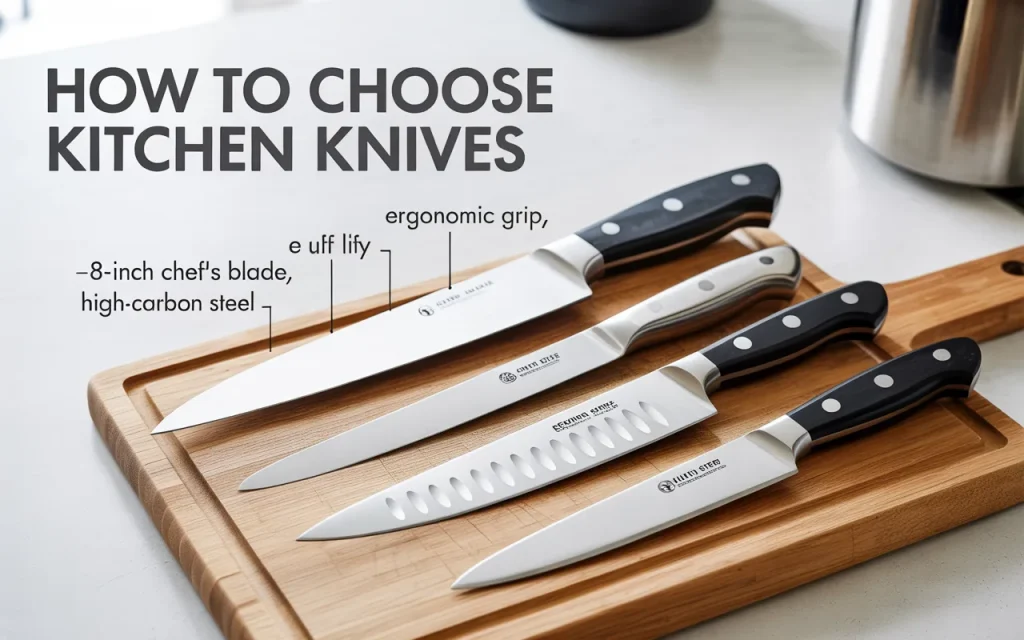
Blade Material: The Heart of the Knife
The steel used in the blade is very important. It affects how sharp the knife gets, how long it stays sharp, and how easy it is to care for.
- Stainless Steel: This is the most common material. It resists rust and stains, so it is low maintenance. It holds an edge well but can be harder to sharpen than some other steels.
- High-Carbon Stainless Steel: This is a mix that gives you the best of both worlds. It holds a sharp edge like carbon steel but resists rust like stainless steel. Many professional cooks prefer this.
- Ceramic: These blades stay sharp for a very long time, but they are brittle. They can chip or break if you drop them or try to cut something hard like frozen food or bones.
When you choose kitchen knives, think about how much time you want to spend on upkeep. If you want a low-maintenance option, a good stainless steel or high-carbon stainless steel is a safe choice.
Handle Comfort and Material
The handle is where your hand meets the knife. If the handle is not comfortable, you will not enjoy using the knife. Handles come in different materials like wood, plastic, or composite. Wood handles look beautiful but may need a bit more care to keep them clean and dry. Plastic or composite handles are often very durable and can go in the dishwasher, though hand washing is always better for any knife.
When you hold a knife, try a few different grips. Pinch the blade right where it meets the handle between your thumb and index finger. Wrap your other fingers around the handle. Does it feel secure? Is there any sharp edge that digs into your hand? This simple test is a key part of how to choose kitchen knives that you will enjoy using.
Matching the Knife to Your Cooking Habits
Your cooking habits are a big part of the decision. A person who cooks a big meal every night has different needs than someone who cooks a few times a week. Being honest about how you cook will help you choose kitchen knives that truly fit your life.
For the Daily Cook
If you are in the kitchen every day, chopping vegetables for stews, slicing meat, and preparing large meals, you will want knives that can handle heavy use. Look for a chef’s knife with a full tang and a comfortable, secure handle. A heavier blade might work well for you because the weight helps with repetitive chopping. You might also appreciate a knife with a harder steel that holds its edge longer, even if it takes a bit more effort to sharpen.
For the Occasional Cook
If you cook a few times a week and mostly do simple tasks, you do not need the most expensive professional-grade knife. You can look for a lighter knife that is easy to handle. A stamped blade, which is cut from a large sheet of steel, is often lighter and more affordable than a forged blade. It will still do a great job for basic meal prep. The key is to find a knife that feels good to you and stays sharp enough for your needs.
“A good knife is not defined by its price tag, but by how it feels in your hand and how it performs the tasks you ask of it.”
— Alton Brown, Food Scientist and Author
Forged vs. Stamped: What Does It Mean?
You will see these two terms often. They refer to how the blade is made. This is a helpful point to know when you choose kitchen knives.
| Feature | Forged Blade | Stamped Blade |
|---|---|---|
| Creation | Heated and hammered from a single bar of steel | Cut from a large sheet of steel, then shaped and sharpened |
| Weight | Heavier, with a thicker spine | Lighter, thinner blade |
| Balance | Often better balance due to the full tang | Balance can vary; some have a partial tang |
| Cost | Generally more expensive | Usually more affordable |
| Durability | Very strong and durable | Durable for home use; may not last as long under heavy professional use |
Both types can be excellent. A well-made stamped knife can serve you for many years. A forged knife often has a classic feel and heft that many cooks love. Your choice depends on your budget and your preference for weight and balance.
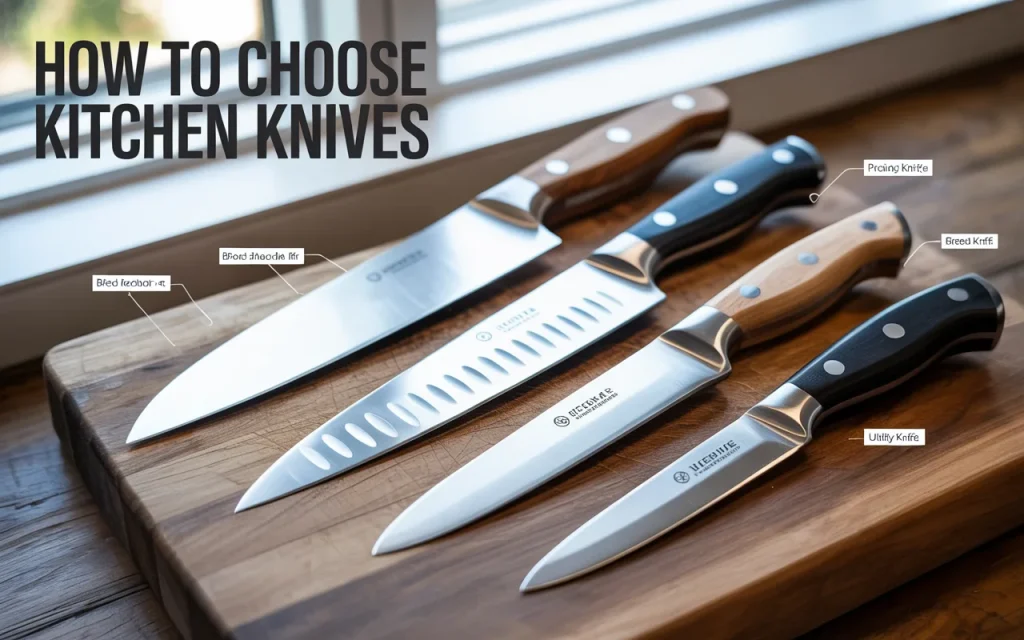
How to Test and Choose Kitchen Knives in Person
If you have a chance to go to a store, that is the best way to test knives. Online shopping is easy, but you cannot feel the knife. When you go to a store, try these steps.
The Grip and Balance Test
Hold the knife the way you normally would. For a chef’s knife, use the pinch grip. This is where you grip the blade between your thumb and index finger right above the handle. Then, wrap your other fingers around the handle. This grip gives you the most control. Move the knife up and down a few times. Does it feel balanced? Does the handle fill your hand comfortably without being too big or too small?
The Cutting Test
Most good kitchen stores have a cutting board and some vegetables like carrots or potatoes. Ask if you can try the knife. Try chopping a carrot. Does the blade go through smoothly? Does the knife feel stable? Pay attention to the knuckle clearance. This is the space between your knuckles and the cutting board when you hold the knife. You want enough space so your knuckles do not hit the board while you chop.
“A sharp knife is a safe knife. Dull knives slip, and that’s when accidents happen. Comfort and control are the true measures of a good knife.”
— Julia Child, Chef and Author
Taking Care of Your Knives
Once you choose kitchen knives, you need to take care of them. Good care will make them last for decades. It is not hard, but it does require a few simple habits.
Hand Washing is Best
This is the most important rule. Always wash your knives by hand with warm, soapy water. Dry them right away. Do not leave them in the sink where they can get bumped by other dishes. The dishwasher is very hard on knives. The high heat and harsh detergent can damage the handle and dull the blade quickly.
Sharpening and Honing
These are two different things. Honing is done with a honing steel. It does not sharpen the knife. It straightens the edge of the blade that can bend slightly during use. You should hone your knife every time you use it. It takes only a few seconds.
Sharpening is when you actually grind away a small amount of metal to create a new, sharp edge. You need to do this less often, maybe once or twice a year depending on how much you cook. You can take your knives to a professional, use a sharpening stone, or use a good pull-through sharpener. Learning to keep your knives sharp is a key part of owning them.
Budget and Value
You can spend a little or a lot on knives. The most expensive knife is not always the best for you. When you choose kitchen knives, think about value. A well-made knife in the mid-price range will often serve you better than a very cheap set that dulls quickly or a very expensive knife that you are afraid to use.
Starter Sets vs. Individual Knives
Many people buy a block set. This can be a good value, but you may end up with knives you never use. Another approach is to buy individual knives. Start with the three essentials: a chef’s knife, a paring knife, and a bread knife. You can add more later if you find you need them. This way, you put your budget toward the knives you will use every day.
Frequently Asked Questions
1. What is the first knife I should buy?
Start with an 8-inch chef’s knife. It is the most versatile tool in the kitchen. You can use it for chopping vegetables, slicing meat, and crushing garlic. Once you have a good chef’s knife, you can add a paring knife and a serrated bread knife.
2. Is it better to buy a knife set or individual knives?
It depends on your needs. Individual knives let you spend your money on the quality of the tools you actually use. Sets can be a good value if you know you will use all the knives included, but often they include specialty knives that stay in the block.
3. How do I know if a knife is high quality?
Look for a full tang, which means the metal runs through the handle. Check the balance by holding it. The knife should feel comfortable and stable. Look for a smooth, seamless transition from the blade to the handle. There should be no gaps where food and moisture can get trapped.
4. How often should I sharpen my kitchen knives?
Most home cooks sharpen their knives once or twice a year. It depends on how often you cook and what you cut. You will know it is time to sharpen when the knife does not easily slice through a tomato or pepper skin. In between sharpening, use a honing steel before each use to keep the edge straight.
5. Can I put my good knives in the dishwasher?
No. The dishwasher is the worst place for a good knife. The high heat, harsh detergents, and the banging against other items will dull the blade and can damage the handle. Always wash your knives by hand with mild soap and dry them immediately.
Conclusion
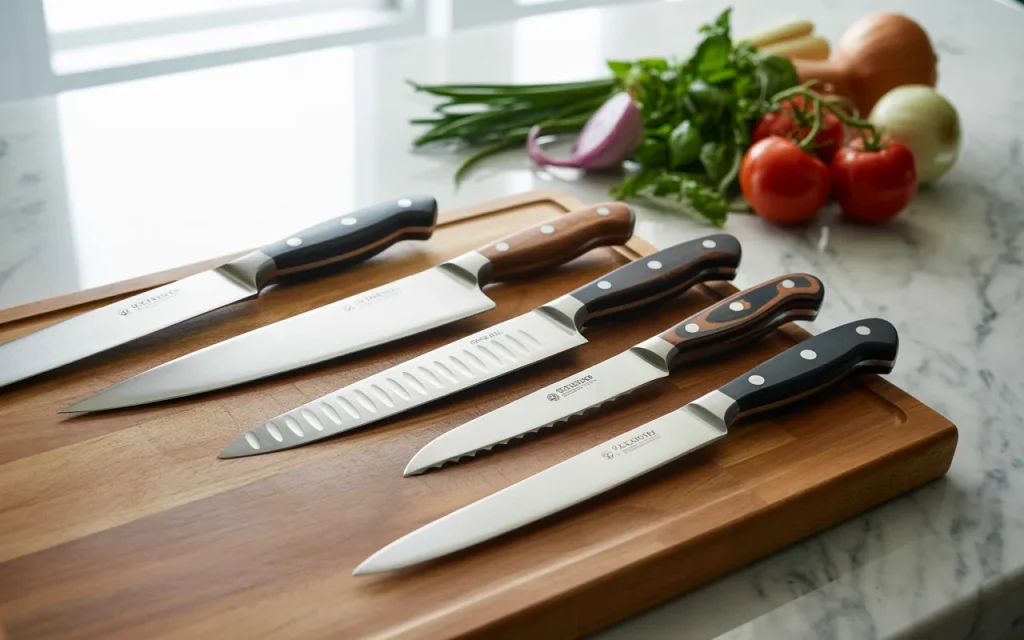
Learning how to choose kitchen knives is a personal process. It is not about finding the most expensive brand or the set with the most pieces. It is about finding the tools that feel comfortable in your hand and fit the way you cook. Focus on the three essential knives first: a chef’s knife, a paring knife, and a bread knife. Pay attention to the blade material, the handle comfort, and the overall balance. Test them in person if you can.
When you choose kitchen knives that feel like an extension of your hand, cooking becomes more enjoyable. The work feels easier, and you might find yourself looking forward to chopping those vegetables for dinner. Take your time, try a few options, and trust your own feel. The right knife is out there waiting for you. With the simple care steps of hand washing and regular honing, your knives will be reliable partners in your kitchen for many years to come.
Related posts
 Best Under Sink Organizers Kitchen 2026: Practical Storage Solutions
Find the best under sink organizers kitchen in 2026. Compare top-rated pull-out bins, L-shaped racks, and protective mats to maximize your cabinet space. The space under…
 Best Kitchen Cabinet Storage Solutions for 2026
Organize your kitchen efficiently with our Best Kitchen Cabinet Storage Solutions. Compare the best organizers for lids, pans, and spices to maximize your space. A cluttered…
 Top Rated Kitchen Shelf Organizers for 2026
Discover the top rated kitchen shelf organizers for 2026. Compare durable racks, magnetic shelves, and tiered storage to maximize your pantry and counter space. A cluttered…