
Minimalist Kitchen Design Principles
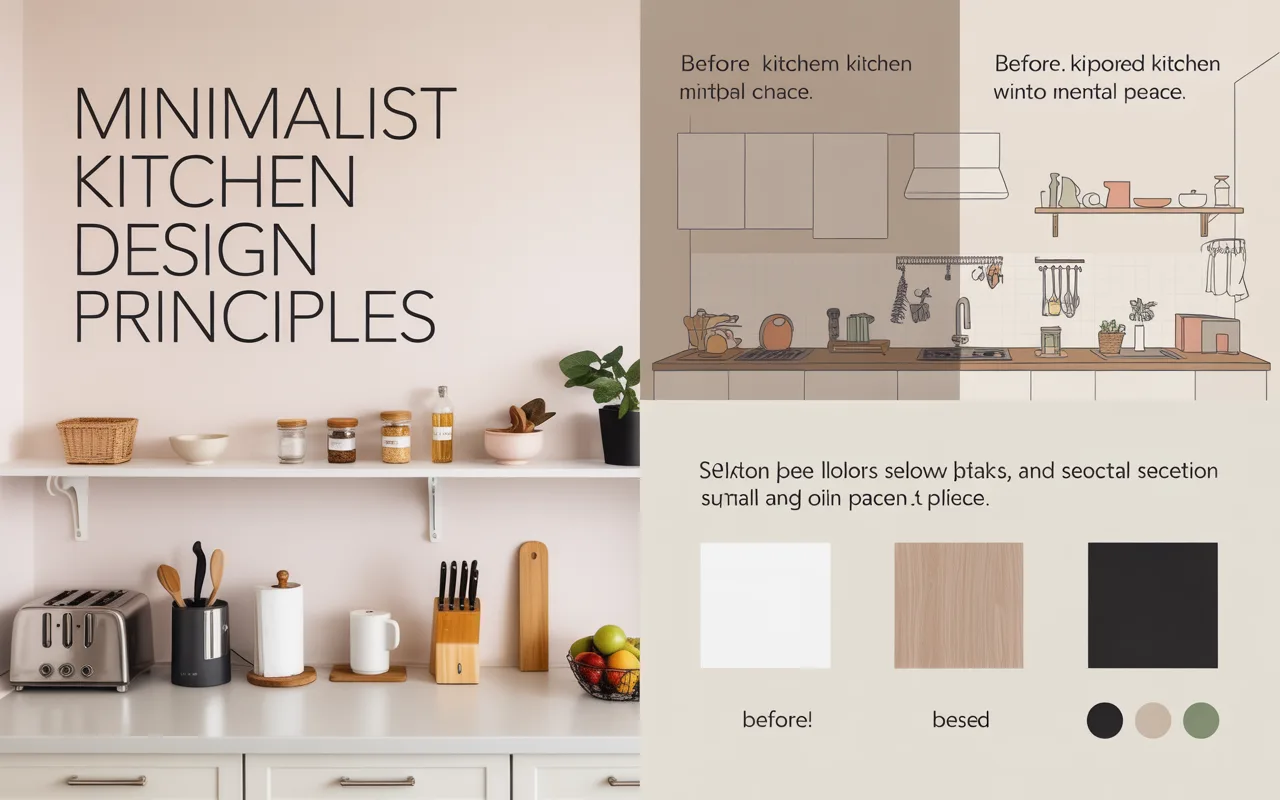
Discover how minimalist kitchen design principles create calm, functional spaces. Learn to apply these ideas for an uncluttered, efficient kitchen today.
A clean, quiet kitchen can change how you feel every morning. When you walk into a space with no extra stuff, your mind feels lighter. That is the promise of minimalist kitchen design principles. These ideas help you keep only what you need. They focus on smooth surfaces, hidden storage, and a simple look.
I have helped friends redo their kitchens with very small budgets. I also learned from watching my own kitchen get too full over the years. The truth is simple: less clutter means less stress. Let me show you how minimalist kitchen design principles work in real life. You do not need a big renovation. You just need a new way to think about your space.
“Simplicity is the ultimate sophistication.” – Leonardo da Vinci
What Are Minimalist Kitchen Design Principles?
Minimalist kitchen design principles are a set of rules that guide you to a clean, useful kitchen. These rules say: remove the extra, keep the essential, and love the empty space. A minimalist kitchen is not empty or cold. It is warm, easy to clean, and a joy to cook in.
The main ideas include:
- Flat cabinet fronts with no handles
- Hidden appliances behind panels
- A simple color palette (white, gray, beige, black)
- Lots of natural light
- Open floor space with no blocked paths
- Every item has a home
When you follow minimalist kitchen design principles, you stop buying gadgets you never use. You start loving the tools you truly need.
Why Do These Principles Work So Well?
These principles work because they match how our brains feel peace. A busy kitchen with many colors, shapes, and objects makes us tired. A simple kitchen lets us focus on cooking and talking with family.
Also, cleaning becomes very fast. No small items on the counter. No hard to reach corners filled with dust. You wipe, and you are done.
The First Principle: Clear Surfaces
The first rule of minimalist kitchen design principles is to keep counters empty. Nothing should sit on your counter unless you use it every single day. Even then, try to store it in a drawer.
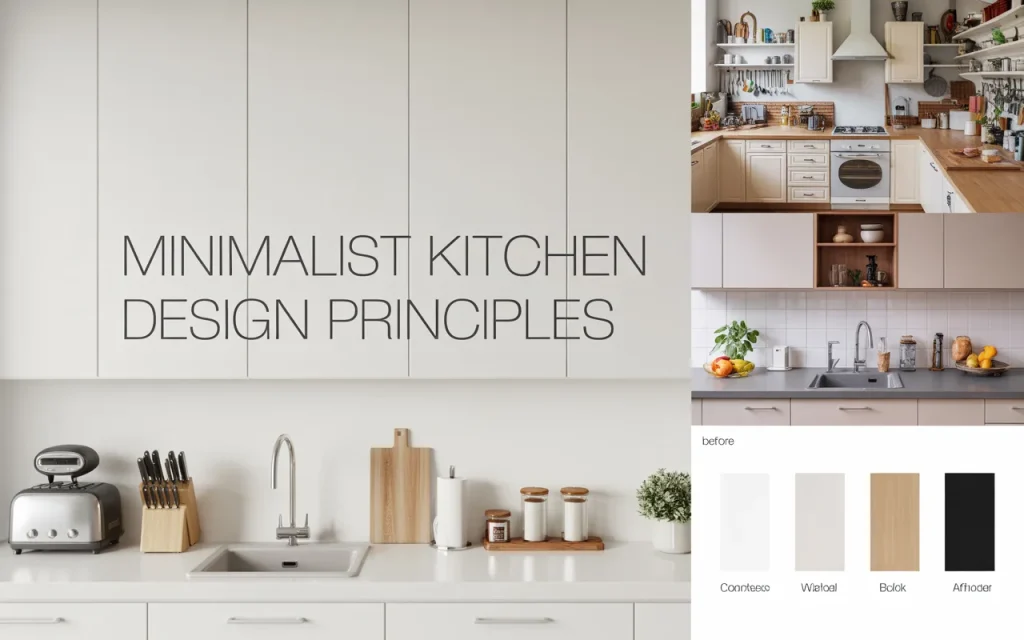
I learned this the hard way. My counter once held a toaster, a mixer, a knife block, a fruit bowl, a paper towel stand, and three small jars. It looked busy. I felt busy just looking at it. After clearing everything except a small knife and one cutting board, I felt a deep sense of calm.
How to Clear Your Counters Today
| Item | Solution |
|---|---|
| Toaster | Store in a low cabinet, bring out when needed |
| Knife block | Use a magnetic strip inside a cabinet door |
| Fruit bowl | Move to a shelf or dining table |
| Paper towels | Hang under a cabinet |
| Spice jars | Put in a pull out drawer near the stove |
Do this one step at a time. In one weekend, you can remove 80% of what sits on your counters. This is the heart of minimalist kitchen design principles.
“Have nothing in your house that you do not know to be useful or believe to be beautiful.” – William Morris
The Second Principle: Hidden Storage
You need places to hide your things. Minimalist kitchen design principles say: if you see it, it must be beautiful or useful. Everything else goes behind closed doors.
Types of Hidden Storage That Work
| Storage Type | Best For |
|---|---|
| Deep drawers | Pots, pans, lids |
| Pull out shelves | Canned goods, bottles |
| Tall pantry cabinet | Dry food, small appliances |
| Under sink organizer | Cleaning supplies |
| Drawer dividers | Utensils, cutlery |
When you use these ideas, your kitchen looks like a calm room, not a storage unit. I installed pull out shelves in my lower cabinets for less than $100. It changed how I use every inch of space.
Why Open Shelving Is Not Always Best
Many people think open shelves are minimalist. But open shelves collect dust and show every dish. If you love open shelves, use them for just three matching bowls or two white plates. Keep the rest hidden. Real minimalist kitchen design principles prefer closed storage for a cleaner look.
The Third Principle: A Simple Color Palette
Color affects your mood. Too many colors make a kitchen feel busy. Minimalist kitchen design principles suggest using two to three neutral colors.
Good choices are:
- White and light gray
- Beige and warm white
- Black, white, and wood
- Soft green with white
I used soft white for my cabinets and a light wood for the floor. My walls are off white. The result is bright but not cold. You can add one small color with a towel or a plant. But keep it very small.
How to Choose Your Colors
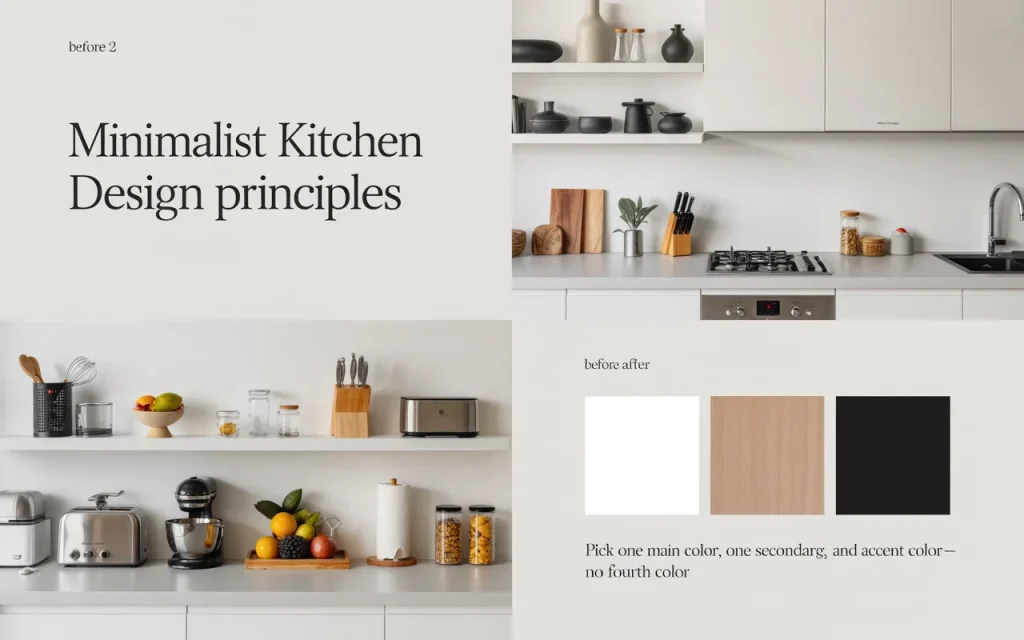
Start with the largest surfaces: cabinets, walls, floor. Pick one main color (like white). Pick one secondary color (like light wood). Pick one accent color for very small items (like a black faucet or a green plant). Do not add a fourth color. This follows minimalist kitchen design principles perfectly.
The Fourth Principle: Functional Layout
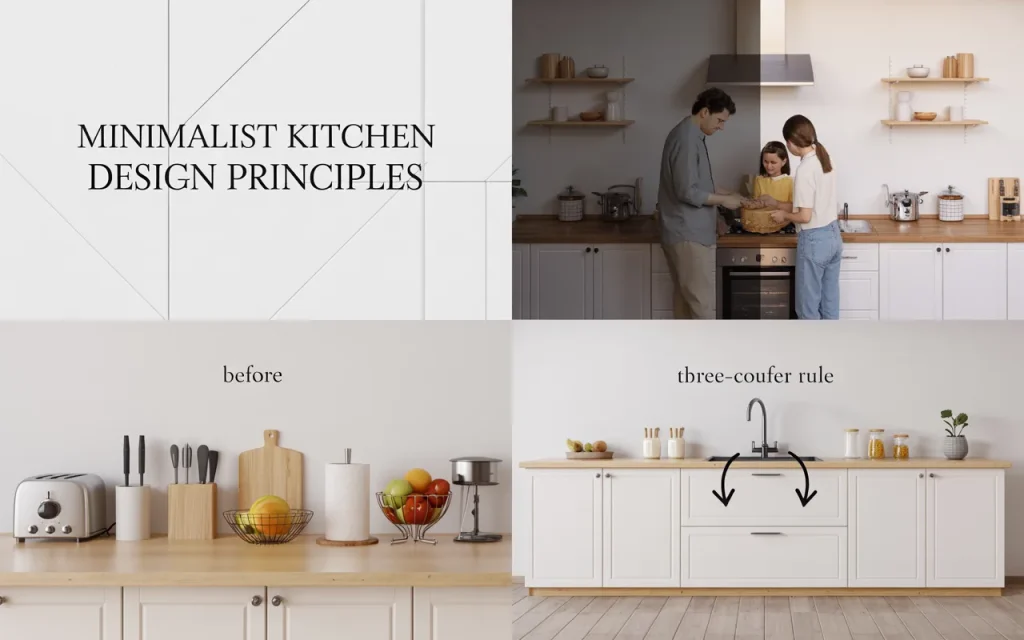
Your kitchen layout must help you move easily. Minimalist kitchen design principles care a lot about the work triangle: the path between sink, stove, and fridge. These three should form a triangle with no obstacles.
Signs Your Layout Works
- You can walk from sink to stove in three steps
- The fridge door does not block a walkway
- You have counter space next to the stove
- The dishwasher is near the sink
If your layout fails, try moving a small cart or changing where you store pots. Sometimes a small change fixes a bad flow. I moved my utensil holder from the left of the stove to the right. That small shift saved me five extra steps every time I cooked.
“The ability to simplify means to eliminate the unnecessary so that the necessary may speak.” – Hans Hofmann
The Fifth Principle: Quality Over Quantity
Buy fewer things, but buy better things. Minimalist kitchen design principles teach you to own one good pan instead of five bad ones. One good chef’s knife instead of a block of dull knives.
What to Keep and What to Donate
Keep these:
- One large skillet (cast iron or stainless steel)
- One medium pot with a lid
- One chef’s knife (8 inch)
- One cutting board (wood or bamboo)
- One spatula, one spoon, one tongs
Donate or throw away:
- Extra baking pans you never use
- Broken gadgets
- Duplicate utensils
- Specialty tools (avocado slicer, banana keeper)
- Chipped plates or mugs
When you apply minimalist kitchen design principles to your tools, you save money over time. You also save space. And cooking becomes faster because you know exactly where your good knife is.
The Sixth Principle: Reduce Visual Noise
Visual noise means things that catch your eye but do not help you. Minimalist kitchen design principles say to remove as much visual noise as possible.
Examples of visual noise:
- Magnets on the fridge
- Papers stuck with magnets
- Multiple towel patterns
- Different bottle shapes on the counter
- A busy backsplash with many colors
How to Reduce Noise in One Hour
Take your phone and record a video of your kitchen. Watch it. You will see the clutter you stopped noticing. Then remove every item that is not necessary. Move fridge magnets to the side of the fridge or throw them away. Keep one type of towel in one color. Choose one soap bottle and one lotion bottle that match.
This is the final step of minimalist kitchen design principles. Once you reduce noise, your kitchen will feel like a peaceful room, not a storage shed.
How to Start Applying These Principles Today
You do not need to spend money to begin. Start with one drawer. Empty it. Put back only what you used in the last month. Donate the rest. Next, clear one counter section. Then move to your cabinets.
A Simple Weekly Plan
| Day | Task |
|---|---|
| Monday | Clean and clear one drawer |
| Tuesday | Clear half of your main counter |
| Wednesday | Remove fridge magnets and papers |
| Thursday | Sort one cabinet, donate duplicates |
| Friday | Choose a simple color for towels and accessories |
| Saturday | Hide all small appliances |
| Sunday | Cook a meal and enjoy your calm kitchen |
After one week, you will feel the difference. Minimalist kitchen design principles are not about suffering. They are about freedom.
Common Mistakes to Avoid
People try minimalist kitchen design principles but make these errors:
- Buying new storage boxes before decluttering – Do not buy anything until you remove things.
- Keeping things “just in case” – If you did not use it in one year, let it go.
- Forgetting about lighting – Bad light makes any kitchen feel small and sad. Add under cabinet lights.
- Choosing pure white for everything – Pure white shows every crumb. Try off white or warm white.
- Going too extreme – You do not need to live with one spoon. Keep what makes you happy to cook.
I made mistake number four. My all white kitchen looked dirty five minutes after cooking. I changed to a warm cream color, and now I clean less often.
Frequently Asked Questions
Q1: Can I follow minimalist kitchen design principles on a small budget?
Yes. Start by decluttering for free. Then hide items in boxes you already own. Paint cabinets a single color. Remove handles for a flat look. You do not need new cabinets.
Q2: How do I store spices without cluttering the counter?
Use a pull out drawer near the stove. Or put small matching jars on a shelf inside a cabinet. Label them on the top so you see the name when you look down.
Q3: Are open shelves ever okay in a minimalist kitchen?
Yes, but only for very few items. Use one open shelf for three white plates or two glass jars. Keep the rest behind closed doors.
Q4: What if my family leaves things on the counter?
Create a rule: before dinner, the counter must be empty. Give each person a small basket for their daily items (keys, phone, mail). The basket goes in a cabinet or pantry.
Q5: Do minimalist kitchens look boring?
No. A calm kitchen feels peaceful, not boring. You can add warmth with wood, a small plant, or one piece of art. The difference is you choose very few things instead of many things.
Q6: How do I handle recycling and trash in a minimalist kitchen?
Use matching bins inside a lower cabinet. Pull the bin out when needed. Hide it the rest of the time. Use one bin for trash and one for recycling.
Q7: Can I keep my stand mixer?
Yes. Keep it if you bake every week. Store it in a lower cabinet with a pull out shelf. Take it out when you bake. Put it back after cleaning.
Q8: What is the hardest part of minimalist kitchen design principles?
Letting go of gifts and items with emotional value. Take a photo of the item, then donate it. The memory stays, but the clutter goes.
Conclusion
Minimalist kitchen design principles give you more than a clean kitchen. They give you peace, more time, and less stress. You stop searching for tools. You stop wiping around clutter. You start enjoying the simple act of making food.
Start small. Clear one drawer today. Hide one small appliance tomorrow. In one month, your kitchen will feel like a new room. You do not need a perfect house. You just need a kitchen that helps you rest and cook with joy.
Try one idea from this article this week. Then try another. You will see why so many people choose less over more. Your future self will thank you every time you walk into that calm, clean, beautiful space.
Related posts
 Best Under Sink Organizers Kitchen 2026: Practical Storage Solutions
Find the best under sink organizers kitchen in 2026. Compare top-rated pull-out bins, L-shaped racks, and protective mats to maximize your cabinet space. The space under…
 Best Kitchen Cabinet Storage Solutions for 2026
Organize your kitchen efficiently with our Best Kitchen Cabinet Storage Solutions. Compare the best organizers for lids, pans, and spices to maximize your space. A cluttered…
 Top Rated Kitchen Shelf Organizers for 2026
Discover the top rated kitchen shelf organizers for 2026. Compare durable racks, magnetic shelves, and tiered storage to maximize your pantry and counter space. A cluttered…