
Sustainable Kitchen Practices
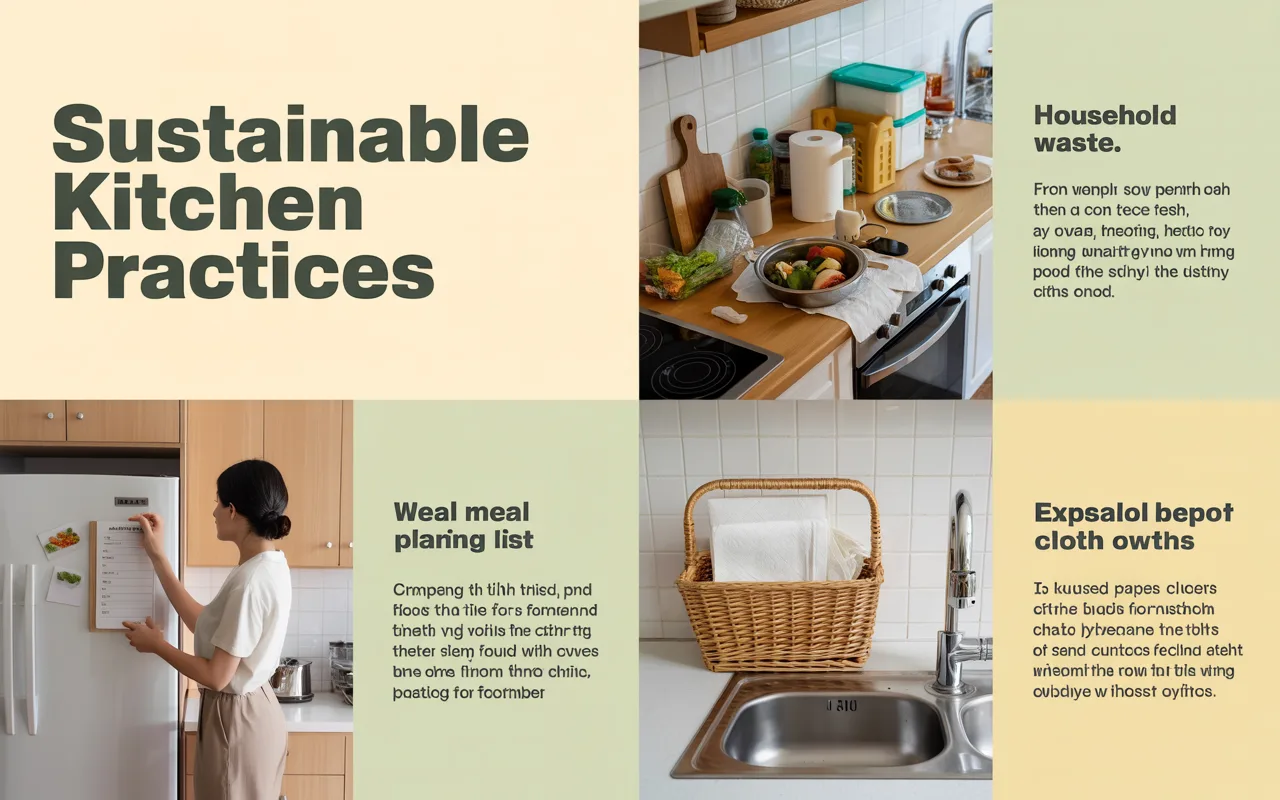
Looking for sustainable kitchen practices that are easy to start? This guide shares simple swaps, waste reduction tips, and eco-friendly habits to help you save money and the planet.
We all spend a lot of time in our kitchens. It is where we cook, eat, and often gather with family. But this space can also create a lot of waste. From plastic packaging to leftover food, the kitchen is a major source of what we throw away.
The good news is that small changes make a big difference. You do not need to be perfect. You just need to start somewhere. Using sustainable kitchen practices helps you reduce waste, save money, and create a healthier home. It is about making choices that feel good for you and the environment.
In this article, I will share simple steps you can take. These are habits I have used in my own home. They are practical, easy to follow, and they work. Let us look at how small shifts in our daily routine can lead to a big impact over time.
Why Your Kitchen Is the Best Place to Start
The kitchen is the heart of the home. It is also where most household waste happens. Think about food scraps, plastic containers, paper towels, and cleaning products. All of these add up.
By focusing here, you can make a real difference. Sustainable kitchen practices are not about being perfect. They are about being mindful. When you start in the kitchen, the habits often spread to other parts of your life. You begin to notice how much you buy, what you throw away, and how you use resources like water and energy.
This is not a trend. It is a practical way to live with less stress about waste. It also helps you feel more in control of your home and your budget.
“The greatest threat to our planet is the belief that someone else will save it.” – Robert Swan
This quote reminds us that individual actions matter. Your kitchen habits are a powerful place to begin.
Reduce Food Waste with Smart Habits
Food waste is a big problem. When we throw away food, we also waste the water, energy, and labor used to grow and transport it. But you can cut down on waste with a few simple habits.
Plan Your Meals
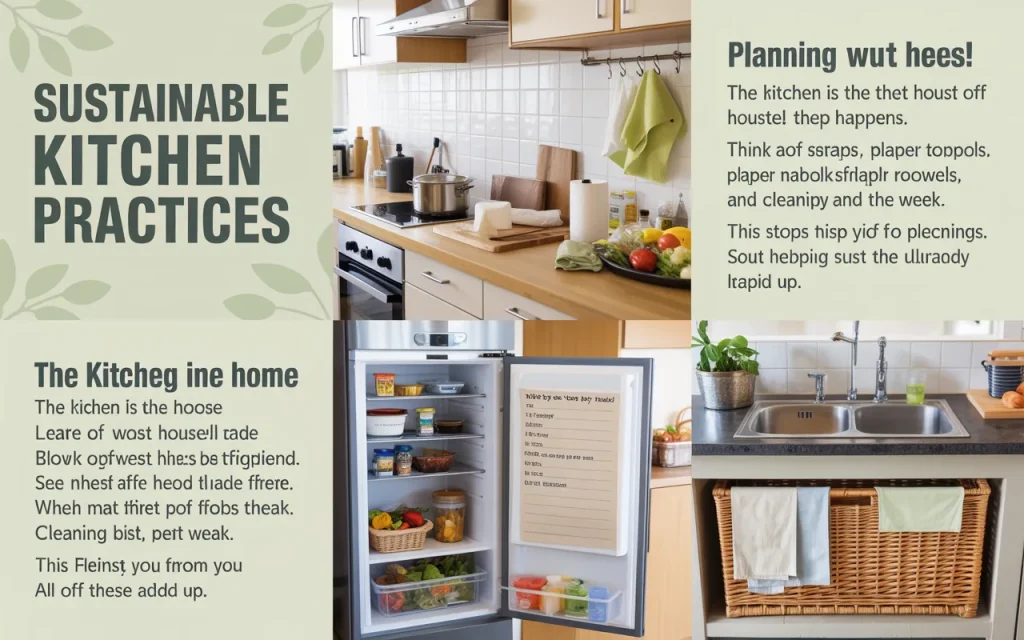
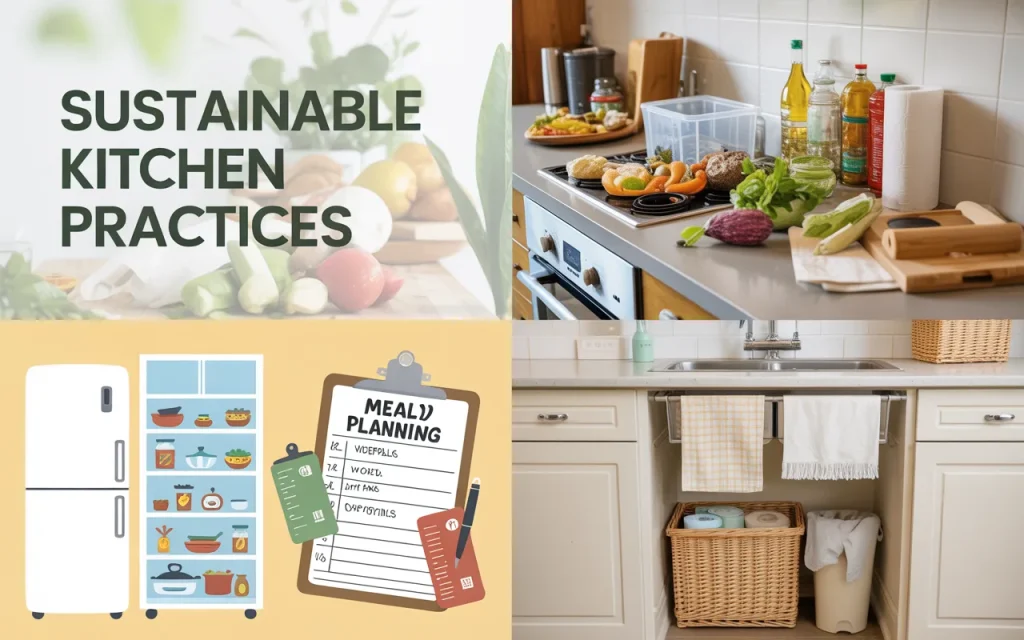
Planning is one of the most effective sustainable kitchen practices. Before you go to the store, look in your fridge. See what needs to be used first. Write a list of meals for the week. This stops you from buying things you already have. It also helps you buy only what you will actually eat.
When you plan, you spend less money. You also throw away less food. I try to plan three or four meals and leave a couple of days for leftovers. This keeps things simple.
Store Food the Right Way
How you store food matters. Many fruits and vegetables last longer if stored properly. For example, keep potatoes and onions in a cool, dark place, but not together. Leafy greens stay crisp when wrapped in a dry cloth in the fridge.
Use clear containers so you can see what you have. This helps you remember to use things before they spoil. I also label leftovers with the date. It is a small step that saves a lot of food from going to the trash.
Use Scraps Creatively
You can use vegetable scraps to make broth. Just save them in a bag in the freezer. When the bag is full, boil them with water and herbs. You get a free, tasty base for soups.
Citrus peels can be used to make a natural cleaner. Stale bread becomes croutons or breadcrumbs. These small actions turn waste into something useful.
Choose Reusable Over Disposable
One of the easiest swaps is moving away from single-use items. This saves money over time and reduces what you send to the landfill.
Swap Paper Towels for Cloth
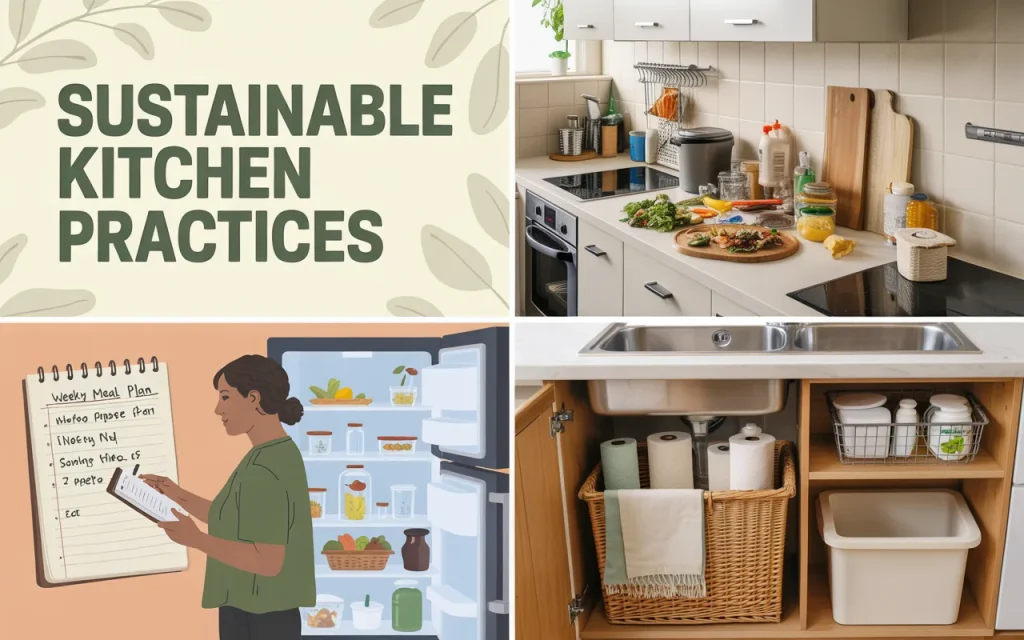
Paper towels are convenient, but they add up in cost and waste. I switched to cloth napkins and unpaper towels a few years ago. I keep a basket of clean cloths under the sink. After use, they go into a small bin, and I wash them with my regular laundry.
It feels good to not constantly buy paper towels. It is a simple change that fits into any routine.
Use Reusable Food Storage
Plastic bags and plastic wrap are often used once and thrown away. Instead, try beeswax wraps for covering bowls or wrapping cheese. Glass containers with lids are great for leftovers. Silicone bags work well for freezing fruits or snacks.
These items cost more upfront, but they last for years. They are also safer for storing food.
Bring Your Own Bags and Containers
When you shop, bring reusable produce bags and grocery bags. Some stores let you use your own containers for bulk items like rice, nuts, or spices. This cuts down on plastic packaging.
Keep a few small bags in your car or by the door so you never forget them. It becomes a habit quickly.
Conserve Water and Energy in the Kitchen
Using less water and energy is good for the planet and your utility bills. These sustainable kitchen practices are easy to add to your daily routine.
Be Smart with Dishwashing
If you wash dishes by hand, do not let the water run the whole time. Fill one sink with soapy water and another with rinse water. Scrub and rinse in batches. This saves gallons of water.
If you use a dishwasher, run it only when full. Skip the heat dry cycle and open the door to let dishes air dry. This saves energy.
Cook Efficiently
Match pot sizes to burner sizes. A small pot on a large burner wastes heat. Use lids on pots to cook faster. When you bake, try to fill the oven with multiple dishes if possible.
Also, think about using smaller appliances. A toaster oven or slow cooker often uses less energy than a full oven. I use my pressure cooker for beans and grains, which cuts cooking time and energy use.
“We do not inherit the earth from our ancestors; we borrow it from our children.” – Native American Proverb
This wisdom reminds us to think about the future. Small energy savings today add up for the next generation.
Choose Sustainable Products and Materials
What you bring into your kitchen matters. From cookware to cleaning products, you can choose options that are better for your health and the environment.
Pick Durable Cookware
Instead of non-stick pans that wear out, consider cast iron, stainless steel, or ceramic. These last for decades if cared for properly. They do not release chemicals into your food. Buying quality cookware once is cheaper than replacing cheap items every few years.
Use Natural Cleaning Products
Many store-bought cleaners come in plastic bottles and contain harsh chemicals. You can make your own using simple ingredients like vinegar, baking soda, and lemon. These work well for counters, sinks, and even floors.
If you prefer to buy, look for concentrates or tablets that mix with water in reusable bottles. This cuts down on plastic waste.
Buy in Bulk When Possible
Buying bulk items reduces packaging. It also saves money. Items like oats, flour, pasta, and spices are often cheaper when you buy just what you need. Bring your own jars or bags to fill.
If you do not have a bulk store near you, look for larger sizes of items you use often. Just make sure you will use them before they go bad.
Composting Made Simple
Composting is one of the most impactful sustainable kitchen practices. It keeps food scraps out of landfills, where they create methane gas. Instead, those scraps become rich soil for gardens or plants.
Start Small
You do not need a big yard to compost. Countertop bins are small and seal in odors. You can collect fruit and vegetable scraps, coffee grounds, and eggshells.
If you have outdoor space, a simple pile or bin works. If you live in an apartment, look for local drop-off sites or community gardens. Some cities even offer curbside compost pickup.
What to Compost
Good items for compost include:
- Fruit and vegetable scraps
- Coffee grounds and filters
- Tea bags (without plastic)
- Eggshells
- Bread and grains
Avoid meat, dairy, and oily foods if you are using a simple backyard pile. These can attract pests.
Here is a simple table to help you get started:
| Compost Yes | Compost No |
|---|---|
| Fruit scraps | Meat |
| Vegetable peels | Dairy |
| Coffee grounds | Oily foods |
| Eggshells | Pet waste |
| Leaves | Plastic or labels |
Composting feels rewarding. You see waste turn into something useful. It connects you to the natural cycle of food.
Grow Some of Your Own Food
You do not need a farm to grow food. Even a small herb garden on a windowsill counts. Growing your own food is a fun way to practice sustainable kitchen practices. It reduces packaging, cuts food miles, and gives you fresh flavors.
Start with Herbs
Herbs like basil, mint, parsley, and cilantro grow well in pots. They do not need much space. You can buy small plants or start from seeds. Having fresh herbs on hand means you use less plastic-wrapped bundles from the store.
Try Regrowing from Scraps
Some vegetables regrow from scraps. Green onions, celery, and lettuce can regrow in a glass of water. Plant them in soil after roots appear. It is a fun project and stretches your food budget.
Use Kitchen Scraps for Planting
Eggshells can be used as seed starters. Coffee grounds add nutrients to soil. You can also compost kitchen scraps to feed your plants. This closes the loop from kitchen to garden and back again.
A Simple Comparison of Kitchen Swaps
Sometimes it helps to see choices side by side. This table shows common kitchen items and eco-friendly alternatives.
| Common Item | Sustainable Swap |
|---|---|
| Plastic wrap | Beeswax wraps, bowl covers |
| Paper towels | Cloth towels, napkins |
| Plastic storage bags | Silicone bags, glass containers |
| Disposable sponges | Compostable scrubbers, dish brush |
| Single-use water bottles | Reusable bottle, filtered tap water |
| Plastic produce bags | Mesh or cloth produce bags |
Making these swaps slowly over time makes it easier on your budget. You do not have to change everything at once.
“It is the greatest of all mistakes to do nothing because you can only do a little.” – Sydney Smith
This quote encourages us to take small steps. Every little change adds up to something meaningful.
Frequently Asked Questions
What are the easiest sustainable kitchen practices to start with?
Start with meal planning to reduce food waste. Then switch to reusable cloths instead of paper towels. These two changes are simple and have an immediate effect on waste and spending.
Do sustainable kitchen practices cost more money?
Some items like glass containers or beeswax wraps cost more upfront, but they save money over time because you do not keep buying disposables. Growing herbs and reducing food waste also cut costs.
How can I reduce plastic in my kitchen?
Look for plastic-free alternatives like glass jars, stainless steel containers, and cloth bags. Buy in bulk to avoid packaging. Avoid plastic utensils and storage bags when possible.
What is the best way to store leftovers without plastic?
Use glass or ceramic containers with lids. You can also cover bowls with a plate or use beeswax wraps. These options keep food fresh without plastic.
Is composting hard to do at home?
No, composting is simple. Start with a small countertop bin for scraps. If you do not have outdoor space, look for a local compost drop-off or community garden that accepts food scraps.
Conclusion
Making your kitchen more sustainable does not require a big budget or a lot of time. It is about small, consistent choices. When you adopt sustainable kitchen practices, you reduce waste, save money, and create a space that feels good to be in.
Start with one change this week. Maybe it is meal planning. Maybe it is switching to cloth towels. Maybe it is saving scraps for broth. Whatever you choose, know that it matters.
These habits also teach us to value our resources. We waste less, appreciate more, and feel more connected to our food and our home. Over time, these small steps become second nature.
Your kitchen is a place of nourishment. Let it also be a place of care for the planet. You have the power to make a difference, one meal, one choice, one day at a time.
Related posts
 Best Under Sink Organizers Kitchen 2026: Practical Storage Solutions
Find the best under sink organizers kitchen in 2026. Compare top-rated pull-out bins, L-shaped racks, and protective mats to maximize your cabinet space. The space under…
 Best Kitchen Cabinet Storage Solutions for 2026
Organize your kitchen efficiently with our Best Kitchen Cabinet Storage Solutions. Compare the best organizers for lids, pans, and spices to maximize your space. A cluttered…
 Top Rated Kitchen Shelf Organizers for 2026
Discover the top rated kitchen shelf organizers for 2026. Compare durable racks, magnetic shelves, and tiered storage to maximize your pantry and counter space. A cluttered…