
How Do You Restore Faded Car Paint
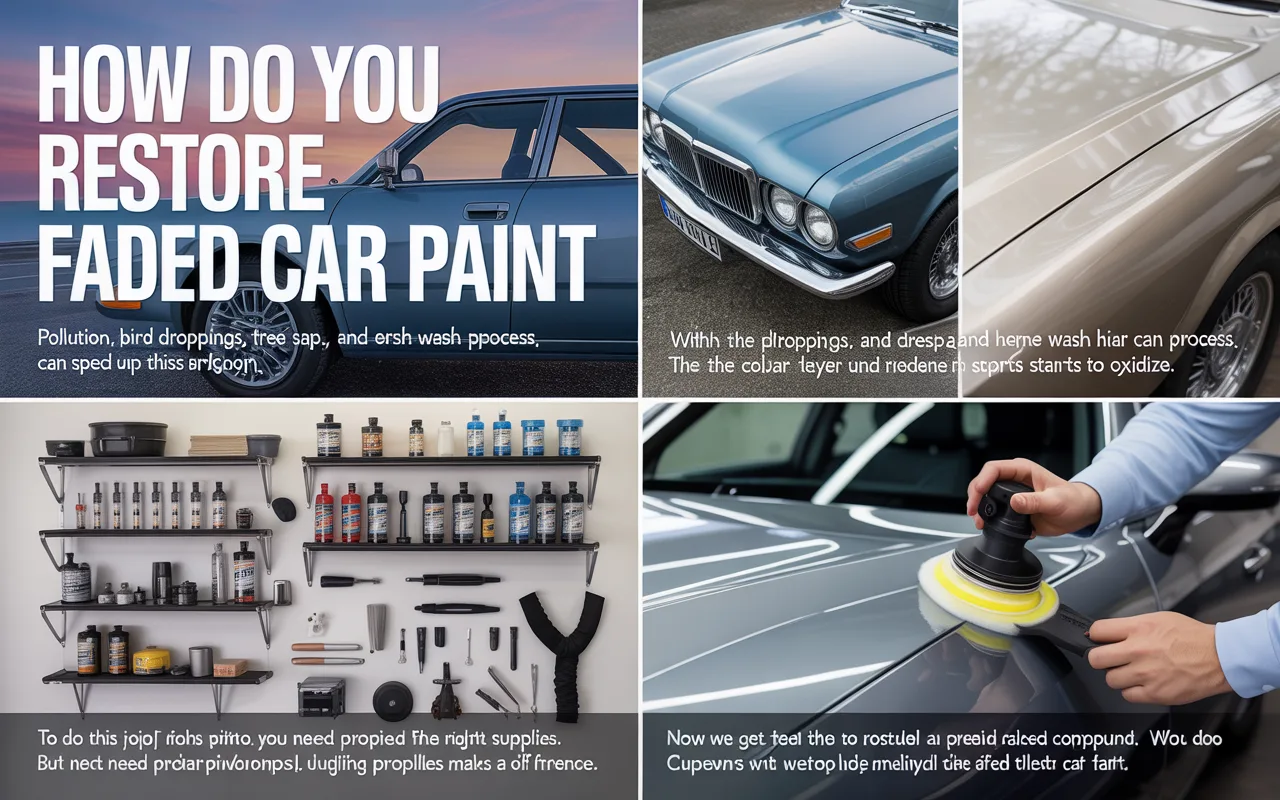
If your car has lost its shine, learning how to restore faded car paint is easier than you think. This guide walks you through simple steps, from washing to waxing, to bring back that brilliant finish without expensive professional help.
We have all been there. You walk out to your car on a sunny morning, expecting to see that glossy reflection you fell in love with, only to find a dull, hazy surface staring back at you. Faded paint is one of the most frustrating things a car owner can face. It makes even a well-maintained vehicle look old and neglected. But here is the good news: you do not need to spend a fortune at a body shop to fix this. Learning how to restore faded car paint is a skill you can master in your own driveway with the right tools and a little bit of patience.
I remember the first time I tried this on my old truck. The hood had turned from a deep navy blue to a chalky gray. I was sure I needed a new paint job. But after a weekend of work, I got it back to about 90% of its original glory. That experience taught me that faded paint is often just the top layer of clear coat oxidizing. It is a surface problem, and surface problems can be fixed.
What Causes Car Paint to Fade?
Before we get into the steps, it helps to know why your paint is looking tired. Car paint fades because of exposure. The sun’s ultraviolet (UV) rays are the main culprit. They break down the chemical bonds in the paint and the clear coat over time.
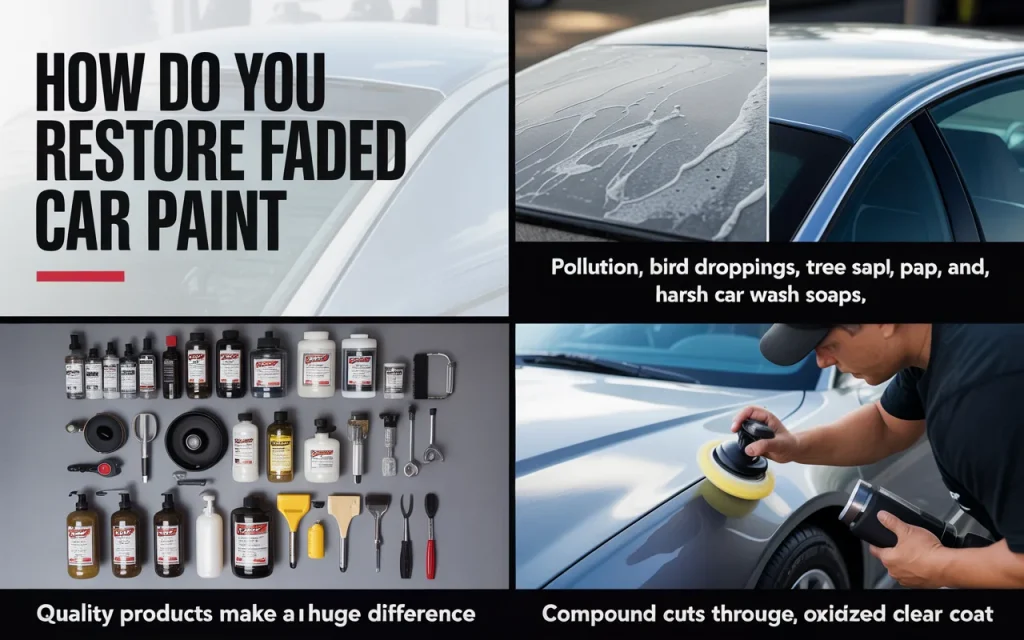
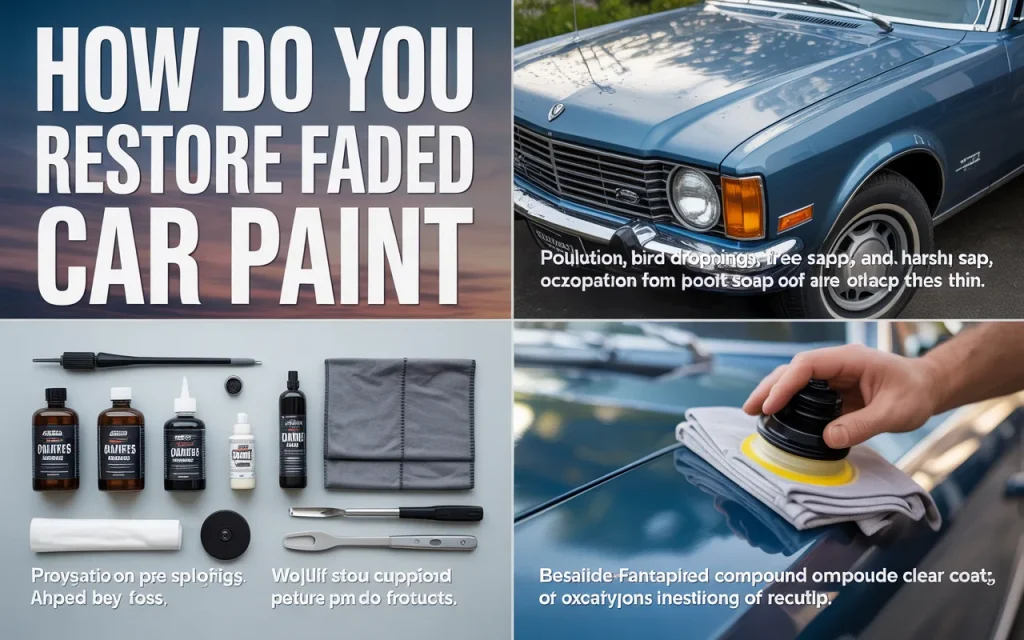
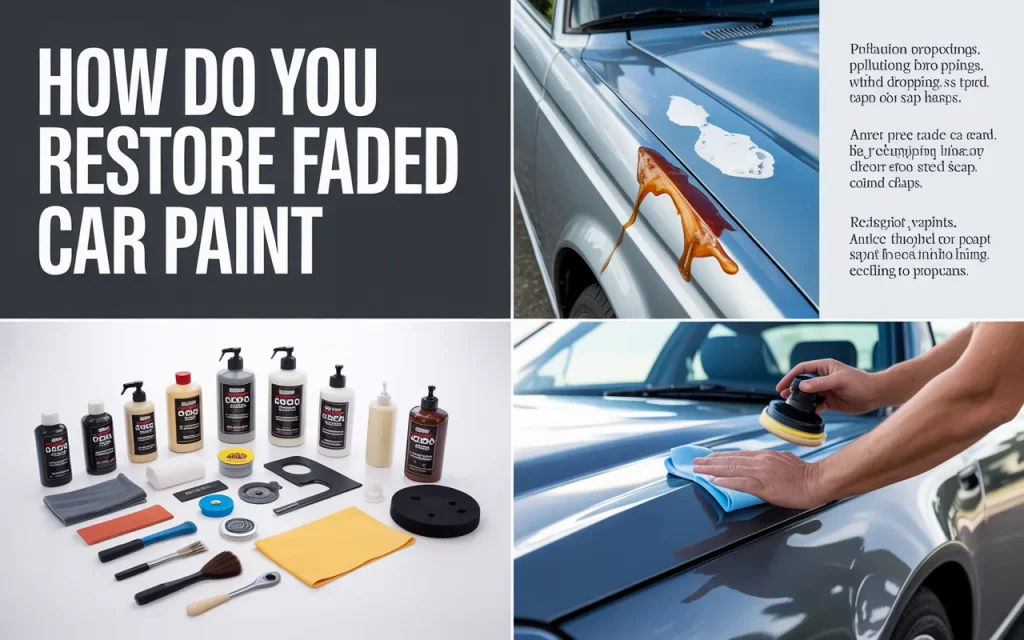
Pollution, bird droppings, tree sap, and even harsh car wash soaps can speed up this process. When the protective clear coat gets thin or damaged, the color layer underneath starts to oxidize. This oxidation looks like a white, powdery film. It is essentially the paint drying out.
“Oxidation is like a sunburn for your car’s paint. The clear coat acts as sunscreen. Once it fails, the color underneath starts to deteriorate rapidly.” – Mike Phillips, Director of Training at Meguiar’s.
So, if you want to restore faded car paint, your main goal is to remove that damaged top layer safely and then seal the fresh paint underneath.
Assessing the Damage: Can You Fix It?
Not all faded paint is created equal. You need to do a simple test to see if your efforts will pay off. This is called the “water test.” Splash some water on the faded area. If the paint looks deep and rich when wet, you are in luck. That means the color layer underneath is still good. You just need to remove the oxidized clear coat.
If the paint still looks dull or patchy when wet, the damage might go deeper. You might be dealing with clear coat failure. Clear coat failure looks like peeling or cracking. Unfortunately, if the clear coat is physically peeling off, you cannot polish it back. You would need a respray. But for simple oxidation and fading, you are a perfect candidate for a restoration.
Tools and Materials You Will Need
To do this job right, you need the right supplies. You do not need a professional workshop, but using quality products makes a huge difference. Here is a simple breakdown of what to gather.
| Category | Items |
|---|---|
| Cleaning | Car wash soap, two buckets, a microfiber wash mitt, a grit guard, and a drying towel. |
| Surface Prep | Clay bar kit with lubricant. |
| Polishing | Dual-action polisher (recommended) or foam applicator pads, compound (for heavy oxidation), polish (for refinement). |
| Protection | Isopropyl alcohol (for wiping down), quality car wax or ceramic spray sealant. |
| Safety | Painter’s tape (to mask off trim), microfiber towels (plenty of them). |
If you do not have a machine polisher, you can do this by hand. It will take more physical effort and time, but the process remains the same. A dual-action polisher is safer for beginners because it reduces the risk of burning through the paint.
Step 1: The Deep Clean
You cannot polish dirt. If you try to restore faded car paint without washing first, you will grind contaminants into the paint and create scratches. Start with a thorough wash.
Use the two-bucket method. One bucket has your soapy water. The other has plain water to rinse your mitt. This keeps the dirt out of your soap. Wash the car from the top down. Rinse thoroughly and dry the car with a clean microfiber towel. Do not let the car air dry, as water spots can leave mineral deposits that interfere with polishing.
After washing, you need to use a clay bar. Even after washing, the paint feels smooth? Run your hand over it. If it feels rough like sandpaper, you have bonded contaminants. A clay bar removes these tiny particles that a wash cannot. Spray the lubricant on a small section, and gently rub the clay bar back and forth. You will feel the resistance go away as it pulls out the dirt. This step is crucial for achieving a smooth surface to work on.
Step 2: Masking Off
This is a step many beginners skip, and they regret it. You need to protect the plastic trim, rubber seals, and any chrome or emblems. Polishing compounds can stain black plastic trim permanently. Use painter’s tape to mask off these areas. It takes ten minutes, but it saves you hours of frustration trying to clean white residue off black plastic later.
Step 3: Cutting the Oxidation
Now we get to the main event. This is where you actually restore faded car paint. You will use a compound. Compound is an abrasive liquid that cuts through the dead, oxidized clear coat.
If you are using a machine polisher, put a foam cutting pad on it. Apply a few small dots of compound to the pad. Spread it over a 2×2 foot section on low speed, then increase the speed to work the product in. Move the polisher slowly in overlapping passes. You want to see the product break down and become clear. When you wipe it off with a microfiber towel, you should see the color come back.
If you are working by hand, put the compound on a foam applicator pad. Use firm pressure in small circular motions. Work the product until it starts to dust away. Wipe it off. You will need to repeat this several times by hand to get the same effect as a machine.
“Patience is the most important tool in your garage. Rushing through the compounding stage is the number one reason people don’t get the results they hoped for when they try to restore faded car paint.” – Larry Kosilla, Founder of Ammo NYC.
Step 4: Refining the Finish
After compounding, the paint will look glossy, but you might see tiny micro-scratches or “haze” left by the compound. This is where a polish comes in. Polish is a finer abrasive. It removes the haze left by the compound and brings out the true depth of the color.
Switch to a polishing pad on your machine, or a clean hand applicator. Apply the polish the same way you did the compound. This step refines the finish and makes the surface ready for protection. You will notice the paint feels slicker and looks much deeper after this step. If you want to know how to restore faded car paint to a mirror-like shine, never skip the polishing step.
A Quick Guide to Abrasives
To make it easier, here is how the products differ. Think of them like sandpaper grits.
| Product | Purpose | Abrasive Level |
|---|---|---|
| Compound | Removes heavy oxidation, deep scratches, and dead clear coat. | High |
| Polish | Removes micro-scratches, refines gloss, and enhances clarity. | Medium to Low |
| Glaze | Fills in fine swirl marks (temporary effect). | Non-abrasive |
| Wax/Sealant | Protects the paint from UV rays and contaminants. | Zero |
For heavily oxidized paint, you start at the top. For paint that is just slightly dull, you might skip the compound and go straight to polish.
Step 5: Surface Preparation for Protection
Before you apply your final protection, you need a clean slate. Compounds and polishes leave behind oils. These oils are great for making the paint look wet during the process, but they will prevent wax or ceramic coatings from bonding properly.
Mix a solution of isopropyl alcohol (IPA) and water. A 15% to 20% alcohol mix is safe. Spray this on a clean microfiber and wipe down the panel. You will see the true finish without any fillers. Now you are ready to seal it.
Step 6: Sealing the Deal
You have worked hard to restore faded car paint. If you do not protect it, the oxidation will come back in a matter of weeks. The sun is relentless. You need to apply a sacrificial barrier.
You have a few choices here. Traditional carnauba wax gives a deep, warm glow. It usually lasts 1 to 2 months. Synthetic polymer sealants last longer, often 4 to 6 months. Ceramic spray coatings are very popular now. They are easy to apply and can last 6 to 12 months with good maintenance.
Apply your chosen protection in thin, even layers. Let it cure according to the instructions, then buff it off with a clean towel. This final step is what locks in your hard work.
Maintaining Your Restored Paint
Now that you have done the hard part, keeping it looking good is much easier. You want to avoid letting the oxidation build up again. Here are a few simple habits to adopt.
First, wash your car regularly. Do not use dish soap, as it strips wax. Use a dedicated car shampoo. Try to wash in the shade to prevent water spots. If you can, dry the car with a microfiber towel rather than letting it air dry.
Second, use a spray wax or quick detailer after every few washes. This adds a layer of protection in between your main wax applications. It takes only five minutes but significantly extends the life of your finish.
Third, if possible, park in the shade or use a car cover. UV rays are the enemy. Even a simple sunshade for the windshield helps reduce interior heat, but covering the whole car is best for the paint.
“Maintenance is the secret to long-term paint health. It is far easier to maintain a wax every few months than it is to re-polish the entire car every year.” – Renny Doyle, Author of “The Complete Guide to a Show Car Shine.”
When to Call a Professional
I want to be honest with you. While learning how to restore faded car paint is a great DIY project, there are limits. If you have tried a small test spot and the paint is not improving, or if you see metal or primer showing through, stop.
Also, if you have “clear coat failure” where the clear layer is peeling off like sunburned skin, polishing will make it worse. In those cases, a professional repaint or a vinyl wrap is the only real solution. A professional detailer can also wet sand the paint if the oxidation is extremely deep. Wet sanding involves using high-grit sandpaper to level the paint. It is very effective, but it is also risky. If you sand too much, you go through the paint. If you are unsure, paying a pro for this step is worth the peace of mind.
Frequently Asked Questions
Q: Can I restore faded car paint with just wax?
No. Wax is a protectant, not a restorative product. Wax will make faded paint look shiny for a day or two, but once it wears off, the oxidation will be back. You must remove the oxidation first with a compound or polish before applying wax.
Q: How long does a paint restoration last?
If you properly seal the paint with a quality wax or ceramic coating and maintain it with regular washing, the results can last 6 to 12 months. However, if the car is parked outside 24/7, you may need to reapply wax every 2 to 3 months to keep the shine protected.
Q: Is it safe to use a machine polisher on old paint?
Yes, if you use a dual-action (random orbital) polisher, it is very safe. These machines do not generate enough heat to burn the paint unless you apply excessive pressure or use a very aggressive pad. Always start with the least aggressive method on a test spot.
Q: Can I use toothpaste to restore car paint?
Toothpaste is a mild abrasive, so it can sometimes remove very light oxidation. However, it is not formulated for automotive paint. It lacks the lubricants needed to prevent scratching and will not provide any protection. It is better to use proper automotive compounds designed for the job.
Q: What if my car has single-stage paint?
Older cars (usually pre-1980s) often have single-stage paint, meaning there is no separate clear coat. The color itself oxidizes. You can restore faded car paint that is single-stage using the same steps. The only difference is that you will see color transfer onto your pads. This is normal. Be careful not to polish too aggressively, as you can remove too much of the color layer.
Conclusion
Bringing life back to a dull, faded car is one of the most satisfying things you can do as a car owner. It transforms the way you feel about your vehicle. You no longer look at it and feel embarrassed. You look at it and feel proud. The process is not magic. It is simply cleaning, cutting, polishing, and protecting.
I have found that if you take your time with each step, you can achieve professional-level results. It requires a weekend, some sweat, and a few supplies, but the cost is a fraction of a new paint job. So, grab a polisher or a few foam pads, and give it a try. Learning how to restore faded car paint is a skill that pays off every time you walk up to your car and see your reflection in the hood. It is worth every minute of effort.
Related posts
 2026 Torque Wrench Reviews: Choosing the Right Tool for Precision Fastening
Explore our 2026 torque wrench reviews to find the right tool for your automotive, bike, or gunsmithing projects. Compare top models for accuracy and value. Finding…
 Top Automotive Tools for Beginners: Essential Gear for 2026
Discover the top automotive tools for beginners in 2026. Compare essential pry kits, wrench sets, and repair gear to start your DIY car maintenance journey. Starting…
 Top Rated Mechanic Tool Brands for 2026
Explore top rated mechanic tool brands for 2026. Compare reliable socket sets and hand tools to find the right equipment for your home garage or auto…