
Why Am I Not Seeing Gym Results? Fix it fast
Wondering why am I not seeing gym results? Learn the real reasons, common mistakes, and simple fixes to finally make progress.
If you have been working out consistently but still feel stuck, you are not alone. Many people reach a point where progress slows down or stops entirely. This often leads to frustration and confusion, especially when you are putting in effort at the gym. The question “why am I not seeing gym results” usually comes down to a few common issues related to training, nutrition, recovery, and expectations.
This article breaks down the most likely reasons you are not seeing gym results, explains how each factor affects your progress, and shows you exactly what to adjust. By the end, you will have a clear, practical plan to start moving forward again.
You Are Not Training With a Clear Plan
One of the biggest reasons people are not seeing gym results is a lack of structure in their workouts.
Going to the gym without a plan often leads to random exercises, inconsistent effort, and poor progression. While any movement is better than none, results usually require a focused approach.
Signs your training lacks structure
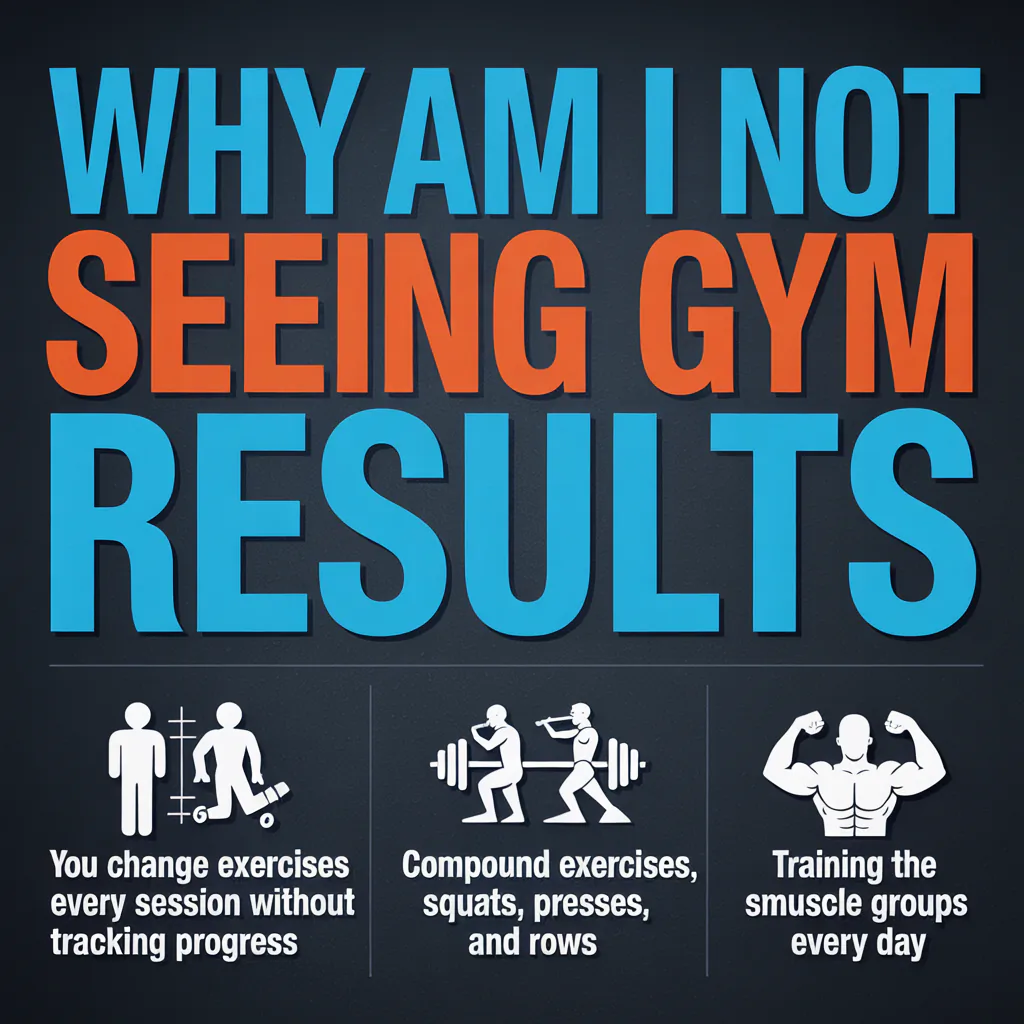
- You change exercises every session without tracking progress
- You do not know how much weight you lifted last time
- Your workouts feel repetitive but not challenging
- You are unsure what muscles you are targeting
What to do instead
Start following a simple, goal-based program. Whether your goal is fat loss, muscle gain, or general fitness, your workouts should include:
- Compound exercises like squats, presses, and rows
- A clear progression plan such as increasing weight or reps
- Consistency week to week
Without progressive overload, your body has no reason to adapt.
Your Nutrition Does Not Support Your Goal
Training is only part of the equation. If your diet is not aligned with your goal, progress will be slow or nonexistent.
Many people underestimate how important nutrition is when asking why they are not seeing gym results.
Common nutrition mistakes
| Mistake | What happens | Simple fix |
|---|---|---|
| Eating too little | No energy or muscle growth | Increase calories gradually |
| Eating too much | Fat gain hides muscle | Track portions and intake |
| Low protein intake | Poor muscle recovery | Add protein to each meal |
| Inconsistent eating | Unstable progress | Stick to a routine |
Key basics to follow
- Eat enough protein daily
- Match calories to your goal
- Stay consistent rather than perfect
Even a great workout plan cannot overcome poor nutrition habits.
You Are Not Recovering Properly
Recovery is often overlooked, but it is where progress actually happens. If your body does not get enough rest, your performance and results will suffer.
Common recovery problems
- Not getting enough sleep
- Training the same muscle groups every day
- High stress levels
- Ignoring rest days
Your muscles grow and repair during rest, not during the workout itself.

What good recovery looks like
- 7 to 9 hours of sleep per night
- At least one or two rest days per week
- Balanced training split
- Managing stress where possible
If you constantly feel tired, sore, or unmotivated, recovery may be the missing piece.
You Expect Results Too Quickly
Unrealistic expectations are a major reason people feel like they are not seeing gym results.
Fitness progress takes time. Social media often shows extreme transformations that are not typical or realistic for most people.
Typical timelines to keep in mind
| Goal | Realistic timeframe | What to expect |
|---|---|---|
| Strength gain | 4 to 8 weeks | Gradual increase in weights |
| Fat loss | 6 to 12 weeks | Slow, steady changes |
| Muscle gain | 8 to 16 weeks | Noticeable but gradual growth |
Progress is often subtle at first. You might get stronger before you look different.
Your Workout Intensity Is Too Low
Showing up at the gym is important, but effort matters just as much. If your workouts are too easy, your body will not change.
Signs you are not pushing hard enough
- You finish sets without feeling challenged
- You rarely increase weights or reps
- You stop well before muscle fatigue
How to improve intensity
- Aim to get close to muscle fatigue in each set
- Gradually increase weights over time
- Focus on proper form while challenging yourself
This does not mean going to failure every set, but your workouts should feel purposeful and demanding.
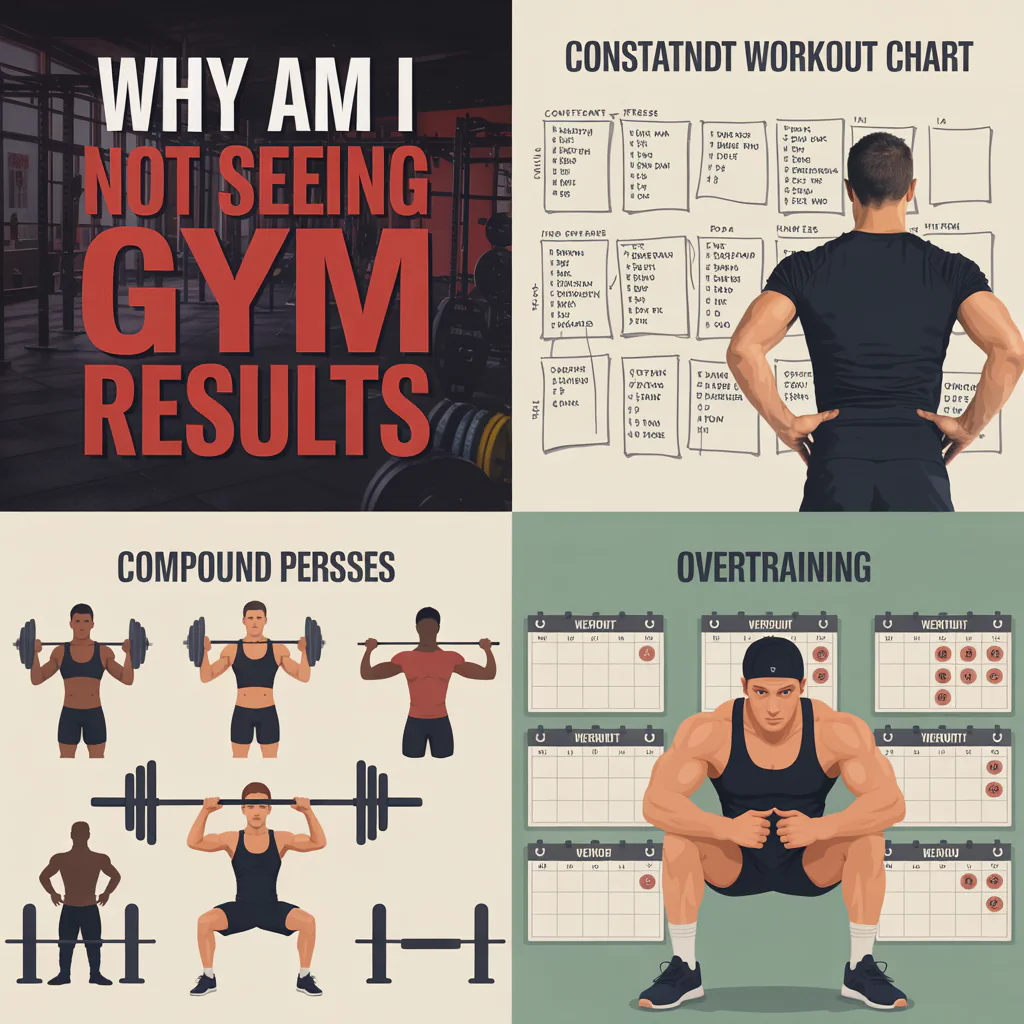
You Are Not Consistent Enough
Consistency beats perfection every time. Missing workouts, changing routines too often, or quitting early can all stall progress.
Even a well-designed plan will not work if it is not followed regularly.
Common consistency issues
- Skipping workouts frequently
- Starting and stopping programs
- Changing goals too often
What consistency really means
- Showing up even on low-motivation days
- Sticking to a plan for several weeks
- Building habits instead of relying on motivation
Results come from what you do repeatedly, not occasionally.
You Are Ignoring Small but Important Details
Sometimes the issue is not one big mistake but several small ones adding up.
Overlooked factors that affect results
- Poor exercise form
- Not warming up properly
- Staying dehydrated
- Not tracking progress
Each of these may seem minor, but together they can slow your progress significantly.
Simple improvements that help
- Learn proper form for key exercises
- Drink enough water daily
- Track workouts and body changes
- Warm up before training
These small changes can make a noticeable difference over time.
How to Fix It: A Simple Action Plan
If you are not seeing gym results, you do not need to start over. You need to adjust your approach.
Step-by-step reset plan
- Set a clear goal such as fat loss or muscle gain
- Follow a structured workout program
- Align your nutrition with your goal
- Prioritize sleep and recovery
- Track your progress weekly
- Stay consistent for at least 8 to 12 weeks
Avoid changing too many things at once. Make small adjustments and give them time to work.
FAQ
Why am I working out but not losing weight?
Weight loss depends mainly on a calorie deficit. You may be eating more than you think or not burning enough overall calories.
How long does it take to see gym results?
Most people notice small changes within 4 to 8 weeks, but visible transformations often take a few months.
Can I build muscle without a strict diet?
You can make some progress, but results will be slower and less noticeable without proper nutrition.
Why do I feel stronger but look the same?
Strength gains often happen before visible changes. Muscle growth takes longer to show physically.
Is it normal to hit a plateau?
Yes, plateaus are common. They usually mean your body has adapted and needs a new challenge.
Should I work out every day for faster results?
Not necessarily. Rest days are important for recovery and long-term progress.
Conclusion
If you have been asking yourself “why am I not seeing gym results,” the answer usually lies in a few key areas like training, nutrition, recovery, and consistency. The good news is that these are all things you can improve with the right approach.
Focus on building a structured routine, supporting your workouts with proper nutrition, and giving your body enough time to adapt. Progress may feel slow at first, but steady effort adds up.
If you want to keep improving, consider reading related fitness guides on building muscle, fat loss basics, or workout planning to deepen your understanding and stay on track.
Related posts
 Understanding Fitness Checkup Consultation Cost and Professional Assessment Resources for 2026
Explore Understanding fitness checkup consultation cost factors and professional assessment resources to help you make informed decisions about your health and training goals. Navigating the world…
 Gym Membership Discount Price Alternatives for 2026 Home Fitness
Looking for a gym membership discount price Alternatives? Explore smart home fitness alternatives and equipment to save money and build your own workout space in 2026.…
 Buy Home Workout Sliders: 2026 Guide to Core Fitness Tools
Looking to buy home workout sliders? Compare top-rated gliding discs and core trainers to find the right equipment for your 2026 fitness routine. Adding core sliders…