
How to Read Torque Specifications
Learn exactly how to read torque specifications so you never damage another bolt or component. This guide breaks down torque units, ranges, and what those numbers really mean for your repairs.
Have you ever looked at a torque specification and felt confused? You are not alone. Many people see numbers like “8.6 ± 0.6 Nm” or “25 ft-lbs” and wonder what they actually mean. Getting this right matters because guessing can lead to broken parts or loose bolts that fail at the worst time.
How to Read Torque Specifications. I have spent years working on cars, bikes, and machinery. Let me share what I have learned about reading torque specs the right way. By the end of this article, you will understand exactly what those numbers mean and how to apply them correctly.
What Is Torque and Why Do Specifications Matter?
Torque is simply a twisting force. When you turn a bolt, you apply torque. The specification tells you how much twisting force the engineer designed for that specific connection.
Jay Seiter, an R&D engineer at Pedro’s North America, puts it simply: “Torque is calculated as force multiplied by length with the length being the distance between the rotational axis and the point where the force is applied.”
Think about it like baking bread. If you use too little flour, the dough falls apart. Too much flour, and the bread is hard and dry. Torque specifications work the same way. The right amount keeps everything working perfectly.
Understanding Torque Units
Before you can read torque specifications, you need to understand the units. Different countries use different systems. Here is what you will commonly see.
Common Torque Units Explained
| Unit | Full Name | Where It Is Common |
|---|---|---|
| Nm | Newton-meter | Most of the world |
| lbf·ft | Pound-foot | United States |
| lbf·in | Pound-inch | United States (small fasteners) |
The proper way to write torque is force multiplied by length. This means Nm and lbf·ft are correct. Ft·lbf is actually a unit of work, not torque . This might seem like a small detail, but using the right terms helps you find the correct information when you search for help.
Quick Unit Conversions
You will often need to switch between units. Here are rough conversions to remember:
If you see 25 Nm and your torque wrench reads in foot-pounds, multiply by 0.74 to get about 18.5 ft-lbs.
How to Read Torque Specifications on Documents
Most torque specifications come from service manuals or technical documents. Here is how to interpret what you see.
Single Number Specifications
Sometimes you will see just one number like “25 Nm” or “18 ft-lbs.” This means tighten the fastener to exactly that value. But here is the truth engineers know: no torque wrench is perfect. A single number usually means aim for that value, and being close is acceptable.
Range Specifications
You might see something like “25-30 Nm” or “18-22 ft-lbs.” This gives you a window. Anywhere in that range works. I usually aim for the middle, around 27-28 Nm in this example. This gives you a safe margin on either side.
Plus-Minus Specifications
How to Read Torque Specifications. This is where many people get confused. Let me share a real example from a forum user who asked about a valve cover specification . They saw “8,6 ± 0,6 Nm” and did not understand.
Here is the answer. In many European countries, they use a comma as a decimal point. So 8,6 means 8.6. The ± 0,6 means you can go 0.6 above or below. So the range is 8.0 Nm to 9.2 Nm .
Table: How to Interpret Common Torque Formats
| Format You See | What It Means | Example | Acceptable Range |
|---|---|---|---|
| 25 Nm | Target exactly 25 | 25 Nm | Approximately 25 |
| 25-30 Nm | Any value in range | 25-30 Nm | 25 to 30 |
| 25 ± 2 Nm | 2 above or below | 25 ± 2 Nm | 23 to 27 |
| 8,6 ± 0,6 Nm | European decimal | 8,6 ± 0,6 Nm | 8.0 to 9.2 |
Where to Find Torque Specifications
Torque specs hide in plain sight if you know where to look.
On the Component Itself
Many parts have torque values stamped right on them. Look closely at brake calipers, stem bolts on bicycles, and valve covers. You might see small numbers next to the bolt holes. “Most components on a bike will have a small number stamped next to the fastening you want to adjust” .
Service Manuals
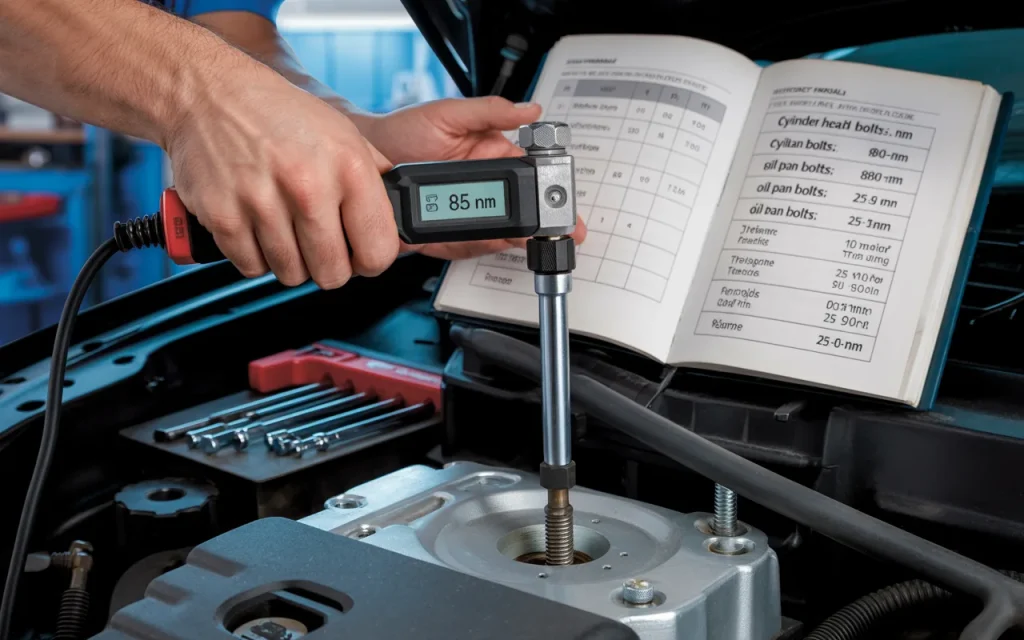
How to Read Torque Specifications. Factory service manuals are the best source. They list every fastener on the vehicle or machine. These manuals cost money but pay for themselves by preventing one broken part.
Online Databases
Many manufacturers post torque specifications online. Car forums also have excellent information from people who have done the same job before. Just verify multiple sources before trusting one.
How to Read Torque Charts for Motors and Machines
Sometimes you need to read torque charts for motors, not just bolts. These look different but follow similar logic.
Understanding Motor Torque Charts
How to Read Torque Specifications.
A spindle motor chart shows torque at different speeds . The purple line usually represents torque. The green line shows horsepower. You read the torque value on the left side and find the corresponding RPM on the bottom.
These charts help machinists choose the right cutting speeds. If you need maximum torque, you run the motor at lower RPM where the torque line peaks. If you need speed, you run at higher RPM even though torque drops off.
Rated vs. Peak Torque
Motors have different torque ratings for different situations. Rated torque is what the motor can produce continuously without overheating. Peak torque is what it can do for short bursts, usually measured in milliseconds . How to Read Torque Specifications.
When you read motor specifications, look for which type they list. Using peak torque continuously will overheat and damage the motor.
Common Mistakes When Reading Torque Specs
Even experienced people make these errors. Avoid them and your work will last longer.
Mistake 1: Confusing Foot-Pounds and Inch-Pounds
This is the most dangerous mistake. “There is a huge difference between 10 inch pounds and 10 foot pounds” . Ten foot-pounds equals 120 inch-pounds. If you set an inch-pound wrench to 10 thinking it is foot-pounds, you will barely tighten the bolt. If you do the opposite, you will snap it clean off.
Always check which unit your torque wrench uses before setting it.
Mistake 2: Ignoring the Parallax Effect
When you set a torque wrench with a scale, look straight down at the mark. Looking from an angle changes what number lines up with the indicator. This is called the parallax effect . It can throw your setting off by enough to matter.
Mistake 3: Forgetting About Lubrication
Guy T. Avellon, president of GT Technical Consultants, explains: “The equation is fairly accurate, but every application should be evaluated on its own to determine the optimum torque value.”
Lubrication changes everything. Oiled threads need less torque to achieve the same clamping force as dry threads. If you add oil or threadlocker, you might need to adjust the torque value. Some specifications tell you whether they assume dry or lubricated threads. Pay attention to this detail.
Mistake 4: Misreading European Decimals
As we saw earlier, many countries use commas as decimal points. If you see “8,6” on a European part, that means 8.6, not eight comma six. This trips up many Americans working on imported vehicles.
How to Apply Torque Specifications Correctly
Reading the spec is step one. Applying it correctly is step two.
Set the Wrench Properly
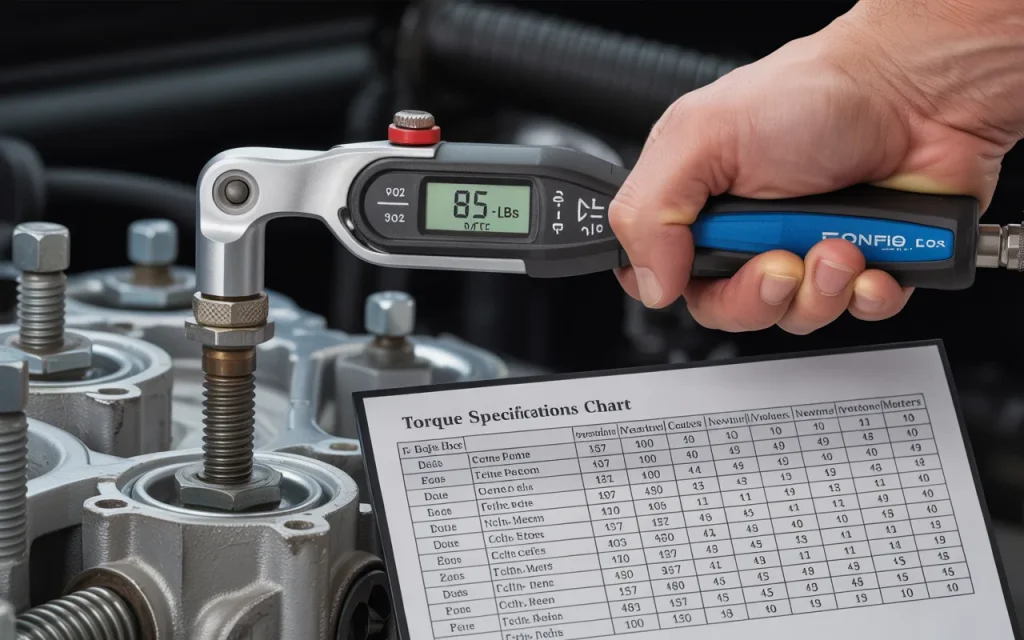
For click-type wrenches, turn the handle to the correct value. Look straight at the scale to avoid parallax error. Lock it in place if your wrench has a lock ring.
Tighten in Steps for Multiple Bolts
When you have several bolts holding one part, like a cylinder head or stem, do not tighten one fully then move to the next. “When one fastener is tightened, it loosens the others” .
How to Read Torque Specifications. Instead, tighten all bolts a little at a time. Go in a crossing pattern. After all are snug, go back and torque each one to spec. Then check them all again because the first ones will have loosened as you tightened the others.
Listen for the Click
When using a click-type wrench, pull smoothly until you hear and feel the click. Stop immediately. Continuing past the click over-torques the fastener and can damage the wrench .
David Archer, principal engineer at Peak Innovations Engineering, notes that angle-controlled tightening is actually more accurate than torque control because “friction is not a part of that” . But for most home mechanics, torque control works fine.
Storing and Maintaining Your Torque Wrench
How to Read Torque Specifications. A torque wrench is a precision tool. Treat it right and it will stay accurate for years.
Storage Position
“For adjustable click type torque wrenches, the wrench should be set to its lowest torque setting” for storage . This releases tension on the internal spring. Leaving it set at a high value keeps the spring compressed and can throw off calibration over time.
Some high-end wrenches use bending rods instead of springs and do not need this step . Check your manual to know which type you have.
When to Calibrate
How to Read Torque Specifications. With daily use, calibrate every three to six months. Occasional users can go longer if the wrench has not been dropped or abused . If you drop a torque wrench, get it checked before using it again.
Frequently Asked Questions
Q: What does 8-10 Nm mean?
A: It means tighten the bolt to anywhere between 8 and 10 Newton-meters. Pick a value in that range, usually the middle around 9 Nm, and use that.
Q: Can I use a foot-pound wrench for small bolts?
A: You can, but be careful. Foot-pound wrenches are less accurate at the low end of their range. For small bolts under 10 ft-lbs, an inch-pound wrench gives better results.
Q: What if my torque wrench doesn’t have the exact unit I need?
A: Convert the value. Google will do it instantly. Just type “25 Nm to ft-lbs” and you get the answer.
Q: Do I really need a torque wrench for everything?
A: No. Many bolts are not critical. But for suspension components, engine internals, carbon fiber parts, and safety items, always use one.
Q: Why do some specs say “lubricated” or “dry”?
A: Friction changes how much torque reaches the clamp load. Lubricated threads need less torque to achieve the same tightness. Using dry torque on lubricated threads over-tightens the bolt.
Q: What does the ± symbol mean?
A: Plus or minus. It gives you a tolerance range. If it says 25 ± 2 Nm, you can go anywhere from 23 to 27 Nm.
Conclusion
How to Read Torque Specifications. Reading torque specifications does not require an engineering degree. You just need to understand the units, know what the format means, and pay attention to details like lubrication and decimal points.
Start by finding the spec for your job. Check whether it is in Nm, ft-lbs, or in-lbs. Look for range indicators like dashes or ± symbols. Set your wrench carefully, looking straight at the scale. Tighten in steps if you have multiple bolts. And always store your wrench at its lowest setting.
The next time you see “8,6 ± 0,6 Nm” on a part, you will know exactly what it means. 8.6 Nm is the target, and you can go as low as 8.0 or as high as 9.2. Simple as that.
Getting torque right prevents broken bolts, damaged parts, and failed repairs. It takes two extra minutes to check and set correctly. Those two minutes save hours of frustration later.
Related posts
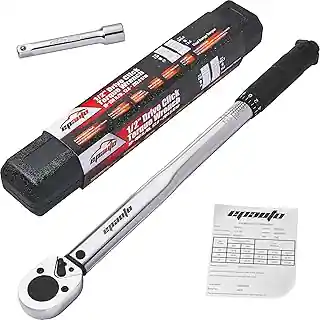 2026 Torque Wrench Reviews: Choosing the Right Tool for Precision Fastening
Explore our 2026 torque wrench reviews to find the right tool for your automotive, bike, or gunsmithing projects. Compare top models for accuracy and value. Finding…
 Top Automotive Tools for Beginners: Essential Gear for 2026
Discover the top automotive tools for beginners in 2026. Compare essential pry kits, wrench sets, and repair gear to start your DIY car maintenance journey. Starting…
 Top Rated Mechanic Tool Brands for 2026
Explore top rated mechanic tool brands for 2026. Compare reliable socket sets and hand tools to find the right equipment for your home garage or auto…