
How To Season Cast Iron Pans
Learn exactly how to season cast iron pans with this simple guide. We explain the oil to use, oven steps, and care tips for a smooth, natural non-stick surface that lasts for years.
Cast iron pans are kitchen heroes. They last forever, hold heat like nothing else, and can go from stovetop to oven without a problem. But there is one thing that confuses many people. That thing is seasoning.
If you just bought a new cast iron pan or found an old rusty one, you might wonder what to do next. The good news is that learning how to season cast iron pans is not hard. It does not require special skills or expensive tools. You just need a little time and the right steps.
Seasoning is just a fancy word for baking oil onto the pan. This creates a dark, shiny layer that stops food from sticking. It also protects the iron from rust. When you know how to season cast iron pans the right way, your cooking gets better. Eggs slide right out. Pancakes flip easily. Meat gets a perfect sear.
In this guide, we will show you everything. We will talk about the best oils, the right oven temperature, and what to do after cooking. We will also share tips from people who have used cast iron for years. Let us get started.
What Does Seasoning Actually Mean?
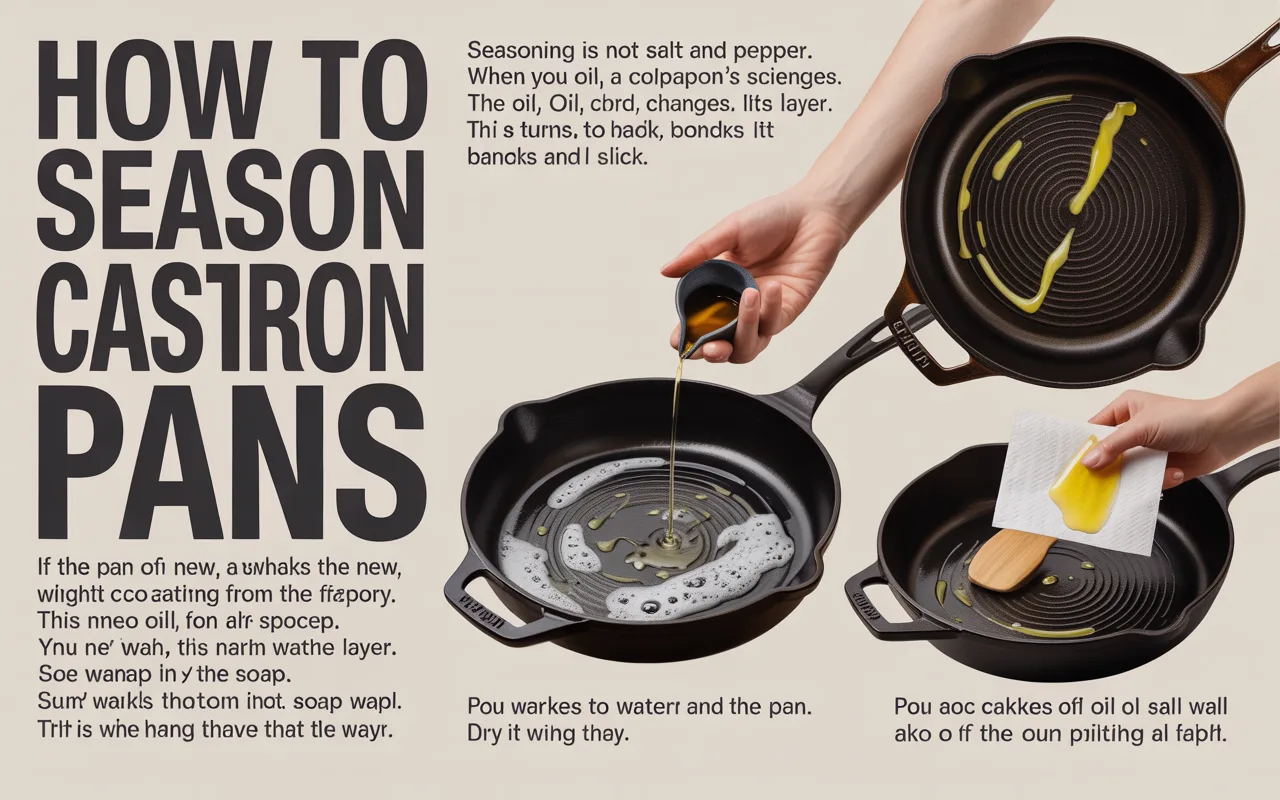
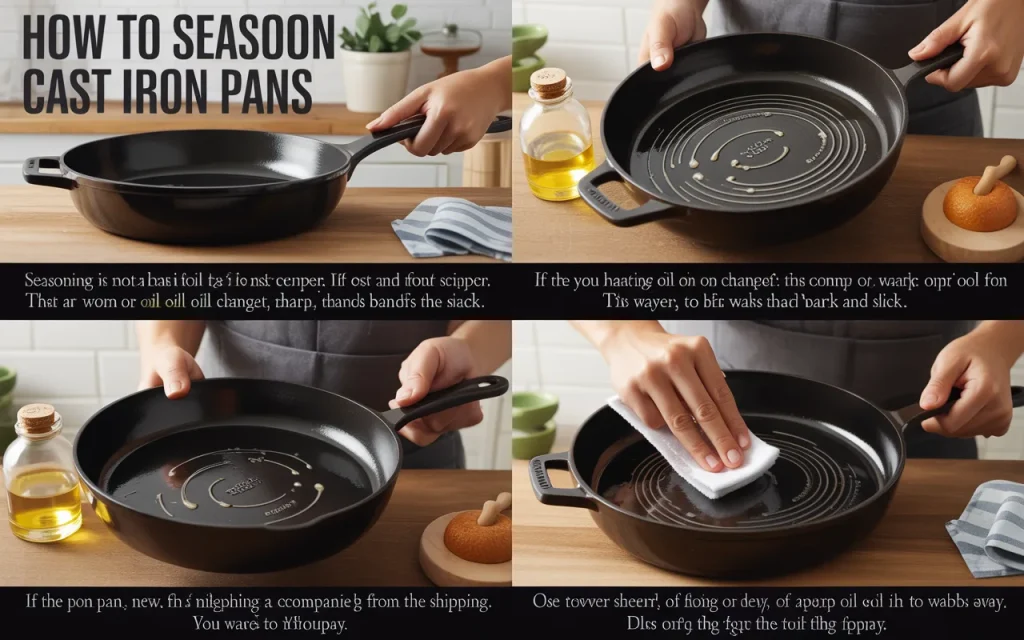
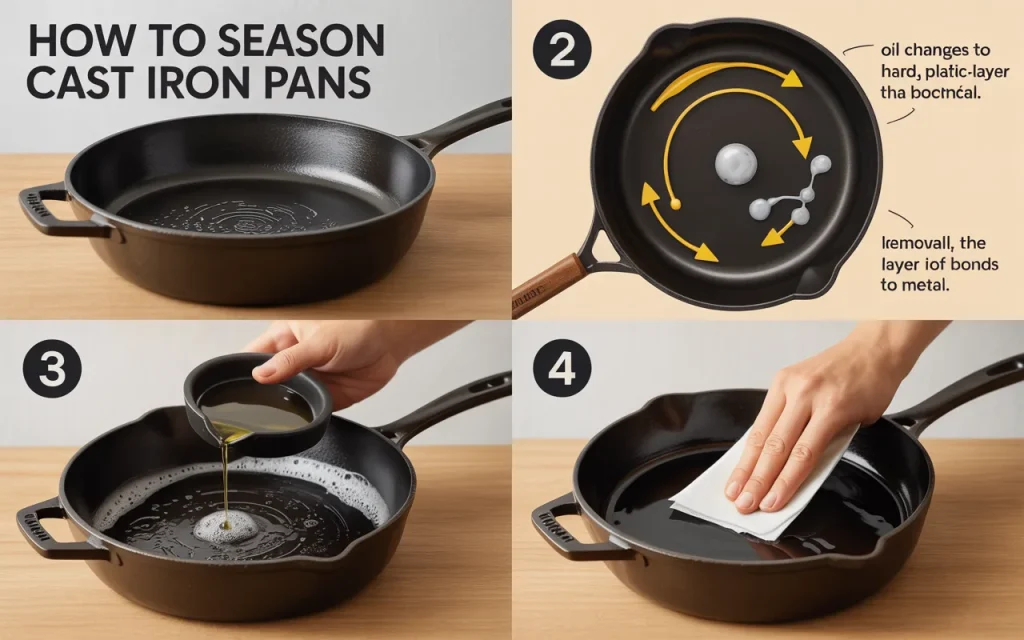
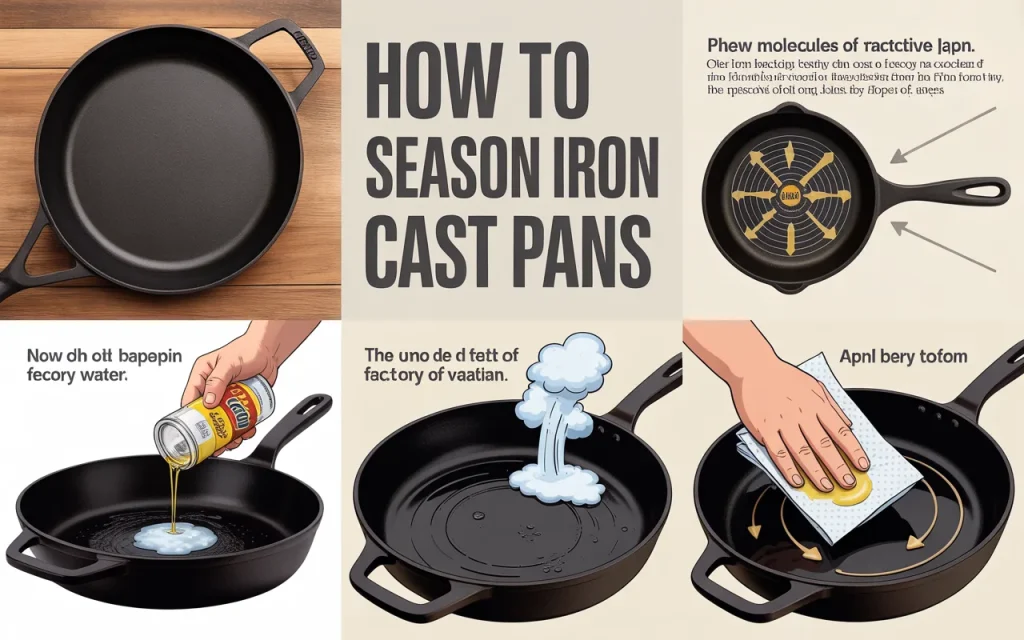
Seasoning is not about salt and pepper. It is about science. When you heat oil on cast iron, the oil changes. It turns into a hard, plastic-like layer. This layer bonds to the metal. That is what makes the pan dark and slick.
Chef Maria Gonzalez, who teaches cooking classes, says, “People think seasoning is complicated. But it is really just oil, heat, and time. The oil polymerizes, which means it becomes a solid coating. That coating is what makes cast iron so useful.”
So when we talk about how to season cast iron pans, we are really talking about how to build that coating. More layers mean better non-stick power.
Why Does a Cast Iron Pan Need Seasoning?
There are three main reasons.
First, seasoning stops rust. Iron rusts when it meets water and air. The seasoning layer blocks both. It keeps the metal safe.
Second, it makes food slide off. A well-seasoned pan is as good as any non-stick pan you can buy. But it lasts much longer.
Third, it adds flavor. As you cook more, the seasoning builds up. Each time you use the pan, you add a tiny bit of flavor to the next meal. This is why old cast iron pans are often the best.
What You Need Before You Start
Before you learn how to season cast iron pans, gather these items.
- Your cast iron pan (new or old)
- A stiff brush or scrubber
- Mild dish soap (only for cleaning off old rust or factory wax)
- Paper towels or a clean cloth
- Vegetable oil, flaxseed oil, or canola oil
- Aluminum foil
- A baking sheet
- An oven
That is it. No fancy tools needed.
Step One: Clean the Pan Really Well
If the pan is new, it might have a coating from the factory. This coating protects it during shipping. You need to wash that off. Use warm water and a little soap. Scrub well. Dry it with a towel right away.
If the pan is old and rusty, scrub harder. Use a brush or steel wool. Get all the rust off. You want to see bare metal.
Once the pan is clean and dry, you are ready for the next step.
Step Two: Apply a Thin Layer of Oil
This is the most important part of how to season cast iron pans. You must use the right amount of oil.
Put a small spoonful of oil on the pan. Use your fingers or a paper towel to rub it all over. Cover the inside, the outside, the handle, and the bottom. Every part needs oil.
Now, here is the trick. You must wipe off the extra oil. The pan should look almost dry. If there are puddles or drops of oil, those spots will get sticky later. Use a clean paper towel and wipe hard. The pan should look shiny but not wet.
Chef James Miller, who writes about kitchen tools, explains, “The biggest mistake people make when learning how to season cast iron pans is using too much oil. You want a micro-thin layer. Thick oil will not turn into hard seasoning. It will just get gummy.”
Step Three: Heat the Pan in the Oven
Put the pan upside down on the top rack of your oven. Put a baking sheet on the bottom rack. The baking sheet catches any oil that drips.
Heat the oven to 375 to 400 degrees Fahrenheit. The exact temperature depends on the oil you use. Most vegetable oils work well at 375. Flaxseed oil needs a lower heat, around 300.
Bake the pan for one hour. Then turn off the oven and let the pan cool inside. Do not take it out right away. The slow cooling helps the seasoning set.
Step Four: Repeat for More Layers
One layer is good. Two or three layers are better. If you want a really smooth, dark finish, repeat the whole process.
Let the pan cool completely between layers. Then add more oil, wipe it off, and bake again.
Here is a simple table to help you remember the steps.
| Step | What To Do | Why It Matters |
|---|---|---|
| Clean | Wash and dry the pan | Removes dirt and rust |
| Oil | Rub on a thin layer | Creates the base for seasoning |
| Wipe | Remove extra oil | Prevents sticky spots |
| Heat | Bake at 375 for one hour | Turns oil into hard coating |
| Cool | Let pan cool in oven | Helps seasoning bond |
| Repeat | Do steps 2 to 5 again | Builds stronger layers |
What Oil Works Best for Seasoning?
People often ask what oil to use. The truth is, many oils work. But some are better than others.
Vegetable oil and canola oil are cheap and easy to find. They work well for most people. Grapeseed oil is also good. It has a high smoke point, so it can handle the heat.
Flaxseed oil makes a very hard coating. But it can flake off over time. Some people love it. Others avoid it.
Avoid butter or olive oil. They burn at lower temperatures. They do not create a strong seasoning layer.
How to Keep Your Seasoning Strong
Once you know how to season cast iron pans, you need to keep the seasoning healthy. It is easy.
After cooking, clean the pan while it is still warm. Use hot water and a stiff brush. If food sticks, scrub with coarse salt and a little water. The salt acts like sandpaper but does not hurt the seasoning.
Dry the pan right away. Put it on the stove over low heat for a few minutes. This makes sure all water is gone.
Then rub on a tiny drop of oil. Use a paper towel and spread it thinly. This is like giving your pan a little lotion. It keeps the seasoning fresh.
Common Mistakes People Make
Even experienced cooks make mistakes. Here are some things to avoid.
Do not soak the pan in water. Water is the enemy of cast iron. It causes rust.
Do not put the pan in the dishwasher. The soap is too harsh. It will strip the seasoning.
Do not cook acidic foods for a long time. Things like tomatoes or vinegar can eat away the seasoning. If you cook them, clean and re-oil the pan right after.
Do not use metal scrubbers. They scratch the surface. Stick to brushes or plastic scrapers.
Can You Fix a Pan That Looks Bad?
Yes, you can. Even if your pan is rusty or sticky, you can save it.
If it is rusty, scrub all the rust off first. Use steel wool or a scrubber. Wash it, dry it, and then season it again from the start.
If it is sticky, that means there is too much oil on it. Put it in the oven at high heat for an hour. The extra oil will burn off. Then wipe it clean and add a new thin layer.
If the seasoning is patchy, just add another layer. Bake it again, and the new layer will fill in the gaps.
Sarah Jenkins, a home cook who runs a food blog, shares this. “I found an old pan at a yard sale. It was orange with rust. I scrubbed it, seasoned it three times, and now it is my favorite pan. Learning how to season cast iron pans saved that pan from the trash.”
Stovetop Seasoning vs. Oven Seasoning
Some people season their pans on the stovetop. This works for small touch-ups. You heat the pan, add oil, and wipe it around. But for a full seasoning, the oven is better.
The oven gives even heat all around. It coats the whole pan, not just the cooking surface. If you are starting fresh, use the oven.
Use the stovetop method when you notice a spot that needs help. Heat that spot, add a tiny bit of oil, and rub it in. Let it cool and it will be fine.
How Often Should You Season?
There is no set schedule. It depends on how much you cook.
If you use your pan a lot, the seasoning gets better on its own. Each time you cook with oil, you add a little more seasoning.
If you notice food starting to stick, it is time for a fresh layer. If the pan looks dull or gray in spots, add a layer.
Some people season their pans once or twice a year. Others do it every few months. Do what feels right for your pan.
New Pans vs. Old Pans
New pans often come “pre-seasoned.” That means the factory already did the first layer. But factory seasoning is usually thin. You should add a few more layers at home. This makes the pan work better.
Old pans might have years of seasoning built up. Be careful with old pans. Do not scrub too hard. You do not want to remove the good layers. Just clean gently and add oil when needed.
A Quick Guide to Fixing Problems
Here is a second table for quick help.
| Problem | Cause | Fix |
|---|---|---|
| Rust spots | Pan got wet | Scrub rust, re-season |
| Sticky surface | Too much oil | Heat in oven to burn off extra |
| Food sticks | Thin seasoning | Add another layer in oven |
| Gray color | Old seasoning worn | Clean and add new layer |
| Flaking | Old oil layers breaking | Strip and re-season completely |
Cooking Tips for Seasoned Pans
Once your pan is seasoned, cooking is easy. But a few tips help.
Always preheat the pan slowly. Cast iron gets very hot. Let it warm up on low heat for a few minutes. Then turn up the heat if you need it.
Use enough oil when cooking. Even a well-seasoned pan needs some fat. Butter, oil, or bacon grease all work.
Do not be afraid to cook. The more you use the pan, the better it gets. Fry eggs, sear steaks, bake cornbread. All these things add to the seasoning.
Let food cook before flipping. If you try to flip too early, it might stick. Give it time to form a crust. Then it will release easily.
Myths About Cast Iron Seasoning
There are many myths about cast iron. Let us clear a few up.
Myth: You can never use soap.
Truth: A little soap is fine if your seasoning is strong. Do not soak, but a quick wash with soap will not hurt.
Myth: You cannot cook tomatoes.
Truth: You can, but not for a long time. Quick tomato sauces are okay. Just clean the pan well after.
Myth: Seasoning is hard to do.
Truth: It is easy. Heat, oil, time. That is all.
Myth: You need expensive oil.
Truth: Cheap vegetable oil works great.
Why Your Own Experience Matters
Everyone’s kitchen is different. Your oven might run hot or cool. Your oil might act a certain way. The best way to learn how to season cast iron pans is to try it yourself.
Start with one pan. Season it a few times. Cook with it. See how it feels. If something goes wrong, fix it. Over time, you will know exactly what your pan needs.
Cooking expert David Chen says, “Your cast iron pan is a partner in the kitchen. It changes as you cook. The more you understand it, the better your food gets. Learning how to season cast iron pans is the first step in that relationship.”
Frequently Asked Questions
How long does seasoning take?
The oven part takes about an hour. Plus cooling time. For multiple layers, plan a few hours total. But most of that is waiting, not working.
Can I use coconut oil?
Yes, if it is refined coconut oil. Unrefined has a low smoke point. It might burn before it seasons.
Why does my pan look brown instead of black?
New seasoning often looks bronze or brown. It turns black as you use it more. Keep cooking and it will darken.
Do I need to season the bottom?
Yes. The bottom can rust too. Season the whole pan.
What if smoke comes out of the oven?
That is normal. Open a window. The oil might smoke a little. That means it is working.
Can I season a pan without an oven?
Yes, on the stovetop. But the oven gives better results for full pans.
How do I store my pan?
Keep it dry. Put a paper towel inside to absorb moisture if your kitchen is humid.
Is flaxseed oil the best?
Some people love it. Others find it flakes. Try it and see what you think.
Can I use spray oil?
Spray oils often have additives. They can make the pan sticky. Use bottled oil instead.
How do I know when to re-season?
When food starts sticking or the pan looks dry, add a layer.
Conclusion
Learning how to season cast iron pans is a simple skill that makes a big difference. It turns a good pan into a great one. It saves money because you do not need to buy new non-stick pans. It connects you to a tradition of cooking that goes back generations.
Start with a clean pan. Use a thin layer of oil. Bake it in the oven. Repeat if you want. Then cook with it often. Clean it gently. Add a little oil after each use.
Your pan will get better over time. It will become dark and smooth. Food will slide right off. You will wonder why you ever thought cast iron was hard.
Now you know exactly how to season cast iron pans. Go ahead and try it. Your kitchen will thank you.
Related posts
 Best Gas Stove Safety Devices for 2026: Child and Pet Proofing Solutions
Keep your kitchen secure with our 2026 guide to the best gas stove safety devices. Compare top-rated knob covers for child and pet proofing your home.…
 Top Water Purifier for Kitchen Choices in 2026
Looking for the top water purifier for kitchen use? Explore our 2026 guide to the best faucet-mount, pitcher, and under-sink systems for cleaner drinking water. Finding…
 Top Kitchen Tissue for Daily Cleaning: 2026 Buyer Guide
Find the top kitchen tissue for daily cleaning in 2026. We compare five popular paper towel options to help you choose the right strength and value…