
Kitchen Lighting Guide
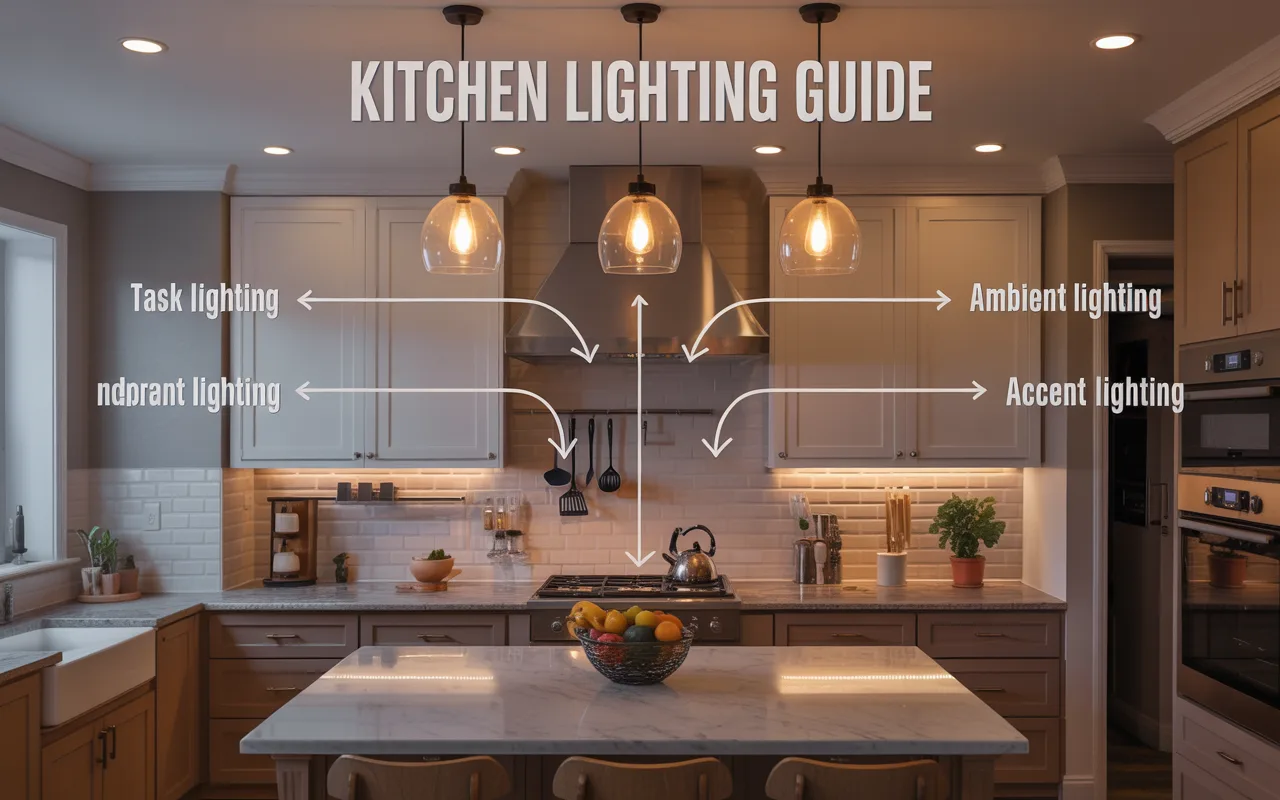
This comprehensive Kitchen Lighting Guide explains how to layer ambient, task, and accent lights for a functional and beautiful cooking space. Learn about fixture types, bulb choices, placement tips, and common mistakes to avoid for a brighter, safer, and more inviting kitchen you will love using every day.
Good lighting can change how your kitchen feels and works. It is not just about seeing clearly. It is about making your kitchen warm, useful, and safe. Many people feel confused when choosing lights. There are so many options. This Kitchen Lighting Guide will help you understand the basics. You will learn how to pick the right lights for your space. Let us make your kitchen shine in the best way possible.
This Kitchen Lighting Guide explains how to choose the best lights for your cooking space. You will learn about layered lighting, fixture types, placement tips, and common mistakes to avoid. We cover task, ambient, and accent lighting in simple terms. This guide helps you create a bright, functional, and beautiful kitchen for your daily life.
Why Good Lighting Matters in Your Kitchen
The kitchen is often the busiest room in a house. You cook, eat, talk, and sometimes work there. Bad lighting can make these tasks hard. It can cause eye strain or even accidents. Good lighting makes food prep easier. It helps you read recipes clearly. It also sets the mood for family dinners or morning coffee.
When you follow a Kitchen Lighting Guide, you think about different needs. You need bright light for chopping vegetables. You might want soft light for a late-night snack. You also want to show off nice features like backsplash or cabinets. The right plan does all these things at once.
Lighting also affects how big or small your kitchen looks. A dark kitchen feels cramped. A well-lit kitchen feels open and airy. This is true even for small spaces. So, taking time to plan your lights is worth it.
The Three Layers of Kitchen Light
Experts talk about three main types of lighting. They call them layers. Each layer has a job. Together, they make your kitchen perfect. This idea is the core of any good Kitchen Lighting Guide.
Ambient Lighting: The Base Layer
Ambient light is the main light in the room. It fills the space evenly. It lets you move around safely. You do not want dark corners here.
Common sources for ambient light are ceiling fixtures. This could be a flush mount light. It could also be recessed cans in the ceiling. Some people use track lights pointed up. The goal is general, overall light.
For a kitchen, ambient light should be bright but not harsh. Think of it as sunlight on a cloudy day. You see everything well. But there are no strong shadows. This light lets you do basic things like walk or find a plate.
Task Lighting: Light Where You Work
Task lighting is more focused. It shines on specific areas. You use it when you need to see small details. This is a key point in any Kitchen Lighting Guide.
Think about your countertops. When you chop onions, you need light right there. If your ambient light comes from behind you, your body casts a shadow. Task lighting fixes that. It goes under cabinets. It shines directly on the work surface.
Other task areas include the stove and the sink. A light over the stove helps you see if food is cooking right. A light over the sink helps with washing dishes. Even the kitchen island needs task light if you use it for prep or eating.
Accent Lighting: The Finishing Touch
Accent light is not for work. It is for looks. It draws your eye to something pretty. This could be a piece of art. It could be a nice textured wall. It could be glass-front cabinets with dishes inside.
Accent lighting adds depth. It makes the room feel complete. In a Kitchen Lighting Guide, this layer is often forgotten. But it makes a big difference. It adds personality to your kitchen.
You can use small puck lights inside cabinets. You can put a strip of light along the toe-kick under cabinets. You can even highlight a nice range hood. These small touches make the kitchen feel special.
Choosing the Right Light Fixtures
Now you know the layers. Next, you need to pick the actual lights. There are many types. Here are the most common ones for a kitchen.
Recessed Lights
These go into the ceiling. They are also called can lights or downlights. They are great for ambient light. You can space them out to cover the whole room evenly.
Some recessed lights are adjustable. You can point them at a wall or cabinet. This gives you some flexibility. In a Kitchen Lighting Guide, recessed lights are a popular choice. They look clean and modern. They do not hang down, so they work well in low ceilings.
Pendant Lights
Pendant lights hang from the ceiling on a rod or chain. They are like jewelry for your kitchen. People often use them over islands or peninsulas.
You can use one big pendant. You can also use a row of smaller ones. Pendants give focused light. They work well for task lighting over an island. They also add style. You can find them in glass, metal, or fabric.
A good Kitchen Lighting Guide will tell you about pendant height. Hang them low enough to light the surface. But not so low that they block your view across the room.
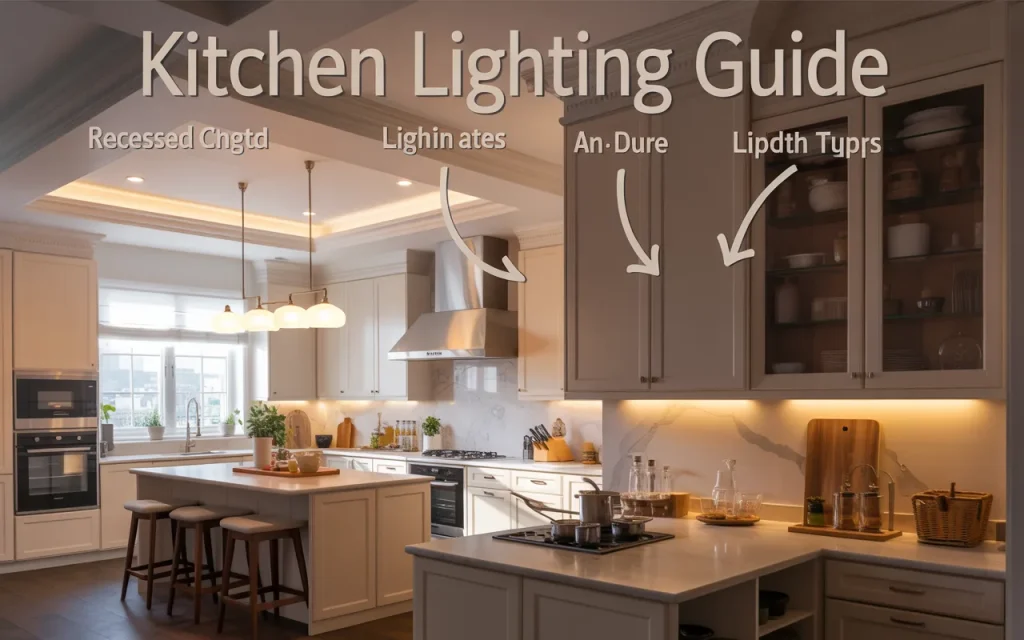
Under Cabinet Lights
These are small lights mounted under your wall cabinets. They shine down on the counter. This is pure task light. It is one of the most useful lights you can add.
Under cabinet lights come in different forms. There are small individual pucks. There are long slim bars. There are also flexible tape lights. LED options are best. They last long and do not get hot.
If you read any Kitchen Lighting Guide, they will stress under cabinet lights. They make food prep so much easier. They also add a nice glow to the room when the main lights are off.
Chandeliers
Some kitchens have a chandelier. This is more common in formal or large kitchens. A chandelier adds elegance. It works as ambient light and a style statement.
Place a chandelier in the center of the room or over a dining area in the kitchen. It should match the style of your home. A modern kitchen can have a simple, sleek chandelier. A farmhouse kitchen might have a wrought iron one.
Track Lighting
Track lighting has a long bar on the ceiling. Several lights attach to it. You can move the heads around. This lets you aim light where you need it.
Track lights are versatile. You can use them for ambient light by spreading the heads out. You can use them for accent light by pointing at a wall. They are a good option if you cannot install many separate recessed lights.
Light Bulb Basics
The fixture is just one part. The bulb inside matters a lot. A Kitchen Lighting Guide must cover bulb types. Here are the main things to know.
Brightness and Lumens
In the past, we talked about watts. But watts measure energy use, not brightness. Now we use lumens. Lumens tell you how much light a bulb gives.
For a kitchen, you want good light. Aim for a total of 5,000 to 10,000 lumens for the whole room. This depends on size. Under cabinet lights should give about 400 to 600 lumens per foot of counter.
Color Temperature
This is about how the light looks. It is measured in Kelvin (K). Lower numbers are warm and yellow. Higher numbers are cool and blue.
For kitchens, experts often recommend 2700K to 3000K. This is warm white. It feels cozy. It also makes food look good. Cooler light at 4000K is very bright and clean. Some people like this for task areas. Avoid going above 5000K in a home kitchen. It can feel too harsh and clinical.
A good Kitchen Lighting Guide will tell you to match color temps in one area. If you mix warm and cool lights, the room can look weird.
CRI (Color Rendering Index)
CRI measures how well a light shows true colors. The scale is 0 to 100. Sunlight is 100. For kitchens, you want a high CRI. Look for 90 or above.
With high CRI, you can see if meat is cooked right. You can tell if a tomato is ripe. It makes the whole space look better. Cheap bulbs often have low CRI. They make colors look dull or gray.
Planning Your Kitchen Lighting Layout
Good planning makes everything work together. Here is a simple way to think about your layout.
Start with a Sketch
Draw your kitchen on paper. Mark where the cabinets, sink, stove, and island are. This helps you see where you need light.
Place Your Ambient Lights
First, plan your main ceiling lights. For recessed lights, a common rule is to space them 4 to 5 feet apart. They should be about 2 feet away from the walls. This gives even coverage.
If you use a central fixture, put it in the middle of the room. Make sure it clears tall cabinet doors when they open.
Add Task Lights
Next, mark where you need focused light. Under cabinet lights are a must over counters. Plan a light over the sink. If you have a stove with a hood, many hoods have a built-in light. If not, add one.
For an island, plan pendants or a linear fixture. This Kitchen Lighting Guide suggests one pendant for every 2 feet of island length. So a 6-foot island could have three small pendants or two medium ones.
Finish with Accent Lights
Finally, think about special touches. Do you have open shelves? Add small lights above them. Do you have glass cabinet doors? Put lights inside. Do you have a beautiful backsplash? Shine a light on it.
Accent lights often use low-voltage strips or small spots. They are the last step but they add so much.
Kitchen Lighting Guide: Quick Reference Table
This table summarizes the main light types and where to use them. Keep it handy when you shop.
| Light Type | Best For | Common Placement | Pro Tip |
|---|---|---|---|
| Recessed Lights | Ambient light | Ceiling, spaced evenly | Use dimmers to control brightness |
| Pendant Lights | Task and style | Over islands and sinks | Hang 30-36 inches above the counter |
| Under Cabinet Lights | Task light on counters | Under wall cabinets | Hide wires inside the cabinets |
| Track Lights | Flexible ambient/accent | On ceiling, aimed where needed | Good for kitchens with odd shapes |
| Chandelier | Style and ambient | Center of room or over table | Match the style to your cabinets |
Common Lighting Mistakes to Avoid
Even with a good Kitchen Lighting Guide, people make mistakes. Here are some to watch out for.
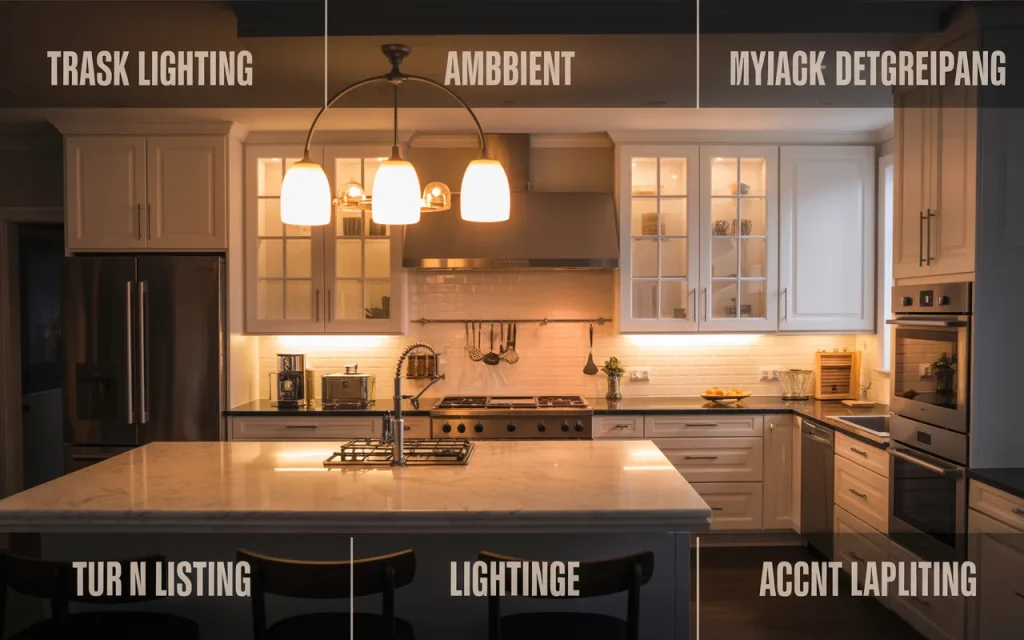
One Light Only
Relying on a single ceiling light is the biggest mistake. It creates shadows. It leaves corners dark. It makes the kitchen feel flat. Always use multiple light sources.
Wrong Bulb Color
Using cool white bulbs in a cozy home can feel cold. Using warm bulbs in a very modern kitchen might look muddy. Pick a color temp and stick with it.
Forgetting Dimmers
Dimmers change everything. They let you adjust light for the time of day. Bright for cooking, soft for eating. Dimmers also save energy and make bulbs last longer.
Poor Placement
Putting lights in the wrong spot is common. If you put recessed lights too far apart, you get dark pools. If you put pendants too high, they do not light the island well. Measure twice, install once.
Ignoring Shadows
Think about where you stand. If a light is behind you, your body blocks it. This is why under cabinet lights are key. They shine from the front, not behind you.
Quotes from Experts on Kitchen Light
Sometimes, hearing from others helps. Here are thoughts from people who know about lighting.
“The kitchen is the heart of the home, and lighting is what makes that heart beat. You need a mix of light sources to make the space work from morning coffee to evening dinner.”
— Sarah Johnson, Interior Design Consultant
“I always tell my clients to invest in under cabinet lighting. It is the one thing they use every single day and it makes the biggest difference in food prep.”
— Mark Davis, Kitchen Remodeling Specialist
“Don’t be afraid of dimmers. They give you control over the mood. Bright for a busy cooking day, soft for a quiet dinner. It is the best tool in your lighting plan.”
— Lisa Chen, Home Lighting Expert
Kitchen Lighting Guide: Placement Tips Table
Here is another simple table. It gives you quick numbers for placing lights correctly.
| Location | Fixture Type | Recommended Height/Spacing | Notes |
|---|---|---|---|
| Kitchen Island | Pendant Lights | 30-36 inches above counter | Space pendants 24-30 inches apart |
| Countertop | Under Cabinet Lights | Flush with front edge of cabinet | Hide strip or pucks near the front |
| Sink Area | Pendant or Recessed | Directly above the sink bowl | Add a dimmer for late night use |
| General Ceiling | Recessed Lights | 4-5 feet apart, 2 feet from walls | Stagger rows for better coverage |
| Glass Cabinets | Interior Accent Lights | Inside cabinet, near the front | Use battery pucks for easy install |
Budgeting for Your Kitchen Lights
Lighting costs can vary a lot. You can spend a little or a lot. A good Kitchen Lighting Guide helps you plan your budget.
Basic Budget
If you need to save money, start with the basics. Use a main ceiling fixture for ambient light. Add plug-in under cabinet lights. These are easy to install yourself. Swap out bulbs for LEDs with good color.
Mid-Range Budget
For a nicer setup, install recessed lights for ambient. Add hardwired under cabinet lights. Choose some nice pendants for the island. Put all lights on dimmer switches. This gives you great control and style.
High-End Budget
For a top kitchen, do it all. Use a layered plan with recessed, under cabinet, and accent lights. Add lighting inside drawers or cabinets. Use smart bulbs you can control with your phone. Choose designer fixtures that become art pieces.
No matter your budget, planning helps. You can even do it in stages. Start with the most important lights. Add more later.
Energy Saving Tips
Kitchen lights are used a lot. Saving energy is good for the planet and your wallet.
Use LED bulbs everywhere. They use much less power than old bulbs. They also last years longer. Look for the Energy Star label.
Use dimmers. When lights are dimmed, they use less power. This also makes bulbs last longer.
Consider motion sensors for low-use areas. A light in a pantry can turn on when you open the door and off when you close it. This saves energy automatically.
Frequently Asked Questions
How many lights do I need in my kitchen?
There is no exact number. It depends on size. A good rule is to have at least three sources. One for general light, one for counters, and one for style. For a small kitchen, that might be four recessed lights, one under cabinet strip, and one pendant. For a large kitchen, you might have ten recessed lights, multiple under cabinet strips, and several pendants.
What is the best color light for a kitchen?
Most people like 2700K to 3000K. This is warm white. It feels inviting. It also makes skin and food look good. If you have a very modern kitchen with gray and white, you might like 3500K. Test a bulb first to see if you like it.
Do I need under cabinet lights?
Yes, they are highly recommended. They remove shadows on your counter. They make cooking safer and easier. They also add a nice glow to the kitchen in the evening when the main lights are off. This Kitchen Lighting Guide puts them high on the list.
Can I install kitchen lights myself?
Some things are easy. Plug-in lights are simple. Replacing a fixture where wires already exist can be done by a careful DIYer. But running new wires is for professionals. Electricity is dangerous. If you are not sure, hire an electrician. It is worth the cost for safety.
How high should I hang pendant lights?
Over a kitchen island or counter, hang pendants 30 to 36 inches above the surface. For an 8-foot ceiling, stay closer to 30 inches. For higher ceilings, you can go higher. The key is to not block the view across the room.
What are the best bulbs for kitchen lighting?
LED bulbs are the best choice today. They save energy and last a long time. Look for a high CRI (90+) and a color temperature you like. Make sure they are dimmable if you use dimmer switches.
Conclusion
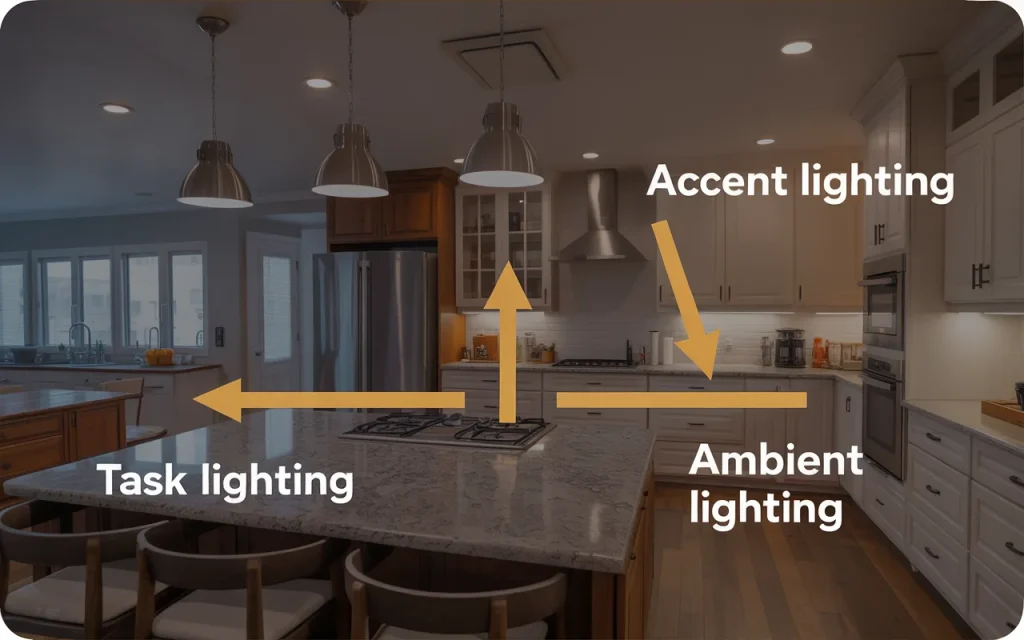
Lighting your kitchen well does not have to be hard. Use this Kitchen Lighting Guide to make simple choices. Start with the three layers: ambient, task, and accent. Pick fixtures that fit your style and budget. Choose LED bulbs with good color and brightness. Plan your layout on paper before you buy anything.
Avoid common mistakes like using only one light or picking the wrong bulb color. Add dimmers for extra control. Remember that good lighting makes your kitchen safer, more useful, and more beautiful. It is one of the best improvements you can make in your home.
Take it step by step. Think about how you use your kitchen every day. Do you need more light on the counter? Do you want a softer feel for evenings? Answer these questions and let your lighting plan grow from there. Your kitchen will soon be a place you love to be, day or night.
Related posts
 Best Gas Stove Safety Devices for 2026: Child and Pet Proofing Solutions
Keep your kitchen secure with our 2026 guide to the best gas stove safety devices. Compare top-rated knob covers for child and pet proofing your home.…
 Top Water Purifier for Kitchen Choices in 2026
Looking for the top water purifier for kitchen use? Explore our 2026 guide to the best faucet-mount, pitcher, and under-sink systems for cleaner drinking water. Finding…
 Top Kitchen Tissue for Daily Cleaning: 2026 Buyer Guide
Find the top kitchen tissue for daily cleaning in 2026. We compare five popular paper towel options to help you choose the right strength and value…