
Clothing Storage Tips
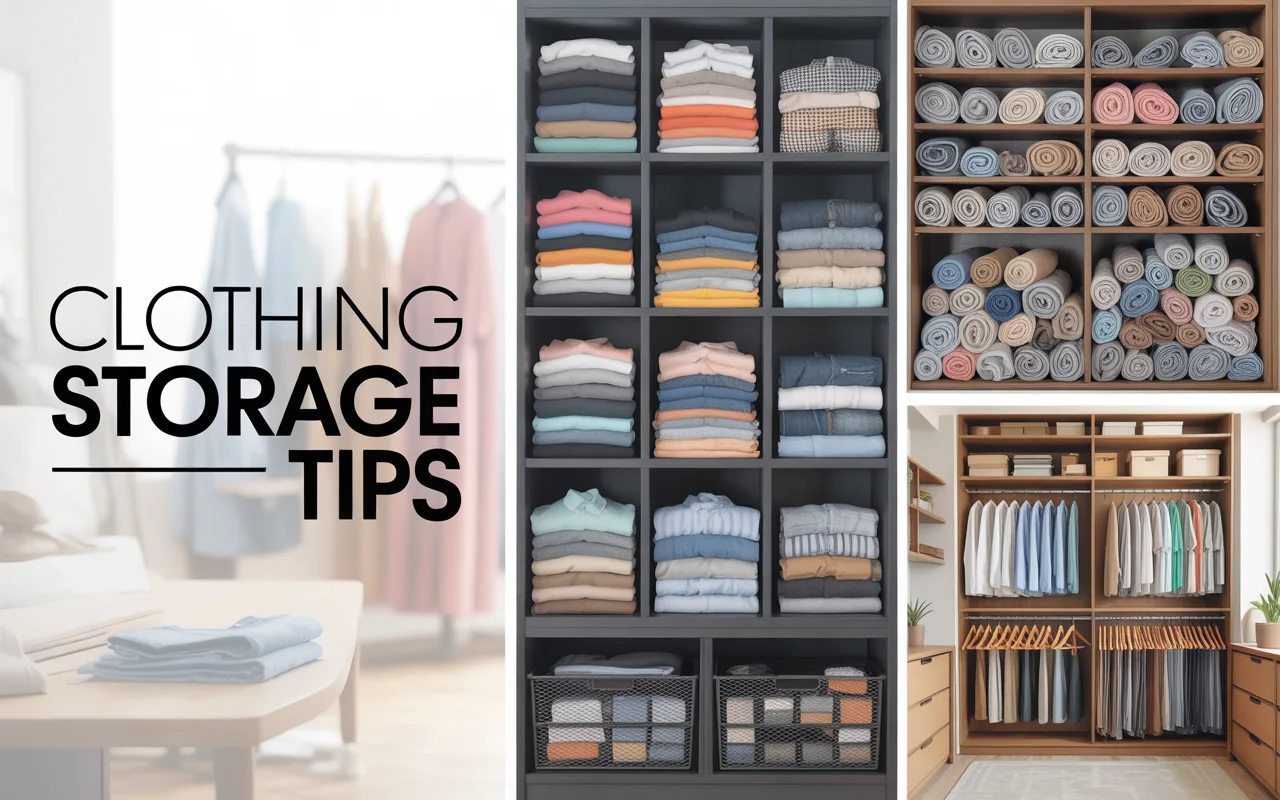
Discover practical clothing storage tips that save space and keep your clothes fresh. Learn folding methods, organizer ideas, and seasonal tricks for a tidy closet.
Do you open your closet and feel a bit lost? You are not alone. Many people struggle with too many clothes and not enough room. The good news is that you can fix this without buying a bigger house. Simple changes make a big difference. This article shares real clothing storage tips that work for any home. Whether you have a small apartment or a shared closet, these ideas help you stay organized. Let’s make your mornings easier and your clothes happier.
Keeping clothes neat is about more than looks. When you store things well, you save time. You also save money because clothes last longer. Wrinkles, dust, and moths damage fabrics. Proper storage stops these problems. As home organizer Marie Kondo once said, “The space in which we live should be for the person we are becoming now, not for the person we were in the past.” This means your closet should fit your life today. These clothing storage tips help you create that space.
Start with a Clean Slate
Before you organize, you need to clear out. Take everything from your closet. Yes, everything. This step helps you see what you own.
Sort Into Three Piles
- Keep: Clothes you wear often and love.
- Fix: Items with small problems like a missing button.
- Let Go: Things that do not fit or you have not worn in a year.
Be honest with yourself. If you have not worn it since last summer, you probably never will. Donate or sell these items. This makes room for the clothes you actually use. After sorting, you have less to store. This is the foundation of all good clothing storage tips.
Clever Folding Methods That Save Space
How you fold changes how much fits in your drawers. Many people just shove clothes in. This causes wrinkles and wasted space.
The KonMari Fold
This method lets clothes stand upright. You can see everything at once. Fold pants and shirts into small rectangles. Place them side by side like files in a drawer. This works great for t-shirts, jeans, and sweaters. You will fit more items and never dig for a bottom shirt again.
Rolling for Travel and Drawers
Rolling is another smart trick. Roll t-shirts, pajamas, and workout gear tightly. This prevents creases and saves room. Use these simple clothing storage tips to double your drawer space.
Table 1: Folding Methods Comparison
| Method | Best For | Space Saved | Wrinkle Risk |
|---|---|---|---|
| KonMari Fold | T-shirts, Jeans | High | Low |
| Rolling | Casual wear, Travel | Very High | Low |
| Flat Stacking | Sweaters, Bulky items | Low | High |
| Hanging | Dress shirts, Dresses | Medium | None |
Use Every Inch of Your Closet
Most closets have unused space. Look up high and down low. These areas are perfect for extra storage.
Add a Second Hanging Rod
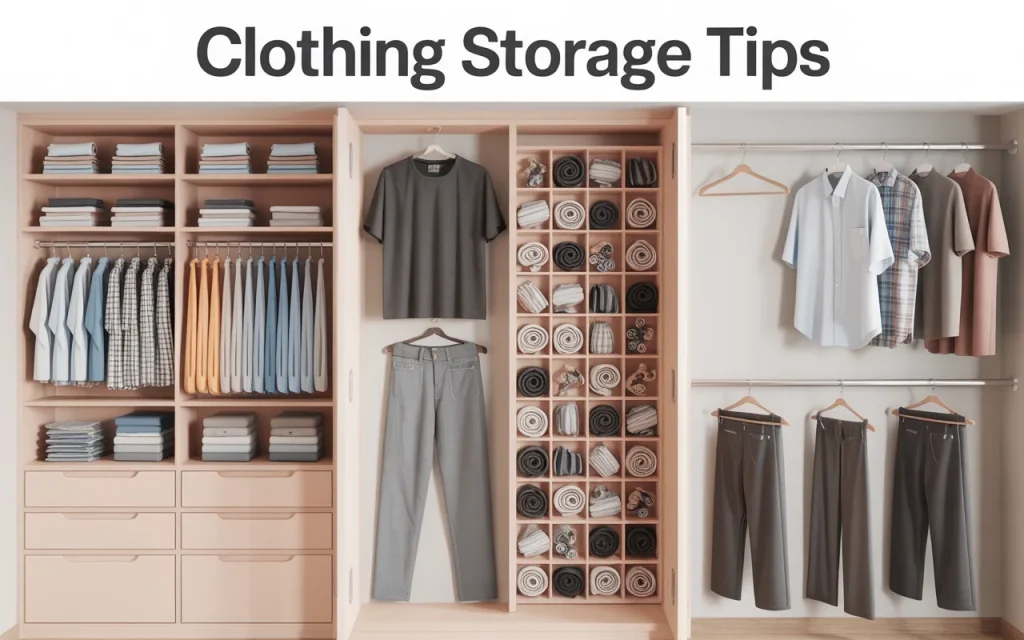
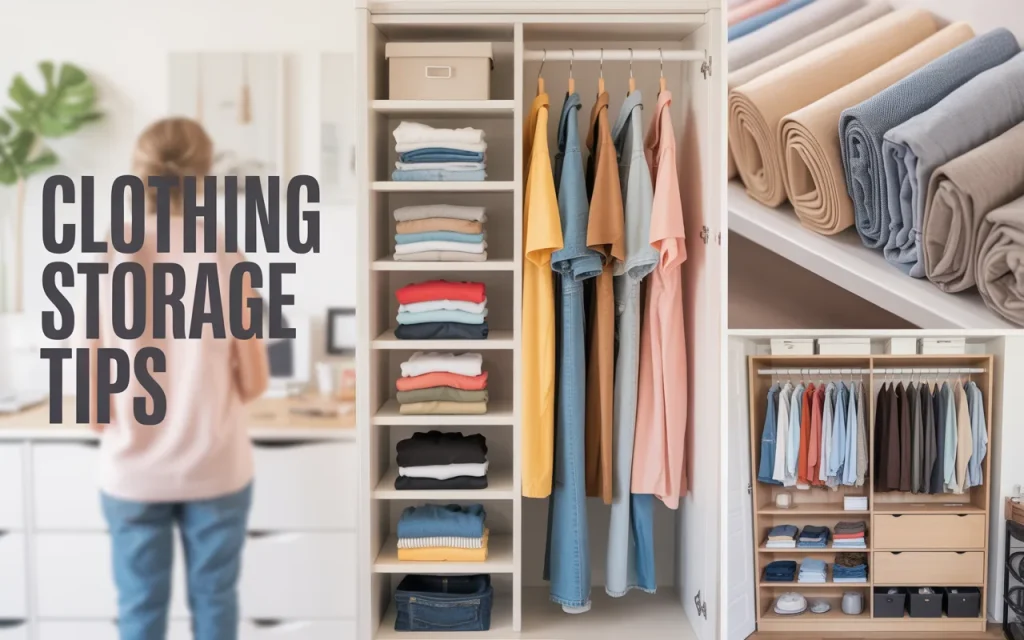
If your closet has one rod, add another below it. This gives you two levels. Use the top for shirts and the bottom for pants. You can buy simple rods that hang from the main rod. No tools needed. This is one of the easiest clothing storage tips for small closets.
Use Shelf Risers
Shelf risers create two layers on one shelf. Put jeans on the bottom and sweaters on top. You see everything without moving piles.
Door Space Is Gold
The back of your closet door is useful. Add hooks for robes, bags, or scarves. Over-door organizers have pockets for shoes or accessories. Do not let this space go to waste.
Seasonal Storage Solutions
You do not need all clothes out all year. Winter coats take up space in July. Summer dresses hide in January. Rotating clothes by season helps.
Under-Bed Storage
Beds offer lots of hidden space. Use flat bins that slide under. Store off-season clothes here. Vacuum-seal bags work well for bulky winter jackets. They shrink the size a lot. Label each bin so you know what is inside.
High Shelves
High closet shelves are for items you use less. Place holiday clothes or special occasion wear up high. Use a sturdy step stool to reach them. Remember to keep heavy items on lower shelves for safety.
Storage Bags and Bins
Clear bins are best. You can see what is inside. Fabric bins look nice but hide contents. If you use fabric, add a label. As professional organizer Peter Walsh notes, “Organization is not about perfection; it’s about efficiency, reducing stress and clutter, saving time and money, and improving your overall quality of life.” These clothing storage tips aim for that efficiency.
Smart Hanger Choices
Not all hangers are the same. The thin wire ones from the dry cleaner are not good. They bend and let clothes slip off.
Velvet Hangers
These are thin and non-slip. They take less space than plastic or wood. Dresses and blouses stay in place. You can fit more on the rod because they are slim.
Clip Hangers for Skirts and Pants
Use clip hangers for bottoms. They hold items straight without creases. Some have multiple clips for several pieces. This saves rod space.
Cascading Hooks
These hooks hang from one hanger and hold several items below. Great for scarves, ties, or belts. Keep similar items together for easy finding.
Drawer Organizers That Work
Drawers can become messy fast. Small items mix together. You waste time searching for one sock.
Dividers Are Your Friend
Use dividers to separate drawer sections. One section for socks, one for underwear, one for pajamas. Everything has a home. You can buy adjustable dividers or make your own with small boxes.
Store Items Vertically
Remember the folding tips from earlier? Use them in drawers too. Standing clothes upright lets you grab one without messing up others. This works for t-shirts, jeans, and even sweaters if folded well.
Table 2: Drawer Organizer Ideas
| Drawer Type | Organizer Suggestion | Benefits |
|---|---|---|
| Socks and Underwear | Small grid dividers | Keeps pairs together |
| T-shirts | Upright folding bins | See all options at once |
| Accessories | Compartment trays | No tangles or lost items |
| Workout Gear | Rolled in open bins | Grab and go easily |
Caring for Special Fabrics
Some clothes need extra care. Wool, silk, and leather cannot be treated like cotton t-shirts. Proper clothing storage tips protect these investments.
Wool and Cashmere
Moths love wool. They eat holes in your favorite sweaters. Use cedar blocks or lavender sachets to repel them. Wash wool before storing. Moths are attracted to sweat and food smells. Fold wool sweaters, do not hang them. Hanging stretches the shoulders.
Silk and Delicates
Keep silk away from sunlight. Sun fades the color. Store in a cool, dark place. Use padded hangers for silk dresses to keep the shape.
Leather and Suede
Leather needs air. Do not put it in plastic bags. Plastic traps moisture and causes mold. Use breathable garment bags instead. Keep leather away from heat sources.
Seasonal Refresh Routine
Set a reminder to check your closet every few months. A quick refresh keeps things from getting messy again.
Spring and Fall Switch
When seasons change, swap your clothes. Take out summer shorts and put away winter coats. While you do this, check for stains or damage. Fix small problems right away. This routine takes one hour but saves time all year.
The One-In-One-Out Rule
When you buy something new, let something go. This keeps your closet from overflowing. If you buy a new jacket, donate an old one. This rule works well for shoes and bags too. Designer Anya Hindmarch once said, “Buy less, choose well.” These clothing storage tips help you care for what you choose.
Shoe Storage Ideas
Shoes are hard to store. They come in different shapes and sizes. A pile of shoes on the floor looks messy and damages the shoes.
Over-the-Door Racks
These hold many pairs and take no floor space. Great for sneakers and flats. Clear pockets let you see each pair.
Stackable Shoe Boxes
Clear plastic boxes stack like blocks. You can build a tower. Each pair has its own box. Labels help you find the right shoes fast.
Under-Bed for Off-Season Shoes
Boots and heavy shoes go under the bed in summer. Sandals go under the bed in winter. Use a flat bin to keep them together and dust-free.
Laundry and Clean Clothes Flow
Your storage works better when laundry is under control. Dirty clothes should not mix with clean ones.
Baskets for Dirty Clothes
Have at least two baskets. One for lights and one for darks. This saves sorting time on laundry day. Put baskets where you undress, like the bathroom or bedroom.
Put Away Clean Clothes Fast
Do not let clean laundry sit in a basket for days. Fold or hang right away. Clothes get wrinkled and you lose track of what is clean. Make this a habit and your closet stays organized.
Multi-Purpose Furniture Ideas
Sometimes you need more than a closet. Furniture with storage helps a lot.
Storage Benches
A bench at the foot of your bed holds extra blankets or off-season clothes. You also get a place to sit while putting on shoes.
Ottomans with Space
Some ottomans open up. Store scarves, gloves, or small items inside. They look nice and add hidden storage.
Bed Frames with Drawers
Platform beds often have drawers underneath. This is great for extra linens or clothes. No need for separate under-bed bins.
Travel and Packing Tips
Good clothing storage tips also help when you travel. Packing well protects clothes and saves space.
Packing Cubes
These small bags organize your suitcase. One cube for shirts, one for pants, one for underwear. You find things fast and keep clothes neat.
Dry Cleaning Bags for Wrinkle Protection
Put dry cleaning bags over hanging clothes in your suitcase. Clothes slide against the plastic instead of wrinkling. This trick works well for suits and dresses.
Shoe Bags
Put shoes in fabric bags. This keeps dirt off your clothes. You can also use shower caps as cheap shoe covers.
Kids’ Clothing Storage
Kids grow fast and have lots of clothes. Their rooms need simple systems they can use.
Low Hanging Rods
Put rods where kids can reach. They learn to hang their own clothes. Use bins for socks and underwear with picture labels.
Rotate Sizes
Keep current sizes in the closet. Store bigger sizes in bins under the bed. When your child grows, swap them out. This keeps the closet from getting too full.
Easy Baskets
Use open baskets for pajamas and play clothes. Kids can toss them in without folding perfectly. Quick and easy for busy mornings.
Mistakes to Avoid
Even with good clothing storage tips, some habits cause problems. Watch out for these common errors.
Overcrowding
A packed closet crushes clothes. You cannot see what you own. Leave some space between items. This keeps clothes fresh and easy to grab.
Wrong Hangers
As mentioned, wire hangers are bad. They stretch necklines and let clothes fall. Switch to velvet or wood for better care.
Ignoring Smells
If your closet smells musty, find the cause. Moisture or dirty clothes cause odors. Fix leaks and wash clothes before storing. Use baking soda boxes to absorb smells.
Forgetting to Clean
Dust collects on clothes. Vacuum your closet floor and shelves sometimes. Wipe down rods and bins. Clean space feels better and protects your clothes.
Quick Daily Habits
Small daily actions keep your closet nice. These habits take minutes but work well.
Hang It Up at Night
When you get undressed, hang clothes right away. Do not throw them on a chair. This stops wrinkles and clutter.
One-Minute Tidy
Spend one minute each day fixing your closet. Straighten hangers, fold one pile, or put shoes away. This small effort adds up.
Weekly Check
Look through your closet each week. Pull out anything that needs washing or repair. Handle small problems before they grow.
Frequently Asked Questions
How often should I clean out my closet?
Try to do a deep clean every six months. Seasonal changes are a good time. This keeps your closet from overflowing.
What is the best way to store winter coats in summer?
Clean them first. Then use vacuum-seal bags to save space. Store under the bed or on a high shelf. Add cedar blocks to repel moths.
Can I store clothes in plastic bins?
Clear plastic bins work well. Make sure clothes are clean and dry first. Avoid non-breathable plastic for long-term storage of delicate fabrics.
How do I stop my clothes from smelling musty?
Keep your closet dry. Use moisture absorbers if needed. Do not store damp clothes. Add lavender sachets or cedar for a fresh smell.
Are fabric bins good for closet shelves?
Yes, they look nice and hide clutter. Label them so you remember what is inside. Use them for items you do not need every day.
What should I do with clothes I rarely wear?
Store them separately from daily clothes. Use high shelves or under-bed bins. Rotate them in if you start wearing them more.
How do I organize a small closet with my partner?
Divide the space fairly. Give each person their own sections. Use matching hangers for a tidy look. Share shelves for items like sheets or bags.
Conclusion
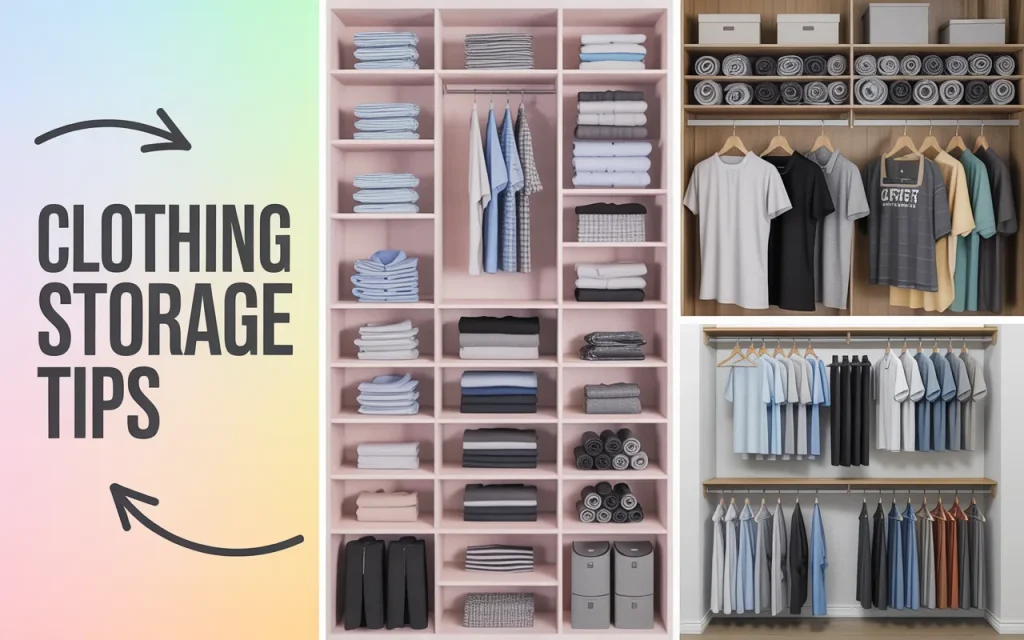
A tidy closet is possible for everyone. These clothing storage tips help you use your space better. Start by clearing out old clothes. Fold neatly to save room. Use every part of your closet from floor to door. Store seasonal items away. Choose the right hangers and drawer organizers. Protect special fabrics with care. Add small daily habits to stay organized.
Your clothes last longer when stored well. You save time finding what you need. Mornings become easier and less stressful. Remember the words of organizing expert Peter Walsh: efficiency and less stress are the goals. You do not need a perfect closet. You need one that works for you.
Try one tip this weekend. Maybe clear a drawer or add a second rod. Small steps lead to big changes. Soon you will open your closet and feel calm. Your clothes will be ready when you are. Happy organizing
Related posts
 Best Compact Powder for Women: 2026 Buyer Guide
Finding the best compact powder for women in 2026. We compare top-rated matte, mineral, and lightweight pressed powders to help you choose the right finish. Finding…
 Best Casual Wear for Women: 2026 Style and Comfort Essentials
Discover the best casual wear for women in 2026. We compare top-rated trousers and versatile tops to help you build a comfortable, stylish everyday wardrobe. Finding…
 Best Claw Clips for Thick Hair in 2026
Finding the best claw clips for thick hair requires a balance of grip and size. Explore our top 2026 recommendations for secure, stylish, and reliable styling.…