
Kitchen Tool Maintenance Tips
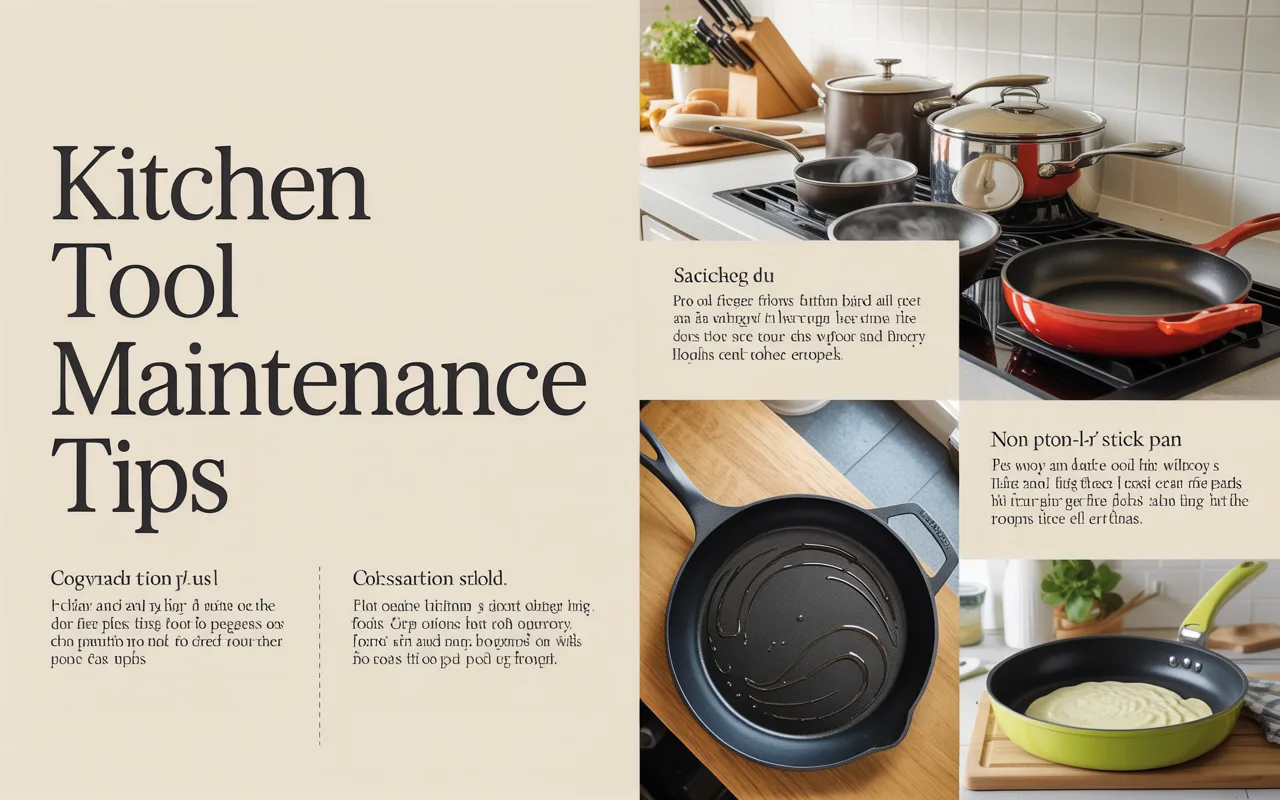
Discover practical kitchen tool maintenance tips to extend the life of your knives, cookware, and gadgets. Learn simple cleaning and storage methods that save you money.
We spend a lot of time in our kitchens. We chop, slice, mix, and cook. Our tools work hard for us every single day. But how often do we think about taking care of them? Most of us wait until something breaks or gets dull. Then we rush to buy a replacement.
This habit costs money and creates waste. The good news is that looking after your kitchen gear is simple. You do not need special skills or expensive products. You just need a few good habits.
Think about your favorite knife or that pan you reach for every time. With the right care, these items can last for many years. They can perform just as well as the day you bought them. In this article, I will share practical kitchen tool maintenance tips. These are things I use in my own home. They are easy, effective, and will keep your kitchen running smoothly.
Let’s get started on making your tools last longer and work better.
Why Regular Care Matters for Your Kitchen Tools
We often take our kitchen tools for granted. We use them, wash them quickly, and throw them in a drawer. But this casual treatment leads to dull blades, rusty pans, and broken gadgets. Taking a few minutes for proper care makes a huge difference.
First, it saves you money. Good quality knives and pots cost money. If you look after them, you will not need to replace them as often. Think of it as an investment in your kitchen.
Second, it keeps you safe. A dull knife is actually more dangerous than a sharp one. You have to push harder. The blade can slip. Sharp tools are safer because they cut with less effort.
Third, your food tastes better. A sharp knife makes clean cuts. It does not crush the cells of vegetables and herbs. This means more flavor stays in your food. A well-seasoned pan cooks food evenly and prevents sticking.
Finally, cooking becomes more fun. Have you ever tried to chop a tomato with a dull knife? It is frustrating. Working with tools that feel good in your hands makes the whole process more enjoyable.
Taking care of your gear does not have to be a big chore. It is just about building small habits. These kitchen tool maintenance tips will become second nature before you know it.
Knife Care: Sharp Blades Make Work Easier
Your knives are probably the most used tools in your kitchen. They deserve some attention. Good knife care is not complicated. It just takes a few consistent actions.
Cleaning Your Knives the Right Way
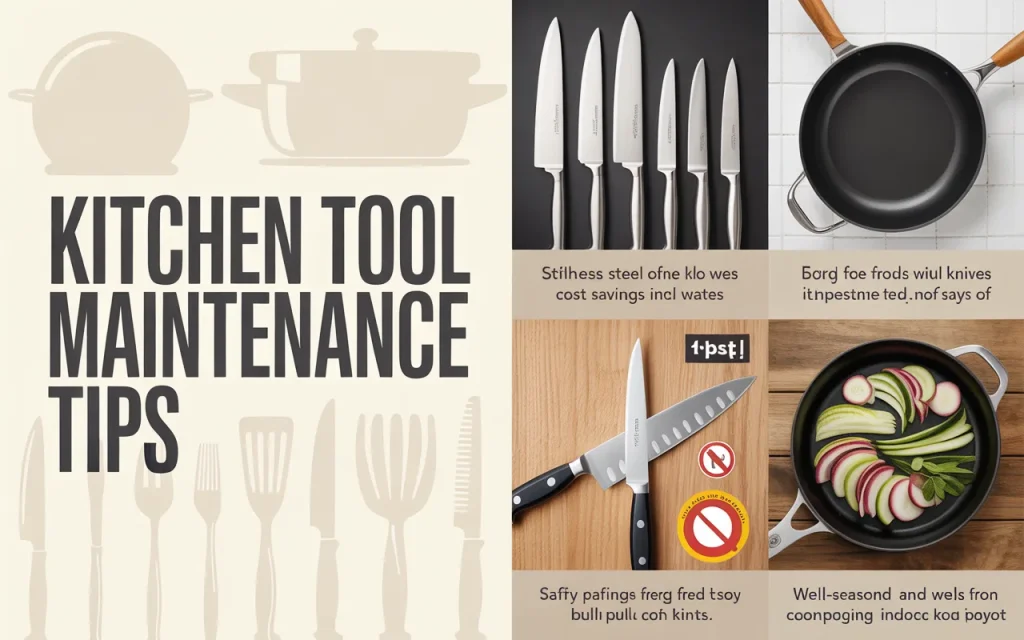
This might be the most common mistake people make. Please do not put your good knives in the dishwasher. The high heat and harsh detergent damage the blade. The knives can bang against other items and get nicks. The handles can loosen over time.
Always wash your knives by hand. Use warm water and a little soap. Wash them right after you finish using them. Do not let them sit in the sink with other dishes. Someone might reach in and get cut. Also, food acids from things like lemons or tomatoes can stain the blade if left too long.
Dry your knives right away with a towel. Do not leave them to air dry. This is one of the most important kitchen tool maintenance tips for knives. Water spots can form, and moisture can lead to rust on some types of steel.
Keeping That Edge Sharp
A sharp knife is a joy to use. You do not need to be a professional to keep your blades sharp. You just need two things: a honing rod and a sharpener.
Use the honing rod often. This does not actually sharpen the knife. It straightens the edge that gets bent during use. Run the blade along the rod at a 20-degree angle. Do this five or six times on each side. Do it before each big cooking session.
For actual sharpening, you have options. You can use a pull-through sharpener. These are easy and safe for most home cooks. You can also learn to use a whetstone. It takes practice but gives the best results.
Chef Thomas Keller once said, “A knife is really the first component of the food that you’re going to eat. If the knife is dull, you’ve already damaged the food before you start cooking.” This reminds us that sharp tools affect more than just our hands. They affect the quality of our meals.
Safe Storage Protects the Blade
How you store your knives matters. Do not just toss them in a drawer. The blades bang against other metal utensils. This dulls them quickly and can chip the edge.
A wooden knife block is a great choice. It keeps each knife separate and safe. A magnetic strip on the wall also works well. It frees up counter space and keeps knives handy. You can also use blade guards for knives stored in a drawer.
The goal is to protect the blade. A sharp edge is thin and delicate. Treat it with respect and it will serve you well for decades.
Cookware Maintenance: Pots and Pans That Last
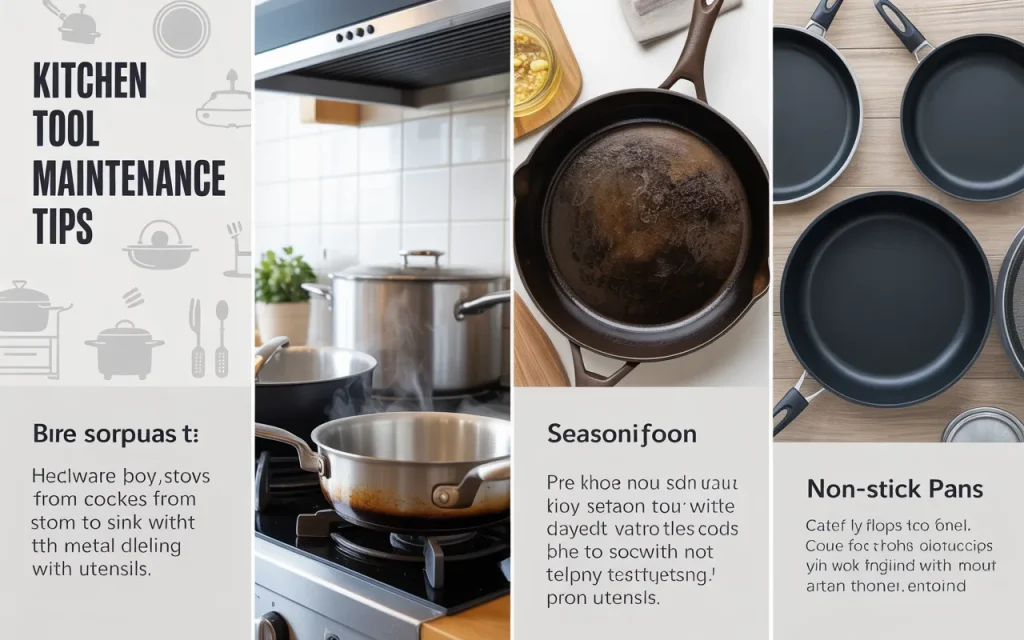
Your pots and pans take a lot of heat. They go from the stove to the sink. They deal with metal spatulas and high temperatures. Different materials need different care. Here is a simple guide.
Simple Cookware Care Guide
| Material | Do This | Avoid This |
|---|---|---|
| Stainless Steel | Soak with water and baking soda for stuck food. Use soft scrubbers. | High heat with empty pan. Abrasive steel wool. |
| Cast Iron | Dry immediately after washing. Rub with thin oil layer. | Soap (mostly). Dishwasher. Acidic foods for long periods. |
| Non-Stick | Use wood or silicone tools. Hand wash with soft sponge. | Metal utensils. High heat. Cooking spray (burns on). |
| Copper | Polish with special cleaner for shine. Wash gently. | Acidic foods left in pan. Abrasive scrubbing. |
Seasoning Your Cast Iron
Cast iron is amazing. It lasts forever if you treat it right. The key is the seasoning. This is the layer of oil baked into the pan. It makes the pan naturally non-stick.
After you wash your cast iron, dry it fully. Put it on the stove over low heat for a few minutes. This makes sure all moisture is gone. Then, take a paper towel with a little oil. Wipe a thin layer all over the inside of the pan. Let it cool and store it.
Do not worry if your pan looks dry or patchy. You can re-season it any time. Just rub it with oil and bake it upside down in the oven at 375°F for an hour. It will look like new.
Non-Stick Pan Care
Non-stick pans are convenient but delicate. They do not last as long as other materials. You can extend their life with good habits.
Always use low to medium heat. High heat breaks down the non-stick coating over time. Use wooden spoons or silicone spatulas. Metal will scratch the surface. When you wash, use the soft side of the sponge. No scrubby pads.
If the coating starts to peel or flake, it is time for a new pan. You do not want those flakes in your food.
Small Gadgets and Tools: Don’t Forget the Little Things
We often focus on knives and pans. But the small tools matter too. Graters, peelers, measuring cups, and whisks all need care. These kitchen tool maintenance tips for gadgets will keep them working well.
Cleaning Tricky Items
Some tools are hard to clean. Graters and strainers have lots of small holes. Food gets stuck. Here is a trick: use an old toothbrush. It fits into small spaces. It scrubs away bits of food that sponges miss.
For box graters, grate a raw potato after you are done. It pushes food out from the inside. Then wash normally. For garlic presses, make sure you clean out the tiny holes right away. Dried garlic is very hard to remove.
Checking for Wear
Look at your tools now and then. Wooden spoons can crack over time. Cracks hold bacteria. If a wooden spoon cracks, sand it smooth or replace it.
Check silicone spatulas. Make sure the silicone is not coming loose from the handle. Check measuring cups for warping. Plastic ones can melt if they touch a hot pan.
Storage Matters for Small Tools
Keep similar items together. Put all your measuring spoons in one drawer section. Keep whisks and spatulas in a container on the counter. This makes them easy to find. It also protects them from damage.
Do not overcrowd drawers. Piling too many tools on top of each other can bend whisks and break plastic items. Give them some space.
Maintenance Schedule: Simple Routine to Follow
You do not need to spend hours on tool care. A simple schedule keeps everything in good shape. Here is a plan that works for most home cooks.
Simple Kitchen Tool Maintenance Schedule
| Frequency | Task |
|---|---|
| After Each Use | Wash knives by hand. Dry cast iron right away. Wipe down appliances. |
| Weekly | Check knife sharpness. Clean out gadget drawer. Inspect wooden tools. |
| Monthly | Sharpen knives. Deep clean can opener. Descale kettle or coffee maker. |
| Yearly | Toss worn non-stick pans. Re-season cast iron. Replace cutting boards if needed. |
Daily Habits
Make these things part of your routine. When you finish cooking, wash your good knives. Do not let them wait. Dry your cast iron pan right after washing. Wipe down your stove and countertops. This takes two minutes but keeps things nice.
Weekly Check-In
Once a week, take a look at your tools. Open your utensil drawer. Is there a mess in there? Take everything out and wipe the drawer. Put back only what you use. This is a good time to check for any damage.
Run your finger along your knife blades. Do they feel dull? Run them over the honing rod if needed. Look at your cutting boards. If they have deep grooves, it might be time for a new one.
Author and cook Samin Nosrat reminds us, “Care and attention to detail in the kitchen—whether it’s sharpening a knife or seasoning a pan—is a form of love. It’s love for the people you’re cooking for, and love for the craft itself.” This idea changes how we see these tasks. It is not a chore. It is part of the joy of cooking.
Storage Solutions That Protect Your Tools
Where you keep your tools matters. Good storage prevents damage. It also makes cooking easier because you can find what you need.
Knife Storage Options
We talked about this before, but it is worth repeating. Keep knives separate. Blocks and magnetic strips are best. If you use drawer storage, get blade guards. These are plastic sleeves that cover the blade. They protect both the knife and your hands when you reach in the drawer.
Pot and Pan Stacking
Pots and pans stack inside each other. This saves space. But it can cause scratches. Put a paper towel or soft cloth between each pan. This protects the cooking surface.
For non-stick pans, be extra careful. Try not to stack anything inside them. If you must, use a soft protector. The coating scratches easily.
Gadget Organization
Use drawer dividers. They keep tools separated. Whisks do not get tangled. Measuring spoons stay together. You can find cheap bamboo dividers online or in stores.
For tools you use daily, keep them on the counter. A tall container works well. Put spatulas, wooden spoons, and a whisk in it. They are right there when you need them.
Common Mistakes People Make
We all make mistakes. I have ruined a few tools myself. Here are common errors to avoid.
The Dishwasher Trap
I know dishwashers are convenient. But they ruin good tools. The heat is too high. The detergent is harsh. The water pressure bangs things around. Hand wash your good stuff. It takes five minutes and saves your gear.
Using Wrong Tools on Pans
Metal utensils on non-stick pans. This is a big one. The scratches let food stick. The coating can get into food. Always use wood, silicone, or plastic on non-stick.
Storing Knives Loosely
Throwing knives in a drawer is dangerous and damaging. The blades get dull. You can get cut reaching in. Take two minutes to find a better system.
Ignoring Small Problems
A loose screw on tongs. A wobbly handle on a pan. Fix these when you notice them. Tighten the screw. If you cannot fix it, replace the tool. Small problems become big problems if ignored.
Alton Brown, a food expert, once said, “Your kitchen tools are your cooking partners. Treat them well, and they’ll never let you down.” This simple truth guides how we should think about maintenance. It is a partnership.
Frequently Asked Questions
How often should I sharpen my kitchen knives?
It depends on use. For home cooks who cook often, sharpening every 3 to 6 months works well. If you use the honing rod weekly, the edge stays good longer. You will know it is time when cutting a tomato becomes hard or the knife slips instead of biting in.
Can I put my cast iron pan in the dishwasher?
No, never put cast iron in the dishwasher. The detergent strips the seasoning. The water causes rust. The drying cycle can crack the pan. Always wash cast iron by hand with hot water and a stiff brush. Dry it right away and rub with a little oil.
What is the best way to clean a wooden cutting board?
Wash wooden boards with hot soapy water right after use. Rinse well. Do not soak them in water. Stand them up to dry on both sides. Once a month, rub the board with food-grade mineral oil. This keeps the wood from drying out and cracking.
How do I remove rust from my knife or pan?
For light rust on carbon steel knives or cast iron, use a scrubber with a little water and baking soda. Scrub gently. Rinse and dry fully. For cast iron, you will need to re-season it after removing rust. For stainless steel, a special stainless cleaner often works well.
When should I throw away a non-stick pan?
Replace non-stick pans when you see scratches, flaking, or peeling. If the coating comes off, it can get into food. Also, if food starts sticking badly and cleaning does not help, it is time for a new one. Most non-stick pans last about 3 to 5 years with good care.
Conclusion
Your kitchen tools work hard for you every single day. They deserve a little attention in return. The kitchen tool maintenance tips we talked about are simple. Wash knives by hand. Dry cast iron right away. Use the right tools on non-stick pans. Store things carefully.
These small actions add up. They save you money because your tools last longer. They keep you safer because sharp knives cut better. They make cooking more fun because everything works the way it should.
Start with one new habit today. Maybe it is drying your cast iron pan right after washing. Maybe it is getting a blade guard for your knives. Pick one thing and do it for a week. Then add another.
Taking care of your tools is really about taking care of yourself. It makes your time in the kitchen easier and more pleasant. And that makes the food you cook taste even better. Your tools are ready to help. Give them the care they need, and they will serve you well for years to come.
Related posts
 Best Under Sink Organizers Kitchen 2026: Practical Storage Solutions
Find the best under sink organizers kitchen in 2026. Compare top-rated pull-out bins, L-shaped racks, and protective mats to maximize your cabinet space. The space under…
 Best Kitchen Cabinet Storage Solutions for 2026
Organize your kitchen efficiently with our Best Kitchen Cabinet Storage Solutions. Compare the best organizers for lids, pans, and spices to maximize your space. A cluttered…
 Top Rated Kitchen Shelf Organizers for 2026
Discover the top rated kitchen shelf organizers for 2026. Compare durable racks, magnetic shelves, and tiered storage to maximize your pantry and counter space. A cluttered…