
LED Face Mask Benefits
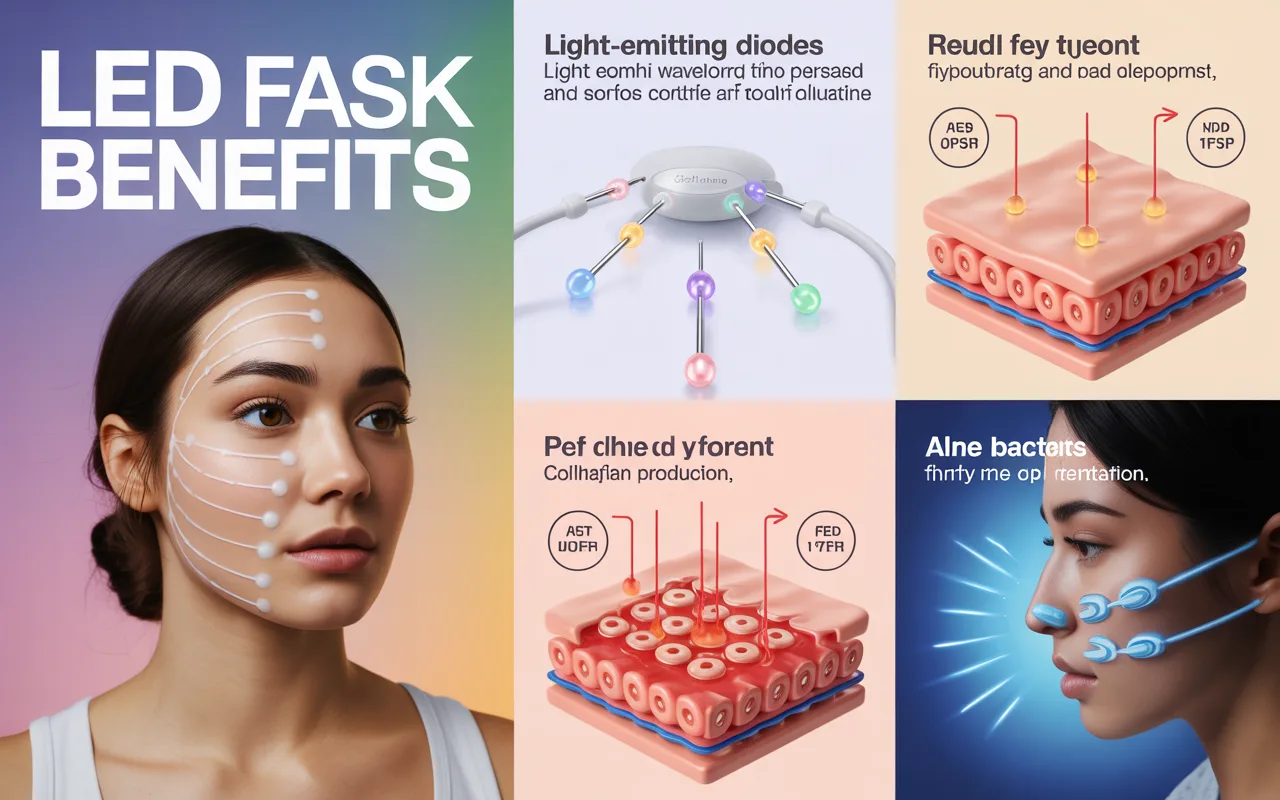
Discover the real LED face mask benefits for acne, aging, and glow. Learn how light therapy works, what results to expect, and how to choose the right mask for your skin.
Have you noticed LED face masks popping up all over social media and beauty blogs? You might wonder if they actually work or if this is just another expensive skincare gadget. The truth is, LED light therapy has been around for decades in dermatology offices. Now these devices have become affordable for home use.
LED face mask benefits go far beyond what you might expect. People use them for acne, wrinkles, redness, and overall skin health. The technology sounds fancy, but the idea is simple. Different colors of light affect your skin cells in different ways. Some lights kill bacteria. Others boost collagen. Some reduce inflammation.
I have spent time researching these devices and talking to dermatologists. I also tested a few masks myself to see what the hype is about. This guide will walk you through everything you need to know about LED face mask benefits. You will learn which light color does what, how often to use your mask, and what results are realistic.
Let’s get into the science and the real-world results of LED light therapy.
What Is LED Light Therapy and How Does It Work?
LED stands for light emitting diode. These are small lights that give off specific wavelengths of energy. Your skin cells actually respond to this light energy. Think of it like plants using sunlight for photosynthesis. Your skin uses light energy to repair and renew itself.
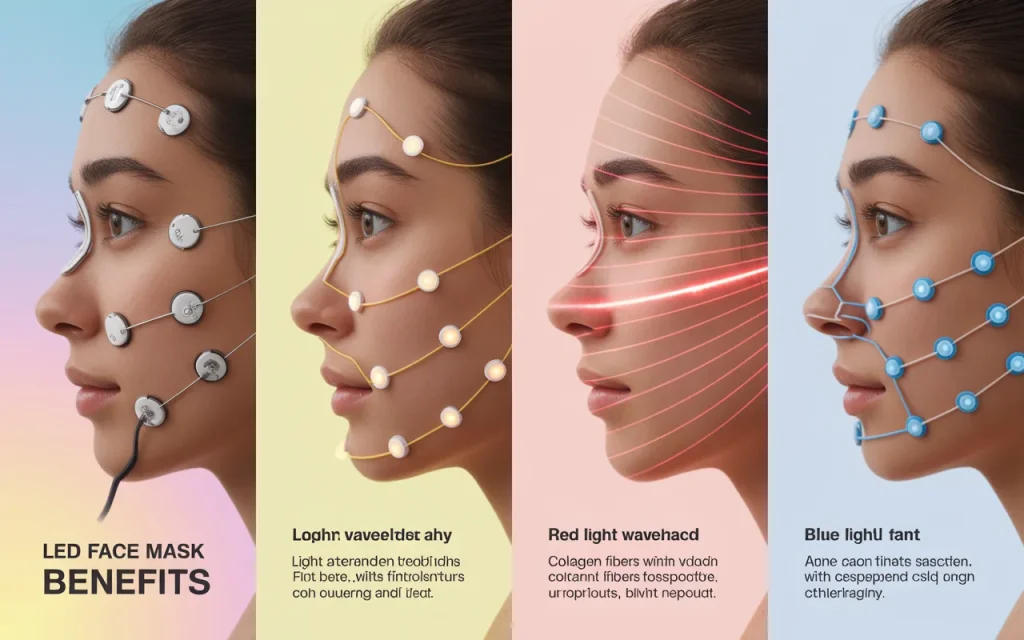
The light penetrates different layers of your skin depending on the color. Red light goes deeper. Blue light stays closer to the surface. This is why different colors treat different problems.
Dr. Rachel West, a board-certified dermatologist, explains: “LED light therapy works through a process called photobiomodulation. The light energy stimulates cellular activity. It wakes up tired cells and tells them to work harder at repairing damage and fighting inflammation.”
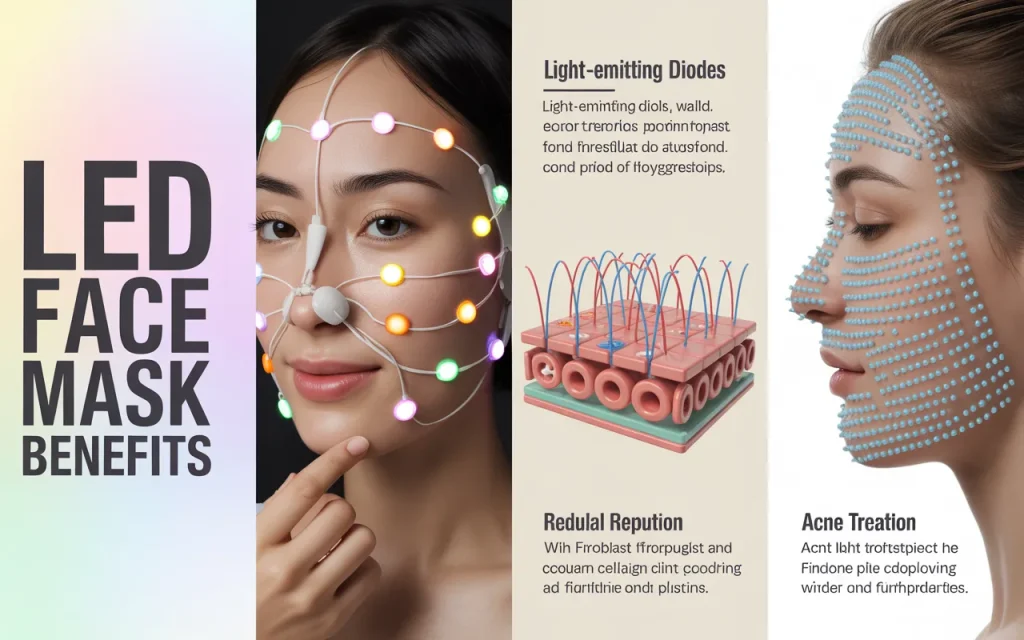
Most at-home LED face masks combine multiple light colors. This way you can target several skin concerns at once. The masks fit over your face and leave your eyes and mouth exposed. You wear them for about 10 to 20 minutes while doing other things around the house.
The Main LED Face Mask Benefits for Different Skin Concerns
LED face mask benefits cover a wide range of skin issues. You do not need a different machine for each problem. Most quality masks offer several light options. Here are the main benefits people experience with regular use.
Red Light Therapy for Anti-Aging and Collagen
Red light is the most popular option in LED face masks. It targets the deeper layers of your skin where collagen and elastin live. Collagen is what keeps skin firm and plump. As we age, collagen production slows down. This leads to fine lines and sagging.
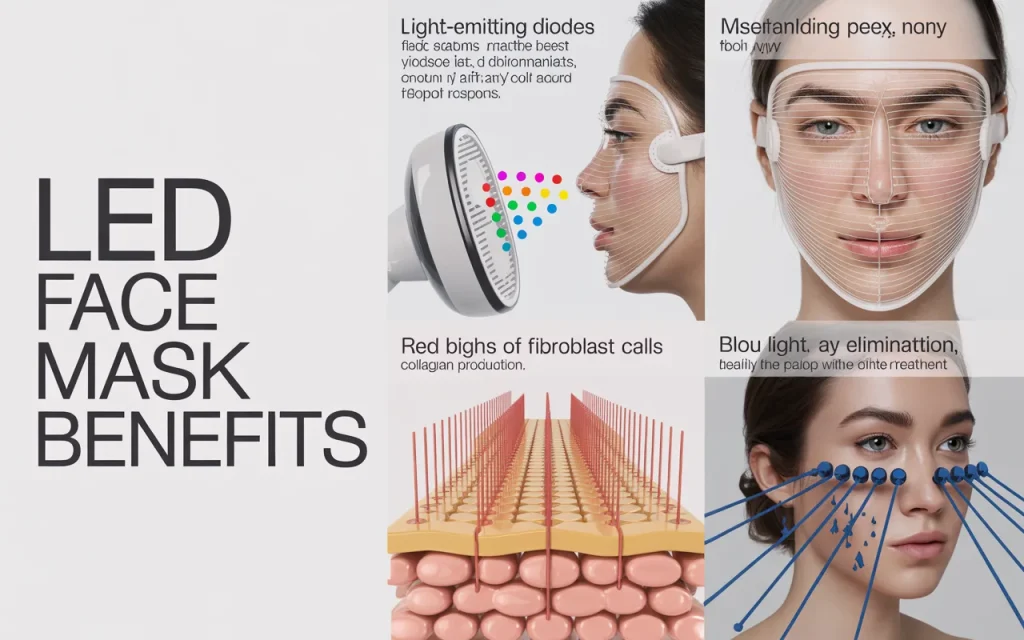
Red light wakes up fibroblast cells. These are the cells that make collagen. When they get more energy, they produce more collagen. Over time, this fills in fine lines from the inside out.
What red light helps with:
- Fine lines around eyes and mouth
- Skin firmness and elasticity
- Overall skin texture
- Dull, tired-looking skin
Most people notice a healthy glow first. The deeper changes like fewer wrinkles take two to three months of regular use.
Blue Light Therapy for Acne and Breakouts
If you struggle with breakouts, blue light might be your new best friend. Blue light targets the surface of your skin where acne bacteria live. These bacteria, called P. acnes, create inflammation and pimples.
The blue light kills these bacteria without hurting your skin cells. This is different from harsh acne treatments that can dry out your face. Blue light also helps calm existing breakouts faster.
Sarah Chen, an esthetician who uses LED in her practice, shares: “My clients with persistent acne see the biggest difference with blue light. It reduces the bacteria count on their skin. Combined with red light for healing, their skin clears up faster than with topical treatments alone.”
Blue light works best for active breakouts. It does not fix hormonal issues or clogged pores from dead skin cells. But it is a great addition to your acne routine.
Near-Infrared Light for Deep Healing
Near-infrared light is not visible to the human eye. But many LED face masks include it because of its healing powers. This light goes deeper than red light. It reaches muscles, nerves, and even bones.
Near-infrared light reduces inflammation deep in the tissue. It also improves blood flow and speeds up healing. If you have redness, sensitive skin, or slow healing after breakouts, this light helps.
The combination of red and near-infrared gives the best anti-aging results. The red builds collagen while the infrared calms inflammation and brings nutrients to the skin.
Yellow and Green Light Options
Some LED face masks include additional colors like yellow and green. These are less common but still useful.
Yellow light helps with redness and sensitivity. It calms the skin and reduces visible blood vessels. People with rosacea or very sensitive skin often prefer yellow light.
Green light targets dark spots and hyperpigmentation. It helps break up excess melanin in the skin. This evens out skin tone over time.
What Results Can You Expect and When?
LED face mask benefits do not happen overnight. This is not a quick fix like a chemical peel or filler. The changes happen slowly as your skin cells respond to the light.
Here is a realistic timeline of what to expect:
Week 1 to 2: Your skin might look brighter right after using the mask. This is from increased blood flow. It fades after a few hours. Some people notice their skin feels softer.
Week 3 to 4: The glow lasts longer. Breakouts may heal faster. Fine lines might look slightly softer right after treatment.
Month 2 to 3: This is when real changes start showing. Collagen takes time to build. You need at least eight weeks of consistent use to see firmer skin and fewer wrinkles.
Month 4 to 6: Maximum results appear. Your skin texture improves. Old acne scars look less noticeable. Fine lines are visibly reduced.
Dr. Michael Torres, a cosmetic dermatologist, notes: “Patients often expect too much too fast with LED. I tell them to think of it like exercise for your face. You would not expect a toned body after one workout. Your skin needs the same patience and consistency.”
Consistency matters more than anything with LED light therapy. Using your mask three to five times per week gives the best results. Missing weeks at a time means you start over.
How to Choose the Right LED Face Mask
Not all LED face masks are created equal. The market is full of options at different price points. Here is what to look for when shopping.
Wavelength Matters Most
The most important factor is the wavelength of light. This is measured in nanometers or nm. Different wavelengths reach different depths in the skin.
For red light, look for wavelengths between 630nm and 660nm. This range penetrates deep enough to reach collagen-producing cells.
For near-infrared, look for 810nm to 850nm. This goes even deeper for healing.
For blue light, 415nm is the standard wavelength for killing acne bacteria.
Cheap masks might not list their wavelengths. Avoid these. You want a mask that specifies the exact numbers.
Energy Output and Intensity
Wavelength gets the light to the right place. But the light needs enough energy to actually do something. This is measured in milliwatts per square centimeter.
Higher intensity means shorter treatment times. Medical-grade devices have high intensity. At-home masks have lower intensity but you use them longer.
Look for masks with at least 30 to 50 milliwatts per square centimeter for red light. This ensures you get enough energy in a reasonable treatment time.
Safety Features and Comfort
LED face masks should have eye protection. Some have built-in goggles. Others have shields that block light from your eyes. Never look directly at the lights.
Comfort matters because you will use this mask several times a week. Look for lightweight designs with adjustable straps. The mask should fit your face shape without pressing too hard.
Comparison of Common LED Face Mask Features:
| Feature | What to Look For | Why It Matters |
|---|---|---|
| Wavelengths | 630-660nm red, 810-850nm infrared | Correct penetration for results |
| Light intensity | At least 30 mW/cm² | Enough energy in reasonable time |
| Treatment zones | Full face coverage | Treats all areas evenly |
| Eye protection | Built-in shields or goggles | Prevents eye strain and damage |
| Timer settings | Automatic shut-off | Safe and convenient use |
How to Use Your LED Face Mask for Best Results
Getting the most from your LED mask is about more than just turning it on. Here is how to build it into your routine.
Clean Skin Is Essential
Always start with clean, dry skin. Dirt, oil, and makeup block the light from reaching your skin cells. Wash your face gently and pat it dry before using the mask.
Do not put anything on your skin before treatment. Serums and moisturizers can actually block some wavelengths. Apply your skincare products after the light therapy. The light helps products absorb better anyway.
Positioning and Timing
Place the mask directly against your skin. Most masks fit snugly against the face. This ensures the light hits your skin at the right angle.
Follow the manufacturer’s timing instructions. Most sessions last between 10 and 20 minutes. Do not exceed the recommended time. More is not better with LED therapy. Overdoing it can actually stress your skin.
Use your mask three to five times per week for the first two to three months. After that, you can drop to two to three times per week for maintenance.
Combine With Other Treatments
LED light therapy works well with other skincare treatments. Use it after microneedling or chemical peels to speed healing. The light reduces inflammation and helps your skin repair faster.
You can also use LED on the same days as other active ingredients. Just remember to apply the light first on clean skin. Then use your serums and moisturizers after.
Safety and Who Should Avoid LED Light Therapy
LED light therapy is generally very safe. It is non-invasive and does not use UV light. There is no burning or damage to the skin. But some people should be careful.
People who are pregnant should talk to their doctor before using LED masks. There is not enough research on how light therapy affects pregnancy.
If you take medications that make your skin sensitive to light, check with your dermatologist. Some antibiotics and acne medications increase light sensitivity.
People with epilepsy should avoid flashing lights. Most LED masks use steady light, but check the product specifications.
Never use LED therapy over areas with active skin cancer. If you have a history of skin cancer, ask your doctor first.
Frequently Asked Questions
How long until I see LED face mask benefits?
Most people notice better skin texture and glow within two to four weeks. Deeper changes like fewer wrinkles take two to three months of consistent use.
Can I use my LED mask every day?
Yes, daily use is safe for most masks. But follow your device instructions. Some masks work best three to five times per week. More is not always better.
Do LED face masks hurt?
No, LED light therapy is painless. You might feel warmth from the lights but no pain or discomfort.
Can I wear makeup after using my LED mask?
Yes, you can apply makeup right after treatment. The light helps your skin absorb products better, so your makeup might actually look smoother.
Are at-home masks as good as professional treatments?
Professional devices are stronger, so you get faster results. But at-home masks work well with consistent use. They cost less than a series of office treatments over time.
Will LED light therapy work for hormonal acne?
Blue light kills bacteria, so it helps with inflamed breakouts. But hormonal acne needs internal treatment too. LED works best as part of a complete acne routine.
Can teenagers use LED face masks?
Yes, LED therapy is safe for teens dealing with acne. Blue light is especially helpful for teenage breakouts without harsh side effects.
Conclusion
LED face mask benefits are real and backed by science. These devices offer a gentle way to improve your skin without needles, chemicals, or downtime. Red light builds collagen for firmer skin. Blue light kills acne bacteria. Near-infrared light heals from deep within.
The key to success with LED light therapy is patience and consistency. You will not see dramatic changes overnight. But with regular use over several months, your skin will look healthier, clearer, and more youthful.
When choosing a mask, focus on quality. Look for proper wavelengths and enough intensity. A good mask lasts for years and pays for itself compared to professional treatments.
Remember to keep your skin clean before each session. Use the mask as directed, and be consistent. Your skin cells respond to light therapy like exercise for your face. The more regularly you do it, the better your results.
LED light therapy is not magic. It is simple science that helps your skin do what it already knows how to do repair and renew itself. Give it time, and your skin will thank you.
Related posts
 Best Compact Powder for Women: 2026 Buyer Guide
Finding the best compact powder for women in 2026. We compare top-rated matte, mineral, and lightweight pressed powders to help you choose the right finish. Finding…
 Best Casual Wear for Women: 2026 Style and Comfort Essentials
Discover the best casual wear for women in 2026. We compare top-rated trousers and versatile tops to help you build a comfortable, stylish everyday wardrobe. Finding…
 Best Claw Clips for Thick Hair in 2026
Finding the best claw clips for thick hair requires a balance of grip and size. Explore our top 2026 recommendations for secure, stylish, and reliable styling.…