
How Do You Check Coolant Level Correctly
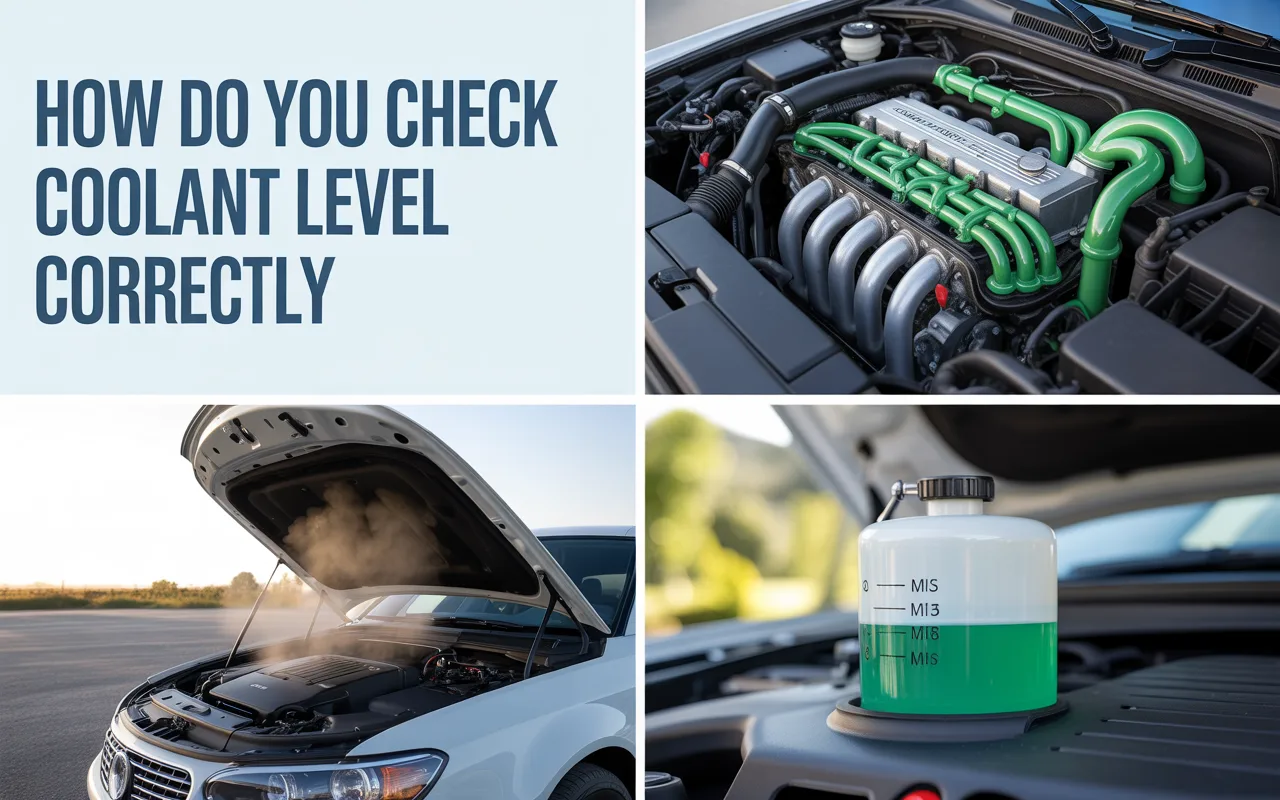
Checking your car’s coolant level is one of those simple jobs that can save you from a major headache later. When your engine runs low on coolant, it can overheat quickly. This might lead to expensive repairs. The good news is that learning how do you check coolant level correctly takes just a few minutes. You do not need to be a mechanic to do it right.
Many drivers skip this simple check. They only think about coolant when the temperature gauge goes high. By then, it might be too late. Regular checks keep your engine happy and help you spot small problems before they grow.
In this guide, I will show you exactly how to check coolant level correctly. I will cover the tools you need, the safety steps, and what to look for. I will also answer common questions about coolant colors and types. Let us get started.
Why Coolant Matters for Your Engine
Your engine creates a lot of heat when it runs. Coolant, also called antifreeze, moves through the engine and takes that heat away. It goes to the radiator, where air cools it down. Then it goes back to the engine to do the job again.
Coolant does more than just stop overheating. In winter, it stops the water in your engine from freezing. It also has special chemicals that stop rust and corrosion inside the engine. Without good coolant, metal parts can start to rust. This can lead to leaks and damage.
When you check coolant level correctly, you make sure this system has enough fluid to work. You also get a chance to look at the coolant color. If it looks rusty or oily, that tells you something might be wrong.
Safety First Before You Start
Before we talk about how to check coolant level correctly, we need to talk about safety. The cooling system gets very hot. It runs under pressure too. If you open it when the engine is hot, hot coolant can spray out and burn you badly.
Always check the coolant when the engine is cold. The best time is in the morning before you start the car. If you have been driving, wait at least two to three hours for everything to cool down.
Some people think they can open the cap slowly to let pressure out. Do not do this. Even a small spray of hot coolant can cause serious burns. Wait for the engine to cool completely.
“Working on a hot engine is one of the biggest mistakes car owners make. The cooling system holds pressure and heat long after you turn the key off. Patience here prevents burns.” – Mike Thompson, Auto Service Technician for 22 years
Also, keep coolant away from children and pets. It tastes sweet, which is dangerous. Animals might drink it if you spill some. Clean up any spills right away.
What You Need to Check Coolant
You do not need fancy tools to check coolant level correctly. Here is what you need:
- A clean rag or paper towel
- Your car owner’s manual (helpful but not required)
- The right coolant type if you need to add some
Most modern cars have a coolant reservoir. This is a plastic tank, usually white or clear, with markings on the side. You can see the coolant level without opening the radiator cap. This is where you will look first.
Some older cars do not have a reservoir. You have to check inside the radiator itself. We will cover both ways.
Where to Find the Coolant Tank
Pop the hood of your car and look around. The coolant reservoir is usually on the side of the engine bay. It is often made of white plastic. You might see writing on the cap that says “coolant” or “antifreeze.”
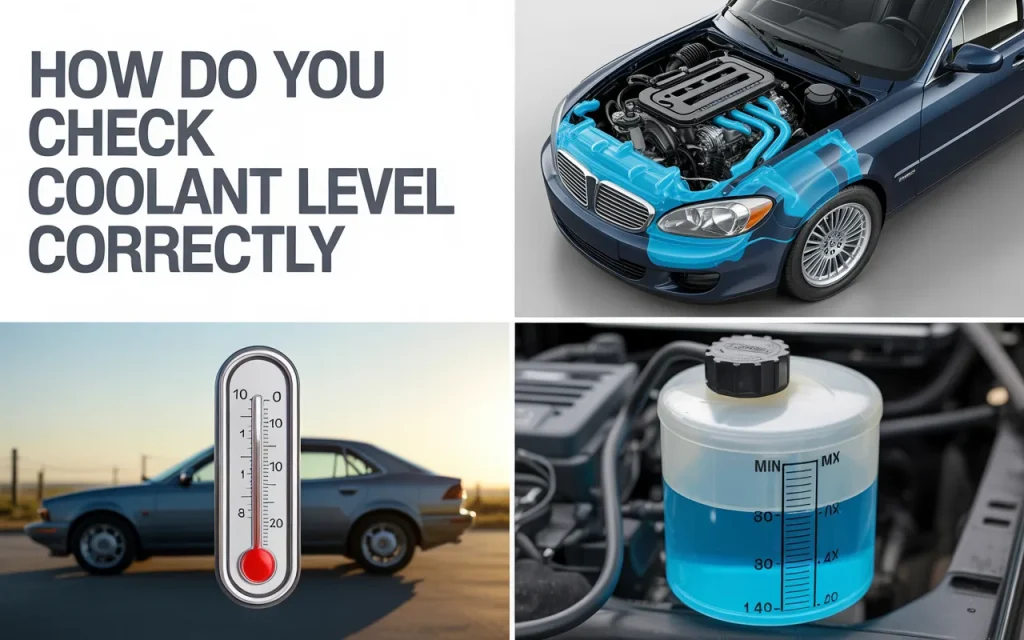
The tank has lines on the side. One line says “FULL” or “MAX.” Another line says “LOW” or “MIN.” These marks help you check coolant level correctly at a glance.
If you cannot find the tank, look in your owner’s manual. It will show you where everything is. You can also search online for your car model.
In some cars, the tank is hard to see. You might need a flashlight. That is fine. Just make sure the engine is cold before you start moving things around to see better.
How to Check Coolant Level Correctly: Step by Step
Let me walk you through the exact steps to check coolant level correctly. Follow these in order and you will get an accurate reading every time.
Step 1: Make Sure the Engine Is Cold
I said this before, but I will say it again. Cold engine only. Park the car on level ground. If you just drove it, wait a few hours. Touch the hood to see if it feels cool. Do not rush this step.
Step 2: Find the Coolant Reservoir
Open the hood and locate the plastic tank. It connects to the radiator with a hose. The tank is usually near the front of the engine bay.
Step 3: Read the Level on the Tank
Look at the side of the tank. You will see markings. The coolant should be between the “MIN” and “MAX” lines. If it is at or below the “MIN” line, you need to add some.
The plastic can get dirty or foggy over time. Wipe it with a rag if you cannot see clearly. This helps you check coolant level correctly without guessing.
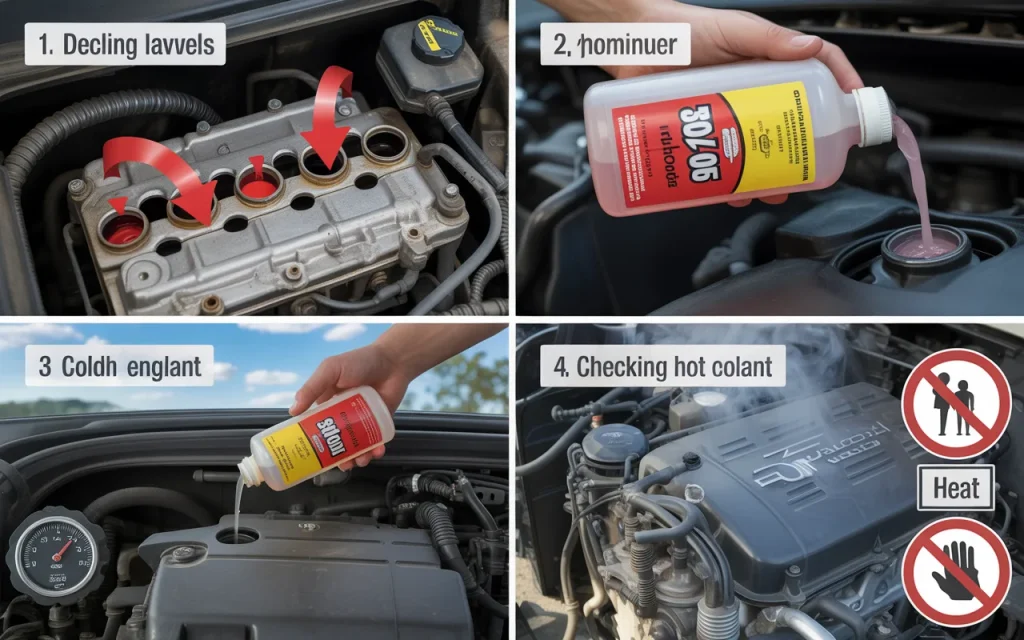
Step 4: Check the Coolant Color and Condition
Look at the color of the coolant through the tank. It should be bright and clear. Common colors are green, orange, pink, or blue. If it looks rusty, brown, or has stuff floating in it, the coolant needs to be changed.
Step 5: If Needed, Check the Radiator
Some cars do not have a reservoir. Or you might want to check the radiator itself. Only do this if the engine is cold. Turn the radiator cap slowly. If you hear any hiss, stop and wait longer. When it is safe, remove the cap and look inside. Coolant should be right at the top. If you cannot see it, add some until it is full.
Step 6: Add Coolant If Low
If the level is low, you need to add coolant. We will talk about what type to use next. Pour it into the reservoir, not the radiator, unless your car has no reservoir. Fill to the “MAX” line. Do not overfill. The system needs some air space.
“One thing I see often is people overfilling the reservoir. They think more is better. But coolant expands when it heats up. Too much can push out the overflow and make a mess.” – Linda Garcia, ASE Certified Master Technician
Put the cap back on tight. Close the hood. You are done.
Table 1: Quick Guide to Checking Coolant
| Step | What to Do | Why It Matters |
|---|---|---|
| 1 | Make sure engine is cold | Prevents burns from hot coolant |
| 2 | Find the reservoir tank | This is where you check the level |
| 3 | Read level against MIN/MAX marks | Tells you if you need to add coolant |
| 4 | Look at coolant color | Spots rust or contamination early |
| 5 | Check radiator if needed | For cars without a reservoir |
| 6 | Add coolant to reservoir only | Keeps the system working right |
Different Coolant Colors and What They Mean
When you check coolant level correctly, pay attention to the color. Car makers use different coolant types. They dye them different colors so you can tell them apart.
Green coolant is the older style. It works in many cars. You need to change it more often, about every two years.
Orange coolant usually lasts longer. Many GM cars use this. It can go five years or more between changes.
Pink or blue coolant is common in newer Asian and European cars. These are often special formulas. You need to use the exact type your car needs.
Do not mix colors. Different coolants have different chemicals. Mixing them can turn the coolant into a thick gel. This gel can clog up your radiator and heater core. That is a costly fix.
If you are not sure what your car takes, check the owner’s manual. You can also look at the cap on the reservoir. Sometimes it says what type to use. Auto parts stores can help you find the right one too.
How Often Should You Check Coolant?
You should check coolant level correctly at least once a month. This takes two minutes and gives you peace of mind. It is also good to check before any long trip.
If you notice the level keeps going down, that is a red flag. A slow drop might mean a small leak. A fast drop means something is wrong. You might have a hose leak, a bad radiator cap, or a bigger problem like a head gasket issue.
Coolant does not get used up like fuel. The level should stay steady between changes. If it drops, there is a leak somewhere. Find it before it leaves you stranded.
What If the Coolant Looks Bad?
When you check coolant level correctly, look at the fluid quality. Here are signs that something is wrong:
Rusty or brown color means rust inside the system. The rust inhibitor in the coolant is used up. You need to flush the system and put in new coolant.
Milky or oily look means engine oil might be mixing with the coolant. This can happen if a head gasket fails. This is serious. Get it checked right away.
Particles floating in the coolant can be rust or scale. If you see this, the system needs a good flush. Old coolant can leave deposits that clog small passages.
Thick or sludgy coolant happens when different types are mixed. This is bad. The cooling system might stop working. You will need to flush it all out.
If you see any of these, it is time for a coolant change. A mechanic can flush the system and put in fresh coolant. This keeps your engine running cool and clean.
Common Mistakes When Checking Coolant
I want to help you avoid the mistakes I see people make. These errors can lead to wrong readings or even damage to your car.
Checking when the engine is hot. This is the biggest one. You cannot get an accurate level because hot coolant expands. It will look higher than it really is. Plus, it is dangerous.
Only checking the reservoir. The reservoir gives you a good idea, but if your car has a radiator cap, check there sometimes too. The reservoir can show wrong if the cap is bad.
Adding cold water to a hot engine. If you are on the road and the engine is hot, do not dump cold water in. The sudden temperature change can crack engine parts. Wait for it to cool, or call for help.
Using the wrong coolant. As we talked about, mixing types can cause problems. Always use what the car maker says.
Forgetting to check the cap. The radiator cap holds pressure in the system. If the cap seal is bad, coolant can boil and overflow. Check the cap for cracks or wear.
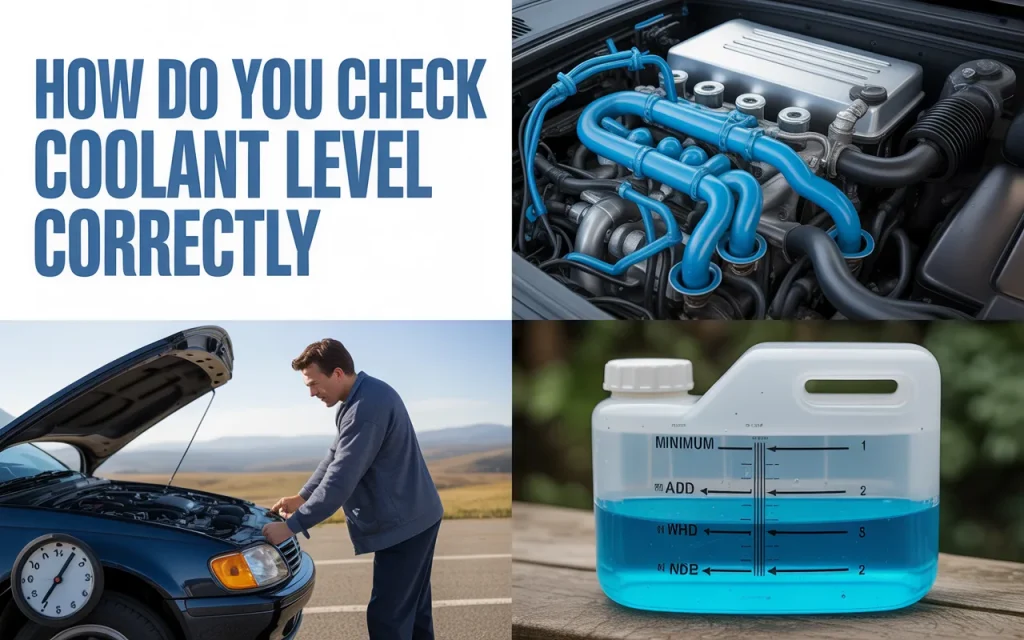
Table 2: Coolant Colors and What They Mean
| Coolant Color | Common Type | Typical Use | Change Interval |
|---|---|---|---|
| Green | Conventional IAT | Older cars, trucks | Every 2 years |
| Orange | Dex-Cool OAT | Many GM vehicles | Up to 5 years |
| Pink | HOAT or special | Asian imports | 5 years or more |
| Blue | HOAT | European cars | 5 years or more |
| Brown/Rusty | Old, contaminated | Any car | Needs flush now |
Topping Up Coolant: What to Use
If your level is low, you need to add something. The best choice is to use premixed coolant. This is coolant already mixed with water 50/50. You just pour it in. It saves you from having to mix it yourself.
If you buy concentrated coolant, you must mix it with distilled water. Never use tap water. Tap water has minerals that can leave deposits inside your engine. Distilled water is pure and safe.
In an emergency, you can use plain distilled water to top up. This is okay for getting home or to a shop. But do not leave it that way. Water alone does not have rust inhibitors. It can also freeze in winter. Get the right coolant in there as soon as you can.
“People ask if they can just use water in a pinch. Yes, but only distilled water and only to get you to safety. Then flush and refill with proper coolant. Water lacks the protection your engine needs long term.” – David Chen, Automotive Engineer
Pour slowly. Stop when the level hits the “MAX” line. Put the cap back on tight.
When to Get Professional Help
You can check coolant level correctly on your own. But some cooling system problems need a pro.
If you add coolant and it keeps disappearing, you have a leak. Small leaks might just need a new hose or clamp. Bigger leaks might need a new radiator or water pump.
If your engine runs hot even with full coolant, something else is wrong. The thermostat might be stuck. The water pump might not be working. The radiator might be clogged. These jobs are best left to a mechanic.
If you see white smoke from the exhaust or smell sweet exhaust, that can mean coolant is burning in the engine. This is serious. Get it looked at fast.
Frequently Asked Questions
Q: How do you check coolant level correctly in a modern car?
A: With the engine cold, look at the plastic reservoir tank. The coolant should be between the MIN and MAX marks. Check the color too. If it looks rusty or has stuff in it, you need a coolant change.
Q: Can I check coolant when the engine is warm?
A: No. Never open the cooling system when the engine is warm or hot. Hot coolant is under pressure and can spray out and burn you. Wait for the engine to cool completely.
Q: What color should coolant be?
A: It depends on your car. Common colors are green, orange, pink, and blue. It should look bright and clean. If it is brown, rusty, or milky, that is bad.
Q: How often should I check my coolant level?
A: Check it once a month. Also check before long trips. If you notice the level drops fast, get it looked at right away.
Q: Is it okay to mix different coolant colors?
A: No. Do not mix different coolant types. The chemicals can react and form a gel that clogs your cooling system. Stick to what your car needs.
Q: What happens if coolant is too low?
A: Your engine can overheat. Low coolant means less fluid to carry heat away from the engine. Overheating can cause major damage like blown head gaskets or cracked engine parts.
Q: Do I check coolant with the car running?
A: No. The engine should be off and cold. Never open the cooling system with the engine running.
Q: Can I just add water to my coolant?
A: In an emergency, you can add distilled water. But do not rely on this. Water lacks the protection against rust and freezing that proper coolant provides. Replace it with the right coolant mix soon.
Conclusion
Learning how do you check coolant level correctly is a simple skill that protects your car. It takes almost no time and costs nothing. Yet it can save you from expensive engine repairs down the road.
Remember the key points. Always check with a cold engine. Look at the reservoir tank. Make sure the level sits between the MIN and MAX lines. Pay attention to the coolant color. If it looks bad, plan for a coolant flush. If the level drops fast, find the leak.
Make this check part of your regular routine. Once a month, pop the hood. Look at the coolant. Look at the oil too while you are there. A few minutes of attention can keep your car running well for years.
Your engine works hard every time you drive. It gets hot and needs that coolant to keep going. By checking it regularly, you make sure it has what it needs. That is good for your car and good for your wallet.
If you ever feel unsure, ask a mechanic to show you. Most shops are happy to help. They want you to take care of your car. Now you know how to check coolant level correctly on your own. Go ahead and give it a look next time you are near your car.
Related posts
 Best Transmission Jack Options for 2026 Shop Projects
Find the best transmission jack options for your garage. We compare top-rated hydraulic and floor-style lifts to help you choose the right tool for your vehicle…
 Best Ratchet Wrench Set Options for 2026
Looking for the best ratchet wrench set? We compare top-rated socket and wrench kits to help you choose the right tools for your home or auto…
 Best Wire Crimping Tool for Automotive Wiring in 2026
Find the best wire crimping tool for automotive wiring. We compare five top-rated hand tools to help you choose the right fit for your vehicle projects.…