
How To Choose Cookware Material
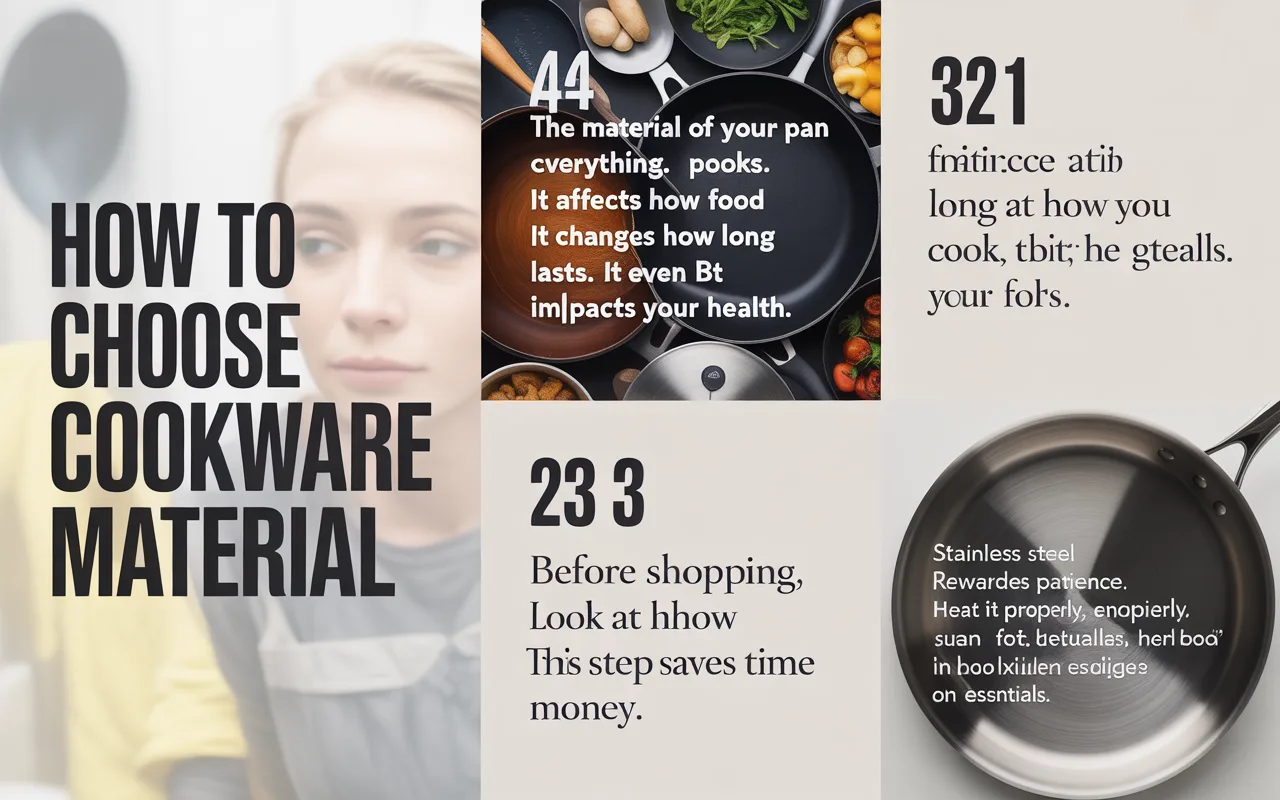
Learn how to choose cookware material that fits your cooking style, budget, and health concerns. We compare stainless steel, nonstick, cast iron, and more options.
Cooking at home brings so much joy. But standing in the cookware aisle can feel confusing. So many pots and pans hang on the racks. You see stainless steel, nonstick, cast iron, copper, and ceramic. Each material looks promising. But which one works best for you?
Learning how to choose cookware material does not need to be hard. I remember my first kitchen setup. I bought a cheap set that looked nice. Within months, the nonstick coating scratched. The pans wobbled on the stove. I wasted money because I did not understand materials.
This guide helps you avoid that mistake. We look at real performance, safety, and care needs. By the end, you will know exactly what to buy for your kitchen.
Why Material Matters in Your Cookware
The material of your pan changes everything. It affects how food cooks. It changes how long the pan lasts. It even impacts your health.
Different materials conduct heat differently. Some heat up fast but cool down quickly. Others hold heat for a long time. Some react with acidic foods like tomatoes. Others stay safe with any ingredient.
“The material of your pan is the foundation of your cooking. Get this right, and everything else becomes easier,” says Chef Marcus Williams, a cooking instructor with 20 years of experience.
When you choose cookware material, think about these factors:
- Heat conductivity
- Weight and handling
- Maintenance requirements
- Safety concerns
- Price and longevity
Understanding Your Cooking Style First
Before shopping, look at how you actually cook. This step saves time and money.
Do you cook eggs often? Then you need something slippery. Do you love searing steaks? Then you need high heat tolerance. Do you make lots of tomato sauce? Then avoid reactive metals.
I cook eggs almost every morning. I also make quick stir-fries for dinner. My needs differ from someone who bakes casseroles or simmers soups for hours.
Let me share what I learned from my kitchen mistakes. Write down your top five dishes. This list guides your material choice.
Common Cookware Materials Compared
Here is a quick look at popular materials. We explore each one in detail below.
Table 1: Cookware Material Basics
| Material | Heat Conductivity | Weight | Best For | Care Level |
|---|---|---|---|---|
| Stainless Steel | Medium | Medium | Browning, deglazing | Easy |
| Nonstick | Low | Light | Eggs, fish | Gentle |
| Cast Iron | Medium | Heavy | Searing, baking | Special |
| Carbon Steel | High | Medium | Stir-frying | Special |
| Copper | Very High | Medium | Precision cooking | High |
| Ceramic | Medium | Medium | General cooking | Gentle |
Stainless Steel Cookware
Stainless steel is the workhorse of most kitchens. It looks professional and lasts for decades. You see it in restaurants for good reason.
Most stainless steel pans have an aluminum or copper core. This core helps with heat distribution. Pure stainless steel heats unevenly. The layered construction solves this problem.
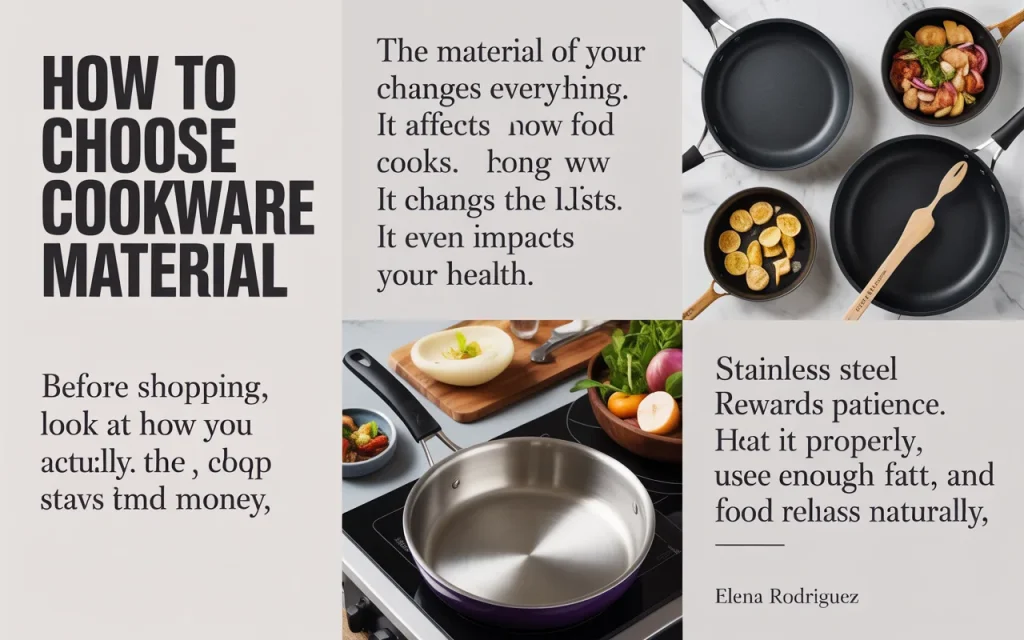
I use stainless steel for most of my cooking. It browns meat beautifully. It handles high heat without damage. You can put it in the dishwasher, though hand washing keeps it shiny longer.
But stainless steel has one drawback. Food sticks to it. You need oil or butter to prevent sticking. Eggs can be tricky on stainless steel. The pan requires proper preheating technique.
“Stainless steel rewards patience. Heat it properly, use enough fat, and food releases naturally,” explains food writer Elena Rodriguez in her book on kitchen essentials.
When you choose cookware material for browning and versatility, stainless steel works well.
Nonstick Cookware
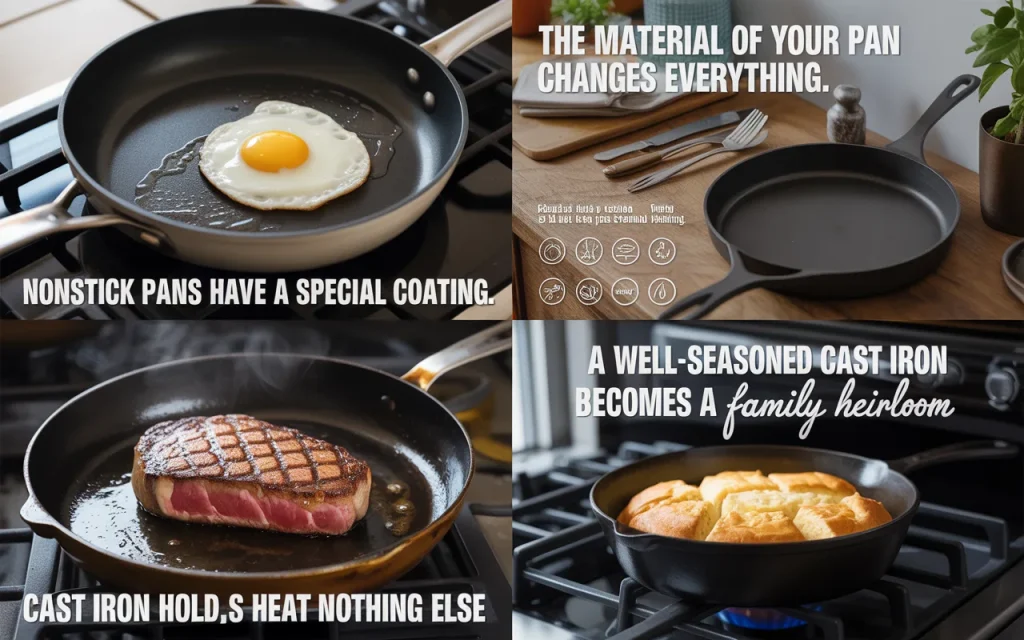
Nonstick pans have a special coating. This coating prevents food from sticking. You can cook eggs with very little oil. Cleanup takes just a wipe with a sponge.
Modern nonstick coatings have improved over the years. Many brands now offer PFOA-free options. Some use ceramic-based coatings instead of traditional materials.
However, nonstick pans do not last forever. The coating wears down over time. High heat damages the surface. Metal utensils scratch it easily. You must use wood, silicone, or plastic tools.
I keep one nonstick pan just for eggs and delicate fish. For everything else, I reach for other materials. This approach makes my nonstick pan last much longer.
Nonstick works best for low to medium heat cooking. Never preheat an empty nonstick pan. This can damage the coating and release fumes.
Cast Iron Cookware
Cast iron has been around for centuries. It remains popular because it works so well. These pans are heavy and nearly indestructible.
Cast iron holds heat like nothing else. You get a consistent cooking surface. This makes it perfect for searing meat. The pan stays hot even when you add cold food.
The material needs seasoning. Seasoning means layers of oil baked into the surface. This creates a natural nonstick coating. With good care, the seasoning improves over time.
Many people worry about cast iron maintenance. Yes, you cannot use soap on vintage pans. But modern thinking allows mild soap for cleaning. Just dry it immediately and apply a thin oil layer.
Cast iron also adds iron to your food. This benefits people with low iron levels. The amount is small but helpful.
I use cast iron for cornbread, steaks, and frying. It goes from stovetop to oven easily. A well-seasoned cast iron pan becomes a family heirloom.
Carbon Steel Cookware
Carbon steel looks similar to cast iron but is lighter. It heats up faster while still holding heat well. Professional chefs often prefer carbon steel woks and pans.
Like cast iron, carbon steel needs seasoning. The surface darkens over time. It becomes naturally nonstick with use. Many cooks say carbon steel is the best choice for stir-frying.
The material handles very high temperatures. You can get that smoky wok hei flavor in your cooking. Carbon steel also works for crepes, pancakes, and seared fish.
When you choose cookware material for high-heat cooking, consider carbon steel. It gives you the benefits of cast iron with less weight.
The main challenge is the initial seasoning. You must apply thin oil layers and heat the pan. This process creates the protective patina. After that, regular cooking maintains the surface.
Copper Cookware
Copper pans look stunning in any kitchen. They offer the best heat conductivity of any material. Heat spreads instantly and evenly across the surface.
Professional pastry chefs love copper. It gives precise temperature control for delicate tasks. Copper bowls also work best for whipping egg whites.
But copper has serious drawbacks. It reacts with acidic foods. You cannot cook tomatoes or lemon dishes in bare copper. That is why most copper pans have a stainless steel or tin lining.
Copper also costs more than other materials. A quality copper pan represents a real investment. It also requires polishing to maintain its shine.
For most home cooks, copper may be overkill. The benefits matter less in everyday cooking. But if you love beautiful tools and have the budget, copper brings joy to cooking.
Ceramic Cookware
Ceramic cookware includes both 100% ceramic pots and ceramic-coated metal pans. Pure ceramic cookware heats gently and evenly. It looks beautiful and goes from oven to table.
Ceramic coatings offer a nonstick surface without traditional chemicals. Many people choose these for health reasons. The coatings feel smooth and release food easily.
However, ceramic coatings can scratch. They also lose nonstick properties over time. Compared to traditional nonstick, ceramic may wear out faster.
I used a ceramic-coated pan for a year. It worked great for the first few months. Then eggs started sticking again. The pan still worked but required more oil.
Ceramic cookware handles medium heat best. High heat can damage the coating. For low-fat cooking at moderate temperatures, ceramic works nicely.
How to Match Material to Your Cooking
Different foods benefit from different materials. Here is a simple guide.
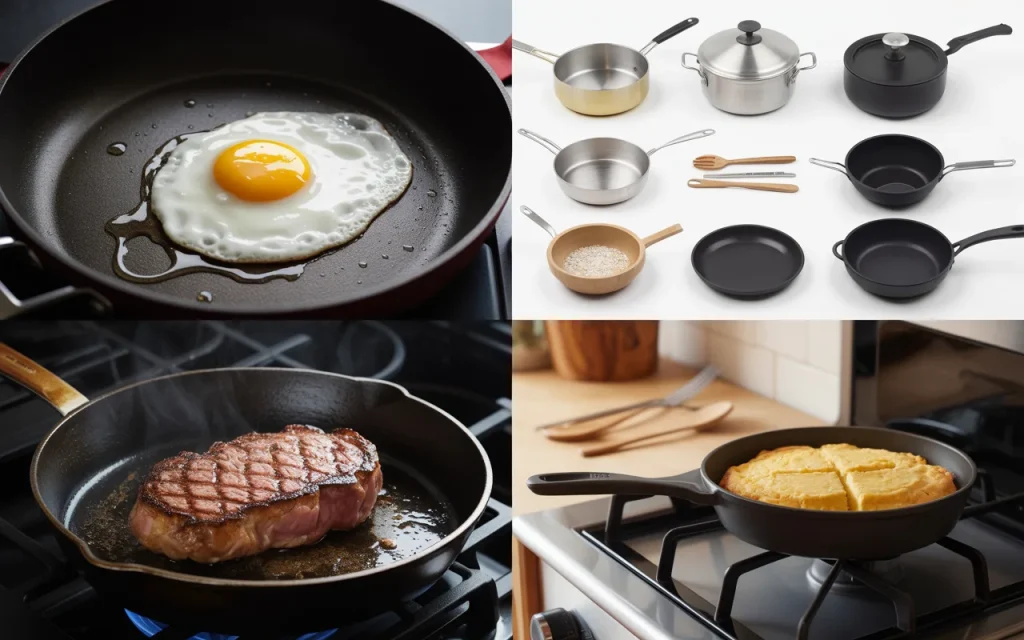
For eggs and delicate foods: Choose nonstick or well-seasoned carbon steel. These surfaces release food easily without breaking it.
For meat and poultry: Choose stainless steel or cast iron. These materials create beautiful brown crusts.
For vegetables: Choose stainless steel or carbon steel. High heat gives vegetables nice char marks.
For acidic sauces: Choose stainless steel or enameled cast iron. These do not react with tomatoes or vinegar.
For baking: Choose cast iron or ceramic. These hold heat steadily for even baking.
“Match your pan to your recipe, not the other way around. The right material makes cooking effortless,” advises kitchen consultant David Chen.
Health and Safety Considerations
Safety matters when you choose cookware material. You want pans that keep your food safe.
Traditional nonstick coatings raised concerns in the past. Older pans used PFOA in manufacturing. Modern nonstick pans are PFOA-free. Reputable brands follow safety guidelines.
Aluminum cookware also raises questions. Bare aluminum can react with foods. It may leave a metallic taste. Most aluminum pans now have coatings or anodized surfaces. Anodized aluminum does not react with food.
Copper needs a lining for safety. Too much copper in food can cause issues. Only use lined copper for cooking.
Cast iron adds iron to food. This benefits most people but matters for those with certain conditions.
Ceramic and stainless steel generally offer the fewest health concerns. They do not react with foods. They do not release compounds during cooking.
Budget and Long-Term Value
Cookware prices vary widely. You can spend $20 on a pan or $200. Higher cost often means better materials and construction.
But expensive does not always mean better for you. A $100 nonstick pan may last five years. A $50 cast iron pan may last 100 years. Think about value over time.
I suggest investing in a few good pieces rather than a full set. Start with a stainless steel skillet and a cast iron pan. Add a nonstick pan for eggs. Build from there.
Cheap cookware often disappoints. Thin pans create hot spots. Handles break or get hot. Coatings peel off. Spending a little more saves money in the long run.
Table 2: Price and Longevity Guide
| Material | Price Range | Expected Lifespan | Best Value For |
|---|---|---|---|
| Stainless Steel | $$-$$$$ | Decades | All-purpose cooking |
| Nonstick | $-$$ | 2-5 years | Low-fat cooking |
| Cast Iron | $-$$ | Lifetime | Searing, baking |
| Carbon Steel | $$-$$$ | Decades | High-heat cooking |
| Copper | $$$-$$$$$ | Lifetime | Precision cooking |
| Ceramic | $$-$$$ | 3-8 years | Chemical-free surface |
Care and Maintenance Tips
Taking care of your pans extends their life. Each material needs different care.
For stainless steel, soak stuck-on food with water. Use gentle cleaners and soft sponges. Avoid steel wool that scratches the finish.
For nonstick, use low to medium heat only. Cool the pan before washing. Avoid stacking other pans on top of it.
For cast iron, wash with warm water and a stiff brush. Dry completely on the stove. Rub with a tiny bit of oil before storing.
For carbon steel, follow the same care as cast iron. The pan develops character over time. Dark spots and patches are normal.
For copper, polish occasionally to maintain shine. For daily use, just wash with mild soap and dry well.
For ceramic, avoid sudden temperature changes. Do not put a hot ceramic pan in cold water. This can cause cracking.
Frequently Asked Questions
What is the safest cookware material for daily use?
Stainless steel and cast iron have strong safety records. They do not release chemicals into food. Ceramic and glass also offer safe cooking surfaces. Choose reputable brands that follow manufacturing standards.
How do I choose cookware material for induction cooktops?
Induction needs magnetic materials. Cast iron and magnetic stainless steel work well. Copper and aluminum only work if they have a magnetic layer on the bottom. Look for induction-compatible labels when shopping.
Can I mix different cookware materials?
Yes, absolutely. Most kitchens use a mix of materials. You might have stainless steel pots, a cast iron skillet, and a nonstick egg pan. This gives you the right tool for each job.
How often should I replace nonstick pans?
Replace nonstick pans when you see scratches or wear. If food starts sticking badly, it is time. Most nonstick pans last two to five years with good care.
Is expensive cookware worth the money?
Sometimes yes, sometimes no. Expensive stainless steel often has better construction. It heats more evenly and lasts longer. But expensive nonstick may not last longer than mid-range options.
Conclusion
Learning how to choose cookware material changes your cooking life. You stop fighting with pans and start enjoying the process.
Start by looking at your cooking habits. Do you make eggs? Get a nonstick pan. Do you sear meat? Cast iron works best. Do you cook everything? Stainless steel handles it all.
Remember that you do not need everything at once. Buy one good pan and learn to use it. Add more pieces as you grow comfortable.
Good cookware feels right in your hand. It heats food evenly. It cleans up without struggle. It lasts for years of daily use.
Take your time when you choose cookware material. Read labels. Hold pans in your hand. Consider how each piece fits your kitchen. The right choice brings joy to every meal you cook.
Your cooking deserves good tools. Your kitchen deserves pans that work with you, not against you. Now you know exactly what to look for. Happy cooking
Related posts
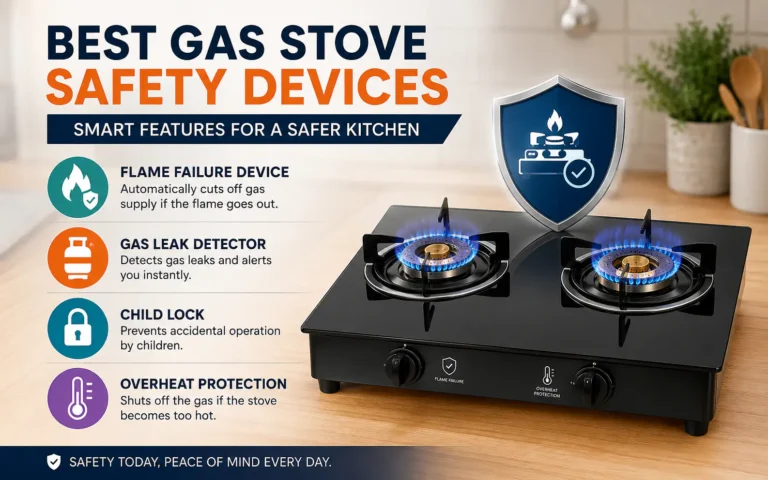 Best Gas Stove Safety Devices for 2026: Child and Pet Proofing Solutions
Keep your kitchen secure with our 2026 guide to the best gas stove safety devices. Compare top-rated knob covers for child and pet proofing your home.…
 Top Water Purifier for Kitchen Choices in 2026
Looking for the top water purifier for kitchen use? Explore our 2026 guide to the best faucet-mount, pitcher, and under-sink systems for cleaner drinking water. Finding…
 Top Kitchen Tissue for Daily Cleaning: 2026 Buyer Guide
Find the top kitchen tissue for daily cleaning in 2026. We compare five popular paper towel options to help you choose the right strength and value…