
How Much Exercise Is Enough Per Day
Find out how much exercise is enough per day to stay healthy and fit. Simple guidelines for adults, seniors, and families with practical daily movement tips.
Do you ever wonder if you are moving enough during the day? Many people feel confused about exercise. Some think they need to spend hours at the gym. Others believe a short walk around the block does nothing. The truth sits somewhere in the middle.
Health experts have studied this question for years. They want to know exactly how much exercise is enough per day to keep our bodies strong and our hearts healthy. The answer might surprise you. It is simpler than most fitness magazines suggest.
Your body needs movement just like it needs food and water. Without enough activity, muscles get weak. Bones lose density. Energy levels drop. But you do not need to become an athlete to see results. Small daily efforts add up over time.
This article breaks down the science into plain language. You will learn what works for real people with busy lives. No complicated charts. No fancy equipment required. Just honest answers about moving your body each day.
What Health Organizations Recommend
The World Health Organization and the American Heart Association agree on basic exercise guidelines. They have studied thousands of people to find the minimum amount of movement that protects health.
For adults aged 18 to 64, the target is clear. You need either:
- 150 minutes of moderate activity each week, or
- 75 minutes of vigorous activity each week
When you break this down, the question of how much exercise is enough per day becomes easier to answer. Spread across five days, you need about 30 minutes of moderate movement daily.
Moderate activity means your heart beats faster. You breathe harder but can still talk. Brisk walking fits here. So does riding a bike on flat ground. Dancing in your kitchen counts too.
Vigorous activity takes more effort. You cannot say more than a few words without stopping for air. Running, swimming laps, or playing singles tennis are good examples.
“Most people overestimate what they need to do and underestimate what they actually do. A twenty-minute walk matters more than waiting for the perfect hour-long workout that never happens.” – Dr. Sarah Chen, Sports Medicine Physician
Breaking Down Daily Exercise by Minutes
Let us look at what 30 minutes per day actually means for normal people. This table shows how different activities stack up against the daily recommendation.
| Activity Type | Minutes Needed | How It Feels |
|---|---|---|
| Brisk walking | 30 minutes | Breathing harder, still can talk |
| Running | 15-20 minutes | Breathing heavy, cannot talk easily |
| Bicycling easy pace | 30-35 minutes | Slight sweat, comfortable pace |
| Swimming | 20 minutes | Full body effort, consistent breathing |
| Yard work | 30-45 minutes | Moving constantly, light sweating |
| Dancing | 25-30 minutes | Fun, heart rate up, smiling |
The table shows flexibility. You can mix activities based on what you enjoy. Some days you might walk. Other days you might dance or garden. All of it counts toward your daily total.
The Difference Between Moderate and Vigorous Exercise
Understanding intensity levels helps you answer how much exercise is enough per day for your specific situation. Not all movement is equal, but all movement matters.
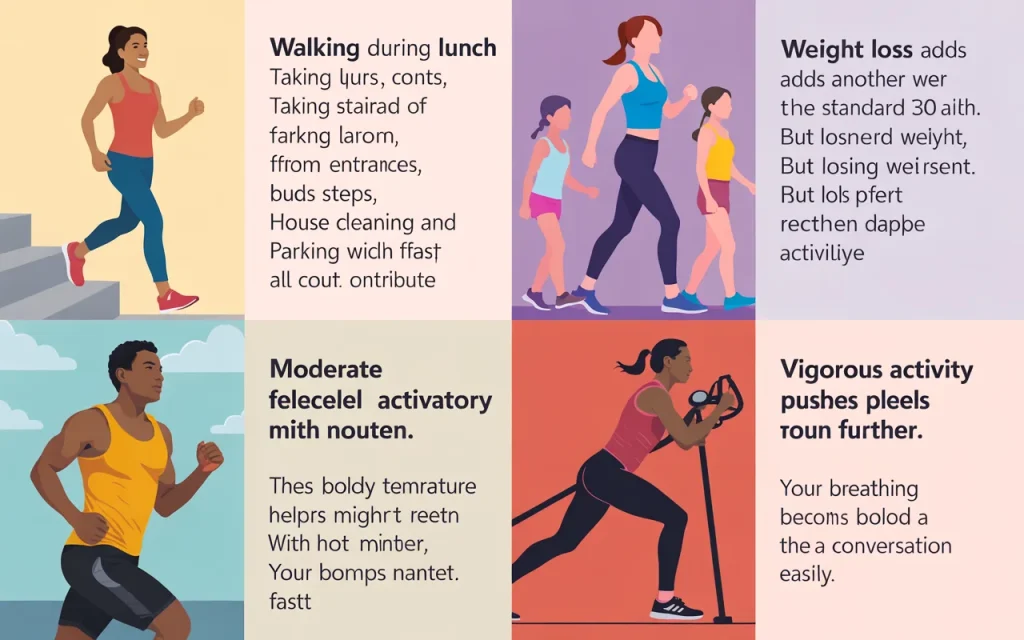
Moderate Intensity Explained
Moderate activity feels noticeably harder than sitting still. Your body temperature rises. You might sweat after ten minutes. Your heart pumps faster.
Examples include:
- Walking at 3 miles per hour or faster
- Water aerobics classes
- Doubles tennis
- Pushing a lawn mower
- Carrying light groceries upstairs
Vigorous Intensity Explained
Vigorous activity pushes you further. Your breathing becomes deep and fast. You cannot hold a conversation easily.
Examples include:
- Jogging or running
- Swimming laps continuously
- Singles tennis or basketball
- Heavy yard work like digging
- Jumping rope
The beauty of this system is choice. If you prefer gentle movement, you do more minutes. If you like pushing hard, you do fewer minutes. Both paths lead to the same health benefits.
How Much Exercise Is Enough Per Day for Weight Loss
Weight loss adds another layer to the movement question. The standard 30 minutes helps maintain health. But losing weight often requires more daily activity.
Research shows that people who successfully lose weight and keep it off get 60 to 90 minutes of moderate activity most days. That sounds like a lot. But remember, this total includes everything you do all day.
Walking during lunch counts. Taking stairs instead of elevators adds up. Parking farther from store entrances builds steps. House cleaning and playing with kids all contribute.
The key difference with weight loss is consistency. Moving more days than not matters more than one intense workout followed by three days of sitting.
“Your body was designed to move throughout the day, not just for thirty minutes in a gym. The person who gardens, walks to the store, and plays with their children often gets more health benefit than someone who does one intense workout then sits for ten hours.” – Marcus Webb, Physical Therapist
Weekly Exercise Breakdown Table
This table helps visualize how weekly recommendations break down into daily goals.
| Day of Week | Moderate Minutes | Vigorous Minutes | Activity Ideas |
|---|---|---|---|
| Monday | 30 | 0 | Brisk walk after dinner |
| Tuesday | 0 | 25 | Jogging or lap swimming |
| Wednesday | 30 | 0 | Bike ride with family |
| Thursday | 30 | 0 | Dance class or active video games |
| Friday | 0 | 25 | HIIT workout or sports game |
| Saturday | 45 | 0 | Hiking or long walk |
| Sunday | 30 | 0 | Stretching and easy movement |
| Total | 165 | 50 | Exceeds weekly goals |
This sample week shows variety. Some days are harder than others. Some activities feel like fun rather than exercise. That is exactly how sustainable movement works.
Strength Training Matters Too
Cardio gets most attention when people ask how much exercise is enough per day. But strength training plays a huge role in long-term health.
Health guidelines recommend strength activities at least twice per week. These workouts should work all major muscle groups: legs, hips, back, chest, stomach, shoulders, and arms.
Strength training does not require gym equipment. Bodyweight exercises work well for beginners. Pushups against a wall count. Squats using a chair for balance work. Lunges across the room build leg strength.
As people age, muscle mass naturally decreases. Strength training slows this process. Strong muscles protect joints. They improve balance and prevent falls. They keep metabolism running efficiently.
Aim for one set of each exercise. Do 8 to 12 repetitions. Feel fatigue by the last few reps. That signals enough effort for muscle building.
Exercise for Different Age Groups
Age changes what how much exercise is enough per day means for your body. Children need more movement than adults. Older adults benefit from specific types of activity.
Children and Teenagers
Kids ages 6 to 17 need 60 minutes of activity daily. This should include:
- Aerobic exercise most days
- Muscle strengthening three days per week
- Bone strengthening three days per week
The good news? Kids naturally move in bursts. Running, jumping, climbing, and playing all count. Organized sports help, but free play works too.
Adults 18 to 64
Adults need the 150 minute weekly minimum described earlier. Breaking this into daily chunks makes it manageable. Twenty to thirty minutes most days works perfectly.
Adults 65 and Older
Seniors follow the same general guidelines but add balance training. Falls become dangerous with age. Activities like tai chi, standing on one foot, or walking backward improve stability.
Older adults should also consider how chronic conditions affect movement. Joint pain might mean swimming instead of walking. Heart conditions require doctor guidance. The goal remains moving safely within personal limits.
Making Exercise Fit Your Real Life
Theory sounds nice. Thirty minutes per day seems simple on paper. But real life gets messy. Work runs late. Kids need attention. Energy disappears by evening.
The secret to answering how much exercise is enough per day lies in flexibility. You do not need a solid block of 30 minutes. Research confirms that shorter bursts work just as well.
Three ten-minute walks provide the same health benefits as one thirty-minute walk. Your body does not know the difference. It only knows total movement.
Try these practical approaches:
- Walk for ten minutes before work
- Take ten minutes at lunch to move
- Do ten minutes of stretching or walking after dinner
This three-part strategy fits almost any schedule. It breaks exercise into manageable pieces. It prevents the all-or-nothing thinking that stops many people from starting.
“Fitness is not about perfection. It is about pattern. The person who walks ten minutes after every meal will outpace the person who waits for the perfect workout that never happens.” – Jennifer Martinez, Wellness Coach
Listening to Your Body
Guidelines provide a starting point. But your body offers the best information about how much exercise is enough per day for you personally.
Some days you will feel energetic. Movement comes easily. You might exceed your usual minutes. Other days feel heavy. Energy lags. Muscles ache. On those days, doing half your normal routine counts as success.
Signs you are exercising enough:
- You feel energized after movement, not drained
- Sleep comes easier at night
- Daily tasks feel less tiring
- Mood stays more stable
Signs you might need more movement:
- You feel stiff sitting for long periods
- Energy drops in the afternoon
- Simple tasks like stairs feel hard
- Sleep quality suffers
Signs you might be overdoing it:
- Constant fatigue or soreness
- Frequent illness or injury
- Trouble sleeping despite fatigue
- Loss of enthusiasm for activities you used to enjoy
Balance matters more than any single number. Some weeks you will hit every goal. Other weeks you will do what you can. Both matter for long-term health.
Small Changes That Add Up
You do not need to overhaul your entire life to answer how much exercise is enough per day. Small shifts in daily habits create big results over time.
Consider these simple adjustments:
Take the stairs instead of elevators. Start with one floor. Add more over time. Stairs build leg strength and get your heart pumping in under two minutes.
Park farther from entrances. Those extra steps add up. A few hundred extra steps per stop become thousands by week’s end.
Walk while talking on the phone. Standing still during calls wastes movement opportunity. Pace around your home or office. Those minutes accumulate.
Set a movement reminder. Phones and watches can alert you to stand and move. Use these prompts to break up sitting time.
Choose active social activities. Meet friends for walks instead of coffee shops. Suggest bowling or mini golf. Play catch with family members instead of watching television.
These strategies require no extra time. They simply replace sedentary moments with active ones. Over days and weeks, the difference becomes significant.
Common Exercise Questions Answered
What if I Cannot Do 30 Minutes at Once?
Do not worry. Multiple short sessions work just as well. Try two fifteen-minute walks or three ten-minute movement breaks. Research confirms this approach provides identical health benefits.
Does Housework Count as Exercise?
Yes. Vacuuming, mopping, gardening, and cleaning all raise your heart rate. These activities build endurance and burn calories. Count them toward your daily movement total.
How Do I Know If I Am Working Hard Enough?
Use the talk test. During moderate activity, you can talk but cannot sing. During vigorous activity, you cannot say more than a few words without stopping for breath.
What about Weekends Only?
Weekend warriors gain real benefits from concentrated exercise. But spreading movement throughout the week works better for consistency and recovery. Try to move at least three days per week minimum.
Do I Need Special Equipment?
No. Walking requires only comfortable shoes. Bodyweight exercises need no equipment. Home workouts using stairs, chairs, and walls provide complete fitness opportunities.
Frequently Asked Questions
How much exercise is enough per day for beginners?
Start with 10 to 15 minutes daily. Walk at a comfortable pace. Add five minutes each week until reaching 30 minutes. Beginning slowly prevents injury and builds sustainable habits.
Can I overdo daily exercise?
Yes. Rest days matter. Muscles need time to repair and strengthen. Listen to your body. If you feel exhausted, sore, or unmotivated, take a lighter day or complete rest.
Does walking really count as enough exercise?
Walking absolutely counts. Brisk walking provides excellent cardiovascular benefits. Studies show regular walkers have lower rates of heart disease, diabetes, and depression.
How much exercise is enough per day for heart health?
The 30-minute moderate standard protects heart health effectively. Some research suggests even 15 minutes daily reduces heart disease risk compared to being sedentary.
What if I sit all day for work?
Break up sitting time every 30 minutes. Stand up. Walk briefly. Stretch. These micro-breaks improve circulation and metabolism even without formal exercise sessions.
Do I need to exercise every day?
Aim for most days rather than every day. Five to six days per week allows for recovery. Rest days remain important for muscle repair and injury prevention.
How much exercise is enough per day for seniors?
Seniors should follow the same 30-minute guideline but focus on balance and strength. Shorter sessions may work better. Listen to joints and adjust activities as needed.
Can I count weekend exercise toward weekly totals?
Yes. Weekly totals matter more than daily perfection. However, spreading activity throughout the week provides more consistent energy and recovery benefits.
Conclusion
The question of how much exercise is enough per day has a straightforward answer. For most adults, 30 minutes of moderate movement provides excellent health protection. This can happen all at once or spread throughout the day in smaller pieces.
Remember that any movement beats none. A ten-minute walk helps more than waiting for the perfect workout. Strength training twice weekly adds protection for muscles and bones as you age.
Your personal answer might vary based on goals. Weight loss often requires more daily activity. Children need double the adult recommendation. Seniors should include balance work alongside cardio.
The most important truth remains simple. Move your body regularly. Listen to what feels right. Adjust based on how you feel. Consistency over years matters far more than perfection over weeks.
Start where you are today. Take a short walk. Stretch for five minutes. Play with your kids or grandkids. These small choices compound into lasting health. Your body thanks you for every minute of movement you give it.
Related posts
 Buy Home Workout Sliders: 2026 Guide to Core Fitness Tools
Looking to buy home workout sliders? Compare top-rated gliding discs and core trainers to find the right equipment for your 2026 fitness routine. Adding core sliders…
 Best Resistance Bands for Beginners: 2026 Buyer Guide
Looking for the best resistance bands for beginners? Compare top-rated loop and handle sets to find the right home gym equipment for your fitness goals. Starting…
 Best Treadmill for Home Use: 2026 Buyer Guide
Finding the best treadmill for home use in 2026. Compare top-rated compact, folding, and incline models to fit your space, budget, and fitness goals. Choosing the…