
How to Stop Dog Chewing Furniture
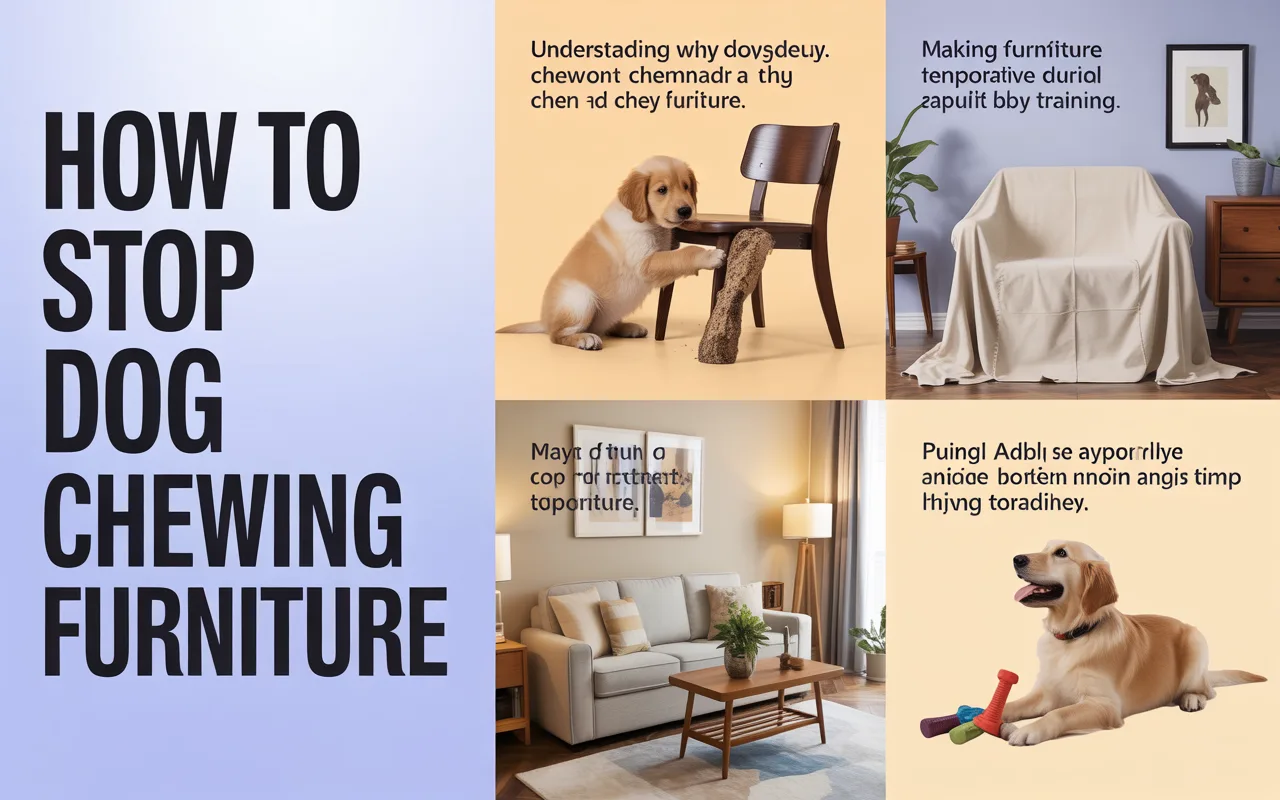
Learn effective ways to stop dog chewing furniture with simple training methods. Discover why dogs chew and how to protect your home today.
Chewing is a natural behavior for dogs. But when your favorite chair legs look like they went through a woodchipper, it becomes a real problem. You love your dog, but you also love your furniture. The good news? You can teach your dog to stop chewing furniture without losing your mind.
I have worked with dogs for over twelve years. I have seen countless owners frustrated by destroyed couch corners and table legs. The solutions are simpler than you might think. Let me show you how to protect your home while keeping your dog happy.
Why Do Dogs Chew Furniture in the First Place?
Before we fix the problem, we need to understand it. Dogs do not chew furniture to spite you. They chew for specific reasons.
Puppies chew because their teeth hurt. Just like human babies, they go through teething. This usually happens between three and six months of age. The chewing helps loosen baby teeth and soothe sore gums.
Adult dogs chew for different reasons. Boredom is a big one. A dog with nothing to do will find something to do. That something is often your sofa. Anxiety also causes chewing. Dogs left alone for long hours may chew to calm themselves. Some dogs simply have too much energy and need an outlet.
Dr. Sarah Mitchell, a veterinary behaviorist with twenty years of experience, explains: “Chewing releases endorphins in a dog’s brain. It actually makes them feel good. When we understand that chewing is self-rewarding for dogs, we can stop blaming the dog and start fixing the environment.”
The key is to stop dog chewing furniture by addressing the root cause, not just punishing the behavior.
How to Stop Dog Chewing Furniture by Managing the Environment
The easiest way to stop dog chewing furniture is to make furniture unavailable. This is not forever. It is just during the training phase.
Limit Access to Problem Areas
Close doors to rooms with nice furniture. Use baby gates to keep your dog in dog-proofed areas. If your dog cannot reach the couch, they cannot chew the couch.
This simple step buys you time. While your dog learns what is okay to chew, you remove temptation. Think of it like keeping cookies out of a toddler’s reach. You would not leave a plate of cookies on the floor and get mad when the toddler eats them.
Use Deterrent Sprays Safely
Many pet stores sell bitter apple spray or other taste deterrents. You spray these on furniture legs and corners. The taste is awful to dogs. Most dogs try it once and never again.
But test any spray on a small hidden area first. You do not want to ruin your furniture finish. Some dogs also learn to like the taste, so this method does not work for every dog.
“Taste deterrents work best for dogs who are picky or sensitive,” says Mark Thompson, a certified dog trainer from Austin, Texas. “For determined chewers, you need stronger strategies. The spray alone will not stop dog chewing furniture if the dog is highly motivated.”
Give Your Dog Better Things to Chew
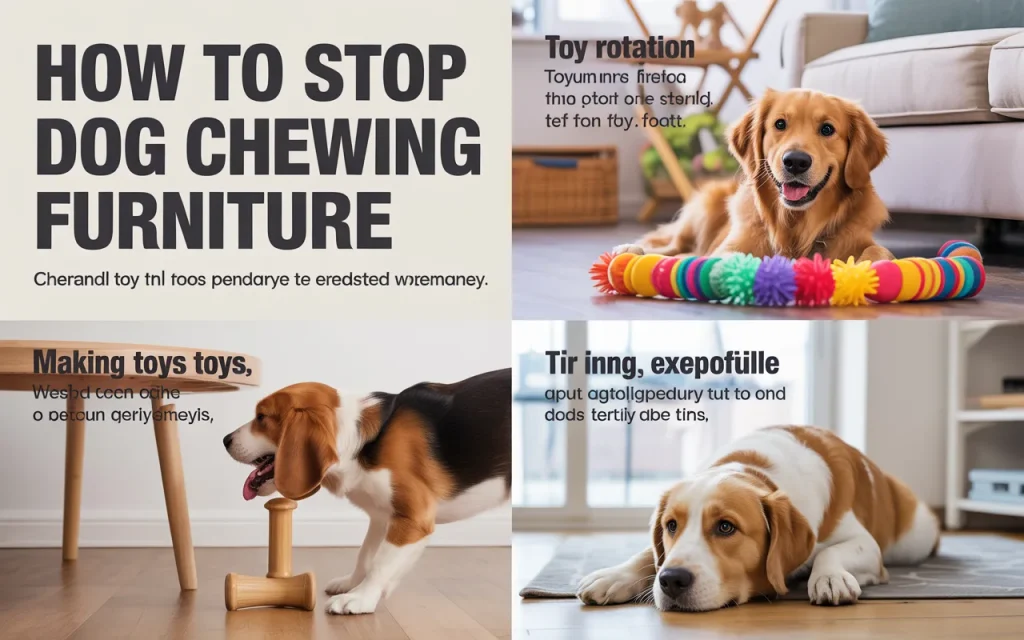
You cannot just say no. You must offer yes. Dogs need to chew. Your job is to redirect that need onto appropriate items.
Choose the Right Chew Toys
Not all chew toys are equal. Some dogs love hard rubber toys. Others prefer rope toys or stuffed animals. You may need to try several types to find what your dog likes.
Table 1: Best Chew Toys by Dog Type
| Dog Type | Recommended Toys | Why It Works |
|---|---|---|
| Heavy Chewers | Kong Extreme, Nylabone Dura Chew | Made of tough rubber that resists tearing |
| Puppies | Soft rubber teething rings, frozen washcloths | Soothes sore gums during teething phase |
| Bored Dogs | Puzzle toys, treat-dispensing balls | Provides mental stimulation and rewards |
| Social Chewers | Tug toys, fetch toys | Turns chewing into interactive play |
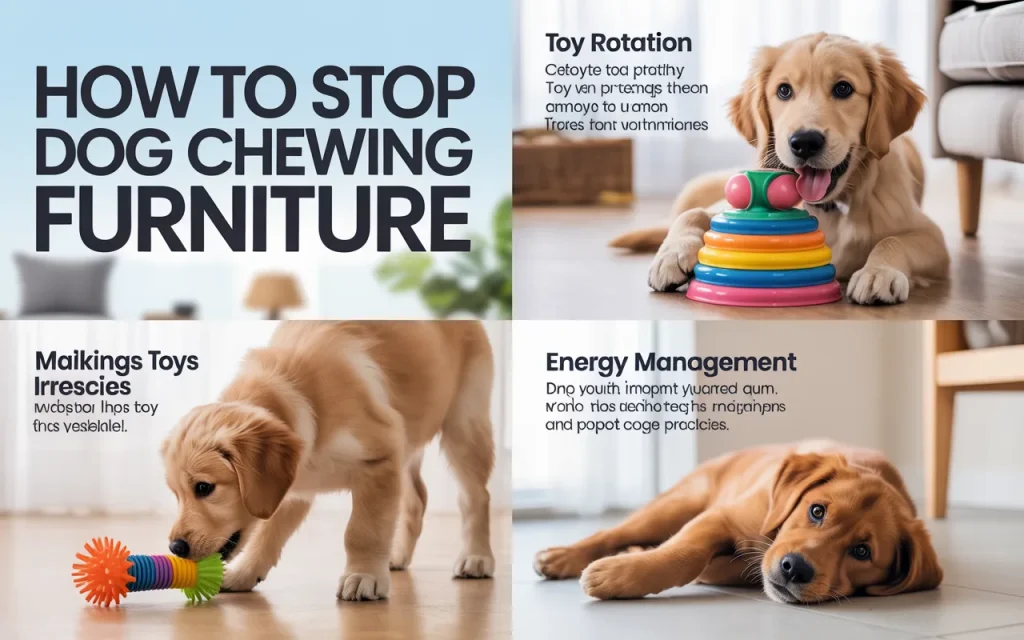
Rotate toys to keep them interesting. If your dog sees the same toy every day, they get bored. Put some toys away for a week, then bring them back. They will seem new and exciting again.
Make Chew Toys More Exciting than Furniture
A plain toy on the floor is boring. A toy with peanut butter inside is amazing. Stuff Kong toys with wet food or yogurt and freeze them. The frozen treat lasts longer and keeps your dog busy.
You want your dog to choose the toy over the table leg. Make that choice easy by making toys irresistible.
Exercise and Mental Stimulation Matter More Than You Think
A tired dog is a good dog. This old saying exists for a reason. Dogs with pent-up energy will find ways to release it. Chewing is one of those ways.
Physical Exercise Burns Energy
How much exercise does your dog need? It depends on breed, age, and health. A young Labrador needs more running than an older Pug. Aim for at least thirty minutes of activity twice daily. This could be walks, fetch, or running in a fenced yard.
When your dog is physically tired, they sleep instead of chew. It really is that simple.
Mental Work Tires Dogs Faster
Physical exercise is only half the picture. Mental stimulation wears dogs out even more. A dog who uses their brain is calmer and less destructive.
Try these mental exercises:
- Hide treats around the house and let your dog find them
- Teach a new trick with short training sessions
- Use puzzle toys that require problem-solving
- Play shell games where you hide a treat under cups
Fifteen minutes of mental work equals about an hour of physical exercise for tiring a dog. This is a secret weapon to stop dog chewing furniture.
Training Methods That Actually Work
Training takes time and patience. But the results last forever. Here are methods that work for most dogs.
The Exchange Method
When you catch your dog chewing furniture, do not yell. Yelling teaches your dog to hide the behavior. Instead, calmly go to your dog with a toy. Offer the toy. When your dog takes it, praise them warmly.
This teaches your dog: “When I chew this toy, good things happen. When I chew furniture, nothing happens.” You are replacing the bad behavior with good behavior.
Teach the “Leave It” Command
This command is gold for dog owners. Start with a treat in your closed hand. Let your dog sniff, lick, and paw at your hand. Say “leave it” and wait. The moment your dog stops trying, open your hand and give the treat.
Practice this daily. Soon your dog will learn that leaving things alone leads to rewards. You can then use this command when your dog approaches furniture.
Jennifer Wallace, a dog behavior consultant from Oregon, shares: “I tell my clients to practice ‘leave it’ fifty times a day for the first week. It sounds like a lot, but each repetition takes seconds. The payoff is a dog who understands that ignoring temptation brings better rewards.”
What to Do About Separation Anxiety
Some dogs chew only when left alone. This points to separation anxiety. These dogs are not being bad. They are panicking.
Signs of Separation Anxiety
- Chewing only happens when you are gone
- Drooling, pacing, or whining before you leave
- Following you from room to room constantly
- Overjoyed greetings when you return
If this sounds like your dog, you need a different approach. Punishment will make anxiety worse.
Help for Anxious Dogs
Start with short absences. Leave for just one minute, then return calmly. Gradually increase the time. This teaches your dog that you always come back.
Create a safe space for your dog while you are gone. This could be a crate (if your dog likes it) or a small room. Leave puzzle toys filled with treats. Play calming music or leave the TV on. Some dogs relax with white noise.
For severe cases, talk to your vet. They may recommend medication temporarily while you work on training. There is no shame in this. Sometimes dogs need extra help.
Table 2: Quick Guide to Stop Dog Chewing Furniture
| Problem | Quick Fix | Long-Term Solution |
|---|---|---|
| Puppy teething | Frozen washcloths, teething rings | Wait it out, redirect consistently |
| Boredom chewing | Longer walks, more playtime | Daily exercise and toy rotation |
| Anxiety chewing | Calming music, safe space | Desensitization training, vet consult |
| Attention-seeking | Ignore bad behavior | Reward calm behavior instead |
| Habit chewing | Block access to furniture | Teach “leave it” and exchange method |
Common Mistakes That Make Chewing Worse
Many owners accidentally encourage chewing without realizing it. Avoid these common errors.
Punishing After the Fact
Never punish your dog for chewing after it happened. If you come home to a destroyed couch and get angry, your dog has no idea why. Dogs live in the moment. Punishment after the fact only confuses them. They learn you are unpredictable and scary, not that furniture is off limits.
Giving Old Shoes as Toys
This is a big one. If you give your dog an old shoe to chew, you teach them: “Shoes are chew toys.” Your dog cannot tell the difference between your old sneaker and your new dress shoes. All shoes look alike to them.
Stick to actual dog toys. Do not use old clothes, shoes, or household items as chew toys.
Leaving Dogs Alone Too Long
Dogs are social animals. They need company. If you leave your dog alone for ten hours daily, they will develop problems. Chewing is just one of them. Consider doggy daycare, a dog walker, or asking a neighbor to visit if you are gone long hours.
Products That Help Stop Dog Chewing Furniture
The market offers many products to help. Some work better than others.
Good Products to Try
- Exercise pens: These create a safe zone around furniture you want to protect
- Crate covers: Make crates feel like cozy dens for anxious dogs
- Interactive cameras: Let you talk to your dog and toss treats while away
- Chew-proof blankets: Protect furniture surfaces while dogs lay on them
Products to Avoid
Avoid shock collars or other punishment devices. These cause fear and can make anxiety worse. They do not teach your dog what to do instead. They only teach fear.
Avoid “training sprays” that make loud noises when your dog chews. These can create noise phobias. Your dog may become afraid of sudden sounds, which is not fair.
When to Get Professional Help
Most dogs improve with consistent training. But some need extra help. If you have tried everything for several weeks with no improvement, consider a professional.
Look for trainers who use positive reinforcement methods. Avoid trainers who talk about being “dominant” over your dog. Old-fashioned dominance theory has been disproven. Modern, science-based training works better and strengthens your bond with your dog.
Your veterinarian can also help. They can check for medical issues that might cause chewing. Dental pain, stomach problems, or nutritional deficiencies can all lead to chewing.
Frequently Asked Questions
How long does it take to stop dog chewing furniture?
Most dogs show improvement within two to four weeks of consistent training. Puppies may take longer because teething lasts several months. Adult dogs with strong habits may need six to eight weeks. Be patient and stay consistent.
Is my dog too old to learn?
No. Dogs of any age can learn new habits. Older dogs may have stronger habits, but they can still change. Use the same methods and allow extra time for results.
Should I crate my dog when I am not home?
Crating works well for dogs who see their crate as a safe space. Never use the crate as punishment. If your dog is anxious in the crate, work on crate training slowly or try a small dog-proofed room instead.
What if my dog eats what they chew?
Some dogs swallow wood or fabric pieces. This is dangerous. It can cause blockages in the digestive system. If your dog swallows what they chew, keep them confined to safe areas when unsupervised. Call your vet if you notice vomiting, not eating, or straining to poop.
Can I stop dog chewing furniture without spending money on toys?
Yes. You can use cardboard boxes, empty plastic bottles with caps removed, or rolled-up towels. Supervise your dog with these items to ensure safety. Remove any small pieces that could be swallowed. Free trade secrets: a frozen wet dish towel works wonders for teething puppies at no cost.
Conclusion
Learning how to stop dog chewing furniture takes time and patience. But you can do this. Your dog is not trying to make you angry. They are just being a dog. Your job is to guide them toward better choices.
Start by managing the environment. Block access to furniture you want to protect. Provide amazing alternatives that your dog actually wants to chew. Make sure your dog gets enough exercise and mental stimulation each day. Train consistently using positive methods. And if your dog chews from anxiety, address the root cause with kindness and patience.
The bond you build during this process matters more than any piece of furniture. Your couch can be replaced. Your dog cannot. Work with your dog, not against them, and you will both be happier.
Remember the words of dog trainer Patricia McConnell: “Dogs do what works. If chewing furniture works for them, they will keep doing it. Your job is to make chewing furniture not work, while making chewing toys work very, very well.”
You have all the tools you need now. Stay consistent, stay patient, and celebrate small victories. Your furniture will thank you. Your dog will thank you too, even if they do not know it.
Related posts
 Best Pet Supplies Online: 2026 Essentials for Every Companion
Discover the best pet supplies online for 2026. We review top-rated toys, grooming tools, and walking gear to help you make the right choice for your…
 Best Pet Care Products for Beginners in 2026
Discover the best pet care products for beginners to keep your home clean and your pets comfortable. Simple, effective solutions for daily grooming and hygiene. Welcoming…
 Best Pet Care Kit for Home Use: 2026 Grooming Essentials
Find the best pet care kit for home use in 2026. Compare top-rated clippers, grooming vacuums, and scissor sets to keep your pets clean and comfortable.…