
How Often Should Coolant Be Flushed
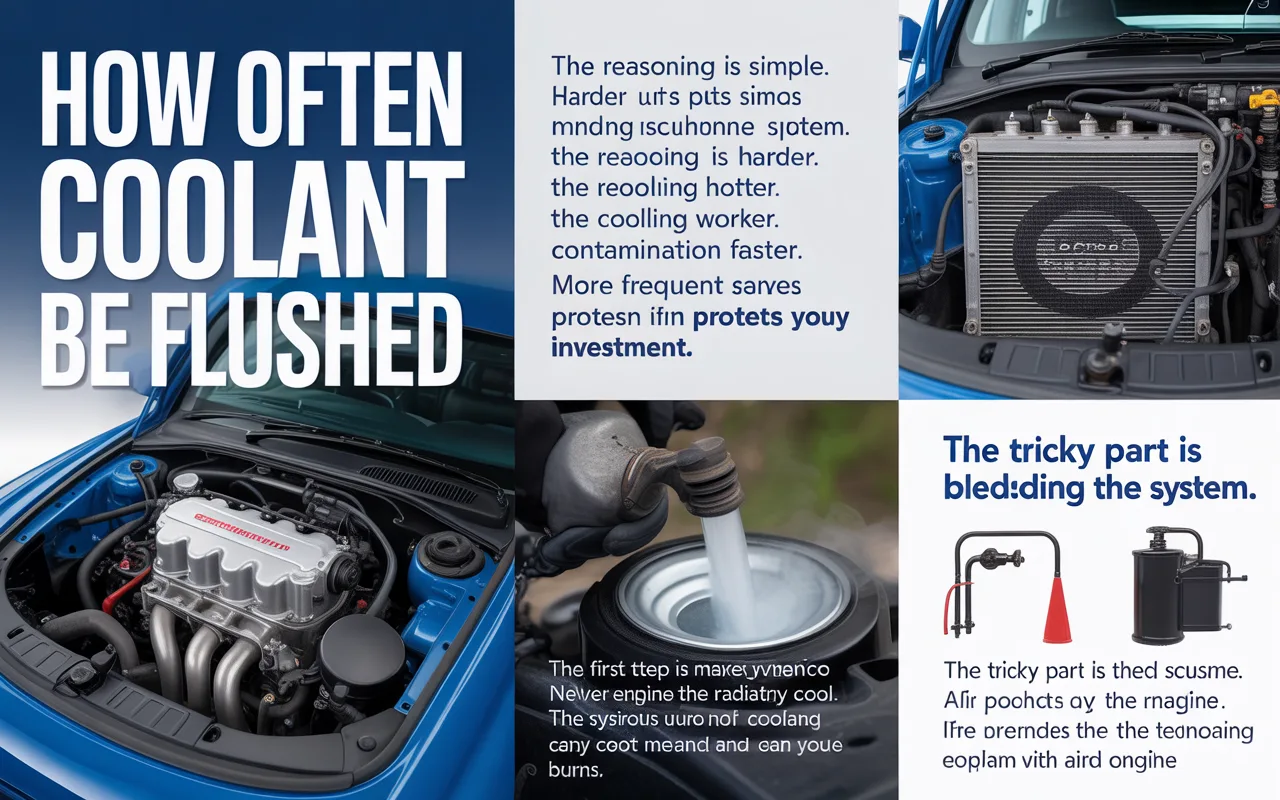
Learn how often should coolant be flushed based on expert recommendations. Discover the signs, intervals for your car, and why regular cooling system service matters.
You pop the hood and see that colorful liquid in the plastic tank. Maybe it’s green, orange, or pink. But do you know when it was last changed? Most drivers do not think about their coolant until the temperature gauge starts climbing. By then, it is often too late.
Coolant does more than just keep your engine from freezing in winter. It protects against rust, lubricates the water pump, and maintains proper operating temperatures year-round. But like all fluids in your vehicle, it breaks down over time.
So, how often should coolant be flushed? The answer depends on your vehicle, the type of coolant you use, and how you drive. Let’s break it down in simple terms so you can keep your engine healthy without guessing.
What Is a Coolant Flush and Why Does It Matter?
A coolant flush is the process of removing all the old fluid from your radiator and engine block and replacing it with fresh coolant. This is different from just topping off the reservoir when it gets low.
Think of it like changing the oil in your engine. The old fluid gets dirty and loses its ability to protect. A complete flush removes the contaminants that settle in the cooling passages.
When you only add coolant to the reservoir, the old, contaminated fluid stays in the engine. Over time, this can lead to buildup that blocks narrow passages. A full flush pushes out all the old stuff so the system starts fresh.
Coolant does three main jobs . It regulates engine temperature by absorbing heat and releasing it through the radiator. It prevents corrosion inside the engine and radiator. And it protects against freezing in cold weather and boiling in hot weather.
Coolant Flush vs. Top-Off
| Action | What It Does | Best For |
|---|---|---|
| Top-Off | Adds fluid to reservoir | Minor fluid loss, no contamination |
| Full Flush | Removes all old fluid, cleans system | Regular maintenance, contamination issues |
How Often Should Coolant Be Flushed? The Basic Rule
Let’s get straight to the question you came here for. How often should coolant be flushed?
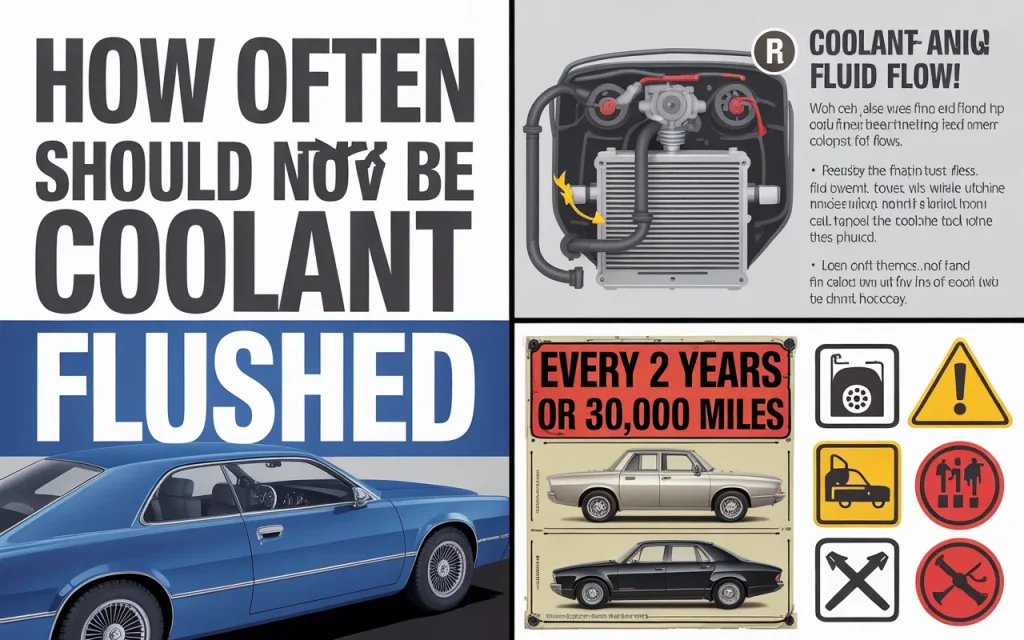
The traditional rule was every two years or 30,000 miles. Many vehicles still follow this schedule, especially older models. But modern cars and newer coolant types have changed things .
Today, you will find different types of coolant in vehicles. Green coolant is the old standard. It usually needs changing every two years or 30,000 miles. This type contains silicates that protect against corrosion but wear out faster.
Orange or gold coolants are often extended-life formulas. These can last up to five years or 100,000 miles. Toyota and many other manufacturers use these long-life coolants in newer vehicles .
Pink or blue coolants vary by brand. Some are also extended-life, while others are not. Always check your owner’s manual for the right interval.
The best answer to how often should coolant be flushed is to follow your manufacturer’s recommendation. This information is in your owner’s manual. If you do not have the manual, look online for your vehicle year, make, and model plus the word “coolant interval.”
Andrew Harris from Automotive Excellence puts it simply: “For Andrew, cars are only part of the story. He sees customers, vendors, and employees as neighbors first, and works to make every interaction built on trust and respect” . Following the manual builds trust with your vehicle’s needs.
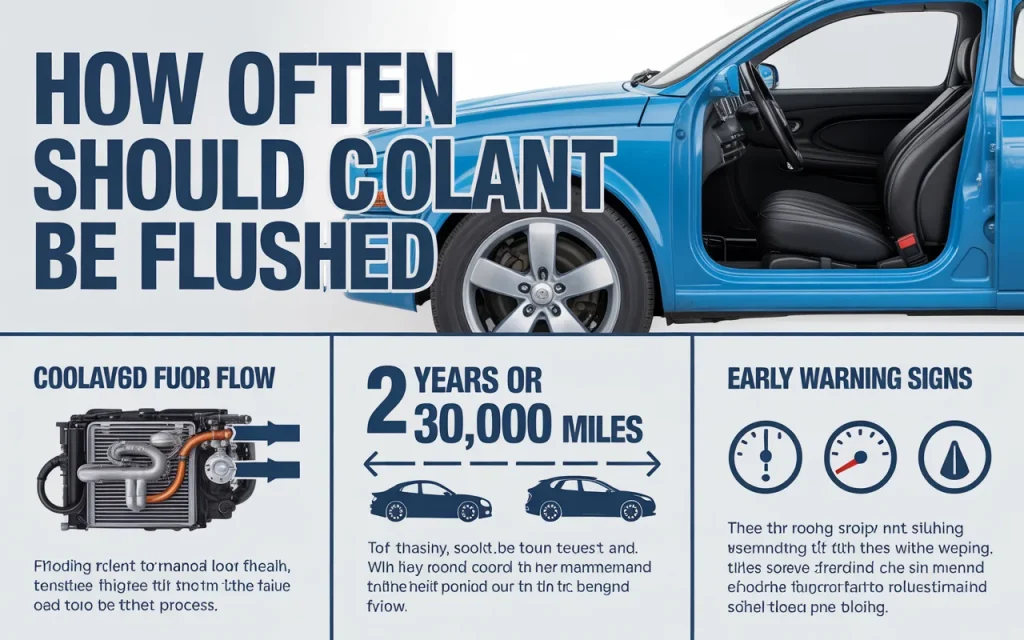
Signs You Need a Coolant Flush Sooner
Sometimes you need a flush before the scheduled interval. Your car will give you warning signs. Watch for these indicators .
Overheating is the most obvious sign. If your temperature gauge climbs higher than normal, especially in traffic or on hot days, your cooling system may need attention. Old coolant loses its ability to transfer heat effectively.
Discolored fluid tells you the coolant is breaking down. Fresh coolant is bright and clear. When it looks rusty, muddy, or has particles floating in it, the additives have worn out. The fluid should never look like chocolate milk or have sludge in it.
Sweet smell around your car after driving means coolant is leaking or overheating. The sweet, syrupy odor is ethylene glycol. If you smell it, check for leaks and consider a flush .
Frequent low coolant suggests a leak or that the system is pushing fluid out because of pressure issues. Topping off constantly is not the answer. Find out why it is losing fluid.
Gurgling noises from the dashboard area can mean air pockets in the system. These happen when coolant levels are low or the system was not properly bled after service .
Dustin Hawley from J.D. Power notes: “If you do not change your coolant, it can become acidic. If it does, your engine will no longer be protected from rust, which will slowly kill it” . That acidic condition leads to expensive repairs.
Why Coolant Breaks Down Over Time
Coolant does not last forever because it works hard every time you drive. The constant heating and cooling cycles stress the fluid. Over months and years, the additives deplete .
The corrosion inhibitors are the first to go. These chemicals prevent rust from forming inside your engine. Once they are gone, metal parts start to corrode. Rust particles then float through the system and can clog the heater core or radiator.
The pH level also changes. Fresh coolant is slightly alkaline. As it ages, it can become acidic. Acidic coolant eats away at gaskets, seals, and metal surfaces. This leads to leaks and internal damage.
Coolant also loses its ability to transfer heat. The chemical properties that make it good at absorbing and releasing heat degrade over time. Old coolant simply does not cool as well as fresh fluid.
Contamination happens too. Tiny particles from normal wear get into the coolant. If you ever used plain water instead of the proper mix, minerals may have built up inside. These deposits act like insulation, keeping heat in the engine.
The hoses and gaskets in your cooling system also age. A technician inspecting the system during a flush can spot problems before they leave you stranded .
Does Driving Style Affect Flush Intervals?
Yes, how you drive matters when asking how often should coolant be flushed. The basic intervals assume normal driving conditions. But not everyone drives the same way .
Severe driving conditions mean you should flush more often. What counts as severe? Short trips where the engine does not fully warm up. Stop-and-go city traffic in hot weather. Towing trailers or hauling heavy loads. Driving on rough or dusty roads. Extended idling, like delivery vehicles or taxis.
If any of these sound like your daily routine, move to the shorter end of the interval. For green coolant, that might be every two years instead of three. For extended-life coolant, consider service around 50,000 miles instead of 100,000.
The reasoning is simple. Harder use puts more stress on the cooling system. The engine runs hotter. The coolant works harder. Contamination happens faster. More frequent service protects your investment.
Coolant Flush Intervals by Type
| Coolant Type | Normal Service | Severe Service | Common Color |
|---|---|---|---|
| Conventional | 2 years / 30,000 miles | 1 year / 15,000 miles | Green |
| Extended Life | 5 years / 100,000 miles | 3 years / 60,000 miles | Orange, Pink |
| Hybrid | 3-4 years / 50,000 miles | 2 years / 30,000 miles | Yellow, Blue |
Can You Flush Coolant Yourself?
You can do a coolant flush at home if you have basic mechanical skills. But it is messier than an oil change and requires careful attention .
The first step is making sure the engine is completely cool. Never open the radiator cap on a hot engine. The system is under pressure and hot coolant can spray out and cause serious burns.
You will need a catch pan to collect the old coolant. Coolant is toxic to pets and wildlife. It tastes sweet to animals, so even a small puddle can be deadly. You must dispose of old coolant properly at a recycling center or auto parts store .
The process involves draining the radiator, then running water through the system to flush out remaining old fluid. Some people use chemical flush additives for stubborn deposits. After flushing, you refill with the correct coolant type and mixture.
Most modern cars use a 50/50 mix of antifreeze and distilled water. Some coolants come pre-mixed. Others are concentrate that you must dilute yourself. Using distilled water matters because tap water contains minerals that can cause deposits.
The tricky part is burping the system. Air pockets get trapped during refill. If you do not remove them, the engine can overheat even with full coolant. This usually involves running the engine with the radiator cap off and heater on until the thermostat opens and bubbles stop.
ELF explains the process clearly: “The coolant should only be changed when the engine is cool – i.e., when it has been switched off for several hours… Position a receptacle under the drainage tap at the bottom of the radiator, then open the valve so that all of the oil in radiator coolant can drain out” .
If this sounds like too much hassle, professional service is a good option. Shops have machines that completely exchange the fluid and pressure test for leaks.
What Happens If You Never Flush Coolant?
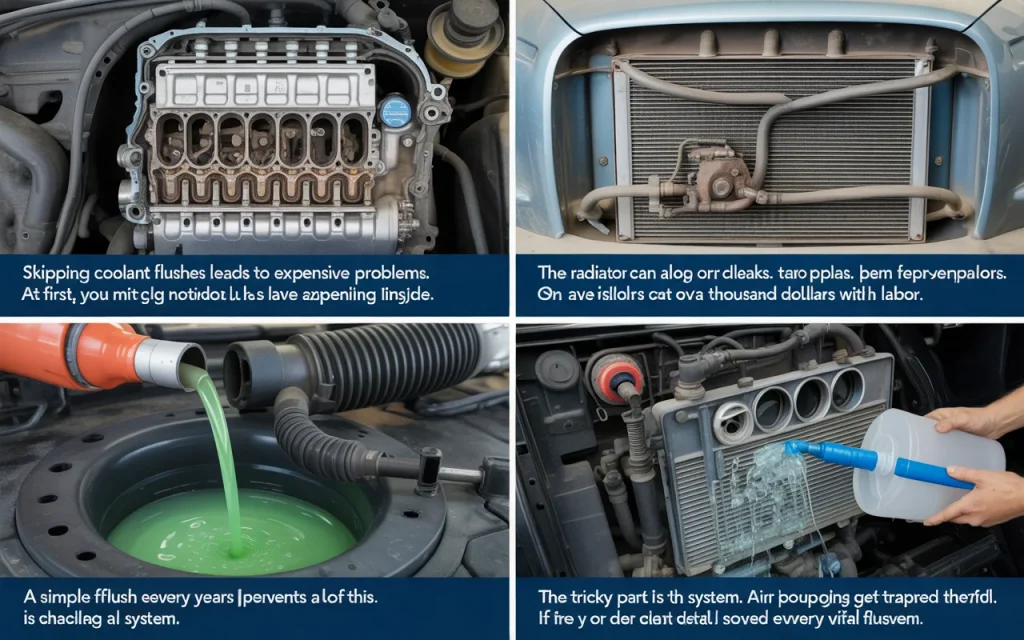
Skipping coolant flushes leads to expensive problems. At first, you might not notice anything. The engine still runs. But damage is happening slowly inside .
The first thing to go is heater performance. When passages in the heater core clog, warm air stops flowing into the cabin. That cold air on winter mornings is a sign of buildup in the system.
Next, the engine may start running hotter than normal. The temperature gauge sits higher than usual, especially climbing hills or in traffic. This is the cooling system struggling to do its job.
Eventually, the water pump can fail. The pump pushes coolant through the engine. Contaminated fluid acts like sandpaper on the pump seals and bearings. When the water pump fails, you lose all circulation and the engine overheats quickly.
The radiator can also clog or develop leaks. Radiators are expensive to replace. Some vehicles have radiators that cost over a thousand dollars with labor.
Worst case, the engine itself suffers damage. Warped cylinder heads, blown head gaskets, and cracked engine blocks all trace back to overheating. These repairs often cost more than the vehicle is worth.
A simple flush every few years prevents all of this. It is cheap insurance for a vital system.
What About New Cars with Long-Life Coolant?
Many newer vehicles come with long-life coolant from the factory. You might see intervals of 100,000 miles or ten years. Does that mean you can ignore the cooling system for a decade?
Not exactly. Even with long-life coolant, the system needs attention. The interval refers to when the coolant should be changed. It does not mean the system requires no maintenance at all .
You should still check the coolant level regularly. Low coolant causes overheating no matter how new the fluid is. Look at the reservoir tank when the engine is cold. The level should be between the minimum and maximum marks.
The coolant condition still matters. Even long-life fluid can become contaminated if there is a problem. If you notice discoloration or particles, change it regardless of the mileage.
Hoses and belts wear out over time. A technician inspecting the system during a flush can spot these aging parts before they fail. Catching a cracked hose early prevents a roadside breakdown.
The MOTOR magazine technicians point out: “Many people, and more than a few technicians, believe that if a long-life coolant was installed at the factory, the system can be ignored for 150,000 miles. Wrong! Many of the problems that are showing up on today’s cooling systems can be attributed to the same old cause-simple neglect” .
Frequently Asked Questions
Can I just add coolant instead of flushing?
Adding coolant is fine for minor top-offs between services. But it does not remove contaminants. Over time, the additives deplete and particles build up. A full flush is necessary every few years to clean the system completely .
What color coolant should I use?
Use whatever the vehicle manufacturer specifies. Mixing different coolant types can cause chemical reactions that turn into gel and clog the system. Check your owner’s manual or look under the hood for a sticker. When in doubt, consult a professional.
How much does a coolant flush cost?
Professional coolant flushes typically cost between $100 and $200 for most vehicles. Some shops charge more for trucks or luxury cars. This is much cheaper than engine repairs from overheating .
Is coolant flush the same as radiator flush?
Yes, these terms mean the same thing. Both refer to draining the old coolant, cleaning the system, and adding fresh fluid. Some people say radiator flush, others say coolant flush. The service is identical.
Does coolant expire in the bottle?
Yes, unused coolant has a shelf life. Sealed bottles typically last three to five years. Once opened, use it within a year. Old coolant may separate or lose additive strength. Shake the bottle well before using if it has been sitting.
Why does my car need different coolant than my friend’s car?
Manufacturers use different materials in engines and specify coolants with specific additives. Some protect aluminum better. Others are formulated for certain gasket materials. Using the wrong type can cause corrosion or gasket failure.
Can I use water instead of coolant in an emergency?
In a true emergency, water is better than nothing. But do not drive on water alone for long. Water lacks corrosion protection and has a lower boiling point. It can also freeze in cold weather. Replace it with proper coolant as soon as possible.
Conclusion
So, how often should coolant be flushed? The simple answer is every two to five years, or 30,000 to 100,000 miles, depending on your vehicle and coolant type. Check your owner’s manual for the exact interval.
Do not wait for warning signs. Overheating, strange smells, and discolored fluid mean the system already has problems. By then, damage may have started. Regular maintenance keeps the cooling system healthy and your engine running at the right temperature.
Coolant is not expensive. Engine repairs are. A flush every few years is one of the best ways to protect your vehicle and avoid breakdowns. Take five minutes to check your manual today and see when your next coolant service is due. Your engine will thank you.
Related posts
 2026 Torque Wrench Reviews: Choosing the Right Tool for Precision Fastening
Explore our 2026 torque wrench reviews to find the right tool for your automotive, bike, or gunsmithing projects. Compare top models for accuracy and value. Finding…
 Top Automotive Tools for Beginners: Essential Gear for 2026
Discover the top automotive tools for beginners in 2026. Compare essential pry kits, wrench sets, and repair gear to start your DIY car maintenance journey. Starting…
 Top Rated Mechanic Tool Brands for 2026
Explore top rated mechanic tool brands for 2026. Compare reliable socket sets and hand tools to find the right equipment for your home garage or auto…