
How To Stop Hair Fall Naturally For Women
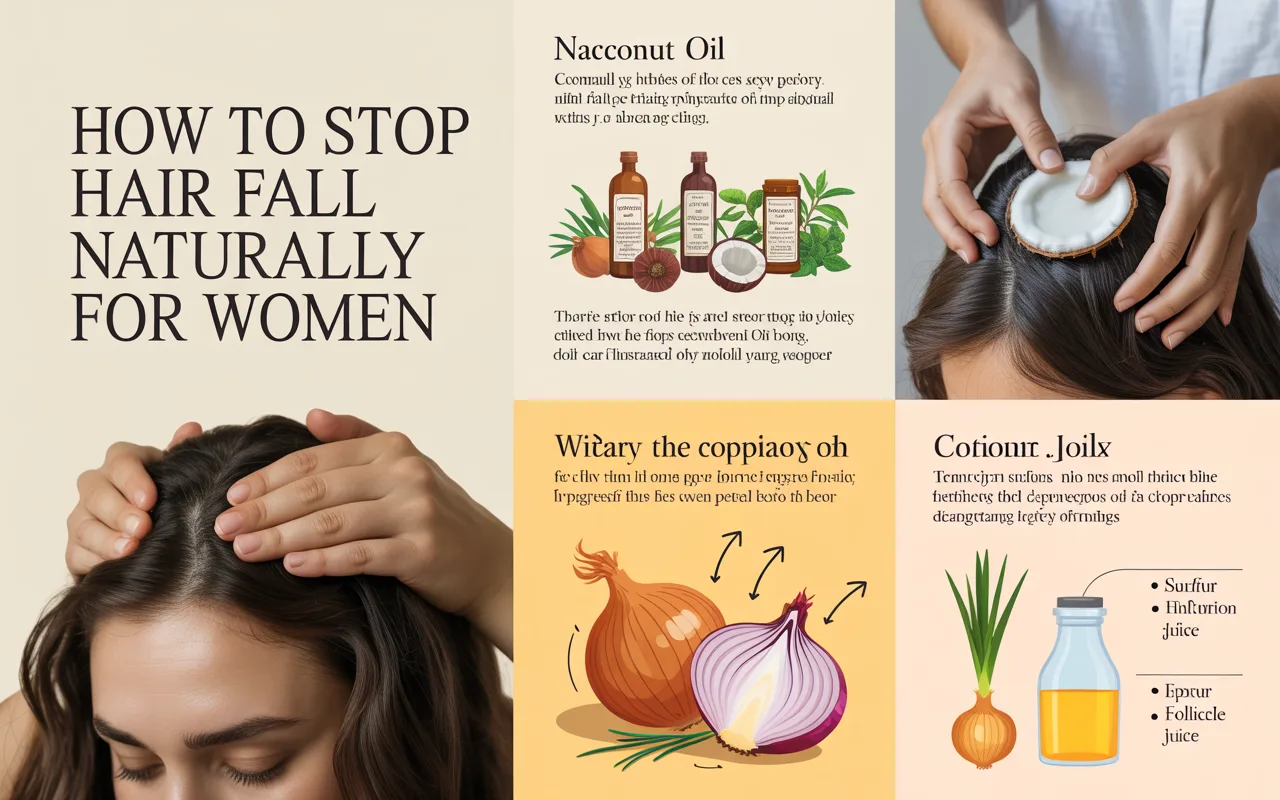
Learn the best ways to stop hair fall naturally for women with home remedies, hair care tips, and diet changes. Simple steps to get stronger, healthier hair starting today.
Before we talk about solutions, it helps to understand why hair falls out. Every day, it is normal to lose between 50 and 100 hairs. This is just part of the hair growth cycle. But when you notice more hair loss than usual, something else might be going on.
Common reasons for hair fall in women include stress, hormonal changes, not getting enough nutrients, using harsh hair products, or tight hairstyles that pull on the roots. Sometimes it happens after having a baby or during menopause. Other times, it might be due to a health issue like thyroid problems or low iron levels.
The key to learning how to stop hair fall naturally for women is finding out what might be causing it in your case. Once you know the possible cause, you can pick the right natural solutions that will work best for you.
Simple Natural Remedies to Reduce Hair Fall
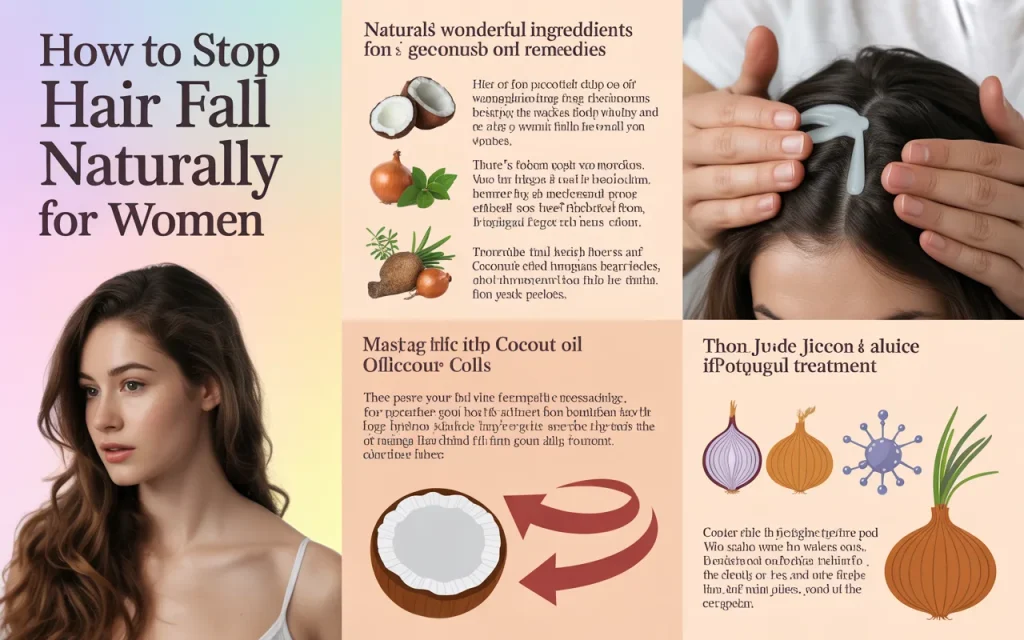
Nature gives us many wonderful ingredients that can help strengthen hair and reduce shedding. These remedies have been used for generations and are safe to try at home. Here are some of the most effective ones.
Coconut Oil Massage for Stronger Roots
Coconut oil is one of the best natural things you can use for your hair. It goes deep into the hair shaft and stops protein loss. This makes hair stronger and less likely to break.
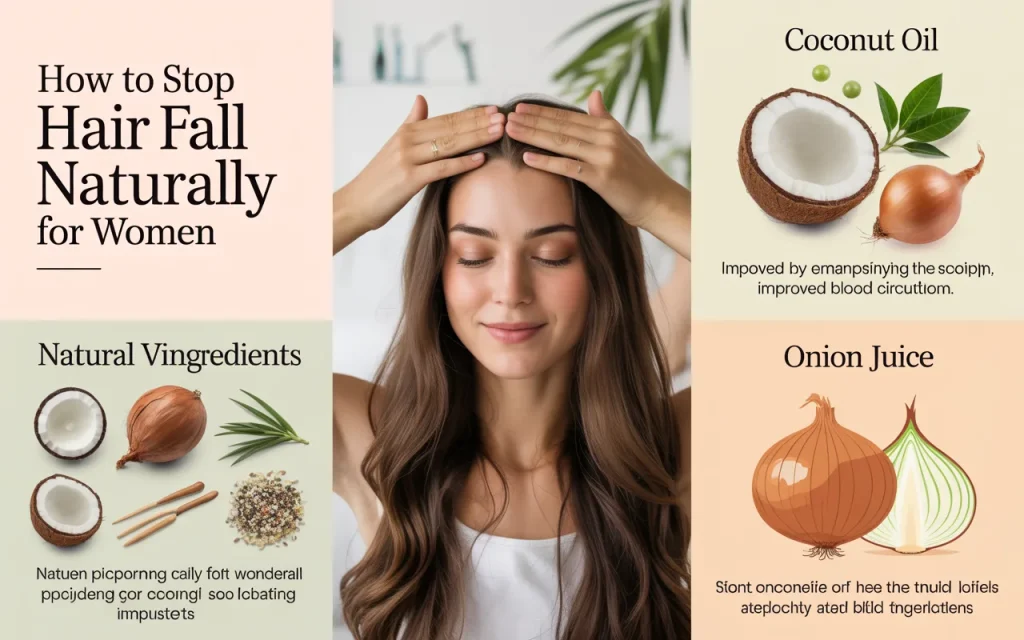
To use coconut oil, warm a small amount in your hands. Gently massage it into your scalp using your fingertips. Use circular motions. This helps blood flow to the hair roots. More blood flow means more nutrients reach your hair follicles. Leave the oil on for at least one hour, or even overnight. Then wash it out with a mild shampoo.
Try doing this once or twice each week. It is a relaxing way to care for your hair and scalp.
Aloe Vera to Soothe the Scalp
Aloe vera is known for its healing properties. It can calm an irritated scalp and reduce dandruff. A healthy scalp is important for healthy hair growth.
You can use fresh aloe vera gel from a plant leaf. Apply it directly to your scalp and leave it for about 30 minutes. Then rinse with lukewarm water. Doing this a few times a week can help create the right conditions for hair to grow well.
“Aloe vera contains enzymes that directly promote healthy hair growth. Its natural composition makes it one of the safest options for women dealing with hair thinning,” says Dr. Priya Sharma, a natural wellness expert.
Onion Juice for Hair Thickness
This remedy might sound strange, but many women swear by it. Onion juice contains sulfur, which helps make hair stronger. It also improves blood flow to hair follicles.
To try this, grate an onion and squeeze out the juice. Apply the juice to your scalp and leave it for about 30 minutes. Then wash your hair well with a gentle shampoo. The smell goes away after washing. Do this once or twice a week for a few months to see results.
Foods That Help Stop Hair Fall Naturally
What you eat matters a lot for your hair. Hair is made of protein, so eating enough protein is very important. But other nutrients also play a big role in keeping hair strong and stopping fall.
Protein-Rich Foods for Hair Structure
Your hair needs protein to grow. When you do not eat enough protein, your body may slow down hair growth. Good sources of protein include eggs, chicken, fish, beans, lentils, and nuts.
Eggs are especially good because they also contain biotin, which helps make hair proteins. Try to include a protein source in every meal.
Iron and Zinc for Healthy Follicles
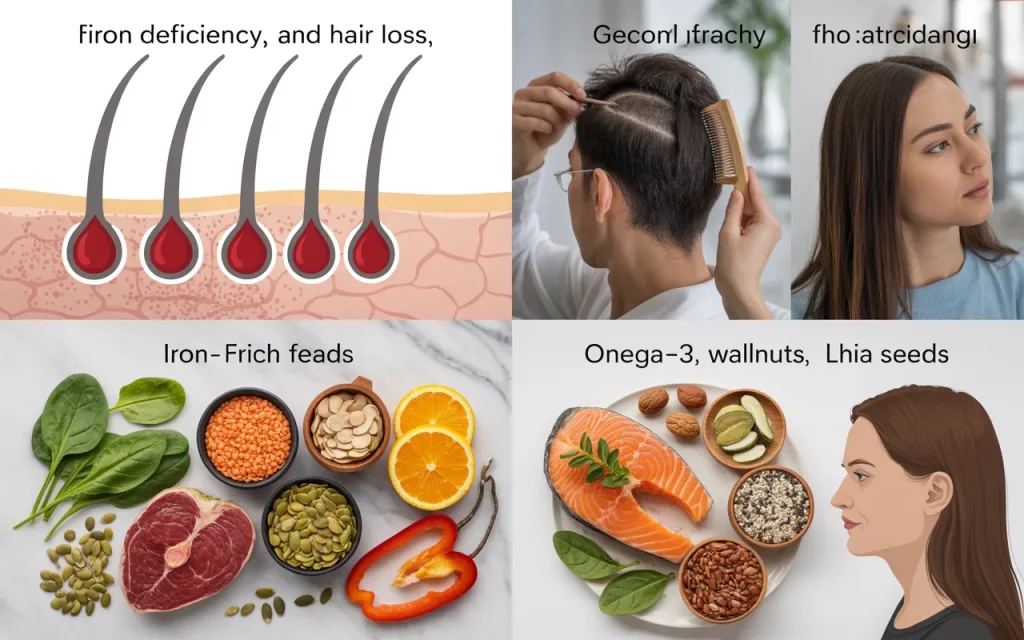
Low iron is a common cause of hair fall in women. Iron helps red blood cells carry oxygen to your hair follicles. Without enough oxygen, hair cannot grow well.
Foods high in iron include spinach, lentils, beans, red meat, and pumpkin seeds. Eating these along with vitamin C foods, like oranges or bell peppers, helps your body absorb the iron better.
Zinc is another mineral that helps hair tissue grow and repair. It also keeps the oil glands around hair follicles working well. You can find zinc in foods like chickpeas, nuts, and eggs.
Omega-3 Fatty Acids for Scalp Health
Healthy fats help keep your scalp moist and healthy. A dry scalp can lead to hair problems. Omega-3 fats are found in fish like salmon and mackerel. For plant sources, try walnuts, flaxseeds, and chia seeds.
| Nutrient | Why It Helps Hair | Best Food Sources |
|---|---|---|
| Protein | Builds hair structure | Eggs, chicken, beans, lentils |
| Iron | Brings oxygen to roots | Spinach, lentils, red meat |
| Zinc | Repairs hair tissue | Chickpeas, nuts, eggs |
| Omega-3 | Keeps scalp healthy | Salmon, walnuts, chia seeds |
| Vitamin C | Helps iron absorption | Oranges, strawberries, bell peppers |
Gentle Hair Care Habits to Adopt
Sometimes the way we handle our hair causes more damage than we realize. Changing a few daily habits can make a big difference in how much hair falls out.
Be Gentle When Hair Is Wet
Wet hair is weaker than dry hair. It stretches more and can break easily. After washing, do not rub your hair hard with a towel. Instead, gently squeeze out extra water with a soft towel or let it air dry.
Use a wide-tooth comb to detangle wet hair. Start from the ends and work your way up slowly. This causes less pulling and breakage.
Avoid Tight Hairstyles
Pulling hair back tightly in ponytails or buns can cause stress on the roots. Over time, this can lead to a type of hair loss called traction alopecia. If you notice soreness on your scalp after wearing a style, it is too tight.
Try to wear your hair down sometimes. When you do put it up, use soft hair ties that do not pull as much. Change your hairstyle often to give different parts of your scalp a break.
Limit Heat and Chemical Treatments
Heat styling tools like flat irons and curling wands can damage hair over time. The high heat makes hair dry and brittle, which leads to breakage. If you use heat, always use a heat protectant spray first.
Chemical treatments like coloring, perming, or relaxing can also weaken hair. If you want to stop hair fall naturally for women, it helps to limit these harsh treatments. Let your hair rest between chemical services.
“Most women do not realize that their daily styling routine is the main cause of their hair thinning. Simple changes in how you handle your hair can stop the breakage within weeks,” notes Lisa Chen, a holistic hair care specialist.
Essential Oils and Herbal Treatments
Many plant oils have properties that support hair health. Using them regularly can strengthen hair and reduce fall.
Rosemary Oil for Hair Growth
Rosemary oil is well known for helping hair grow. Some studies show it works as well as some hair growth medicines, but without the side effects. It improves blood flow to the scalp and helps cells divide, which supports new hair growth.
Mix a few drops of rosemary oil with a carrier oil like coconut or jojoba oil. Massage this into your scalp a few times a week. You can leave it on for at least 30 minutes before washing.
Green Tea Rinse
Green tea is full of antioxidants that can help hair. It may stop a hormone that causes hair loss. Making a green tea rinse is simple.
Brew some green tea and let it cool. After washing your hair, pour the tea over your scalp and hair. Leave it on for about 10 minutes, then rinse with cool water. Doing this once a week can help over time.
Amla for Traditional Hair Care
Amla, or Indian gooseberry, has been used in natural hair care for a long time. It is very high in vitamin C and antioxidants. It can help make hair darker and stronger.
You can find amla oil in stores, or make a paste from dried amla powder and water. Apply it to your scalp and hair, leave for 30 minutes, then rinse well.
| Natural Oil | How It Helps Hair | How to Use It |
|---|---|---|
| Coconut oil | Stops protein loss | Massage into scalp, leave 1 hour |
| Rosemary oil | Improves blood flow | Mix with carrier oil, massage in |
| Amla oil | Strengthens hair | Apply to scalp, leave 30 minutes |
| Peppermint oil | Increases circulation | Dilute well before using |
Lifestyle Changes for Healthier Hair
What you do every day affects your hair just as much as what you put on it. Stress, sleep, and exercise all play a part in hair health.
Managing Stress Levels
High stress can actually cause hair to fall out. When you are very stressed, your body produces hormones that can stop hair growth. Sometimes hair falls out in large amounts a few months after a stressful event.
Finding ways to relax is good for your whole body, including your hair. Things like walking, reading, talking with friends, or doing a hobby you enjoy can help lower stress. Even taking a few deep breaths during a busy day can make a difference.
Getting Enough Sleep
Your body repairs itself while you sleep. This includes your hair cells. Not getting enough sleep can throw off your hormone balance and affect hair growth.
Try to get seven to eight hours of sleep each night. Having a regular sleep schedule helps your body know when to rest and repair. Good sleep supports all the other efforts you make to reduce hair fall.
Drinking Plenty of Water
Water makes up about one-fourth of a hair strand’s weight. When you are dehydrated, your hair can become dry and brittle. This makes it more likely to break.
Drinking enough water throughout the day helps keep hair flexible and strong. Carry a water bottle with you as a reminder to drink. Herbal teas and water-rich foods like cucumbers also help with hydration.
When to See a Doctor
Natural methods work well for many women, but sometimes hair loss needs medical attention. If you try these tips for a few months and still see a lot of hair fall, it might be time to talk to a doctor.
See a doctor if you notice sudden or patchy hair loss, if your scalp itches or burns, or if you have other symptoms like feeling very tired. These could be signs of a health problem that needs treatment.
A doctor can do blood tests to check for low iron, thyroid issues, or hormone problems. Treating the underlying cause is the best way to stop the hair fall.
“Persistent hair loss in women often points to an internal imbalance. While natural remedies support hair health, they work best when combined with proper medical diagnosis of any underlying conditions,” explains Dr. Meera Patel, who specializes in women’s health.
Frequently Asked Questions
How long does it take to see results from natural hair fall remedies?
Most natural methods need time to work. Hair grows slowly, so it can take three to six months of regular care to see a real difference. Be patient and keep up with your routine.
Can washing hair every day cause more hair fall?
Washing itself does not cause hair to fall out. But if you wash too often with harsh shampoos, it can dry out hair and make it more likely to break. Try washing every two or three days with a gentle shampoo.
Does cutting hair make it grow back thicker?
Cutting hair does not change how it grows from the root. It only removes the ends. But regular trims can stop split ends from traveling up the hair shaft, which keeps hair looking fuller and healthier.
Are vitamins for hair growth worth taking?
For some women, supplements can help if they have a vitamin deficiency. But taking extra vitamins when you do not need them may not help. It is better to get nutrients from food first. Talk to a doctor before starting any new supplement.
Can birth control pills cause hair fall?
Some women notice hair changes when they start or stop birth control pills. This is due to hormone shifts. If you think your pills are causing hair loss, talk to your doctor about other options.
Is it normal to lose hair in the shower?
Yes, it is normal to lose some hair in the shower. Many of the hairs you see in the drain are hairs that already came loose during the day. Washing just helps them fall out together.
Conclusion
Learning how to stop hair fall naturally for women is about taking care of your whole self. Gentle scalp massages with nourishing oils, eating foods rich in protein and vitamins, and handling your hair with care all work together to keep your hair healthy and strong.
Remember that small, consistent steps matter more than doing everything at once. Pick one or two natural remedies to start. Add healthy foods to your meals slowly. Change one hair habit at a time. Over weeks and months, these small changes add up to real results.
Your hair reflects your overall health. When you eat well, manage stress, sleep enough, and treat your hair gently, it shows. Be kind to yourself and your hair during this process. Every woman’s hair is different, so find the natural methods that feel right for you.
With patience and care, you can reduce hair fall and enjoy healthier, fuller hair using the simple gifts that nature provides.
Related posts
 Best Compact Powder for Women: 2026 Buyer Guide
Finding the best compact powder for women in 2026. We compare top-rated matte, mineral, and lightweight pressed powders to help you choose the right finish. Finding…
 Best Casual Wear for Women: 2026 Style and Comfort Essentials
Discover the best casual wear for women in 2026. We compare top-rated trousers and versatile tops to help you build a comfortable, stylish everyday wardrobe. Finding…
 Best Claw Clips for Thick Hair in 2026
Finding the best claw clips for thick hair requires a balance of grip and size. Explore our top 2026 recommendations for secure, stylish, and reliable styling.…