
How to Use Nonstick Pan Properly
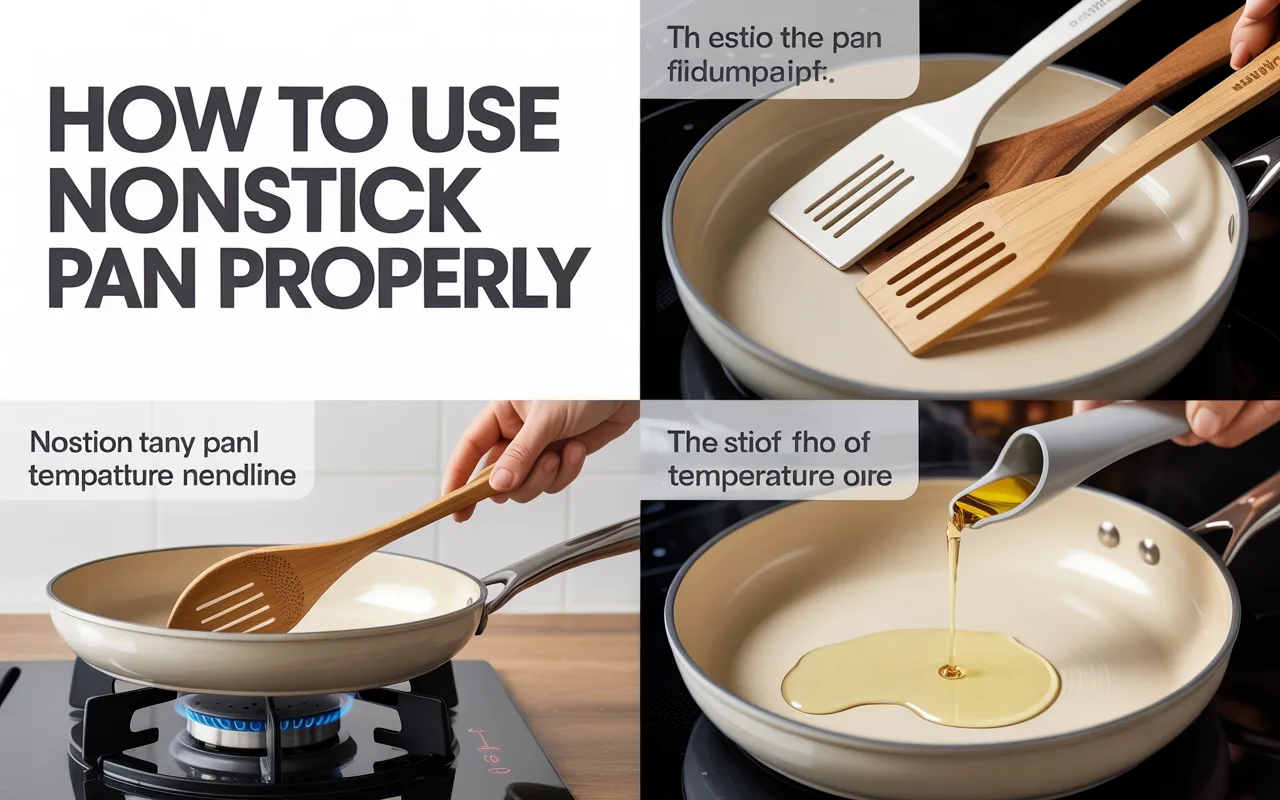
Learn how to use nonstick pan properly with this friendly guide. Discover tips on heating, cleaning, and storing to keep your pan safe and nonstick for years. Simple steps for better cooking.
Nonstick pans make cooking simple and cleanup even simpler. But many people damage their pans without knowing it. If you learn how to use nonstick pan properly, your cookware will last for years and perform like new. This guide shows you exactly what to do and what to avoid.
Nonstick pans have a special coating that stops food from sticking. This coating is helpful, but it is also delicate. When you use nonstick pan properly, you protect this coating. You also keep your food safe and tasty.
Many people throw away good pans because they did not know how to care for them. You can avoid this. Small changes in how you cook and clean make a big difference. Let us look at the right way to handle your pan.
“A good nonstick pan is a cook’s best friend. But like any friendship, it needs care and respect to last.” – Chef Maria Lopez
1. Choosing the Right Utensils
Use Soft Tools Only
The first rule to use nonstick pan properly is to pick the correct tools. Metal spoons, forks, or whisks scratch the coating. These scratches ruin the nonstick surface. Once scratched, food starts to stick, and the pan gets worse over time.
Always use utensils made from:
- Wood
- Silicone
- Plastic or nylon (heat-resistant)
These soft materials slide across the pan without leaving marks. They keep the surface smooth and safe.
Avoid Sharp Edges
Even some plastic tools have rough edges after a while. Check your utensils now and then. If they feel rough or have burrs, replace them. A small scratch can grow into a bigger problem.
2. Heating Your Pan Correctly
Start with Low or Medium Heat
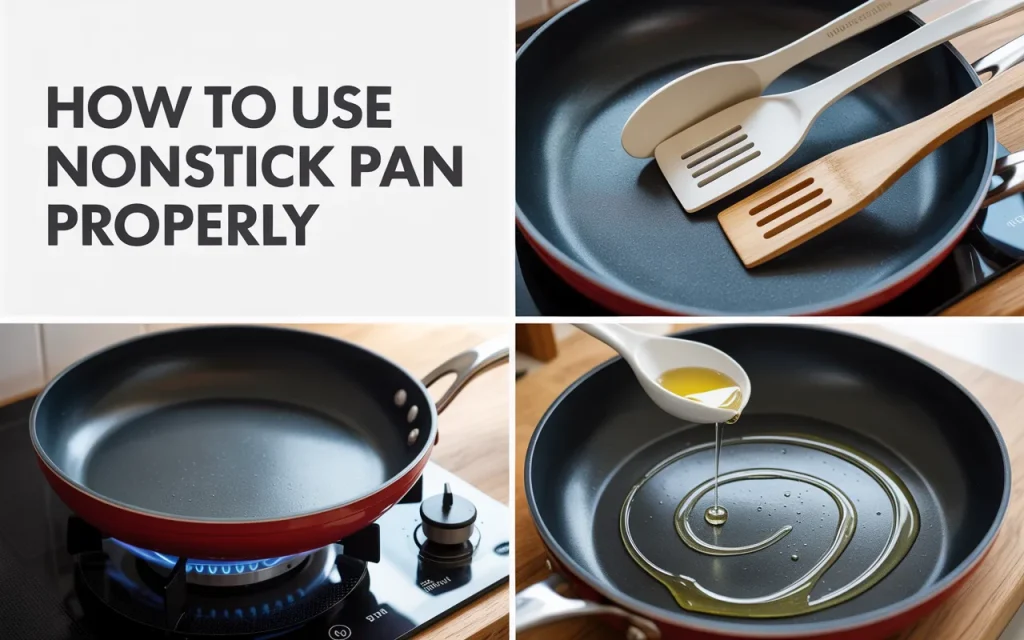
High heat is the enemy of nonstick pans. The coating does not like extreme temperatures. When you use nonstick pan properly, you keep the heat low or medium. This is enough for almost all cooking tasks.
Eggs, pancakes, fish, and vegetables all cook well on medium heat. If you need more heat, let the pan warm up slowly. Never put a cold pan on high heat right away. This sudden change can harm the coating.
Preheat Gently
Put the pan on the stove. Turn the heat to low or medium. Let it warm up for one or two minutes. Then add your oil or food. This gentle preheat helps the pan cook evenly.
“Patience with heat is the secret to nonstick success. Rushing with high heat only leads to disappointment.” – James Chen, Cookware Designer
3. Using Oil and Cooking Spray
A Little Goes a Long Way
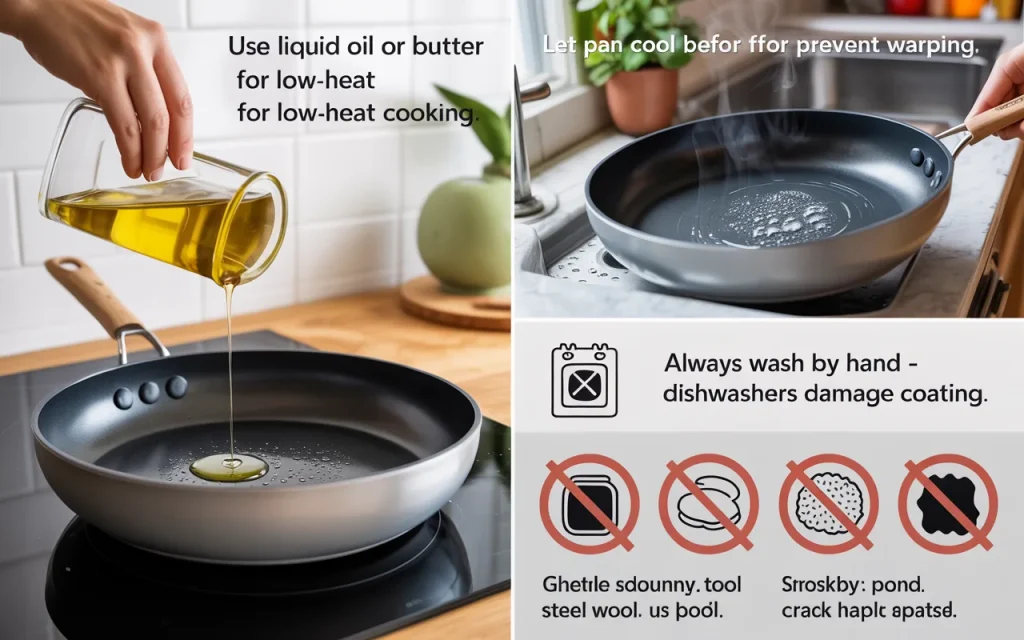
Nonstick pans need less oil than other pans. You only need a thin layer. When you use nonstick pan properly, you use just enough oil to coat the bottom. Too much oil can burn and leave residue.
Be Careful with Cooking Sprays
Many cooking sprays leave a sticky film on nonstick surfaces. This film builds up over time. It becomes hard to remove and makes the pan less nonstick.
If you use spray, turn the pan over and spray it into a paper towel. Then wipe the inside of the pan with that towel. This gives you a thin, even layer without the sticky buildup.
Better yet, use a small amount of liquid oil. Butter also works well for low-heat cooking.
4. Cleaning Your Nonstick Pan
Let It Cool First
After cooking, let the pan cool down before you wash it. Putting a hot pan in cold water can warp the metal. It can also stress the coating. Wait until the pan feels warm but not hot.
Hand Wash Only
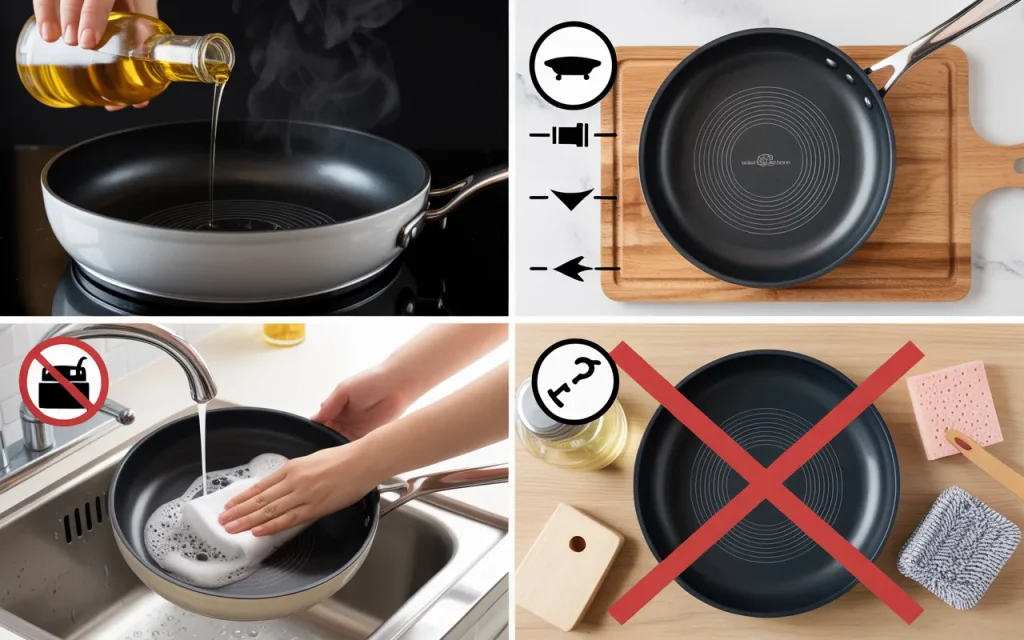
Dishwashers are too harsh for nonstick pans. The strong detergents and high heat break down the coating. Always wash by hand.
Use:
- Warm water
- Soft sponge or cloth
- Mild dish soap
Stay away from steel wool, scrubby pads, or harsh cleaners. These scratch the surface. If food sticks, soak the pan in warm soapy water for a few minutes. Then wipe clean.
Dry Right Away
After washing, dry the pan with a towel. Do not let it air dry. Water spots can form, and leftover moisture is not good for the pan. Drying also stops any rust from forming on the outside.
5. Storing Your Pan
Protect the Surface
How you store your pan matters. When you stack pans, the bottom of one pan can rub against the inside of another. This causes scratches.
To use nonstick pan properly in storage:
- Hang the pan if you have space
- Place a paper towel or soft pan protector inside before stacking
- Store it alone if possible
These small steps keep the coating safe from bumps and rubs.
Keep It Separate
If you must stack, put the nonstick pan on top. Heavier pans below can press down and damage the coating. A soft barrier between pans is a simple fix that works well.
| Do This for Storage | Avoid This |
|---|---|
| Hang the pan | Stacking without protection |
| Use pan protectors | Storing heavy pans on top |
| Place paper towel inside | Letting metal touch the coating |
6. What Not to Cook in Nonstick Pans
Avoid Very High Heat Cooking
Nonstick pans are not for all jobs. They do not work well for:
- Searing steaks
- Cooking with very high heat
- Using broilers
These tasks need high temperatures that can damage the coating. Use stainless steel or cast iron for those jobs instead.
Skip Acidic Foods
Cooking tomatoes, citrus, or vinegar-based dishes for a long time can harm nonstick pans. The acid can break down the coating over many uses. Quick cooking is usually fine, but avoid simmering acidic sauces for hours.
No Metal Tools or Sharp Objects
Never cut food inside the pan. Do not use a knife or pizza cutter on the surface. Take food out and cut it on a cutting board. This keeps the pan safe from cuts and scrapes.
7. Knowing When to Replace Your Pan
Watch for Signs of Wear
Even with good care, nonstick pans do not last forever. Look for these signs:
- Scratches or flaking on the surface
- Food starts sticking more
- Dark stains that will not wash off
- Warped bottom that wobbles on the stove
When you see these, it is time for a new pan. Cooking with a scratched pan is not safe. Small flakes of coating can get into food.
Safety First
Old or damaged pans should go. Do not wait until the coating peels off. A fresh pan works better and gives you peace of mind.
“Your pans tell you when they need retirement. Listen to them. A new pan is an investment in better meals.” – Elena Rossi, Home Cooking Expert
8. Common Mistakes People Make
Using High Heat to Speed Up Cooking
Many people think high heat cooks faster. It does, but it also hurts the pan. Medium heat takes a little longer but protects your cookware. Plan ahead and give yourself extra time.
Putting Cold Food into a Hot Pan
Cold food straight from the fridge can shock a hot pan. This temperature change stresses the coating. Let food sit out for a few minutes before cooking. Or put food in while the pan is still warming up.
Scrubbing Too Hard
A little stuck-on food does not need hard scrubbing. Soak the pan instead. Scrubbing with force wears down the coating. Be gentle, and your pan will thank you.
| Mistake | Better Way |
|---|---|
| High heat | Medium or low heat |
| Cold food in hot pan | Warm food first or start cooler |
| Hard scrubbing | Soak and wipe gently |
| Dishwasher | Hand wash only |
| Metal tools | Wood, silicone, or plastic |
9. Simple Daily Habits for Long Life
Check the Heat
Every time you cook, think about the heat. Keep it low or medium. This one habit makes the biggest difference.
Use the Right Tools
Keep a wooden spoon or silicone spatula near the stove. Make it easy to grab the right tool. If metal tools are close by, you might use them by accident.
Clean Gently
After dinner, soak the pan if needed. Wash with a soft sponge. Dry it and put it away. This routine takes just a few minutes but adds years to your pan.
Store with Care
Take an extra second to add a paper towel before stacking. This small act prevents scratches you cannot see until it is too late.
10. Frequently Asked Questions
Can I use olive oil in a nonstick pan?
Yes, olive oil works fine. Use a small amount on medium heat. It adds flavor and helps food cook evenly.
Why is my nonstick pan sticking?
Food may stick if the coating is scratched or worn. It can also happen if you use too high heat or not enough oil. Try lowering the heat and adding a little fat.
Is it safe to use a scratched nonstick pan?
It is better to stop using a scratched pan. The scratches can release small particles into food. Replace it for safety.
How long should a nonstick pan last?
With good care, a quality nonstick pan lasts three to five years. If you use it daily, you might need a new one sooner.
Can I put my nonstick pan in the oven?
Check the manufacturer’s instructions. Some pans are oven-safe up to a certain temperature. Others are not. The handle material also matters. Plastic handles do not go in the oven.
What is the best way to remove stuck food?
Fill the pan with warm water and a drop of soap. Let it sit for 15 to 20 minutes. Then wipe with a soft sponge. Avoid scraping.
Conclusion
Learning to use nonstick pan properly is simple once you know the rules. Use low or medium heat. Pick soft tools. Clean by hand and store with care. These habits keep your pan working well and lasting longer.
Your nonstick pan is a helpful tool in the kitchen. Treat it kindly, and it will serve you well for many meals. Small changes in your daily cooking make a real difference. Start today, and enjoy easy cooking and easy cleanup for years to come.
Remember these key points:
- Heat gently
- Use soft utensils
- Wash by hand
- Store safely
- Replace when worn
Cooking should be fun, not frustrating. With a well-cared-for nonstick pan, you get both good food and simple cleanup. That is a win for anyone who loves to cook.
Related posts
 Best Under Sink Organizers Kitchen 2026: Practical Storage Solutions
Find the best under sink organizers kitchen in 2026. Compare top-rated pull-out bins, L-shaped racks, and protective mats to maximize your cabinet space. The space under…
 Best Kitchen Cabinet Storage Solutions for 2026
Organize your kitchen efficiently with our Best Kitchen Cabinet Storage Solutions. Compare the best organizers for lids, pans, and spices to maximize your space. A cluttered…
 Top Rated Kitchen Shelf Organizers for 2026
Discover the top rated kitchen shelf organizers for 2026. Compare durable racks, magnetic shelves, and tiered storage to maximize your pantry and counter space. A cluttered…