
What Hair Oils Are Best For Women
Finding the right hair oil can change how your hair looks and feels. But with so many choices, it is hard to know what hair oils are best for women. The truth is, your hair type and needs decide the winner. Some oils add shine, some fix dryness, and others help hair grow. This guide breaks down pure, simple options that actually work without confusion or hype.
Many women today skip hair oil because they fear greasy roots or heavy buildup. But the right oil does not weigh hair down. It protects strands from heat, pollution, and rough brushing. Natural oils have fatty acids that feed the scalp and seal moisture into hair shafts.
Think of oil as a barrier. When you apply it before washing, it stops shampoo from stripping too much. When you use a tiny drop on dry ends, it fakes a fresh cut look. The trick is knowing which oil fits your specific problem.
That is why knowing what hair oils are best for women is not about following trends. It is about matching oil properties to your hair texture and daily habits.
The Science of How Oil Works on Hair
Hair cannot repair itself like skin. Once damage appears, no product truly fixes the split end. But oils prevent more harm. They fill gaps in the cuticle and make strands flexible.
Different oils have different molecule sizes. Coconut oil is small enough to go inside the hair shaft. Jojoba oil sits on top and mimics natural sebum. Castor oil is thick and stays on the scalp longer.
So when people ask what hair oils are best for women, the honest answer is: it depends on whether you need deep repair, surface shine, or scalp stimulation.
Top Hair Oils and Who They Work Best For
Let us look at the most popular natural oils and match them to real hair types. These are not random suggestions. They are based on how each oil behaves chemically.
Coconut Oil for Strength and Protein Protection
Coconut oil is the only oil proven to reduce protein loss in hair. This matters because hair is made of protein. When you lose protein, hair snaps easily.
Women with fine or medium texture see the most benefit. But if you have very thin hair, use it only as a pre wash mask. Leaving it on too long can make strands stiff.
“After twenty years of trichology practice, I still recommend coconut oil for women with damaged hair from bleaching. It does not replace protein treatments, but it extends the life of them.”
Dr. Anjali Hooda, Trichologist
Argan Oil for Frizz and Daily Polish
Argan oil comes from Morocco. It is lighter than coconut oil and absorbs fast. Women with curly, wavy, or frizz prone hair love this one.
It contains vitamin E and antioxidants. These help smooth the outer layer of hair without buildup. You can use it on dry hair anytime. Just one drop rubbed between palms and patted over finished hair removes flyaways instantly.
For many women wondering what hair oils are best for women with busy lifestyles, argan oil wins because it needs no rinsing.
Rosemary Oil for Growth and Scalp Health
Rosemary oil has research backing its ability to improve scalp circulation. Some studies compare it to minoxidil, the ingredient in many growth serums.
Mix a few drops with a carrier oil like jojoba or almond. Massage it onto the scalp for two minutes before washing. Do this twice a week.
Results take time. But women who stick with it notice less shedding and more baby hairs along the hairline.
Castor Oil for Thickness and Edges
Castor oil is thick and sticky. It contains ricinoleic acid, which reduces scalp inflammation. Women with thinning edges or sparse brows often turn to this.
The downside is texture. It feels heavy and hard to spread. Always mix it with a lighter oil. Never apply pure castor oil to soaking wet hair. It will not spread evenly.
Jojoba Oil for Oily Scalp and Dandruff
Jojoba oil is not actually oil. It is a wax ester that closely matches human sebum. The scalp does not reject it.
Women with oily roots often fear putting more oil on their head. But jojoba tricks the scalp into thinking it has produced enough oil. Over time, the scalp slows down its own oil production.
Use it as a scalp treatment thirty minutes before shampoo. It lifts dead skin and makes dandruff easier to wash away.
Quick Reference Oil Match Table
| Hair Concern | Best Oil To Try | How Often To Use |
|---|---|---|
| Dry, brittle ends | Coconut oil | Once weekly as pre wash mask |
| Frizz, dullness | Argan oil | Daily on dry ends |
| Slow growth, shedding | Rosemary oil | 2 times per week on scalp |
| Thinning edges | Castor oil mixed with almond oil | 3 times per week on edges only |
| Oily scalp, flakes | Jojoba oil | Once weekly before shampoo |
How to Pick Based on Hair Texture
Hair texture changes everything. What works for thick curls may flatten straight hair. Here is a simple breakdown.
Fine Straight Hair
This hair type gets greasy fast. Heavy oils sit on top and make hair look wet in a bad way. Stick to argan or jojoba. Use tiny amounts. Apply only to the bottom half of hair. Never rub oil into the scalp unless you plan to shampoo twice.
Thick Curly or Coily Hair
This texture craves moisture. Curls dry out because natural oil from the scalp cannot travel down twisted strands easily. Coconut oil works well here. So does shea oil. Seal in water based leave in conditioner with a few drops of oil. This locks hydration inside the curl.
Wavy Hair
Wavy hair sits in the middle. It can handle some oil but not heavy coats. Argan oil or grapeseed oil are good picks. They add shine without killing volume.
Chemically Treated Hair
Color or relaxer breaks bonds. Hair becomes porous like a sponge. It soaks up oil fast but also loses it fast. Coconut oil before washing helps. So does a very light coat of argan oil after styling.
Common Mistakes Women Make With Hair Oil
Even with the best oil, wrong application ruins results. Here are errors to skip.
Using too much. More oil does not mean more benefits. Extra oil just sits there and collects dust. Start with half a drop for short hair, one drop for shoulder length, two drops for long hair.
Applying to soaking wet hair. Water repels oil. If hair is dripping, oil will not stick. Hair should be damp, not wet.
Skipping the scalp massage. Pouring oil on the head and walking away does little. Massage increases blood flow. It also breaks up dead skin cells. Spend two full minutes on fingertip circles.
Using the wrong oil for your porosity. Low porosity hair repels heavy oils. High porosity hair drinks them and still wants more. Know your porosity before buying.
“Most women over oil their hair because they see influencers using huge amounts on camera. What you do not see is the five minutes of blow drying to remove excess. A few drops are plenty.”
Monisha Gupta, Celebrity Hair Stylist
The Best Way to Apply Hair Oil Step by Step
Step one. Warm the oil between your palms. Cold oil shocks the scalp and does not spread well.
Step two. Part hair in sections. Apply to scalp with fingertips, not nails. Use small circular motions.
Step three. Pull the remaining oil on your hands down the length of hair. Do not scrub ends. Glide over them.
Step four. Wait at least thirty minutes if using coconut or castor oil. Lighter oils like argan or jojoba only need fifteen minutes.
Step five. Shampoo twice. The first wash removes bulk oil. The second wash cleans the scalp fully. Condition as normal.
Step six. For leave in oil, wait until hair is completely styled and dry. Rub one drop between palms and pat over surface hair only.
Can Hair Oil Really Help Growth?
This is the most asked question when searching what hair oils are best for women. The honest answer is yes and no.
Oil alone does not make hair grow. Hair growth happens inside the scalp from blood and nutrients. But oil keeps the scalp environment healthy. A healthy scalp does not itch or flake. It does not hold bacteria. Hair follicles in a clean, well circulated area perform better.
Rosemary oil, peppermint oil, and tea tree oil have shown ability to increase circulation. They are not magic potions. But they support the conditions growth needs.
Also, oil reduces breakage. When hair stops snapping off, it looks like it is growing faster. In reality, you are just keeping what you grew.
Oils to Avoid and Why
Not all oils belong on hair. Some are too heavy. Some clog pores. Some are just cheap fillers.
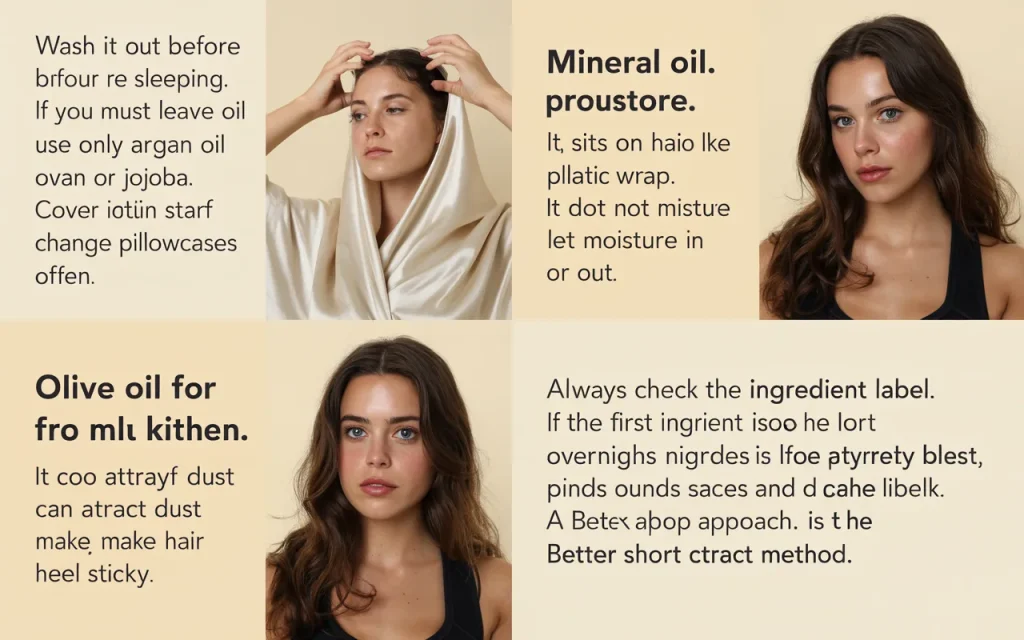
Mineral oil. Found in many drugstore products. It sits on hair like plastic wrap. It does not let moisture in or out.
Silicone based serums labeled as oil. These are not oils. They are synthetic coatings. They look shiny at first but build up fast.
Olive oil from the kitchen. It is too heavy for most hair types. It can attract dust and make hair feel sticky.
Always check the ingredient label. If the first ingredient is not a plant oil, it is likely a synthetic blend.
Nighttime Oil Rituals That Actually Work
Overnight oiling sounds nice but often ruins pillowcases and causes acne along the hairline. A better approach is the short contact method.
Apply oil two hours before bed. Wrap hair in an old cotton t shirt, not a towel. Towel fibers rough up the cuticle. Cotton is smoother.
Wash it out before sleeping. If you must leave oil overnight, use only argan or jojoba. Cover hair with a satin scarf. Change pillowcases often.
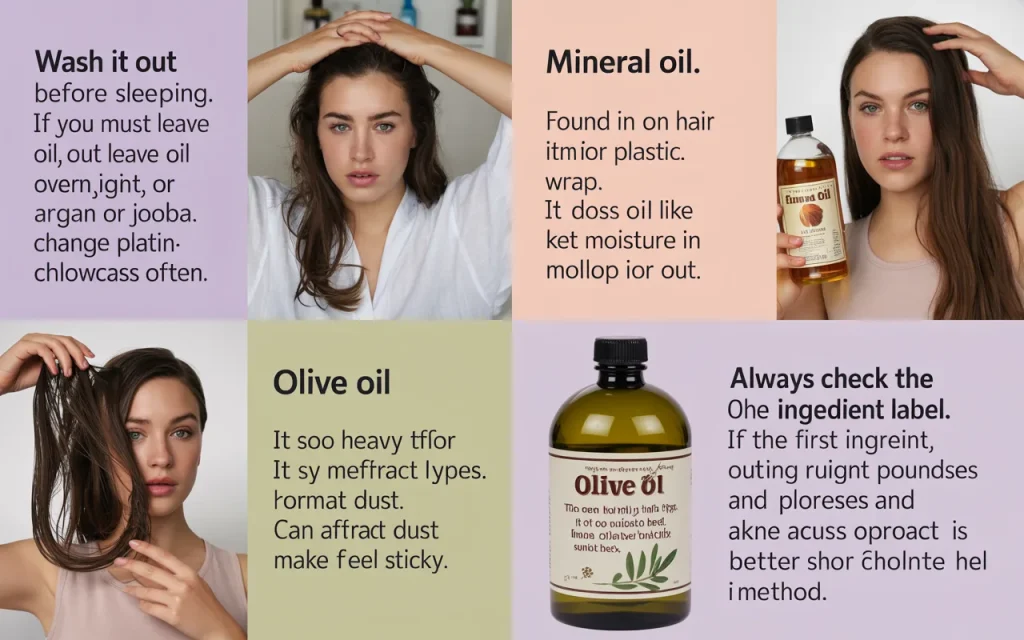
Table: Oil Blends for Specific Issues
| Goal | Base Oil | Add 2 Drops Of | Frequency |
|---|---|---|---|
| Soothe itchy scalp | Jojoba oil | Tea tree oil | Once weekly |
| Boost shine | Argan oil | Lavender oil | Twice weekly |
| Thicken edges | Almond oil | Rosemary oil | Every other day |
| Reduce dandruff | Coconut oil | Neem oil | Once weekly |
| Detangle curls | Grapeseed oil | Ylang ylang oil | As needed |
Why Consistency Becomes More Important Than the Oil Itself
Women often switch oils every two weeks expecting instant change. Hair does not work that way. The hair you see today grew months ago. Oil treatments today affect the hair that grows next month.
Pick one oil suited to your main concern. Use it steadily for eight weeks. Take photos in natural light. Compare. Do not rely on memory.
Hair cycles last years. Patience is the real active ingredient.
What About Multi Purpose Oils?
Many brands now sell ready made hair elixirs with five or more oils in one bottle. These can work well. But they also cost more and sometimes include fragrance that irritates sensitive scalps.
Single ingredient oils are cheaper and easier to customize. You control what touches your head. If you react badly to one oil, you know exactly which one caused it.
The question what hair oils are best for women often leads to these blends. They are convenient but not necessary. A single cold pressed oil from a trusted brand is often enough.
Environmental and Ethical Factors
Some popular oils face sustainability issues. Argan oil production supports women cooperatives in Morocco. That is a good thing. But high demand means pressure on resources.
Coconut oil is widely available and ethically easier to source. Jojoba grows in dry climates with low water needs.
If you care about sourcing, look for fair trade certifications. Avoid oils with unclear origins. Your hair care should not harm communities or ecosystems.
How to Store Hair Oil
Heat and light spoil natural oils. Keep bottles in a cool, dark cabinet. Do not store them in the bathroom if your shower gets steamy. Humidity degrades oil faster.
If oil smells sharp or sour, it has gone rancid. Do not use it. Fresh oil smells mild and nutty.
Most oils last one to two years. Castor oil lasts longer. Nut based oils like almond expire faster. Buy smaller bottles if you use oil slowly.
Realistic Expectations From Hair Oil
Hair oil cannot fix split ends. It cannot change your genetic hair type. It cannot make hair grow an inch in a week.
What it can do is make hair softer, shinier, and less likely to break. It can reduce scalp discomfort. It can make styling easier.
“Hair oil is like moisturizer for your face. You do not expect it to erase wrinkles overnight. You use it to keep skin comfortable and protected. Same for hair.”
Dr. Neha Khurana, Dermatologist
Frequently Asked Questions
Can I mix different hair oils together?
Yes. In fact, mixing a heavy oil like castor with a light oil like jojoba makes application easier. Just do not mix more than two or three oils at once.
How do I know if I am using too much oil?
If your hair looks wet after drying, you used too much. If it feels sticky twelve hours later, you used too much. If your scalp itches or breaks out, oil touched skin you did not wash properly.
Should I oil my hair before or after washing?
Both work for different goals. Before washing protects hair from shampoo stripping. After washing seals in moisture. Pre wash oil is better for dry hair. Post wash oil is better for frizz control.
What hair oils are best for women over fifty?
Hair becomes drier with age. Lighter oils like argan and marula work well. They add shine without weight. Scalp massage with rosemary oil helps maintain density.
Do I need to heat the oil?
Warming oil slightly helps it spread. But boiling hot oil burns the scalp. Warm between palms or place the bottle in warm water for one minute. Never microwave oil.
Is expensive oil worth it?
Price does not always equal quality. Some affordable cold pressed oils work as well as luxury versions. Check for pure ingredients and no added perfume. Brand matters less than freshness.
Conclusion
So what hair oils are best for women? The answer is personal but simple. Coconut oil protects damaged hair best. Argan oil polishes all hair types beautifully. Rosemary oil supports scalp health and growth. Jojoba oil balances oily roots without stripping.
You do not need a cabinet full of bottles. One well chosen oil used consistently gives better results than ten oils used randomly.
Pay attention to how your hair feels after washing, not just right after oiling. Real improvement shows in how long your style lasts and how few broken hairs you see in your brush.
Start with one oil. Use it right. Give it time. Your hair knows what it likes. Listen to it.
Related posts
 Best Compact Powder for Women: 2026 Buyer Guide
Finding the best compact powder for women in 2026. We compare top-rated matte, mineral, and lightweight pressed powders to help you choose the right finish. Finding…
 Best Casual Wear for Women: 2026 Style and Comfort Essentials
Discover the best casual wear for women in 2026. We compare top-rated trousers and versatile tops to help you build a comfortable, stylish everyday wardrobe. Finding…
 Best Claw Clips for Thick Hair in 2026
Finding the best claw clips for thick hair requires a balance of grip and size. Explore our top 2026 recommendations for secure, stylish, and reliable styling.…