
How to Clean Cookware Properly
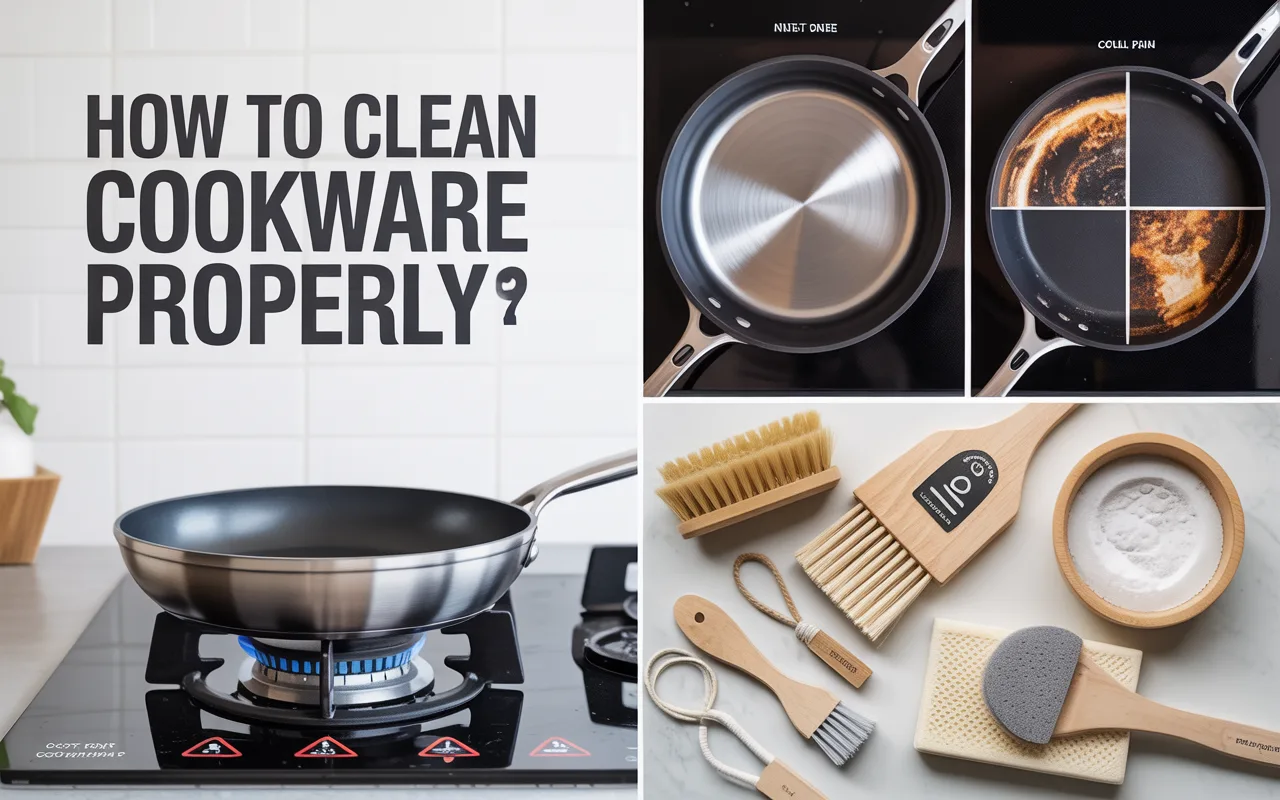
The right way to clean cookware properly protects your investment and keeps your food tasting great. Learn simple, expert methods for all your pots and pans.
You love your favorite skillet. It makes perfect eggs. Your soup pot is a trusty friend for chilly nights. But cleaning them? That can feel like a chore. You might worry about hurting the pan or not getting it fully clean. I get it. I have spent years in home kitchens testing what works. The good news is that learning how to clean cookware properly is simple. It saves you money, makes your cookware last longer, and keeps your meals tasting their best. This guide will show you easy, safe methods for every type of pan you own.
Think of this as a friendly chat over the kitchen counter. We will cover the basics, tackle tough messes, and answer common questions. Let us get started.
Why Proper Cleaning Matters More Than You Think
Cleaning is not just about looks. Doing it the right way protects your cookware. A pan with burnt food or hidden grease can ruin your next meal. It can also wear out the pan faster. Proper care keeps non stick surfaces slick, stainless steel shining, and cast iron seasoned. It is a key part of cooking.
“A kitchen is a place where memories are made. Keeping it clean is a sign of respect for the food and the people you share it with,” says chef and author Anya Fernald.
When you clean cookware properly, you are also caring for your health. Old food bits can harbor bacteria. Proper cleaning removes them. It gives you a fresh start for every meal.
The Golden Rules for Every Pot and Pan
Before we talk about specific materials, remember these three rules. They apply to almost everything in your cupboard.
- Cool Down First: Never put a hot pan under cold water. This is especially true for cast iron, glass, and ceramic. The sudden temperature change can make the metal warp or the glass crack. Let the pan cool on the stove.
- Soak to Save Time: For stuck on food, soaking is your best friend. Fill the pan with warm, soapy water. Let it sit for 15 to 30 minutes. The food will loosen, and you will need less scrubbing.
- Use the Right Tools: Rough scouring pads can scratch. Use softer tools first. Try a nylon brush, a sponge, or a cloth. For tougher jobs, a paste of baking soda and water works well.
How to Clean Cookware Properly by Material
Different pans need different care. Here is a simple breakdown for the most common types.
Non Stick Cookware Care
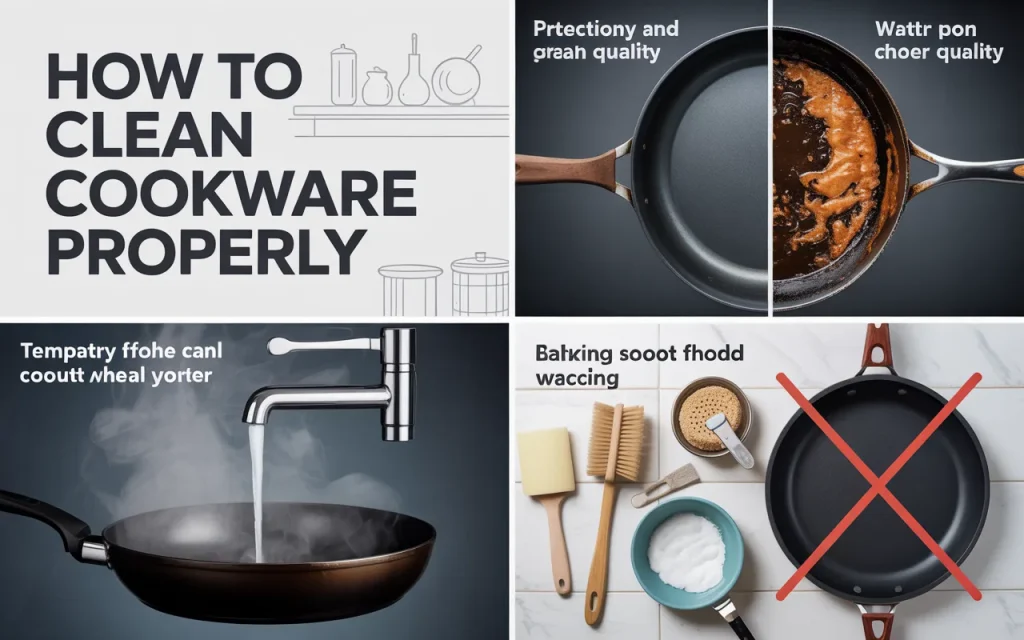
Non stick pans are easy to use but need gentle care. The goal is to protect that coating.
- Cool it down completely before washing.
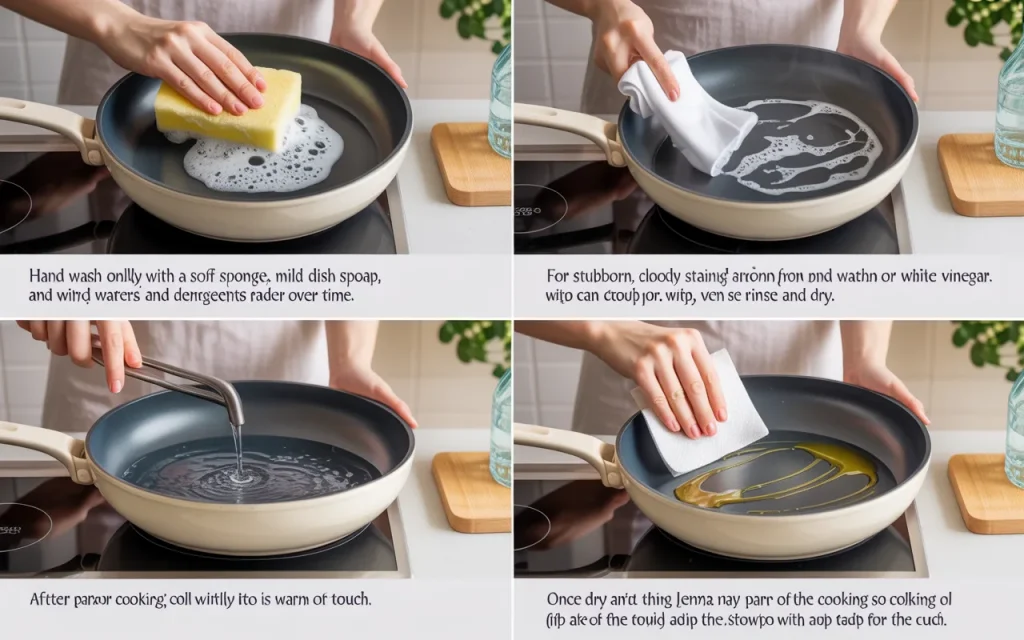
- Hand wash only with a soft sponge, mild dish soap, and warm water. Dishwasher detergents are too harsh and can damage the coating over time.
- For stuck food, soak the pan. Then, use a soft nylon brush. Avoid steel wool or abrasive cleaners.
- Dry it right away with a towel to prevent water spots.
What to Avoid with Non Stick:
- Metal utensils
- Cooking spray (it leaves a sticky film)
- High heat cooking
- The dishwasher
Stainless Steel Sparkle
Stainless steel is tough but can show water spots and burnt on food. This method works every time.
- Let the hot pan cool.
- Fill it with warm water and a drop of dish soap. Soak if needed.
- For baked on grease or food, make a simple paste. Mix baking soda with a little water. Spread it on the problem areas. Let it sit for 10 minutes.
- Gently scrub with a non scratch sponge. For very tough spots, a nylon scrubber is okay.
- Rinse with hot water.
- To make it shine, dry it immediately with a clean cloth.
For stubborn, cloudy stains from hard water or minerals, you can use a bit of white vinegar. Wipe the surface with a cloth dipped in vinegar, then rinse and dry.
Cast Iron Love: Clean and Season
Cast iron is almost indestructible with good care. The key is to keep its “seasoning.” That is the thin layer of oil that makes it non stick.
- Clean while warm. After cooking, let the pan cool slightly until it is warm to the touch. Add some hot water.
- Scrub gently. Use a stiff brush or a sponge with a little coarse salt. You can use a tiny bit of soap if you like. Modern soaps are mild and will not strip a well built seasoning. Avoid soaking the pan.
- Rinse and dry completely. This is the most important step. Dry the pan with a towel. Then, place it on a warm stove burner for a few minutes to evaporate all moisture.
- Lightly oil it. Once dry and warm, rub a very thin layer of cooking oil (like canola or vegetable oil) all over the inside surface with a paper towel.
- Store it in a dry place.
Cast Iron Do’s and Don’ts
| Do This | Do Not Do This |
|---|---|
| Clean while warm. | Let it soak in the sink. |
| Dry it on the stove. | Put it away wet. |
| Oil it after drying. | Clean it in the dishwasher. |
| Use it often! | Use harsh abrasives. |
Ceramic and Enamel Coated Cookware
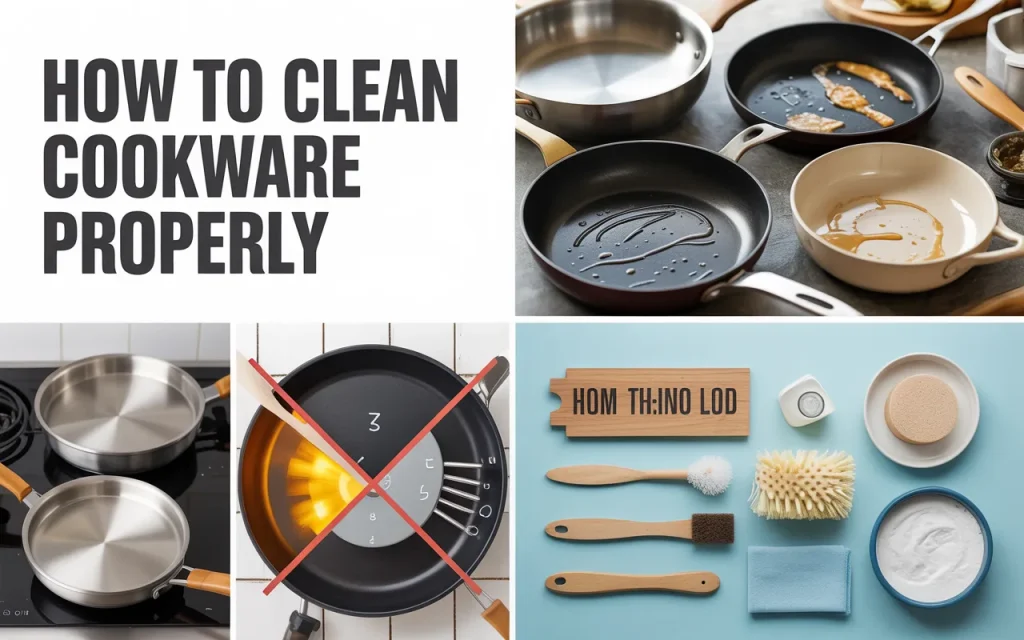
These pans, like those from Le Creuset, have a glass like coating. Treat them with care to avoid chips.
- Let the pan cool fully.
- Soak to loosen food.
- Wash with a soft sponge and soapy water.
- For stains, a baking soda paste can help. Apply, let sit, and gently scrub.
- Avoid abrasive scouring pads that can scratch the glossy surface.
Beating the Tough Stains and Burnt On Food
We have all been there. The phone rang, and the sauce reduced to a sticky, black layer. Do not worry. Here are safe ways to clean cookware properly after a kitchen mishap.
The Boiling Water Method (Great for Pots and Saucepans):
- Fill the pan with enough water to cover the burnt area.
- Add a big spoonful of baking soda or a squirt of dish soap.
- Bring the water to a boil, then turn the heat to low.
- Let it simmer for 15 minutes. As it simmers, the burnt bits will loosen.
- Let it cool, then pour out the water. The mess should wipe away easily with a sponge.
The Baking Soda Paste (For Skillets and Baking Sheets):
Make a thick paste with baking soda and water. Smear it over the burnt food. Let it sit for an hour or even overnight. The baking soda will lift the stain. Scrub gently with a sponge and rinse.
For really tough grease on stainless steel, you can use a method called deglazing. Put the pan back on the stove with a little water or vinegar. Heat it up and use a wooden spoon to scrape up the bits. This is how chefs make pan sauces, and it cleans at the same time!
Frequently Asked Questions
Can I put my non stick pan in the dishwasher?
It is not recommended. The harsh detergent and high heat in dishwashers can break down the non stick coating over time. It will make the surface less slick and cause it to wear out faster. Hand washing is best.
How do I remove baked on grease from a sheet pan?
Sprinkle the pan with baking soda. Then, spray it with hydrogen peroxide until it fizzes. Let it sit for an hour. The combination will break down the grease. Scrub with a sponge and rinse clean.
Is it safe to use soap on cast iron?
Yes, it is safe. The old rule came from when soap had lye in it. Today’s mild dish soaps will not harm a well seasoned cast iron pan. Just use a small amount, rinse well, and always dry and oil it after.
Why does my stainless steel pan have rainbow colored spots?
Those are heat tints, often from overheating. They are not harmful. You can remove them with a cleaner made for stainless steel or a paste of baking soda and vinegar. Scrub gently in the direction of the grain.
How often should I deep clean my cookware?
A quick wash after each use is fine. But a deeper clean, like using the baking soda paste method, is good to do every few months or when you notice stains or sticky spots. Paying attention helps you clean cookware properly over its whole life.
Quick Cleanup Guide
| Problem | Best Solution |
|---|---|
| Sticky non stick pan | Soak in warm, soapy water. |
| Burnt on pasta sauce | Simmer with water and baking soda. |
| Cloudy stainless steel | Wipe with white vinegar, then rinse. |
| Rusty cast iron | Scrub with steel wool, rinse, re season. |
| Discolored aluminum | Boil with cream of tartar and water. |
A Note on Dishwashers and Your Cookware
The dishwasher is easy, but is it safe? Here is a quick list.
Usually Dishwasher Safe:
- Stainless steel (but may spot)
- Glass and ceramic (check the label)
- Some enameled cast iron (check the label)
Hand Wash Only:
- Non stick cookware
- Bare cast iron
- Copper cookware
- Wooden handles
- Pans with bonded layers (they can separate)
When you want to clean cookware properly, the dishwasher is a gamble. If a pan is precious to you, wash it by hand.
Making Your Cookware Last a Lifetime
Good pots and pans are an investment. Simple care makes them last for years, even generations.
“Take care of your tools and they will take care of you. This is as true for a chef’s knife as it is for a humble frying pan,” notes kitchen expert Mark Bittman.
Store your pans with care. Do not stack heavy pans inside each other without a soft cloth or paper towel between them. This prevents scratches. Use the right size burner for your pan. A small pan on a large burner can cause hot spots and warping. And always let your pan heat up slowly.
Wrapping It Up
Learning how to clean cookware properly is a simple skill with big rewards. It keeps your kitchen tools working well, makes cooking more fun, and protects the money you spent. Remember the basics: cool it, soak it, use gentle tools, and dry it well. Treat each material with the care it needs. Your non stick will stay slick, your stainless will shine, and your cast iron will be your family’s heirloom.
Start with one pan tonight. Give it the care it deserves. You will see the difference, and your next meal will taste even better for it. Happy cooking, and even happier cleaning
Related posts
 Best Under Sink Organizers Kitchen 2026: Practical Storage Solutions
Find the best under sink organizers kitchen in 2026. Compare top-rated pull-out bins, L-shaped racks, and protective mats to maximize your cabinet space. The space under…
 Best Kitchen Cabinet Storage Solutions for 2026
Organize your kitchen efficiently with our Best Kitchen Cabinet Storage Solutions. Compare the best organizers for lids, pans, and spices to maximize your space. A cluttered…
 Top Rated Kitchen Shelf Organizers for 2026
Discover the top rated kitchen shelf organizers for 2026. Compare durable racks, magnetic shelves, and tiered storage to maximize your pantry and counter space. A cluttered…